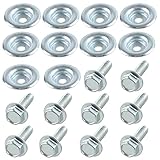
I remember the first time I pulled a set of cylinder heads. Excitement mixed with that nagging voice in the back of my head: ‘Can I reuse these bolts?’ It’s a question that pops up on forums more often than a cheap eBay turbocharger. Everyone wants to save a buck, and frankly, sometimes the official word feels like it’s written by people who’ve never actually touched an engine bay. So, let’s cut through the noise on whether or not are 5.3 head bolts reusable.
The short answer is usually no, but like most things in wrenching, it’s got more nuance than a dealership’s upsell list. It depends on a few key factors, and ignoring them can lead to a blown head gasket faster than you can say ‘torque wrench’.
When ‘new Is Best’ Applies to Head Bolts
Look, I’ve been tempted. I’ve seen perfectly clean, straight-looking bolts come out of an engine and thought, ‘Why throw these away?’ It’s that mentality of ‘if it ain’t broke, don’t fix it’ applied to parts that are literally designed to fail under specific conditions. Head bolts are not like exhaust manifold bolts that just hold things together; they’re important structural components that provide the clamping force to seal the combustion chamber.
They’re engineered to stretch a precise amount when torqued to spec, and that stretch is what creates the seal. Think of them like tiny, very strong rubber bands. You can stretch a rubber band a few times, and it’ll still work. Stretch it too much, or too many times, and it’ll snap.
Head bolts are similar, but the stakes are a lot higher than a loose pile of papers.
The main culprit here is torque-to-yield. Most modern engines, including the 5.3L Vortec you’re likely dealing with, use head bolts that are designed to be stretched beyond their elastic limit. This means they permanently deform.
When you torque them down the first time, they stretch to a specific length, creating the required clamping force. Reusing them means they’ve already been stretched.
Trying to stretch them again to the same spec is like asking that used rubber band to hold the same tension – it’s already weakened. You might get lucky, sure, but are you willing to gamble thousands of dollars in engine repair and your precious weekend time on ‘lucky’? I’m not. I learned that lesson the hard way after a coolant-filled cylinder nearly turned my first rebuild into a boat anchor.
The materials themselves can also fatigue. Repeated heating and cooling cycles, combined with the immense pressure in a combustion chamber, can create microscopic cracks or weaken the bolt’s internal structure. Even if a bolt looks visually perfect, its tensile strength might be compromised.
It’s a bit like how a paperclip can be bent back and forth until it breaks; the metal experiences internal stress with each flex. For something as vital as sealing a cylinder, you want the freshest, strongest material you can get. The cost of a new set of head bolts, often in the range of $50 to $150 depending on the brand and engine, is pocket change compared to the potential cost of an engine failure due to a faulty seal. (See Also: Are All Honda Atv Bolt Patterns The Same )
Signs Your Old Head Bolts Are Telling You ‘no Way’
Even if you’re determined to push the envelope, there are tell-tale signs that your old head bolts have seen better days and are definitely not reusable. First off, visual inspection is your friend, but it’s not foolproof. Look for any signs of stretching, which you can sometimes see as a slight thinning of the shank or distortion. More obvious are any signs of damage: stripped threads, nicks, gouges, or corrosion. If the bolt head is damaged, meaning the hex drive is rounded off or cracked, it’s garbage. Period. Don’t even think about it.
The real kicker is often checking bolt length. Most manufacturers specify a maximum allowable stretch. You’ll need a reliable micrometer or a set of calipers for this. Measure the bolt when it’s new, then measure the ones you’ve removed.
If any bolt has stretched beyond the manufacturer’s specified limit (you can usually find this in a service manual for your specific engine – a quick search for ‘[your engine code] head bolt stretch spec’ should do it), it’s toast. This is where that ‘always buy new’ rule really shines. Forcing a bolt that’s already stretched to its yield point is a recipe for disaster.
The torque won’t be applied correctly, and you’ll end up with uneven clamping force, leading to blown gaskets and oil or coolant leaks.
Another thing to watch out for is heat damage. Sometimes, you’ll see a blueish tint on the bolt, indicating it’s been overheated. This can alter the temper of the steel and make it brittle. If you notice any of these issues, there’s no debate. Chuck them in the scrap metal bin and get yourself a fresh set. It’s not worth the risk. Trust me, I once tried to ‘save’ a set of bolts on a project and ended up pulling the heads off twice because I didn’t want to admit I was wrong the first time. That mistake cost me more time and parts than a new set of bolts ever would have.
The ‘torque-to-Yield’ Truth Bomb
Here’s where I diverge from some of the advice you’ll find floating around. Plenty of guys on forums will tell you, ‘If they look good, they’re fine.’ I call that gambler’s advice. When it comes to torque-to-yield (TTY) fasteners like head bolts, that’s a dangerous game. The engineers who designed your engine didn’t just slap some bolts in there; they calculated exactly how much clamping force was needed to keep that combustion chamber sealed under extreme pressure and temperature. They specified TTY bolts because they provide a more precise and consistent clamping force than traditional stretch bolts that just rely on reaching a specific torque value.
TTY bolts work by stretching to a predetermined point. You torque them to a lower initial value, then you use an angle gauge to rotate them a specific number of additional degrees. This process makes sure each bolt is stretched to its designed yield point, providing uniform clamping across the cylinder head. Once a bolt has been yielded, its material properties have changed. It has permanently deformed. Trying to achieve that same, precise stretch again with a bolt that’s already been through the process is like trying to reheat and reshape a piece of tempered glass; you’re compromising its original integrity.
My stance: if your engine calls for TTY head bolts, always, always, always use new ones. It’s not about being overly cautious; it’s about following the engineering. You wouldn’t rebuild a brake caliper with worn-out seals, would you? It’s the same principle. The clamping force provided by these bolts is what keeps your engine running smoothly and prevents catastrophic failure. The cost of a new set of quality head bolts is minimal compared to the potential damage from a blown head gasket, warped head, or even a cracked block. I’ve seen engines come back with issues because someone skimped on head bolts, and it’s never a cheap fix.
Contrarian Corner: When Reusing might Be Okay (but Still Probably Isn’t)
Okay, here’s my contrarian take. Everyone says, ‘New bolts are the only way.’ I disagree, but with a massive caveat. For most common passenger car and truck engines, especially anything using torque-to-yield (TTY) specifications, you absolutely should NOT reuse the bolts. However, there are older, simpler engines, or specific applications, where the original bolts might have been designed as ‘torque-to-spec’ rather than ‘torque-to-yield’. These bolts are designed to be tightened to a specific torque value without significant permanent stretch. If you are working on such an engine, and the bolts come out looking pristine, are within their original length specifications (measure them!), and show absolutely no signs of damage, then in theory, you might be able to reuse them. (See Also: Are Ak Bolts Interchangeable )
I’ve heard stories, and even seen some older race engines that were rebuilt with reused fasteners that were meticulously inspected and measured. But this is playing with fire, and I wouldn’t recommend it for a daily driver or anything you rely on. The risk of failure is significantly higher. You’re relying on perfect inspection, perfect measurement, and the hope that the metal hasn’t fatigued in ways you can’t see. The margin for error is so thin. For a classic car you’re just showing off, maybe. For your work truck? Absolutely not.
The real danger is misidentifying the type of bolt or the engine’s requirements. Most aftermarket service manuals and even factory service manuals will clearly state if bolts are torque-to-yield and must be replaced. If there’s any ambiguity, or if the manual doesn’t explicitly say they’re reusable, assume they’re not. The few dollars saved on bolts are not worth the headache of a failed seal, especially when you consider the time and effort involved in pulling heads. Stick to the manufacturer’s recommendations unless you are an absolute expert in that specific engine and understand the risks intimately. For 99% of people asking ‘are 5 3 head bolts reusable?’, the answer is a resounding no.
Practical Tips for Head Bolt Replacement
Alright, so you’ve decided to do the right thing and buy new head bolts. Smart move. But just slapping them in and torquing them down isn’t the whole story. Here are a few practical tips that’ll save you headaches down the line. First, make sure you’re buying quality bolts. Don’t cheap out on the brand. ARP, Fel-Pro, and Mahle are generally reputable. Check the specifications – are they hardened? Are they designed for your specific engine application? Sometimes, performance engines benefit from stronger, aftermarket studs, but for a stock 5.3L rebuild, good quality OE-style replacement bolts are usually sufficient.
Before you even think about installing the new bolts, clean your bolt holes thoroughly. Use a thread chaser (not a tap, which cuts new threads) to clean out any debris, old sealant, or carbon buildup. You want those threads to be clean so the bolts thread in smoothly and you get accurate torque readings. Compressed air is your best friend here. Blow out any debris. A quick shot of brake cleaner can also help make sure they’re spotless.
When installing, many new head bolts will come with a specific lubricant or sealant. Follow the manufacturer’s instructions to the letter. Some bolts require a specific assembly lube on the threads and under the bolt head, while others might require a dab of thread locker or sealant. This is important because it affects how the bolt stretches. The wrong lubricant or no lubricant can lead to over-stretching or under-stretching, both of which compromise the clamping force. Pay attention to the torque sequence and values. Most service manuals will provide a step-by-step procedure, often involving multiple passes and specific angle rotations. Get an angle gauge; it’s a cheap tool that’s key for TTY bolts.
Here’s a quick table to help you think about your options:
| Option | Pros | Cons | Verdict |
|---|---|---|---|
| Reuse Old Bolts (Visually OK) | Saves money (initially) | High risk of failure, compromised integrity, potential for engine damage | Don’t do it. gambler’s advice. |
| New OE-Style Replacement Bolts | Designed for the application, meets original specs, affordable | Still a consumable part, might not be as strong as aftermarket | Best for stock or mild builds. |
| Aftermarket Performance Studs/Bolts | Higher strength, more consistent clamping, often reusable (check specs!) | More expensive, may require machining or modifications | Great for performance builds, but overkill for many stock applications. |
A Word on Head Gasket Types and Bolt Choices
The type of head gasket you’re using can also play a role, though it doesn’t change the fundamental answer to ‘are 5 3 head bolts reusable?’. For most modern engines, you’re likely dealing with Multi-Layer Steel (MLS) gaskets. These are fantastic pieces of engineering, providing a very reliable seal. However, they demand precise and even clamping force. This is exactly why TTY bolts are used – they make sure that even clamping force is applied. If you use old, weakened bolts with an MLS gasket, you’re setting yourself up for failure. The uneven or insufficient clamping will allow the gasket to blow out, often between the coolant and oil passages or into the combustion chamber.
If you happen to be working on an older engine that uses a composite or even a traditional shim-style gasket, the requirements might be slightly different. These gaskets can sometimes tolerate a bit more variability in clamping force. However, this doesn’t magically make old TTY bolts good again. It just means the gasket itself might be more forgiving of minor imperfections in clamping. Still, the principle of using fasteners at their designed integrity remains. Why introduce another variable that could lead to a failure?
For the 5.3L Vortec, you’re almost certainly dealing with MLS gaskets. They are the standard now for a reason. They offer superior sealing and durability compared to older gasket technologies. But they require the best of everything to function optimally. That includes fresh, properly torqued head bolts. Think of it like building a high-performance bicycle. You wouldn’t use a bent frame and old tires. You’d use the best components you can afford to make sure performance and safety. Your engine deserves the same consideration. The cost of new head bolts is a small insurance policy against a very expensive repair job. It’s money well spent, every single time. (See Also: Are All Bolt Patterns The Same )
People Also Ask: Are 5.3 Head Bolts Torque to Yield?
Yes, the vast majority of 5.3L Vortec engines from GM use torque-to-yield (TTY) head bolts. This means the bolts are designed to be stretched beyond their elastic limit during installation to achieve precise clamping force. Because they permanently deform, they are not designed to be reused. Attempting to reuse them can lead to improper clamping and potential engine damage.
Can I Reuse Head Bolts If I Don’t Torque Them to Yield?
If your engine’s specifications call for torque-to-yield (TTY) bolts, you absolutely must follow the TTY procedure, which involves stretching the bolts. If you do not torque them to yield as specified, you will not achieve the correct clamping force, and you risk head gasket failure. If the engine was originally designed with standard torque-to-spec bolts (less common on modern engines like the 5.3L), and you meticulously inspect them for damage and make sure they are within length specifications, reuse might be theoretically possible for very specific, non-important applications, but it’s generally not recommended for reliability.
How Do I Know If My Head Bolts Are Tty?
The surest way to know if your head bolts are torque-to-yield (TTY) is to consult the official service manual for your specific vehicle and engine. Manufacturers clearly indicate TTY procedures, which typically involve an initial torque sequence followed by a specific degree of further rotation using an angle gauge. If the manual describes this angle tightening procedure, your bolts are TTY. If it only specifies a torque value, they are likely standard torque-to-spec bolts, though this is rare for modern 5.3L engines.
What Happens If I Reuse Tty Head Bolts?
If you reuse torque-to-yield (TTY) head bolts, they have already undergone permanent stretching from their initial installation. Attempting to torque them again to the same specifications will likely not achieve the required clamping force, or it might result in uneven clamping across the cylinder head. This can lead to a compromised head gasket seal, causing coolant leaks, oil leaks, or combustion gases blowing past the seal, ultimately resulting in engine damage and costly repairs.
What’s the Difference Between Torque-to-Yield and Torque-to-Spec?
Torque-to-spec (or torque-and-stretch) fasteners are tightened to a specific torque value, and they remain within their elastic limit, meaning they return to their original shape if loosened. Torque-to-yield (TTY) fasteners are designed to be tightened beyond their elastic limit, causing them to permanently stretch. This controlled stretching provides a more precise and consistent clamping force, which is important for sealing high-pressure environments like combustion chambers. TTY bolts are not designed for reuse because their material properties are altered after yielding.
Final Thoughts
So, to wrap this up with the blunt honesty you’d expect from a friend who’s been elbow-deep in grease more times than they care to admit: are 5 3 head bolts reusable? For the vast majority of practical applications, the answer is a resounding, unequivocal NO. The engineering behind torque-to-yield fasteners is there for a reason, and it’s not to sell more parts. It’s to make sure your engine seals properly and doesn’t grenade itself.
Saving a few bucks on a set of head bolts when you’re already deep into a head gasket job or rebuild is like trying to save money on fire insurance by not buying smoke detectors. It’s a gamble that rarely pays off. When it comes to the integrity of your engine’s combustion chamber seal, always err on the side of caution. Fresh, properly installed head bolts are a a must component of a reliable rebuild.
My advice? If you’re pulling heads on a 5.3L, budget for new head bolts. It’s a small price for peace of mind and a correctly functioning engine. Get a quality set, follow the torque procedure to the letter, and you’ll be far more likely to enjoy reliable performance for miles to come.