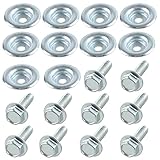
I’ve been burned more times than I care to admit by hardware that looked tough but crumpled under the slightest pressure. You see them everywhere – in furniture kits, on bikes, holding up shelves that are probably too heavy. And the question always lingers in the back of your mind: are 8.8 bolts strong? The marketing hype often suggests they’re the bee’s knees, but I’ve learned the hard way that ‘good enough’ isn’t always, well, good enough. Let’s cut through the noise and talk about what these common bolts can actually handle, and where you might want to look for something beefier.
What Makes an 8.8 Bolt, Well, 8.8?
Forget fancy branding; the strength of a bolt like the 8.8 is all in its numbers and its metal. This isn’t some trade secret whispered in dark workshops; it’s a standard. The ‘8.8’ designation, mind you, is part of a metric property class system.
The first ‘8’ means the bolt has a minimum tensile strength of 800 megapascals (MPa). That’s a LOT of force before the bolt itself starts to stretch and tear apart. The second ‘8’ means its yield strength is 80% of that minimum tensile strength. Yield strength is basically the point where the bolt starts to permanently deform – it bends and doesn’t spring back.
So, an 8.8 bolt will generally withstand about 640 MPa before it decides to stay bent.
These numbers aren’t pulled out of thin air. They’re tied to the steel alloy used and the heat treatment process. Typically, 8.8 bolts are made from medium-carbon steel, sometimes with a bit of alloying elements like chromium or molybdenum thrown in to make them tougher and more consistent. The real magic happens during heat treatment: quenching and tempering.
Quenching involves heating the steel red-hot and then rapidly cooling it, making it very hard. Tempering then involves reheating it to a lower temperature to reduce some of that brittleness and increase toughness. It’s a delicate dance to get that sweet spot where the bolt is both hard enough to resist wear and deformation, but not so brittle that it snaps like a dry twig under shock loads.
Getting this balance wrong is where cheap manufacturers cut corners, and that’s when you end up with a bolt that looks like an 8.8 but performs like a wet noodle.
I remember one time I was assembling a heavy-duty workbench. The instructions called for ‘high-strength bolts,’ and the ones included looked pretty standard. They were marked 8.8. I tightened them down, feeling pretty confident. A few weeks later, after loading it up with some heavy tools, I noticed a distinct sag. Upon inspection, I found that a few of the bolts had visibly stretched. They hadn’t snapped, but they had definitely yielded. It turns out, while technically 8.8, the quality of the steel or the heat treatment on that particular batch was suspect. It was a stark reminder that the marking is only part of the story; the actual execution of manufacturing matters just as much.
When ‘good Enough’ Falls Short: Real-World Scenarios
So, are 8.8 bolts strong enough for most things? For your IKEA bookshelf or the bracket holding your TV? Probably. For holding together a suspension bridge? Absolutely not. The key is understanding the forces involved and the environment the bolt will be in. 8.8 grade bolts are generally considered a good, all-around choice for many general-purpose applications. They offer a significant upgrade over lower grades like 4.6 or 5.8, which are more common in lighter-duty applications. Think of them as the reliable workhorses for tasks that don’t involve extreme stress, vibration, or impact.
However, where I’ve seen them falter is in applications with dynamic loads – things that move, vibrate, or are subjected to sudden shocks. My experience with that workbench is a prime example. The tools I was putting on it weren’t static weights; they were moved around, dropped occasionally, and the whole structure vibrated. This kind of stress is far more punishing than a constant, steady load.
Another area where they can be borderline is in high-temperature environments or where significant corrosion is expected. While the basic steel composition is decent, without special coatings or alloys, they can degrade over time, compromising their strength. I once used them on an outdoor patio furniture frame that got rained on constantly, and after a couple of years, I noticed rust creeping in, and a few connections started to feel loose.
That’s when you know the protective zinc plating is doing its job, but the underlying steel is slowly giving up the ghost.
The common advice often suggests 8.8 is ‘strong enough’ for almost anything a DIYer throws at it, and that’s usually true for static, moderate loads. But the ‘real-world’ aspect often gets glossed over.
What about the vibrations from a washing machine bolted to the floor? Or the stress on a trailer hitch? (See Also: Are All Honda Atv Bolt Patterns The Same )
These are scenarios where you might want to step up to a higher grade, like 10.9 or even 12.9, which offer significantly higher tensile and yield strengths. It’s not just about the maximum load; it’s about reliability over time under less-than-ideal conditions.
I’ve learned to err on the side of caution and often will just buy a higher grade bolt and nut set if I’m unsure, even if it costs a few extra bucks. Better safe than sorry, especially when it’s holding something valuable or dangerous.
Decoding Bolt Markings: Beyond the 8.8
You can’t just grab any bolt that says ‘8.8’ and assume it’s identical to another. While the property class is standardized, there are other important markings that tell you more about the bolt’s pedigree. Most metric bolts have a series of dots or lines on the head. For 8.8 grade, you’ll typically see three radial lines and a dot, or sometimes just three lines. These markings indicate the manufacturer and the property class. However, the quality of the stamp itself can sometimes be a hint – a crisp, clear mark usually means a more reputable manufacturer than a smudged, barely visible one. I’ve seen some cheap bolts with markings that looked like they were applied with a potato.
Beyond the property class, you’ll also find markings indicating the nominal diameter and the thread pitch (if it’s a fine thread). For example, an M10x1.5 bolt would be marked accordingly. This is vital for making sure you’re using the right bolt for the job. Mismatched threads are a recipe for disaster, leading to weak connections or completely stripped bolts.
It’s not just about strength; it’s about compatibility. You also need to pay attention to the material coating. Standard 8.8 bolts often come with a zinc-plated finish.
This offers basic corrosion resistance for indoor or dry-outdoor use. For more demanding environments – like marine applications, salty roads, or industrial settings – you’ll want to look for galvanised (hot-dip galvanised) bolts, or even stainless steel bolts (though stainless steel has different strength grades, and a grade 8.8 equivalent in stainless might be a different designation entirely). I once had a project where I used standard zinc-plated bolts outdoors, and within a year, they looked like they’d been dredged from the bottom of the ocean. Swapping them out for hot-dip galvanised ones made a world of difference in longevity.
When you’re buying, especially in bulk, I always recommend buying from a reputable fastener supplier rather than a general hardware store if you need specific assurances. They often have better traceability and can provide documentation if needed. I’ve had conversations with staff at specialized fastener shops who could explain the nuances of different coatings and materials in a way that just isn’t possible at a big box store. It’s those little details that can save you headaches down the line and make sure that your ‘8.8’ bolt is actually the strong, reliable component you paid for.
| Bolt Grade | Min. Tensile Strength (MPa) | Min. Yield Strength (MPa) | Typical Use Case | My Verdict |
|---|---|---|---|---|
| 4.6 | 400 | 240 | Light general assembly, non-structural furniture | Weak sauce. Avoid for anything remotely important. |
| 8.8 | 800 | 640 | General mechanical assembly, automotive parts, structural components (moderate load) | Good all-rounder for most common tasks, but watch out for dynamic loads. |
| 10.9 | 1000 | 900 | Automotive suspension, heavy machinery, high-stress structural applications | Solid choice when 8.8 feels iffy. Significantly tougher. |
| 12.9 | 1200 | 1080 | Aerospace, high-performance automotive, extreme structural loads | Overkill for most, but the absolute king of strength. |
Common Mistakes When Choosing and Using 8.8 Bolts
One of the biggest blunders I see people make is assuming that ‘all bolts are created equal’ once they hit a certain grade. Not true. The sheer number of counterfeit or poorly manufactured bolts out there is staggering.
I’ve seen bolts marked 8.8 that snapped under a fraction of the expected load. This usually happens when manufacturers skimp on the alloy composition or botch the heat treatment.
They might use cheaper steel, or they might rush the tempering process, leaving the bolt brittle. My rule of thumb is: if the price seems too good to be true for a reputable brand, it probably is.
I once bought a bulk pack of M10 8.8 bolts online for a ridiculously low price. They looked fine, but when I started torquing them down on a trailer frame, one just… twisted.
It didn’t snap clean; it just deformed like play-doh. That was a hard lesson learned about buying cheap hardware. Always stick to known brands or reputable suppliers.
Another common mistake is using the wrong fastener for the environment. As I mentioned, standard zinc-plated 8.8 bolts are fine for dry, indoor use. (See Also: Are Ak Bolts Interchangeable )
Slap them on an outdoor project that’s exposed to the elements, and you’re asking for trouble. Rust will set in, weakening the bolt over time and making it difficult, if not impossible, to remove later. For outdoor or marine applications, you need hot-dip galvanised or, ideally, stainless steel fasteners. Even then, be mindful that not all stainless steels are created equal; look for grades like 304 or 316 for better corrosion resistance.
I remember building a deck railing system where the builder used standard zinc-plated bolts on the posts. Within three years, they were so rusted that I had to cut them off with a grinder. Replacing them with galvanised ones was a simple job that saved me future hassle. It’s the small details that make a big difference in the long run.
Finally, people often forget about the torque. Even the strongest bolt is useless if it’s not tightened properly. Over-tightening can lead to yielding or even snapping the bolt, while under-tightening means the connection will be loose and prone to failure under vibration or dynamic loads.
Always use a torque wrench and consult a reliable torque chart for the specific bolt size, grade, and application. For important connections, like automotive suspension or structural framing, this is a must.
I learned this the hard way when a shelf I’d installed, using 8.8 bolts but not torquing them correctly, started to sag precariously. A quick check revealed they were all loose, and a proper torque application fixed the issue.
It’s not just about how strong the bolt is; it’s about how you use it. Don’t just wing it with torque values; look them up.
When to Step Up: Higher Grades and Special Materials
Look, 8.8 bolts are decent. They’re strong enough for a vast majority of everyday tasks, from assembling furniture to mounting basic fixtures.
But if you’re asking are 8.8 bolts strong enough for something truly demanding, the answer is often ‘no’. When the stakes are higher – think important automotive components, heavy machinery, or structural elements that could cause serious damage if they failed – you need to look at higher-grade bolts. The immediate step up is typically to 10.9 grade.
These bolts have a higher minimum tensile strength (1000 MPa) and a higher yield strength (900 MPa). This means they can withstand significantly more stress before deforming or breaking. I’ve used 10.9 grade bolts for rebuilding motorcycle engines and for mounting heavy-duty equipment in my workshop, and the difference in feel and robustness is palpable.
They just feel more substantial and less prone to unexpected failure under load.
If you need even more strength, there’s 12.9 grade. These are the heavy hitters, offering a minimum tensile strength of 1200 MPa and a yield strength of 1080 MPa.
These are often found in aerospace applications, high-performance racing vehicles, and any situation where extreme loads are a constant factor. Honestly, for most DIY projects or even professional trades, 12.9 grade bolts are overkill and significantly more expensive. But knowing they exist is important for understanding the spectrum of fastener strength.
When I was working on a project that involved securing a large, very heavy generator, the manufacturer’s spec sheet explicitly called for 12.9 grade bolts. Not 8.8, not 10.9, but 12.9. That tells you everything you need to know about the forces at play. (See Also: Are All Bolt Patterns The Same )
Beyond just grade, sometimes the material itself needs to be different. While standard steel bolts (like 8.8) are strong, they can be susceptible to corrosion or specific chemical environments. For applications where rust is a major concern – think marine environments, chemical plants, or even just coastal areas with salty air – stainless steel bolts are the way to go.
However, you can’t just substitute a stainless steel bolt for a steel one and expect the same strength. Stainless steel has its own grading system. For example, common 18-8 stainless steel (like grade 304) is generally weaker than a 8.8 steel bolt.
You’d need to look for higher-strength stainless steel alloys or specific grades designed for structural applications. I learned this when I was building a custom outdoor kitchen and used what I thought were strong stainless steel bolts.
They looked great, but a year later, I noticed some connections were feeling a bit loose. Turns out, the specific grade of stainless I used, while corrosion-resistant, wasn’t as strong in shear as the 8.8 steel bolts I’d considered.
It’s a trade-off you have to weigh: corrosion resistance versus raw tensile strength. Sometimes, a specialized coating on a high-grade steel bolt might offer the best of both worlds, but that comes at a premium.
Faq: Your Burning Questions About 8.8 Bolts Answered
Are 8.8 Bolts Strong Enough for Structural Applications?
Generally, 8.8 bolts are considered suitable for many general structural applications where loads are moderate and static. However, for highly important structural components, especially those subjected to dynamic loads, significant vibration, or extreme weather, higher grades like 10.9 or 12.9 are often recommended for increased safety and reliability. Always consult engineering specifications or local building codes for definitive guidance.
Can I Reuse 8.8 Bolts?
It’s generally not recommended to reuse 8.8 bolts, especially if they have been subjected to significant stress, vibration, or have been torqued multiple times. Reusing bolts can compromise their integrity, as they may have undergone microscopic stretching or deformation that reduces their load-bearing capacity. For important applications, always use new fasteners to make sure optimal strength and safety.
What Is the Difference Between 8.8 and Grade 5 Bolts?
Grade 5 is an imperial (US customary) bolt grade, while 8.8 is a metric grade. A grade 5 bolt has a minimum tensile strength of 60,000 psi (approximately 414 MPa) and a minimum yield strength of 36,000 psi (approximately 248 MPa). An 8.8 metric bolt is significantly stronger, with a minimum tensile strength of 800 MPa and a yield strength of 640 MPa. Therefore, an 8.8 bolt is considerably stronger than a grade 5 bolt.
How Do I Identify an 8.8 Bolt?
Metric 8.8 bolts are typically marked on the bolt head. You will usually see either three radial lines and a dot, or just three radial lines emanating from the center. The number ‘8.8’ itself may also be stamped on the head, depending on the manufacturer and size. Always check the head for these markings to confirm the grade.
Final Verdict
So, are 8.8 bolts strong? Yes, they are strong enough for a whole lot of everyday stuff. Think of them as the solid, dependable middle-ground fastener that gets most jobs done without fuss. They’re a huge step up from those flimsy bolts you find in cheap flat-pack furniture, and for general repairs or building projects around the house, they’re usually your go-to.
But here’s the blunt truth: they aren’t the ultimate solution for everything. If you’re dealing with heavy machinery, high-vibration environments, or anything where a failure could cause serious harm or damage, you need to seriously consider stepping up to a higher grade like 10.9 or even 12.9. Also, don’t forget the environment; a rusty bolt is a weak bolt, no matter its grade. Always match the bolt’s strength and its protective coating to the demands of the job.
My advice? If you’re ever in doubt, or if the cost difference is minimal, just go with the stronger option. It’s not worth the headache of a failure down the line. Next time you’re at the hardware store, take a moment to really look at those bolt heads and know what you’re buying.