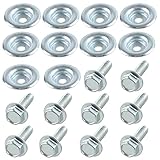
I remember the first time I bought a big box of hardware for a weekend project. I was so proud, picturing those shiny bolts holding everything together perfectly. Then, a few months later, I noticed rust spots. Loads of them. It hit me then: not all bolts are created equal, and my assumption about A307 bolts being stainless steel was dead wrong. It’s a common mistake, and one that can cost you time and money down the line if you’re not careful.
So, let’s cut to the chase. Are A307 bolts stainless steel? The short answer is a resounding no, and understanding why is key to avoiding future headaches.
What Exactly Are A307 Bolts, Anyway?
Alright, let’s get down to brass tacks. When you’re looking at hardware, especially for more general-purpose applications, you’re going to run into designations like ASTM A307. Now, if you’re asking ‘are A307 bolts stainless steel?’, the immediate answer is no. And that’s the most important takeaway right off the bat. A307 is a standard set by ASTM International (that’s the American Society for Testing and Materials, by the way – they set a lot of these specs) that defines the mechanical properties and chemical composition for a specific type of carbon steel bolt. It’s not a material designation like ‘stainless steel’; it’s a performance and composition standard for standard steel fasteners.
These bolts are designed for low-strength applications, typically where significant corrosion resistance isn’t the primary concern. Think of things like general construction, attaching structural shapes, and some basic mechanical assemblies.
They’re affordable, readily available, and strong enough for a lot of jobs. The key here is ‘carbon steel’. Carbon steel, by its very nature, contains iron and carbon, and when exposed to moisture and oxygen, it will rust. It’s just a matter of time.
The A307 standard outlines specific tensile strength requirements (how much pull it can take before breaking) and yield strength (how much it can deform before permanent damage occurs). For Grade A A307 bolts, the minimum tensile strength is 60,000 psi, and for Grade C, it’s 36,000 psi. These are considered mild steel grades.
The typical composition for A307 bolts will include iron, carbon, and then smaller amounts of manganese, phosphorus, and sulfur. There’s no significant chromium content, which is the magic ingredient that makes stainless steel stainless. So, if you see A307, mentally tag it as ‘plain steel’ unless it’s explicitly stated otherwise or it’s a coated version. Trying to use these in a marine environment or somewhere they’ll constantly get wet is a recipe for a rusty mess. I learned this the hard way when I built a simple outdoor workbench and used a bunch of galvanized A307 bolts. Looked great initially, but after one particularly damp spring, I had rust streaks all over my nice cedar. Lesson learned.
Why Aren’t They Stainless? The Material Breakdown
Okay, so if A307 bolts aren’t stainless steel, what are they made of? This gets down to the fundamental difference between carbon steel and stainless steel. Stainless steel gets its name from its inherent resistance to rust and corrosion, and this resistance comes from a high chromium content – typically at least 10.5% by mass. When chromium is exposed to oxygen, it forms a thin, invisible, and passive layer of chromium oxide on the surface. This layer is incredibly protective; it heals itself if scratched, preventing the iron underneath from reacting with oxygen and forming the familiar reddish-brown rust.
A307 bolts, on the other hand, are generally made from carbon steel. This means they have iron as the primary element, with carbon added to increase hardness and strength. They might also contain small amounts of other elements like manganese, silicon, phosphorus, and sulfur, but importantly, they lack the significant chromium content needed for stainless properties.
The ASTM A307 specification covers three grades: A, B, and C. Grade A is typically made from low-carbon steel, Grade B from medium-carbon steel, and Grade C is heat-treated. While there can be variations in the exact alloy composition within these grades, none of them are inherently stainless.
They are designed for strength and economy in applications where corrosion is not a major concern or where protective coatings are applied.
For example, a common composition for a Grade A A307 bolt might be something like 0.25-0.29% carbon, 0.60-0.90% manganese, 0.040% max phosphorus, and 0.050% max sulfur. Compare that to a common stainless steel like 304, which might have 18-20% chromium and 8-10.5% nickel. The difference is stark. The lack of chromium in A307 bolts means they are susceptible to oxidation (rusting) when exposed to moisture, air, and especially salt. (See Also: Are All Honda Atv Bolt Patterns The Same )
So, if you need corrosion resistance, you absolutely need to look beyond A307 bolts unless they are specifically coated for that purpose. I once saw a marine dock built with what the contractor claimed were ‘heavy-duty’ bolts, and they looked suspiciously like A307s. Within a year, they were practically disintegrating from rust. It’s a prime example of why knowing your material is most important.
People Also Ask: Do A307 Bolts Have Coatings?
Yes, A307 bolts can and often do come with protective coatings. The most common is zinc plating (galvanizing), which provides a sacrificial layer to protect the underlying carbon steel from corrosion. However, this is not the same as being stainless steel. The zinc will eventually wear away or corrode, leaving the carbon steel exposed. Other coatings like black oxide can offer mild corrosion resistance for indoor or dry applications, but they are not a substitute for stainless steel in harsh environments.
Where Do A307 Bolts Typically Show Up?
So, if they’re not stainless and they rust, where do you actually see A307 bolts being used? Think of it as the workhorse of general fastening, not the fancy sports car. These bolts are intended for applications where the primary concerns are mechanical strength and cost-effectiveness, and where environmental exposure isn’t going to be a huge issue. They are commonly found in structural steel connections – think of building frames, bridges (though often with higher grades for important connections), and general fabrication where loads are moderate and conditions are relatively dry.
You’ll see them in machinery frames, pipe supports, and general industrial equipment. They’re also used in some construction applications, like attaching handrails, or in less important structural components. The key is that they are not typically used in environments where corrosion is a significant factor. So, you wouldn’t want to use them on a boat, in a chemical plant, or even outdoors in a very humid or coastal climate without a very solid coating – and even then, you’re on borrowed time compared to stainless fasteners.
I remember helping a buddy put up some heavy-duty shelving in his garage. He’d bought a massive kit, and the bolts that came with it were clearly A307s. His garage is mostly dry, so they were fine.
But he mentioned he was thinking of using some of the leftovers for a planter box he wanted to build outside. I strongly advised against it. “It’s just a planter box,” he said. But I explained that even just soil moisture and rain over time would have them looking rough within a year or two, potentially weakening the connection.
He ended up buying some stainless steel bolts for the planter, and they still look perfect years later. It’s about choosing the right tool for the job, and A307 is rarely the right tool for an outdoor, corrosion-prone environment.
What to Look for Instead If You Need Stainless
Alright, so you’ve established that A307 bolts are not your friend if you need rust resistance. What should you be looking for instead? The world of stainless steel fasteners is vast, but for general purposes, you’ll most commonly encounter grades like 18-8 (which is often 304 stainless) and 316 stainless steel. These are the workhorses of the stainless fastener world, offering excellent corrosion resistance for a wide range of applications.
18-8 stainless steel (often referred to as 304) is incredibly popular. It contains chromium and nickel, giving it good resistance to atmospheric corrosion, food acids, and mild chemical solutions. It’s a great all-around choice for many outdoor projects, kitchen applications, and general industrial use where conditions aren’t extremely harsh. It’s also quite formable and weldable. If you’re building that outdoor planter box I mentioned, or attaching a gate hinge, or installing a railing on your deck, 18-8 stainless is usually more than sufficient and a massive upgrade from plain carbon steel.
316 stainless steel is the step up. It’s often called “marine grade” because it contains molybdenum, which significantly increases its resistance to pitting and corrosion from chlorides, such as those found in salt water and industrial chemical solutions.
If you’re working near the ocean, in a swimming pool area, or dealing with more aggressive chemicals, 316 is the material you want. It’s more expensive than 304, so you don’t always need it, but for important applications in corrosive environments, it’s the go-to. I learned this lesson when I tried to use 304 stainless bolts on a boat trailer hitch. (See Also: Are Ak Bolts Interchangeable )
They held up okay, but after a couple of years of saltwater exposure, I started seeing some minor pitting. I replaced them with 316, and they’ve been flawless ever since. It was an $80 mistake that taught me the value of specifying the right stainless grade.
People Also Ask: Can You Use Stainless Steel Bolts Outdoors?
Absolutely. Stainless steel bolts are generally excellent for outdoor use precisely because of their corrosion resistance. Grades like 304 and 316 are specifically chosen for outdoor applications like decks, fences, garden furniture, and outdoor structures. While even stainless steel can eventually corrode under extremely harsh or prolonged exposure to certain chemicals or environments, for typical outdoor conditions, they are far superior to plain carbon steel or even galvanized fasteners.
People Also Ask: How Do I Identify Stainless Steel Bolts?
This is where it gets tricky. Often, they’re not marked in a way that’s obvious to the casual observer.
Some higher-grade stainless bolts might have markings like ‘A2’ or ‘A4’ (which correspond roughly to 304 and 316, respectively), or even the grade number itself (like ‘304’ or ‘316’). However, many standard stainless fasteners, especially smaller ones, might just have the manufacturer’s mark. The best bet is to buy from reputable suppliers who clearly label their stainless steel products. If you’re unsure, a magnet test can be a rough guide: most austenitic stainless steels (like 304 and 316) are non-magnetic or weakly magnetic, while carbon steels are strongly magnetic.
However, some stainless alloys are magnetic, so this isn’t foolproof. Always check the product description or ask the supplier.
Common Mistakes and How to Avoid Them
The biggest mistake, as we’ve hammered home, is assuming any bolt that looks decent is suitable for your environment. When you ask ‘are A307 bolts stainless steel?’
and the answer is no, that’s the first pitfall you’ve avoided. But there are other traps you can fall into. One is relying too heavily on coatings. Galvanized A307 bolts are often sold as being ‘corrosion-resistant.’
While they are more resistant than plain carbon steel, that resistance is finite. The zinc coating is a sacrificial layer; it corrodes instead of the steel, but eventually, it’s gone.
I’ve seen galvanized bolts start to rust within a year or two in coastal areas. If your project is exposed to salt spray or constant moisture, don’t bet your money on galvanizing alone.
Another mistake is confusing different grades of stainless steel. As I mentioned, 304 is great for many outdoor jobs, but if you’re working with saltwater or de-icing chemicals, you’ll want 316.
Using 304 in a harsh environment is like using a standard screwdriver for a bolt that needs an impact wrench – it might work for a bit, but it’s not the right tool and will likely fail prematurely. I once had a client insist on 304 for a pier structure near the coast. (See Also: Are All Bolt Patterns The Same )
They looked fine for about three years, then started showing significant corrosion. Replacing them with 316 was a costly redo. It’s always worth spending a little extra upfront for the correct grade of stainless steel to avoid much larger costs and headaches later.
Finally, don’t just grab the cheapest option. Low-cost fasteners, especially those without clear markings or sold in bulk from unknown sources, are often made to lower standards or from inferior materials. They might look like A307s or even stainless steel, but their actual composition or mechanical properties could be questionable. Always buy from reputable hardware suppliers and look for clear identification on the packaging or the fastener itself. If you can’t find any markings or information, it’s a red flag. It’s better to pay a bit more for peace of mind and a guarantee that you’re getting what you paid for.
A Quick Comparison Table for Fasteners
To make things super clear, here’s a quick rundown comparing A307 bolts with some common stainless steel options. This isn’t exhaustive, but it covers the basics for understanding their suitability.
| Fastener Type | Material Composition | Corrosion Resistance | Typical Use Cases | Opinion/Verdict |
|---|---|---|---|---|
| ASTM A307 Bolts | Low-to-medium carbon steel | Poor (will rust easily) | General construction, light structural, indoor use, applications where corrosion is not a concern. | Fine for dry, indoor, or non-important applications where rust isn’t an issue. Overrated for anything exposed to weather. |
| Zinc-Plated A307 Bolts | Coated carbon steel | Fair (sacrificial coating) | General outdoor use, construction, fencing, where moderate corrosion resistance is needed for a limited time. | Better than plain A307 for outdoors, but don’t expect it to last forever, especially in harsh environments. A temporary fix. |
| 18-8 Stainless Steel (304) | Stainless steel with ~18% Chromium, ~8% Nickel | Good | Outdoor projects (decks, fences, furniture), kitchens, general industrial, marine (non-important areas). | The go-to for most general outdoor and common corrosive environments. Excellent balance of performance and cost. |
| 316 Stainless Steel | Stainless steel with ~16% Chromium, ~10% Nickel, ~2% Molybdenum | Excellent | Marine environments, coastal areas, chemical processing, high-salt exposure applications. | The best choice for serious corrosion resistance, especially against saltwater and chlorides. Worth the premium for important jobs. |
As you can see, the jump in corrosion resistance from even a coated A307 to a basic 18-8 stainless is significant. And the leap to 316 is substantial for truly challenging environments. Making the right choice here saves you from replacing fasteners that have rusted beyond recognition or, worse, failed under load due to corrosion.
Faqs About A307 Bolts and Stainless Steel
Are A307 Bolts Suitable for Structural Applications?
ASTM A307 bolts are designed for low-strength structural applications. They are commonly used in general construction and fabrication for joining structural shapes. However, for higher-strength or more important structural connections, especially those subjected to significant stress or harsh environmental conditions, higher grades of bolts (like A325 or A490) are typically required. Always consult engineering specifications for important applications.
What Is the Difference Between Galvanized and Stainless Steel Bolts?
Galvanized bolts are made of carbon steel that has been coated with a layer of zinc. This zinc coating acts as a sacrificial barrier, corroding before the steel does, thus providing some corrosion resistance. Stainless steel bolts, on the other hand, have chromium and often nickel alloyed into the metal itself, forming a passive oxide layer that inherently resists corrosion. Stainless steel offers superior and longer-lasting corrosion protection compared to galvanizing.
Can I Mix Stainless Steel Bolts with Carbon Steel Parts?
Yes, you can physically mix them, but it’s generally not recommended for long-term durability, especially in corrosive environments. When stainless steel is in direct contact with carbon steel in the presence of an electrolyte (like moisture), galvanic corrosion can occur. The more noble metal (stainless steel) can cause the less noble metal (carbon steel) to corrode at an accelerated rate. For important applications, using fasteners made of the same or compatible materials is best.
How Can I Tell If a Bolt Is Stainless Steel Without a Label?
A common, though not foolproof, test is the magnet test. Most common stainless steels (like 304 and 316) are non-magnetic or only weakly magnetic due to their austenitic crystal structure. Carbon steels, which are what A307 bolts are made from, are strongly magnetic. If a bolt is strongly attracted to a magnet, it’s likely carbon steel. However, some stainless steel alloys are martensitic or ferritic and can be magnetic, so this test isn’t a definitive identifier for all types of stainless steel.
Conclusion
So, to circle back to the main question: are A307 bolts stainless steel? Absolutely not. They are a standard for carbon steel fasteners, designed for strength and economy in environments where rust isn’t a primary concern. If you’ve ever seen a project start to look sad and rusty after just a year or two outdoors, chances are plain carbon steel bolts, like A307s, were involved.
For anything exposed to the elements, especially moisture, salt, or chemicals, you need to step up to stainless steel. Whether it’s the versatile 18-8 (304) for general outdoor use or the heavy-duty 316 for marine conditions, choosing the right stainless grade will save you a world of hurt and a lot of money in the long run. Don’t make the mistake of using the wrong fastener just because it’s cheaper or readily available.
Next time you’re at the hardware store, take a moment to read the labels. If it doesn’t explicitly say ‘stainless steel’ and list a grade like 304 or 316, assume it’s carbon steel. And if your project needs to stand up to the weather, make sure you’re not asking for trouble by using those plain A307 bolts when stainless is what’s truly needed.