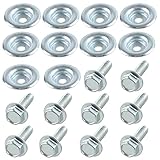
I remember staring at a pile of bolts on a job site, trying to figure out which ones were actually going to hold up. It felt like a gamble, and frankly, I’ve wasted enough money and time on hardware that couldn’t hack it. So, let’s cut to the chase: are A325 bolts high strength? The short answer is yes, they’re designed for it, but there’s more to it than just a label.
You see them everywhere, specified in blueprints for everything from decks to larger structures, and it’s easy to just grab them without thinking. But understanding what makes them tick, and when they’re the right choice (and when they’re overkill or just plain wrong), is key.
What Exactly Makes A325 Bolts ‘high Strength’?
Look, when you’re talking about construction, especially anything that needs to bear significant weight or withstand forces, you can’t just grab any old bolt. The ‘A325’ designation isn’t just some random letter-number combo; it’s a standard set by ASTM International (formerly the American Society for Testing and Materials). Think of them as the rulebook for materials, making sure things are consistent and, most importantly, safe.
So, are A325 bolts high strength? Yes. They are specifically manufactured to meet certain tensile strength requirements. For structural bolting applications, this is a must.
The ‘A’ means it’s an ASTM standard, the ‘325’ is the specific designation, and it implies a minimum tensile strength of 120 ksi (kilopounds per square inch) for standard diameters. That’s a pretty hefty load-bearing capacity. They’re typically made from medium-carbon steel, heat-treated to achieve these superior mechanical properties. It’s this heat treatment and the specific alloy composition that gives them their backbone.
Without it, a bolt could just snap under stress, which is why you’ll see these specified for important connections in bridges, buildings, and other heavy-duty projects. I once had a contractor try to substitute cheaper, generic bolts on a deck frame I was building for a client. I caught it, thankfully.
The difference in weight and heft alone was noticeable, and when I explained the potential failure modes – shear stress, tensile failure – he quickly understood why those A325s were specified. It wasn’t just about looking strong; it was about being strong under all sorts of conditions, including unexpected ones.
The common advice you’ll hear is that A325 bolts are the go-to for structural steel connections. And for the most part, that’s true. But here’s where I think people get a bit fuzzy: they assume ‘high strength’ means ‘can be used anywhere.’
That’s not the case. These bolts are engineered for specific types of connections, primarily slip-important joints and bearing-type connections in steel structures. Slip-important means the joint is designed so that the friction between the connected parts, generated by the bolt’s clamping force, prevents movement. Bearing-type connections rely on the bolt shanks bearing against the edges of the holes.
A325 bolts are great at providing that necessary clamping force to create friction. They’re solid, yes, but their strength is also about the system they’re part of.
You can’t just throw them into a situation where a different type of fastener is required and expect the same results. They’re designed with specific shear and tensile strengths in mind, and using them outside their intended application is just asking for trouble.
I’ve seen folks over-specify them for simple residential projects where standard carriage bolts or even lag screws would have been perfectly adequate and far more economical. It’s like bringing a sledgehammer to crack a nut – it’ll work, but it’s not the right tool, and you’ll likely cause unnecessary damage (or cost).
When Do You Actually Need A325 Bolts?
So, if they’re not for everything, when should you actually be reaching for A325 bolts? The primary use case, and the one that really defines their ‘high strength’ application, is in structural steel framing. Think about it: buildings, bridges, industrial platforms, large outdoor structures like pergolas or heavy-duty gazebos. These are the places where you have large steel members being joined together, and the integrity of those connections is most important. The forces involved – wind loads, snow loads, seismic activity, and just the sheer weight of the structure itself – are substantial. (See Also: Are All Honda Atv Bolt Patterns The Same )
A key differentiator for A325 bolts is their use in slip-important connections. This is a big deal in structural engineering.
In these connections, the bolt is tightened to a specific tension, creating a massive amount of clamping force between the joined steel plates. This force generates friction, and it’s this friction, not the bolt itself bearing against the hole, that resists the load. The A325’s high tensile strength is important here because you need that high clamping force to generate enough friction. If the bolt isn’t strong enough, it might stretch permanently or even fail before you achieve the necessary clamping force.
I learned this the hard way when I was building a rather ambitious workbench in my garage, using some heavy steel C-channels. I initially used standard bolts, and the whole thing had a noticeable wobble.
I upgraded to A325s, torqued them down properly, and the workbench became rock solid. It was a revelation in how much clamping force really matters for stability.
Another common application is in bearing-type connections. Here, the bolt is basically supporting the load by resting against the sides of the bolt holes. While friction still plays a role, the bolt shank is the primary load-carrying element resisting shear.
A325 bolts are strong enough in shear to handle these loads effectively. You’ll see them specified for connecting steel beams to columns, attaching steel joists to girders, and many other situations where the connection needs to be incredibly reliable and resistant to movement or failure. The ASTM standard dictates specific requirements for the material, dimensions, and performance of these bolts, including proof strength, tensile strength, and toughness.
This standardization is why engineers can confidently specify them, knowing they’ll perform as expected. You’ll often find them used in conjunction with heavy-duty washers, especially hardened washers, to distribute the load and prevent the nut or bolt head from digging into the steel surface.
Here’s a quick rundown of where you’ll most likely encounter A325 bolts being used correctly:
| Application Type | Why A325 is Suitable | My Verdict |
|---|---|---|
| Structural Steel Framing (Buildings, Bridges) | High tensile and shear strength, ideal for slip-important and bearing connections. | The gold standard for these applications. No compromises here. |
| Heavy Machinery Mounts | Resists vibration and significant operational forces. | Overkill for most home workshops, but key for industrial settings. |
| Large Outdoor Structures (Heavy Duty Pergolas, Pavilions) | Withstands wind, snow, and the structural load of the assembly. | A solid choice for serious DIYers building things that need to last. |
| General Wood Construction (Decks, Fences) | Often specified, but sometimes over-specified. | While they’ll work, cheaper, appropriately sized galvanized bolts are often sufficient and more economical for typical residential decks. |
It’s worth noting that for many common residential applications, like building a standard deck or fence, A325 bolts are often specified out of an abundance of caution or simply because the plans were drafted by an engineer used to specifying them for larger projects. While they certainly won’t hurt, you can often achieve the required strength and longevity with less expensive, galvanized structural bolts or even heavy-duty lag screws, provided they are sized correctly for the load and the wood members. The key is understanding the loads your project will experience. If you’re building a simple backyard deck, the forces are very different from those acting on a highway overpass.
Choosing the Right A325 Bolt: What to Look For
Okay, so you’ve decided you need A325 bolts. Great. But just grabbing any bolt with ‘A325’ stamped on it might still lead you down a rabbit hole of confusion. There are a few things you absolutely need to pay attention to, beyond just the basic strength designation.
First off, material and finish. While A325 bolts are typically made of medium-carbon steel, they can come in different finishes.
The most common are plain (which is basically a dark, mill scale finish and will rust like nobody’s business) or hot-dip galvanized (HDG). For any outdoor application, or anything exposed to moisture, you need hot-dip galvanized. (See Also: Are Ak Bolts Interchangeable )
Plain A325s are meant for interior structural connections where corrosion isn’t a primary concern. Using plain bolts outdoors is a recipe for rust and eventual failure.
I learned this the hard way years ago when I built a bike rack out of steel tubing. I used plain bolts because they were cheaper, and within a year, they were so rusted they looked like they were about to crumble. I had to replace them all with galvanized ones. It was a frustrating, dusty job I didn’t want to repeat.
Next, size matters – a lot. A325 bolts come in a range of diameters, from 1/2 inch up to 1 inch, and sometimes larger for special applications. The diameter directly impacts the bolt’s strength.
A 3/4-inch diameter A325 bolt is significantly stronger than a 1/2-inch one. You can’t just substitute a smaller bolt for a larger one and expect the connection to be as strong. The engineering specifications will call out a specific diameter and length for a reason. The length is determined by the thickness of the materials being joined, plus the thickness of the washers and nut, with a few threads still exposed after tightening.
Make sure you get the right length; too short and you won’t have enough thread engagement on the nut, too long and you might have excessive thread run-off or it could interfere with something else.
Then there are the nuts and washers. You can’t just pair an A325 bolt with any old nut or washer.
For A325 bolts, you generally need heavy hex nuts and hardened washers. These are specifically designed to withstand the high clamping forces generated when you torque down an A325 bolt. Standard nuts and washers might deform or fail under that pressure.
Hardened washers, in particular, are important for slip-important connections. They provide a smooth, hard surface that helps achieve the necessary clamping force and prevents the nut or bolt head from galling (which is basically metal-on-metal tearing) the surface of the steel plates. The ASTM standards will often specify the type of nuts and washers required for A325 connections.
Don’t skimp here; using the wrong hardware is like putting cheap tires on a race car – it defeats the whole purpose of the high-performance components.
Finally, marking. Most genuine A325 bolts will have a marking on the head to identify them. Typically, it’s an ‘A325’ or sometimes just ‘325’. For galvanized bolts, the markings might be different, or you might have to rely on the packaging and supplier’s documentation. If a bolt doesn’t have any visible marking, or the marking is suspect, it’s best to assume it’s not a true A325 and investigate further or avoid using it for important applications. I’ve been burned by buying from sketchy online suppliers who claimed their bolts were A325 but clearly weren’t. Always buy from reputable sources.
Key Things to Check on A325 Bolts
- Markings: Look for ‘A325’ or ‘325’ on the bolt head.
- Finish: For outdoor use, make sure it’s hot-dip galvanized (HDG).
- Diameter & Length: Match the specifications precisely.
- Associated Hardware: Use heavy hex nuts and hardened washers.
- Supplier Reputation: Buy from trusted sources to make sure authenticity.
Common Mistakes and Why People Get It Wrong
It’s easy to think that because A325 bolts are strong, they’re foolproof. But I’ve seen enough botched jobs and heard enough contractor horror stories to know that’s far from the truth. People mess up with these bolts in a few predictable ways, and it usually comes down to a lack of understanding or a desire to cut corners.
The most common mistake I see is using them in the wrong application. As I mentioned, A325 bolts are designed for specific structural steel connections. They are often over-specified for wood construction, especially for residential decks or fences. While they will hold, they’re usually far more expensive than necessary. (See Also: Are All Bolt Patterns The Same )
Standard hot-dip galvanized structural bolts (like A449, which has similar dimensions but can be used in more general applications, or even specific deck screws designed for structural loads) are often perfectly adequate and much more cost-effective. The key is to match the fastener to the load and the material.
Using A325s on a simple 2×6 deck joist connection isn’t wrong in terms of strength, but it’s like using a race car engine to power your lawnmower – overkill and inefficient. I once had a neighbor who insisted on using A325s for his entire deck build because he heard they were ‘the strongest.’ He spent a fortune on them, and honestly, the deck looked exactly the same as mine, which used lag screws and carriage bolts.
The money he saved on a proper engineering analysis could have gone into better decking material.
Another big one is improper installation, specifically over-tightening or under-tightening. For slip-important connections, the bolt needs to be tensioned to a specific level.
This is often achieved using a calibrated torque wrench, or by using “turn-of-nut” methods where the nut is turned a specific fraction of a turn after snug. If you under-tighten, you won’t achieve the necessary clamping force for friction, and the connection might slip under load.
If you over-tighten, you can strip the threads, damage the bolt, or even permanently deform it, which compromises its strength. I’ve seen guys just crank on them with an impact wrench until they stop moving, which is a terrible idea. You need to know the proper torque specifications for the bolt diameter and grade, or use the specified installation method. This isn’t like tightening a lug nut on your car; it requires precision.
Then there’s the issue of corrosion protection. As I’ve said, plain A325 bolts will rust. Period. If they’re used outdoors or in a damp environment, they’re going to deteriorate. Specify hot-dip galvanized (HDG) for any application exposed to the elements. For situations where extreme corrosion resistance is needed, like marine environments or chemical plants, you might even need stainless steel, although stainless A325s are less common and significantly more expensive. Using the wrong finish is a guarantee of future headaches and potential structural failure. I’ve seen perfectly good steel structures fail prematurely because the bolts holding them together were eaten away by rust, and it all started with using the wrong finish.
Lastly, mixing and matching hardware. You can’t just put an A325 bolt with a standard hex nut and a flat washer and expect it to perform as designed. You need compatible, heavy-duty nuts and hardened washers. These are designed to withstand the high clamping forces without deforming. Using standard hardware can lead to the nut or bolt head sinking into the connected material, reducing the effective clamping force, or the nut itself failing. It’s a system, and all parts need to be correctly specified and installed. Thinking you can save a few bucks by using a standard washer instead of a hardened one is a false economy that can compromise the entire joint.
Common A325 Bolt Mistakes
- Using them in wood construction when less expensive, equally suitable fasteners exist.
- Improper tightening (under or over-tightening), especially for slip-important joints.
- Using plain-finish bolts in outdoor or corrosive environments.
- Pairing A325 bolts with standard nuts and washers instead of heavy-duty ones.
- Not verifying the bolt’s markings and supplier reputation for authenticity.
Final Verdict
So, to wrap it all up, are A325 bolts high strength? Unequivocally, yes. They are engineered and manufactured to meet rigorous standards for tensile and shear strength, making them indispensable for important structural steel connections. However, their strength is only realized when they are correctly specified for the application, properly installed with the right accompanying hardware, and protected from environmental degradation.
Don’t just grab them because they have a fancy designation. Understand why they’re specified for a particular job. If you’re building something substantial, consult the plans, and if you’re unsure, ask a qualified engineer or a seasoned professional. For most residential wood construction, there are often more economical and equally effective fastener options available that will get the job done safely.
Ultimately, the ‘high strength’ of an A325 bolt is a promise, but it’s up to you to make sure that promise is kept through correct selection and installation. Think about the loads, the environment, and the long-term durability before you decide if an A325 bolt is truly what your project needs.