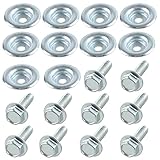
I remember staring at a pile of shiny, but suspiciously cheap, bolts at a trade show a few years back. The salesman was practically vibrating with excitement about how strong they were. I was building a pretty substantial workbench frame, the kind that needs to hold more than just hand tools. Fast forward a few months, and I’m wrestling with a joint that’s just… not quite right. A little bit of flex, a slight creak under load. It made me question everything, especially whether those bargain bolts were truly up to the task. This brings me to a question many people grapple with: are A354 bolts ok for steel connections?
The short answer, like most things worth knowing, is a bit more nuanced than a simple yes or no. It depends on what you’re building, what standards you need to meet, and frankly, your own peace of mind. Forget the marketing fluff; let’s talk real-world application and what you absolutely need to know before you trust your steel structures to any fastener.
Why I Stopped Trusting Generic Bolts for Serious Work
Look, I’m not some fancy engineer with a calculator the size of a small car. I’m a guy who’s spent years messing around with metal, building things that need to hold up.
I’ve learned the hard way that skimping on fasteners is like building a house on sand. A few years ago, I was putting together a pretty hefty canopy for my outdoor workshop.
I needed bolts that could handle wind shear and the weight of roofing materials, plus whatever else life decided to throw at it. I found a deal on some bolts labeled ‘high strength’ that looked the part, and frankly, they were a lot cheaper than the name-brand ones.
I figured, hey, they’re probably made to the same specs, right? Wrong.
The installation went fine, seemed solid. But about six months in, we had a proper storm roll through. Nothing catastrophic, but enough to put the structure to the test.
I went out to check, and one of the main support beams had visibly sagged. The bolts hadn’t snapped, but the connection had pulled tight, and the steel itself had deformed slightly around the holes. It felt wrong.
I ended up having to replace all the main load-bearing bolts with properly spec’d ones from a reputable supplier. It cost me time, money, and a whole lot of frustration.
That’s when I decided I’d never again skimp on fasteners if the connection mattered. I learned that ‘high strength’ is a marketing term, not a guarantee.
This experience taught me a vital lesson about are a354 bolts ok for steel connections. It’s not just about the tensile strength printed on a box; it’s about material quality, manufacturing consistency, and meeting specific engineering standards that have been proven over decades.
Generic bolts might look strong, but they often lack the certified traceability and the precise material composition that makes sure reliable performance under stress. When you’re dealing with steel connections that need to stand up to anything from heavy loads to environmental factors, you need fasteners that are explicitly designed and tested for that purpose. (See Also: Are All Honda Atv Bolt Patterns The Same )
I’ve seen too many DIY projects that looked good on paper but failed in the real world because the builder went for the ‘good enough’ bolt instead of the ‘right’ bolt. It’s a gamble I’m no longer willing to take, and I advise you not to either.
What’s Actually Under the Hood? Understanding Bolt Specs
So, what makes one bolt different from another, especially when you’re talking about steel connections? It’s a whole lot more than just threads and a hex head.
You’ve got material composition, heat treatment, thread rolling versus cutting, and coatings, all playing a role. For steel connections, especially structural ones, we’re usually talking about specific ASTM standards.
Think of ASTM (American Society for Testing and Materials) as the folks who set the rules for how materials should perform. For structural bolting, you’ll frequently encounter standards like A325 and A490. These are the heavy hitters, designed for high-strength structural joints in bridges, buildings, and other important infrastructure. They specify exact chemical compositions for the steel, heat treatment processes to achieve specific hardness and toughness, and rigorous testing protocols.
Now, where do bolts like A354 fit into this picture? This is where it gets a little murky for the average DIYer or even many small shop fabricators. A354 is a specification for alloy steel bolts and studs. It’s not a direct structural connection standard in the same vein as A325 or A490.
A354 covers a range of mechanical properties, including tensile strength, yield strength, elongation, and hardness. It’s often used for applications where higher strength than standard carbon steel bolts (like A307) is needed, but the full rigor of A325/A490 might be overkill or not specifically called for.
Think of it as a step up from your common hardware store bolts, but not quite in the same league as dedicated structural bolts.
The key difference, and where my skepticism about are a354 bolts ok for steel connections really kicks in for serious applications, is traceability and testing. A325 and A490 bolts come with certifications that trace their manufacturing batch, making sure they meet stringent physical and chemical properties. They are designed for shear and tensile loads in structural joints and are tested accordingly.
A354, while specifying properties, doesn’t inherently carry the same level of certified traceability for structural applications. It can be used for connections, but without specific engineering approval or understanding of its precise grade and application, you’re flying blind. I’ve seen A354 bolts used in things like heavy machinery frames or exhaust systems where high heat and vibration are factors, but for primary load-bearing steel structures, I’d want a bolt explicitly designed for that environment, with all the proper documentation.
The Real-World ‘yes, but…’ For A354 Bolts
Let’s get down to brass tacks: can you use A354 bolts for steel connections? The answer is yes, but you need to understand the context. If you’re building a garden trellis, a simple workbench for light tools, or a decorative metal frame that isn’t carrying significant structural load, A354 bolts are likely more than sufficient. They’re generally stronger than your average hardware store bolt and offer better performance under stress. They are also often more readily available and less expensive than the A325/A490 structural bolts, which can be a big draw for hobbyists and small-scale fabricators.
Here’s where the ‘but’ comes in, and it’s a big one. For anything that carries significant loads, is subject to dynamic forces (like vibration or impact), or is part of a structure where failure could have serious consequences—think load-bearing beams, structural supports for decks, canopies that experience wind, or anything in a commercial or public building—you absolutely need to consult with a structural engineer or follow specific building codes that call for certified structural bolts. The A354 specification allows for various grades (e.g., Grade 1, Grade 2, Grade 5, Grade 8). While these grades refer to mechanical properties, they don’t automatically qualify the bolt for structural steel connection use without further verification. The important difference often lies in the bolt’s performance in shear, its fatigue life, and the assurance of consistent material properties and dimensions that certified structural bolts provide. (See Also: Are Ak Bolts Interchangeable )
I once needed to replace a few bolts on an old, custom-made trailer frame. The original bolts were corroded beyond recognition. I picked up some A354 bolts because they seemed like a good upgrade from what I suspected were standard carriage bolts.
They fit well, and the trailer felt sturdier. However, I was towing a heavy load on a rough road, and I heard a distinct ‘ping’ sound.
I immediately pulled over. One of the A354 bolts had sheared. It wasn’t a catastrophic failure, but it was a clear warning.
I immediately replaced all the important fasteners with genuine A325 bolts. This experience reinforced for me that while A354 bolts are good quality fasteners for many general engineering purposes, they aren’t a direct substitute for purpose-built structural bolts when lives or property are on the line. The common advice to simply use the strongest bolt available is often wrong; you need to use the correct bolt for the job.
Common Mistakes People Make with Steel Connections
The biggest mistake I see people make, and one I’ve admittedly made myself before I knew better, is assuming all “strong” bolts are created equal. You walk into a hardware store, and you see bolts labeled grade 8, grade 5, or just with a fancy color head. They look tough, right?
So you grab them for your steel project. What you’re often missing is the specific application they were designed for. A grade 8 bolt is strong in tension, but is it designed for the shear forces and clamping loads experienced in a structural steel connection?
Not necessarily. The A354 specification, as we’ve touched on, is a bit of a grey area for structural work precisely because it’s a material specification, not always a direct application specification for structural joints.
Another common pitfall is neglecting the supporting hardware. Even the strongest bolt is only as good as its washer and nut. Using the wrong type of washer—like a standard flat washer on a load-bearing connection where a hardened structural washer is required—can lead to deformation of the washer or the connected material, effectively reducing the bolt’s performance. Similarly, improper torque is a huge issue. Overtightening can strip threads or even yield the bolt prematurely. Undertightening means the joint isn’t properly clamped, leading to movement, wear, and potential failure. For structural connections, specific tightening procedures (like turn-of-nut or using calibrated torque wrenches) are often mandated. Just ‘snugging it up’ isn’t good enough.
Finally, there’s the issue of corrosion. Steel connections, especially outdoors or in humid environments, are susceptible to rust. While A354 bolts can be coated, they aren’t always specified with the same level of corrosion resistance as some structural bolts might be, or they might require specific galvanic considerations when joined with different metals. I once saw a beautiful steel gate frame start to fail at the joints because the bolts, though strong initially, corroded so badly that the connection was compromised. Replacing them with galvanized or stainless steel alternatives designed for outdoor structural use made all the difference. It’s not just about the bolt’s strength on day one; it’s about how it performs over the life of the structure.
When Are A354 Bolts a Reasonable Choice?
Let’s consider the scenarios where asking ‘are a354 bolts ok for steel connections’ yields a more confident ‘yes’. These bolts are generally a significant upgrade over standard, un-marked carbon steel bolts (like ASTM F568, which is a common international standard for metric bolts but often not as solid as US structural grades). If your project involves general fabrication, mechanical assemblies, or non-important structural elements, A354 can be a perfectly suitable choice. For instance, if you’re building industrial shelving units that need to hold a good amount of weight but aren’t holding up a roof, A354 bolts will likely do a fine job. They offer a good balance of strength and cost-effectiveness for many common engineering tasks.
Consider using A354 bolts in applications like: (See Also: Are All Bolt Patterns The Same )
| Application Type | Consideration | Verdict |
|---|---|---|
| Machinery Frames | Handles vibration and moderate loads. | Good Fit |
| Heavy Duty Shelving (Non-structural) | Supports significant static weight. | Good Fit |
| Custom Tooling & Fixtures | Requires solid fastening for repeated use. | Good Fit |
| Trailer Hitches (Non-important points) | Provides strength for moderate stress areas. | Use with Caution & Engineering Input |
| General Steel Fabrication (Non-load-bearing) | Adds strength beyond standard bolts. | Good Fit |
| Structural Steel Connections (Bridges, Buildings) | Requires certified structural bolts (A325/A490). | NOT Recommended |
The key is understanding the load requirements and the potential consequences of failure. If the connection is important for safety or structural integrity, then A354 bolts, even though they are alloy steel, might not be the specified or appropriate choice. The ASTM A354 specification itself details requirements for quenched and tempered alloy steel bolts and studs. These are manufactured to achieve specific tensile strength properties, often comparable to or exceeding Grade 8 carbon steel bolts.
However, for structural connections, you’re not just looking at tensile strength; you need to consider shear strength, toughness, fatigue resistance, and the assurance that comes with a bolt specifically designed and certified for that purpose. The lack of specific structural connection testing and certification for A354 is its primary limitation in this context. Always refer to engineering drawings or local building codes for definitive requirements.
Practical Tips for Your Steel Connections
When you’re assembling steel connections, no matter what type of bolt you’re using, a few practical tips can make a world of difference. First, always use hardened washers. For structural connections, use specific structural washers that are designed to distribute the load evenly across the connected material and prevent the bolt head or nut from digging in. I learned this the hard way when a regular washer deformed under load, causing the joint to loosen over time. Hardened washers cost a little more but prevent bigger headaches down the line.
Second, get your torque right. If your application calls for specific torque values, use a calibrated torque wrench. Don’t guess. For structural bolts, there are often specific tightening procedures beyond just torque, like the “turn-of-nut” method, where the nut is tightened a specified fraction of a turn after the bolt is snug. This makes sure the joint is properly pre-tensioned, which is vital for its integrity. For less important applications, just aim for a firm, secure feel without excessively straining the bolt or the material. If you’re not sure, err on the side of slightly less torque and then check for stability, rather than overtightening and risking damage.
Third, consider the environment. If your steel connection will be exposed to moisture, salt, or other corrosive elements, use appropriately coated or stainless steel bolts and hardware. Galvanized bolts are common, but for severe environments, stainless steel might be a better investment, albeit more expensive. If you’re using A354 bolts and they aren’t specifically rated or coated for the environment, consider applying a suitable protective coating after assembly. Proper preparation, assembly, and protection are key to making sure your steel connections last and perform as intended, regardless of the specific bolt specification.
People Also Ask: Common Questions Answered
Are A354 Bolts Stronger Than Grade 8 Bolts?
ASTM A354 covers alloy steel bolts and studs, often heat-treated to achieve properties comparable to or exceeding Grade 8 carbon steel bolts. Grade 8 bolts are a common benchmark for high strength in carbon steel fasteners. However, A354 can encompass a range of alloy compositions and heat treatments, potentially offering superior toughness or performance in specific conditions compared to a standard Grade 8. For important structural applications, neither is a direct substitute for certified structural bolts like A325 or A490.
Can I Use A354 Bolts Instead of A325 Bolts?
Generally, no, you should not use A354 bolts as a direct substitute for A325 bolts in structural steel connections without explicit approval from a structural engineer. While A354 bolts offer good strength, A325 bolts are specifically designed, manufactured, and tested for structural applications, meeting stringent requirements for shear strength, toughness, and clamping force that A354 is not inherently certified for in this context. Using the wrong bolt can compromise the integrity of the entire structure.
What Is the Difference Between A354 and A490 Bolts?
The primary difference lies in their intended application and specifications. A354 specifies alloy steel bolts and studs for general high-strength applications. A490, on the other hand, is a specification for high-strength structural bolts designed for use in important steel connections, such as those found in bridges and buildings. A490 bolts are typically made from alloy steel and undergo rigorous testing to make sure they meet specific mechanical and performance requirements for structural joint integrity, often having higher strength and toughness than A354 bolts.
Is A354 a Structural Bolt?
ASTM A354 is a specification for alloy steel bolts and studs, focusing on their material properties like tensile strength and hardness. While these bolts are strong and suitable for many engineering applications, they are not inherently classified as structural bolts in the same way as ASTM A325 or A490 bolts. Structural bolts have specific requirements and testing protocols custom for load-bearing connections in buildings and bridges, which A354 does not directly address in its standard specification for these important applications.
Final Verdict
So, to circle back to the burning question: are A354 bolts ok for steel connections? My honest take is that for most serious structural applications where safety and long-term integrity are most important, you should be looking at bolts specifically designated as structural bolts, like A325 or A490. A354 bolts are good, strong fasteners, and they have their place in many solid mechanical assemblies and non-important fabrications. But when steel is meant to bear significant loads, resist wind, or hold up structures that people rely on, the subtle but important differences in testing, traceability, and design for structural performance matter immensely.
Don’t let a lower price tag or the label ‘high strength’ lead you down a path of potential failure. It’s always better to over-spec slightly for important joints than to gamble. If you’re ever in doubt, or if your project involves any significant load-bearing, get an engineer to sign off on the fastener specifications. The peace of mind you gain from knowing your connections are sound is worth far more than the few extra bucks for the right bolt.
Consider this: if the structural integrity of your project could lead to damage, injury, or worse, always err on the side of caution and go with certified structural fasteners. For everything else, A354 can be a perfectly respectable workhorse. Just be sure you know which ‘everything else’ you’re dealing with before you commit to using A354 bolts for steel connections.