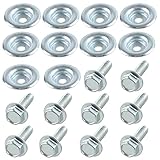
I remember the first time I saw those shiny, impossibly strong-looking bolts. The packaging bragged about holding together anything, forever. I was building a ridiculously over-engineered bookshelf, and my inner perfectionist screamed, ‘You NEED these!’ I bought a pack. They cost more than the wood. And you know what? They held the shelves just fine. But so would regular, well-drilled screws. It made me wonder: are adamate bolts worth it, or is it just fancy marketing?
I’ve spent years tinkering, building, and breaking things (sometimes intentionally) to figure out what actually makes a difference in durability and performance. Adamate bolts fall into a category where the hype often outpaces the reality for most folks.
What Exactly Are These “adamate” Bolts?
Let’s cut to the chase. When people talk about “adamate bolts,” they’re usually referring to hardware made from very high-strength, hardened steel alloys, often with specific coatings designed to resist corrosion and extreme wear. Think of materials that are engineered for aerospace, high-performance automotive, or heavy industrial applications. These aren’t your typical hardware store screws.
They’re built to withstand shear forces, tensile stress, and environmental degradation far beyond what a standard bolt can handle. The name itself, “adamate,” evokes the mythical adamantine, suggesting an unbreakably hard substance.
And in many ways, they live up to that reputation in terms of pure material science. They’re often forged or machined with incredible precision, making sure consistent strength and thread engagement.
The metallurgy behind them is serious stuff, involving controlled heat treatments and alloying elements that dramatically increase their yield strength and ultimate tensile strength. For specific, demanding applications where failure is not an option and the stresses involved are astronomical, these materials are indeed necessary. I’ve seen them used in structural components for bridges that need to withstand seismic activity or in important parts of industrial machinery that operate under constant, heavy load. The engineering behind them is impressive, and the performance they offer in those niche, high-stakes scenarios is undeniable.
If your project involves significant safety concerns or forces that could buckle lesser materials, then understanding the technical specifications of these advanced alloys becomes most important. For instance, some are designed for extreme temperature ranges, maintaining their integrity from cryogenic lows to red-hot highs, something your average galvanized bolt would surrender to almost immediately.
When ‘overkill’ Isn’t Actually Overkill
There are situations where you really do need that super-alloy strength. I learned this the hard way.
A few years back, I was building a custom workbench for my garage. I wanted something bombproof, something that could take a beating from dropped tools or heavy machinery. I used some heavy-duty lag bolts, the kind you’d use for deck framing. They seemed fine at first, but after about six months of really putting the bench through its paces – hammering, clamping immense pressure, even leaning my full weight on the edges – I noticed a slight bowing in the main support beams.
One of the lag bolts had started to deform slightly under the constant, focused stress. It wasn’t a catastrophic failure, but it was a clear sign that my ‘good enough’ hardware wasn’t good enough for the forces I was applying. That’s when I started looking at higher-grade materials, not necessarily ‘adamate’ branded, but certainly stronger alloys.
The difference in price was significant, but the peace of mind knowing that the core structure wouldn’t flex or fail under extreme load was, in that specific case, worth the extra cash. This is the territory where ‘overkill’ becomes necessary engineering. Think about anything that carries human weight under dynamic load – a climbing harness anchor point, a suspension system for a vehicle, or important structural elements in a performance boat.
In these applications, using hardware that can handle far more than the expected load isn’t just good practice; it’s a safety imperative. The cost of failure in these areas is astronomically high, so the investment in superior materials is minimal in comparison. The common advice for DIY projects is often to buy quality, but for these ultra-demanding applications, it’s about buying engineered safety.
| Application Type | Standard Bolts (Galvanized/Stainless Steel) | High-Strength Alloy Bolts (e.g., Adamate-style) | Verdict |
|---|---|---|---|
| General Furniture Building (bookshelves, tables) | ✅ Sufficient, cost-effective | ❌ Overkill, unnecessary expense | Standard is fine |
| Heavy-Duty Workbench/Shop Fixtures (constant abuse) | ⚠️ May eventually deform/fail | ✅ Excellent, built to last | High-strength recommended |
| Automotive Suspension/Engine components | ❌ Unacceptable risk of failure | ✅ Required for safety and performance | Mandatory |
| Marine (structural, high-stress rigging) | ⚠️ Prone to corrosion and fatigue | ✅ Superior corrosion and fatigue resistance | Strongly recommended for important points |
| Aerospace/Industrial Machinery (extreme conditions) | ❌ Will fail catastrophically | ✅ Engineered for specific extreme loads | Absolutely key |
The Common Pitfalls: When Not to Buy Them
Here’s the blunt truth: for 95% of what you’ll do around the house or in your average workshop, adamate bolts are a colossal waste of money. I’ve seen too many people get sucked into the marketing jargon, thinking that buying the ‘strongest’ bolt will somehow magically make their project better. (See Also: Are All Honda Atv Bolt Patterns The Same )
It’s like buying a Ferrari engine to power a go-kart. You don’t need that level of engineering or that price tag for everyday tasks. Take building a simple garden shed, for example.
You’re dealing with wood, weather, and gravity – but not, you know, atomic-level stresses. Regular galvanized or even stainless steel bolts will handle the load perfectly well for decades.
Spending an extra $50-$100 on ‘adamate’ bolts for a shed is just throwing money away. The common advice you’ll hear is to ‘always use the best.’ I disagree. Use the appropriate best.
There’s a difference between quality and overkill. Buying the most expensive, highest-tensile strength bolt when a $0.50 galvanized one will do the job just as well, if not identically in terms of final outcome, is just silly. It doesn’t make your shed stronger; it just makes your wallet lighter. I once helped a friend assemble a patio set that came with these ridiculously over-engineered bolts.
They looked impressive, but they were a pain to work with, prone to stripping if you weren’t extremely careful, and cost a fortune. Regular hex bolts would have been faster, cheaper, and the final product was indistinguishable in terms of stability and longevity.
My mistake was in the garage workbench scenario I mentioned earlier; I bought what I thought was overkill, but it turned out to be just shy of what was needed. Conversely, people buying ‘adamate’ for a birdhouse or a simple shelf are definitely in the overkill camp. The key is to understand the forces involved in your specific project, not to blindly chase the highest spec available.
What If the Packaging Says ‘industrial Grade’?
Often, ‘industrial grade’ is a marketing term for hardware that’s a step up from basic consumer-level fasteners but not necessarily the ultra-high-performance alloys implied by names like ‘adamate’. This usually means better quality control, slightly higher tensile strength than typical DIY store bolts, and possibly a more durable coating. It’s a good middle ground for projects that need a bit more than average, but it’s important to check the actual specifications (like grade or tensile strength ratings) rather than just relying on the label. It’s like buying a ‘performance’ tire for your commuter car; it’s better than the cheapest option, but you don’t need race tires.
Real-World Use Cases: Where They Shine (and Where They Don’t)
The truth is, for the average DIYer or even most professional tradespeople, the opportunities to genuinely need adamate bolts are few and far between. I’ve worked on building sites where we used high-strength alloys for important structural connections, like the main load-bearing beams in a large commercial building or for securing heavy machinery. In those contexts, the engineering calculations demand materials that can withstand immense, predictable forces. Failure isn’t an option because it could lead to catastrophic structural collapse or serious injury.
I remember one project involving a custom-built crane arm for a factory. The stresses on that arm were immense, and standard bolts would have fatigued and failed in short order. We used specialized bolts made from an alloy that could handle the constant torque and shear.
The cost was substantial, but it was a a must requirement for safety and functionality. On the flip side, I’ve also seen people use these ‘super bolts’ for things like attaching a toilet paper holder or assembling a simple picture frame. It’s a classic case of using a sledgehammer to crack a nut.
You’re not gaining any practical benefit; you’re just spending a lot more money for something that offers performance far beyond the application’s requirements. The complexity of the material science involved—specific heat treatments, precise alloying percentages to achieve particular Rockwell hardness ratings—is often lost on the average consumer who sees ‘strongest’ and assumes ‘best for everything.’
Unless your project involves extreme environmental conditions (like deep-sea or high-temperature industrial processes), significant vibrational stress, or forces that are mathematically proven to exceed the capacity of even high-quality stainless steel, you’re likely just overspending. For most home projects, a good quality Grade 8 or high-grade stainless steel fastener is more than sufficient. (See Also: Are Ak Bolts Interchangeable )
How Do They Compare to Standard Bolts?
Think of standard bolts, like those commonly found in your local hardware store (often galvanized or plain steel), as your reliable sedan. They get you from A to B, handle everyday traffic, and are affordable. High-strength alloy bolts, the ‘adamate’ types, are more like a Formula 1 race car. They are engineered for extreme performance, incredible speed, and handling massive G-forces.
They have vastly superior tensile strength, shear strength, and fatigue resistance. However, they are also much more expensive, require specialized knowledge to maintain and use correctly, and are completely impractical for daily commuting. For a typical DIY project, the sedan is the right choice.
For a important component in a race car or an aircraft, the F1 car’s engineering is key.
Buying Smart: What to Look for (and Avoid)
If you’ve assessed your project and genuinely determined you need something beyond standard hardware store fare, how do you actually choose? First, forget the fancy branding like ‘adamate’ unless it’s a specific aerospace or industrial supplier. Look for specifications.
You want to see grades like Grade 8 (for general high-strength steel) or specific alloy designations. For stainless steel, look for higher grades like 18-8 (often labeled 304) or even better, 316, which offers superior corrosion resistance, especially in marine or chemical environments.
The packaging should clearly state the material, the grade, and ideally, the tensile strength. If it just says ‘super strong’ or ‘ultimate power,’ walk away. That’s marketing fluff. Price is also a huge indicator.
If a single bolt costs more than a handful of good quality standard ones, and you can’t find a spec sheet to justify it, it’s probably not worth your money for a typical project. I learned this when I was looking for some specific fasteners for a trailer hitch reinforcement. I found some generic ‘heavy duty’ bolts that were pricier than usual, but when I dug into the specs, they were barely better than Grade 5.
Then I found actual Grade 8 bolts from a reputable fastener supplier for not much more per piece, and they had published load ratings. Always look for published load ratings or strength specifications. Avoid bolts that are excessively shiny or have unusual, brightly colored coatings unless those coatings are specifically explained as corrosion-resistant (like certain types of ceramic or advanced polymer coatings for specific chemical environments).
Sometimes, the very best materials look plain. My biggest mistake here was buying based on appearance and a vague promise of strength. I should have focused on the numbers and reputable brands.
For actual high-performance alloys, you’re often looking at suppliers that cater to industrial, automotive, or aerospace markets, not the general consumer hardware aisle. These specialized suppliers will have detailed datasheets and certifications.
Practical Tips for Using High-Strength Bolts
So, you’ve decided you actually need these tougher bolts. Great. Now what? First, use the right tools.
High-strength bolts are often harder, meaning they can be more brittle if mishandled. Use a good quality socket wrench or wrench that fits snugly. Avoid adjustable wrenches if possible, as they can round off the bolt heads. (See Also: Are All Bolt Patterns The Same )
Torque is your friend. These bolts are designed to be tightened to specific torque values to achieve their maximum holding power without being overstressed.
You absolutely need a torque wrench for important applications. Don’t just ‘muscle it down.’
Over-tightening can strip the threads (especially in softer materials like aluminum or wood) or even fracture the bolt itself. Conversely, under-tightening means you’re not getting the full benefit of its strength. Always use the correct grade of nut and washer if your application requires them.
A high-strength bolt needs a high-strength nut to match. Using a cheap, soft nut can lead to failure at the nut itself, negating the benefit of the strong bolt.
I learned this the hard way when a nut I’d reused from an old project failed on a reinforced bracket I’d installed. It wasn’t the bolt’s fault; it was the weak link in the chain. Lastly, consider the material you’re fastening into. You can put the strongest bolt in the universe into crumbly drywall, and it won’t hold.
Make sure the material surrounding the bolt can also handle the load. For wood applications, pre-drilling pilot holes is even more important with harder bolts to prevent splitting. For metal-to-metal connections, use hardened washers to distribute the load and prevent galling (where the bolt and the mating surface wear each other down).
If you’re working with metric sizes, remember that different grades have different markings on the head, typically dots or numbers, indicating their strength class. Knowing these markings can help you identify what you’re actually using.
What Are the Alternatives to Adamate Bolts?
For most applications where you might consider adamate bolts but don’t strictly require them, standard high-quality fasteners like Grade 8 steel bolts, 18-8 or 316 stainless steel bolts, or even specialized aircraft-grade hardware (which is still often less extreme than what ‘adamate’ implies) are excellent alternatives. These offer significantly improved strength, corrosion resistance, and durability over basic hardware store options without the exorbitant cost and specialized requirements of true aerospace or ultra-high-performance alloys. The key is to match the fastener’s strength and material properties to the specific demands of your project, rather than defaulting to the ‘strongest’ available option.
Final Thoughts
So, are adamate bolts worth it? For the vast majority of us, the answer is a resounding no. They’re a specialized product for specialized, high-stakes applications where failure means disaster. Buying them for your average DIY project is like using a fire-breathing dragon to toast your bread – technically it works, but it’s wildly impractical and unnecessarily expensive.
Focus on understanding the actual stresses your project will face. For most homes and workshops, high-quality stainless steel or Grade 8 bolts are more than enough. Don’t get caught up in marketing hype. Stick to reputable fastener suppliers, check the grades and specifications, and use the right tool for the job.
If you’re in doubt, err on the side of a good quality, standard fastener. It’s far more likely to be the right choice for your project than an over-engineered, overpriced bolt that will likely never reach its full potential anyway. The real ‘worth’ comes from using the appropriate material, not just the strongest sounding one.