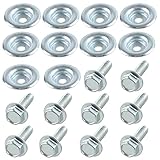
I remember staring at a pile of shiny chrome bits for my old pickup, convinced these ‘performance upgrades’ were the key to opening its true potential. Years later, that pile is mostly rust in a forgotten corner of the garage. The truth about aftermarket parts and how they interact with your vehicle’s ‘stock’ status is a lot murkier than the glossy magazine ads suggest.
So, let’s cut through the BS. Are aftermarket bolt on parts considered stock? The short answer is almost universally no. But the ‘why’ and the implications are where things get interesting, and frankly, where a lot of people get burned.
What ‘stock’ Actually Means for Your Ride
When we talk about ‘stock’ parts, we’re really talking about anything that came with your vehicle when it rolled off the assembly line, or direct replacements that are identical in form, fit, and function to those original parts. Think of it as the factory blueprint. These are the parts the engineers designed, tested, and approved for that specific make and model. They’ve gone through rigorous testing for reliability, emissions, safety, and compatibility with the vehicle’s other systems.
For many car owners, especially those who aren’t deep into modification or performance tuning, ‘stock’ is synonymous with ‘reliable’ and ‘factory-approved.’ It’s the baseline. If you pull a part off a brand-new car of the same year and model and bolt it onto yours, that’s stock. If you buy a replacement part from the dealership that has the exact OEM (Original Equipment Manufacturer) part number, that’s stock. It’s about adherence to the original design specifications and manufacturing processes.
The concept of ‘stock’ becomes incredibly important in a few key areas. First, warranties. If your car is still under warranty, slapping on a non-stock part can, and often will, void the warranty on related components. For example, if you put an aftermarket exhaust system on your car and then have an issue with your catalytic converter, the dealership can (and probably will) blame the aftermarket exhaust and refuse to cover the repair. It’s a common way for manufacturers to protect themselves and push you towards their own, usually more expensive, parts.
Second, resale value. While some modifications can increase a car’s appeal to a niche market, for the general buyer, a car with all original, stock parts is often seen as less risky and more predictable. A heavily modified vehicle can be a red flag, suggesting it’s been pushed hard or that the owner might have made questionable choices in their upgrades. This is especially true for common daily drivers. For collector cars or dedicated performance machines, the market is different, but for your average sedan or SUV, stock is generally king when it’s time to sell.
Finally, legality and emissions. Most jurisdictions have regulations about vehicle emissions and modifications. Stock parts are, by definition, designed to meet these standards. When you deviate from stock, you risk failing emissions tests or running afoul of noise ordinances. For instance, a loud, aftermarket muffler might sound cool to you, but it could land you a ticket or prevent you from registering your car in certain areas. The factory setup is the known quantity, the benchmark against which all other configurations are measured.
So, the core idea of ‘stock’ is adherence to the original design and manufacturing standards. Anything that alters those specifications, even slightly, moves you out of the ‘stock’ category. And while that can be exciting for enthusiasts, it comes with tangible consequences for the average owner.
The Great Divide: Bolt-Ons vs. Original Equipment
Now, let’s get down to the nitty-gritty. When someone talks about ‘bolt-on parts,’ they’re generally referring to aftermarket components designed to replace or supplement existing factory parts without requiring significant fabrication or modification to the vehicle’s chassis or core systems. Things like aftermarket air intake systems, performance exhaust headers, upgraded brake rotors, or a different set of wheels often fall into this category. You can usually remove the old part and bolt on the new one with standard tools, hence the name.
The important distinction here is ‘aftermarket.’ These parts are made by companies other than the original vehicle manufacturer. While some aftermarket manufacturers are reputable and produce high-quality components, they are not bound by the same design philosophy, testing protocols, or material specifications as the OEM. This is why, unequivocally, aftermarket bolt-on parts are not considered stock. They are, by definition, a departure from the original equipment.
Consider an aftermarket air filter. It might be designed to flow more air than the stock paper filter. It bolts right in place, a seemingly simple upgrade.
However, it’s made of different materials, potentially with a different filtration efficiency, and it’s not the part the car’s engine computer was calibrated for. Even such a small change can have ripple effects. I once swapped out a stock air filter for a high-flow aftermarket one on an older Civic.
For about two weeks, it felt zippier. Then, my fuel economy tanked, and I started getting a weird hesitation at higher RPMs.
Turns out, the slightly different airflow measurement was throwing off the fuel mixture enough to cause issues. The dealer would have immediately pointed to that filter as the culprit if I’d had a warranty issue, even though it was just a filter.
This is a common area of confusion. People see ‘bolt-on’ and think it’s just a minor tweak, interchangeable with stock. But the moment a part is manufactured by a third party, with different materials, different tolerances, or a different design purpose (like increased performance), it ceases to be stock. Even if it looks identical, if it doesn’t have the OEM part number or wasn’t produced under license by the original manufacturer, it’s aftermarket.
The implications for warranties are significant, as I’ve already touched on. But it also affects insurance. If you have complete insurance and your modified car is stolen or damaged, your payout might be based on the ‘stock’ value of the vehicle, not its value with all the expensive aftermarket parts. You’d have to specifically declare these modifications and often pay a higher premium to have them covered. Failing to do so means you’re basically self-insuring those upgrades. (See Also: Are All Honda Atv Bolt Patterns The Same )
Furthermore, the quality of aftermarket parts can vary wildly. You can get fantastic, well-engineered performance parts that are better than stock in many ways. You can also get cheap, poorly made knock-offs that fail prematurely, cause damage to other components, or simply don’t perform as advertised. This variability is a key reason why they are never considered stock – they lack the guaranteed consistency and quality control of OEM parts.
Why I Swapped My ‘performance’ Exhaust Back to Stock
Everyone talks about the sound and power gains from a new exhaust. I bought a fancy, supposedly performance-oriented cat-back system for my old Mustang.
It sounded aggressive, maybe a little too aggressive for my daily commute. But the real kicker was when I noticed a slight vibration through the chassis that wasn’t there before. Turned out, the hangers on the aftermarket system weren’t quite aligned perfectly with the chassis mounts, causing it to resonate.
It wasn’t a catastrophic failure, but it was annoying, and a constant reminder that this wasn’t the car the engineers intended. I eventually swapped it back to a stock muffler and resonator.
The sound was quieter, sure, but the ride quality and peace of mind were worth more than the fleeting thrill of a louder exhaust.
The Grey Areas and When It might Seem Stock
Okay, so we’ve established that aftermarket parts are generally not stock. But there are some nuances, and situations where the line can get blurry, often due to how manufacturers and regulatory bodies interpret the rules. This is where you need to be careful and understand the context.
One of the biggest grey areas involves OEM-branded aftermarket parts. Some manufacturers have official accessory lines. For example, you might buy a ‘Ford Performance’ exhaust system for your Ford F-150. While it’s designed to enhance performance, it’s manufactured or certified by Ford. In some cases, these might be considered ‘dealer installed options’ or authorized accessories, and depending on the specific warranty terms and the nature of the part, they might not void your powertrain warranty. It’s key to check the fine print for these specific programs. They are still technically aftermarket in that they weren’t on the car when it left the factory, but they carry a manufacturer’s blessing.
Another point of confusion is when aftermarket parts are exact replicas of stock parts. Sometimes, independent companies will produce replacement parts that are basically identical to the OEM part in terms of design, materials, and manufacturing processes. These are often referred to as ‘OE-quality’ or ‘aftermarket OEM-equivalent’ parts. While they are manufactured by a third party, they are designed to perform precisely like the original. However, they still won’t carry the OEM part number and, strictly speaking, are still aftermarket. Your dealership might be more lenient if you can prove an aftermarket part is identical to the stock one, but the manufacturer’s official stance is usually that only genuine OEM parts are ‘stock’.
Then there are ‘performance’ parts that are so mild, they barely change anything. A slightly different brake pad compound, for instance, might offer a marginal improvement in stopping power or fade resistance but is otherwise dimensionally identical and functions identically to the stock pad. Some might argue this is still ‘stock-like.’ However, if the pad material composition is different, it’s technically aftermarket. The key is always whether the part meets the original manufacturer’s specifications and design intent.
The interpretation of ‘stock’ can also depend on the context. For a concours d’elegance car show, originality is most important, and only factory-original parts are acceptable. For a street-driven car where the owner wants a slight edge in performance or comfort, an OE-quality aftermarket part might be perfectly acceptable and indistinguishable in function. For warranty purposes, it’s almost always black and white: if it’s not OEM, it’s not stock.
I learned this the hard way with a set of ‘upgraded’ suspension bushings for my old Subaru. They were advertised as being the same size and shape as the originals, just made of a denser rubber. My thinking was, ‘It’s the same shape, just a bit stiffer, how could that be bad?’ Turns out, the denser rubber transmitted way more road noise and vibration into the cabin, making highway cruising unbearable.
They looked stock, bolted right in, but the feel was entirely different. The manufacturer’s technical support basically said, ‘It’s not our part, so we can’t comment on its effect on your vehicle’s dynamics.’
That was my final lesson: if it’s not from the manufacturer, it’s not stock, no matter how similar it seems.
Common Pitfalls and What to Watch For
The world of aftermarket parts is a minefield, and many enthusiasts, especially those new to modifying cars, fall into predictable traps. Understanding these common pitfalls can save you time, money, and a whole lot of frustration. The biggest mistake is assuming all aftermarket parts are created equal, or that ‘bolt-on’ automatically means ‘easy improvement’ without consequence.
One massive pitfall is chasing ‘performance’ without understanding the trade-offs. A cold air intake that promises 10 horsepower might actually lead to detonation issues in certain conditions if the engine’s computer isn’t retuned to match the increased airflow. Or, as I experienced, a different exhaust could introduce unwanted noise or vibration. You have to consider the entire system, not just one component in isolation. A part designed for maximum power on a track car might be utterly miserable for daily driving in stop-and-go traffic. (See Also: Are Ak Bolts Interchangeable )
Another common error is buying cheap, unbranded parts. You see a bargain on eBay or Amazon for a turbocharger, a set of coilovers, or even just a set of floor mats.
These often look like the real deal but are made with substandard materials, poor tolerances, and without any real engineering behind them. They might fit poorly, fail quickly, or even damage other parts of your vehicle. I once bought a cheap aftermarket radiator for a project car. It looked okay, but it leaked from day one around the tanks, and no amount of sealant could fix it.
I ended up buying an OEM-equivalent replacement from a reputable brand, which cost more but actually worked. The cheap part was a total waste of about $120.
Misunderstanding warranty implications is another huge pitfall. As mentioned, many people assume small modifications won’t affect their warranty. This is rarely true. Manufacturers are legally allowed to deny warranty claims if they can demonstrate that a non-stock part caused the failure. So, if you have a warranty on your car, be extremely cautious about what you bolt on. Always, always check your warranty documentation or talk to the dealership (and get it in writing if possible) before installing anything non-OEM.
Don’t overlook the need for supporting modifications. If you upgrade your brakes with high-performance pads and rotors, you might need to upgrade your brake fluid and potentially your master cylinder or lines to get the most out of them. Similarly, adding more power often means you need to strengthen your drivetrain, cooling system, or suspension to handle it. A common mistake is just bolting on a turbo or supercharger without addressing fuel delivery, cooling, or clutch strength, leading to premature component failure.
Finally, there’s the ‘looks over function’ trap. Some parts are purely cosmetic. While there’s nothing wrong with wanting your car to look good, don’t mistake aesthetic changes for functional upgrades. A body kit might make your car look aggressive, but it won’t make it faster or handle better unless it’s designed with aerodynamics in mind. Stick to reputable brands, do your research, and understand that ‘bolt-on’ does not automatically mean ‘stock’ or ‘improvement.’ It just means it attaches directly.
Real-World Use Cases: When Are Aftermarket Parts a Good Idea?
Despite the potential pitfalls and the fact that aftermarket parts aren’t stock, they are absolutely indispensable for many drivers. The key is knowing why you’re using them and what you expect to gain. Let’s look at some practical scenarios where aftermarket bolt-on parts make a lot of sense.
Performance Enhancement: This is the most obvious category. If you want your car to accelerate faster, brake harder, or handle better, aftermarket parts are often the only way. Think performance tires for better grip, upgraded suspension components for flatter cornering, or engine tuning for more horsepower. These are not stock upgrades; they are deliberate changes to alter the vehicle’s dynamics. For example, track day enthusiasts or autocross competitors rely heavily on specialized aftermarket suspension, brakes, and engine tuning to gain a competitive edge. These parts are chosen for their specific performance characteristics, not for their adherence to factory specifications.
Replacement of Worn-Out or Obsolete Parts: Sometimes, you can’t get genuine OEM parts anymore, especially for older or classic vehicles. In these cases, reputable aftermarket manufacturers fill the gap. You might need to replace a cooling fan, a radiator, or even body panels. The goal here is to restore the vehicle to its original (or a functionally equivalent) state. While these are technically aftermarket, if they are designed as direct replacements for the stock parts and meet OEM specifications, they are the best available option. This is where OE-quality parts shine.
Improved Durability or Longevity: Certain stock parts might be known weak points. For instance, some transmissions or suspension components might have a reputation for failing prematurely. Aftermarket companies often develop upgraded versions of these parts using stronger materials or better designs to outlast the originals. A common example is an upgraded clutch for a manual transmission vehicle that’s expected to handle more power or more abuse than the stock clutch. These parts are still aftermarket, but they offer a functional improvement in reliability.
Comfort and Convenience: Not all aftermarket upgrades are about speed and handling. Many people install aftermarket stereo systems for better sound quality, upgraded lighting for improved visibility at night, or more comfortable and supportive seats. These are personal choices that enhance the driving experience. A premium sound system is clearly not stock, but it makes driving more enjoyable for the owner. Similarly, LED headlight bulbs might offer brighter, more efficient illumination than standard halogens.
Cost Savings: In some cases, aftermarket parts can be significantly cheaper than their OEM counterparts, especially for common wear items like brake pads, filters, or spark plugs. If you’re not concerned about maintaining absolute factory originality and your vehicle is out of warranty, choosing a quality aftermarket part can be a smart financial decision. For instance, replacing all four brake pads and rotors on a mid-size sedan might cost $800 at the dealership but can be done for $300-$400 with good quality aftermarket parts from a reputable auto parts store.
Here’s a quick table to summarize some common scenarios:
| Use Case | Is it Stock? | Verdict |
|---|---|---|
| Performance Tuning (e.g., turbo, exhaust) | No | Alters original specifications. Offers gains but can void warranty and affect emissions. |
| Replacing Worn OEM Part on an Older Car (no OEM available) | Technically No, practically Yes | If designed as an exact OE-equivalent, it’s the best option for restoration. |
| Upgraded Durability (e.g., stronger clutch) | No | Improves on stock, often for longevity under increased load. Not original spec. |
| Cosmetic Enhancements (e.g., wheels, spoilers) | No | Changes appearance, rarely improves stock performance unless aerodynamically designed. |
| Routine Maintenance (e.g., oil filter, air filter) | Technically No, functionally Often | Quality aftermarket filters are often functionally equivalent and a cost-saver. Be wary of ultra-cheap options. |
The Legal and Warranty Maze
Navigating the legal and warranty implications of aftermarket parts can feel like walking through a dense fog. The core issue is that manufacturers design their vehicles to meet specific safety, emissions, and performance standards. When you introduce parts that deviate from those standards, you’re entering uncharted territory, and the manufacturer has the right to protect itself.
Let’s talk about warranties first, because that’s where most people get tripped up. The Magnuson-Moss Warranty Act in the United States is often cited, and it does state that a manufacturer cannot deny a warranty claim simply because you used an aftermarket part, unless they can prove that the aftermarket part caused the failure. This sounds like a win for consumers, but the burden of proof can be tricky. The manufacturer can and will argue that the aftermarket part did cause the failure, and it’s up to you to prove otherwise, which can be expensive and difficult, often requiring expert testimony. (See Also: Are All Bolt Patterns The Same )
For example, if your engine seizes and you have an aftermarket performance chip installed, the manufacturer will likely argue that the chip caused the engine to run too lean or too hot, leading to failure. Even if you believe the chip was perfectly fine and the engine failure was due to a manufacturing defect in the engine itself, proving this connection (or lack thereof) can be a legal battle. It’s often simpler and cheaper for the manufacturer to deny the claim based on the presence of the non-stock part.
The key takeaway for warranty purposes is this: if you want to keep your warranty intact, stick to genuine OEM parts or parts explicitly approved by the manufacturer as part of an authorized accessory program. If you’re using parts from a third-party manufacturer for performance, replacement, or any other reason, assume that it could void your warranty on related systems.
Legally, beyond emissions, there are other considerations. Some modifications might affect your vehicle’s safety certification. For instance, if you significantly alter the suspension geometry, it could, in theory, impact how the car performs in a crash. Insurance companies also play a role. If your vehicle is declared a total loss after an accident, your insurance payout will typically be based on the market value of the vehicle as it was manufactured, not with the cost of your aftermarket upgrades factored in, unless you have specific coverage for modifications. This is why insuring modified vehicles requires careful attention and disclosure.
Emissions are a big one, especially in states with strict testing requirements. Aftermarket performance exhaust systems, catalytic converters that aren’t CARB-approved (in California and other states adopting their standards), and certain engine tuning devices can cause your vehicle to produce more pollutants, failing emissions tests and potentially leading to fines or an inability to register your vehicle. Always check local laws and regulations regarding vehicle modifications. The EPA sets standards, and many states have their own enforcement mechanisms.
In essence, while the law might offer some protections, the practical reality is that using aftermarket parts introduces risk. The simpler and more direct the bolt-on part is, and the less it alters the fundamental operating parameters of the vehicle (like air/fuel mixture, exhaust flow, or engine timing), the lower the risk. But for anything more significant, proceed with caution and be prepared for potential consequences.
Are Aftermarket Bolt on Parts Considered Stock?
No, aftermarket bolt-on parts are by definition not considered stock. Stock parts are those originally installed by the manufacturer or direct OEM replacements. Aftermarket parts are manufactured by third-party companies and, even if they bolt on directly, they deviate from the original factory specifications and design intent.
Can Aftermarket Parts Void My Car’s Warranty?
Yes, aftermarket parts can absolutely void your car’s warranty, especially on the components related to the modification. While laws like the Magnuson-Moss Warranty Act protect consumers, manufacturers can deny warranty claims if they can prove the aftermarket part caused the failure.
Are Oe-Quality Aftermarket Parts Considered Stock?
Technically, no. OE-quality parts are manufactured by third parties to be equivalent to original equipment, but they are still aftermarket. While they might function identically to stock parts and be accepted by some mechanics, they do not carry the OEM part number and therefore are not considered stock by the manufacturer.
What Are the Risks of Using Aftermarket Parts?
The risks include voiding your warranty, failing emissions tests, potential legal issues, reduced resale value, and the possibility of poor fitment or premature failure if using low-quality parts. There’s also the risk of unintended consequences on other vehicle systems if not properly integrated.
When Is It Okay to Use Aftermarket Parts?
It’s generally acceptable to use aftermarket parts for routine maintenance (like filters or fluids) if they are of good quality, for replacing worn-out parts on older vehicles where OEM parts are unavailable, or when you intentionally want to modify your vehicle for performance, durability, or personal preference, understanding and accepting the associated risks.
What’s the Difference Between Oem and Aftermarket?
OEM (Original Equipment Manufacturer) parts are made by or for the vehicle’s manufacturer and are identical to the parts originally installed on the car. Aftermarket parts are made by independent companies and can range from direct replacements to performance enhancements, often differing in design, materials, and price.
What Is an ‘oe-Style’ Aftermarket Part?
An OE-style aftermarket part is designed to look and function exactly like the original equipment part from the vehicle manufacturer. These are often used to replace damaged or worn-out stock components, especially when original parts are no longer readily available or are prohibitively expensive.
Do Performance Bolt-on Parts Affect Insurance?
Yes, performance bolt-on parts can affect your insurance. You should always inform your insurance provider about any modifications made to your vehicle, as they can increase the vehicle’s value and potentially its risk profile, leading to higher premiums or requiring specific coverage for the upgrades.
Verdict
So, to circle back to the main question: are aftermarket bolt on parts considered stock? The answer is a resounding no. They are a departure from the original design, a change to the factory blueprint. Whether you’re chasing a few extra horsepower, trying to save a buck on a replacement part, or just want your ride to look a bit different, you’re stepping outside the world of ‘stock.’
This isn’t inherently bad. Aftermarket parts are often fantastic, offering improvements in performance, durability, or aesthetics that OEMs might not provide. But you have to go in with your eyes open. Understand the risks regarding warranties, legality, and potential compatibility issues. Don’t just assume that because something bolts on easily, it’s equivalent to what came off.
My advice? Do your homework. Stick to reputable brands, read reviews from people who actually use the parts, and be honest with yourself about what you’re trying to achieve. If your priority is a factory-perfect, warranty-covered vehicle, stick to dealer-supplied parts. If you’re looking to customize and enhance your ride, embrace the aftermarket, but do it intelligently. Next time you’re browsing for those shiny new parts, ask yourself: ‘Am I trying to replace it like-for-like, or am I trying to change it?’ That’s the real question.