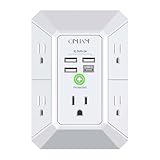
Ever been stuck at Gate B23, battery at 3%, and you spot that glorious little outlet? You plug in your phone, and… nothing. Or worse, it charges at a snail’s pace. It makes you wonder: are airport outlets low voltage, or is my charger just busted? I’ve been there more times than I care to admit, lugging around power banks that felt like dead weight. It’s frustrating, and often, the answer isn’t as simple as you’d think.
The truth is, while most airports aim to provide standard voltage, the reality on the ground can be a bit more complicated. It’s not just about the raw voltage; it’s about how that power is delivered and what’s actually plugged into it. Let’s cut through the confusion and get to what actually matters when you’re trying to juice up your devices while waiting for your flight.
Why Your Airport Charger Might Be Slow (it’s Not Always Voltage)
Alright, let’s get this out of the way: are airport outlets low voltage? Technically, no. Most countries, including the US, Canada, and Mexico, operate on a standard 120-volt system, and airports are supposed to adhere to that. In Europe, it’s 230-240 volts. The problem isn’t usually that the outlet itself is intentionally outputting less power. It’s more about the journey that power takes from the wall to your phone, and what else is hogging the juice.
Think of it like water pressure in a building. The city provides plenty of pressure, but if too many faucets are open upstairs, the flow to your shower might be weak. Airport outlets are often wired in series or shared circuits.
This means multiple outlets might be drawing from the same breaker. If a dozen people have laptops and hair dryers plugged in nearby, your little phone charger is going to have to fight for its share of the available amperage. This is especially true in older terminals or during peak travel times. I once saw a family try to run a portable blender off an airport outlet – not smart, and it definitely killed the power for everyone around them for a good ten minutes.
Another factor is the type of outlet. Some older airports might still have what look like standard US outlets, but they’re wired to a less solid circuit. Newer airports are often better, with dedicated USB ports or higher-amperage outlets. But even then, those USB ports can be surprisingly weak. I tested a few at a major hub recently, and my phone’s fast-charging capability was completely ignored. It was charging, sure, but at the agonizing pace of a 5-watt charger from a decade ago. It felt like my phone was deliberately being insulted.
The quality of the wiring in the airport itself plays a huge role. Over time, wires can degrade, connections can loosen, and the overall resistance in the circuit increases. This can lead to a voltage drop, especially over longer wire runs from the main power source to that conveniently located seat. So, while the outlet should be delivering full power, real-world conditions can mean you’re getting less. It’s not a conspiracy to slow down your charging; it’s just basic electrical engineering meeting the realities of high-traffic, aging infrastructure.
So if it’s not usually a deliberate low-voltage situation, what’s actually killing your charging speed? It boils down to amperage and wattage, and how they’re shared. Voltage is like the ‘push’ of electricity, but amperage is the ‘flow’ – how much electricity can move at once. Wattage is the total power, the combination of voltage and amperage (Watts = Volts x Amps).
Airport outlets, especially older ones, might be designed for low-draw devices like a simple reading lamp or to trickle-charge a battery. They might have a standard 120V, but only be rated for 5 or 10 amps. That’s enough for a basic phone, but if you’re trying to fast-charge a modern smartphone or power a laptop, you need more. Your charger is designed to communicate with your device to figure out the optimal voltage and amperage for fast charging. If the outlet can’t supply that required amperage, even if the voltage is technically correct, the charging will be slower. It’s like trying to fill a swimming pool with a garden hose; the water is there, but the flow is too limited. (See Also: Are American Outlets Ac Or Dc )
Consider this: a standard phone charger might output 5V at 2A (10W). A fast charger for a phone could be 9V at 3A (27W), or even higher. A laptop charger could be 20V at 3.25A (65W) or more. If the circuit powering that airport outlet is only designed to handle, say, 15 amps total across multiple outlets, and your neighbor has their laptop plugged in at 3A, and someone else has a portable fan at 1A, you’re already using up a significant chunk of that available amperage. Your phone’s fast charger might ask for 3A, but only 1A might be realistically available. Your phone then defaults to a slower charging mode to protect itself and the circuit.
The common advice you see everywhere is to bring a high-quality power bank. And yeah, that’s solid advice. But it doesn’t explain why the outlets themselves feel so weak. It’s this interplay of shared circuits and limited amperage that’s the real culprit. I once spent three hours at a gate and my phone only gained 15% battery. I was fuming, convinced the airport was actively sabotaging my battery. Turns out, the outlet was powering a row of overhead lights and a vending machine, and there was just not enough grunt left for my phone’s fast-charging request. It was a lesson learned the hard way about understanding the whole electrical picture, not just the voltage number on the wall.
My Own Airport Outlet Horror Story: A Charger’s Betrayal
I remember one trip, heading to a conference in Denver. I’d spent a small fortune, probably around $180 total across four different versions, on what were advertised as ‘universal travel chargers’ and ‘high-speed USB adapters’ specifically for travel. They promised the moon – rapid charging, compact design, the works. I packed one in my carry-on, feeling smug and prepared.
At the airport, I found a coveted outlet near my gate. Plugged in my phone, which was at a dismal 10%. I pulled out my fancy new charger, plugged it in, and settled back, expecting to see that battery percentage climb rapidly. An hour later, I checked. Twenty-two percent. TWENTY-TWO. I almost threw my phone across the terminal. I tried a different port on the same charger. Same glacial pace. I even tried a different cable, thinking maybe that was the issue. Nope. It was charging, technically, but it was the slowest charge I’d ever experienced from a device that cost me nearly fifty bucks.
I ended up having to buy a cheap, generic power bank from one of those airport kiosks for $40. It was bulky, ugly, and frankly, felt like a ripoff.
But that kiosk power bank, bless its heart, charged my phone at a respectable speed. It made me realize that all those flashy travel chargers, while claiming high wattage, weren’t actually able to deliver it effectively in a real-world, shared-circuit environment like an airport. They might perform well at home with a dedicated wall socket, but they choked under the pressure of a potentially weak airport circuit. My expensive chargers were basically just really fancy, overpriced USB cables in that situation.
It was a humbling, expensive lesson in not believing every marketing claim, especially when dealing with the often-underpowered reality of airport power.
Contrarian Take: Why Most People Get It Wrong About Airport Chargers
Here’s a hot take for you: most people obsessing over whether airport outlets are low voltage are missing the forest for the trees. Everyone says, ‘Oh, it’s because the voltage is lower!’ or ‘You need a special travel adapter!’ I disagree. While voltage can fluctuate slightly, the primary issue is almost always the circuit’s capacity and the charger’s efficiency in a low-power environment. (See Also: Are All Power Outlets Ac )
The common advice is to bring a high-capacity power bank or a specific ‘travel charger.’ I think that’s often overkill and doesn’t address the root cause. Most modern devices have smart charging systems. They will draw as much power as the source can provide, up to their maximum limit. If the source is weak, the device simply slows down. Your phone isn’t being actively punished; it’s just getting the limited power that’s available.
What you should be looking for isn’t a charger that boasts a ridiculously high wattage, but one that is efficient and can negotiate power delivery well, even with limited supply. Many cheap chargers are poorly designed. They might claim 20W, but they can’t actually deliver that consistently, or they have high internal resistance that wastes power. The real issue is that airport circuits are often shared and can be overloaded. Trying to draw too much power too quickly from a weak source is like trying to drink a milkshake through a coffee stirrer – it’s going to be slow and frustrating, no matter how much milkshake is in the cup.
So, instead of buying another ‘super-fast travel charger’ that might perform poorly at the airport, focus on a solid, reputable brand power bank that you can charge fully before you leave home. For the outlets themselves, understand that you’re lucky if you get a decent trickle charge. The idea that airports are intentionally hobbling their outlets with low voltage is, in my experience, a myth. It’s just the reality of old infrastructure and shared power demands. Stop blaming the voltage, and start understanding the circuit.
What to Look for (and What to Avoid) in Travel Charging Gear
Okay, so we’ve established that while airport outlets aren’t supposed to be low voltage, you’re often not getting the full punch. So, what gear should you actually pack? Forget those fancy, do-it-all travel adapters that promise to convert every voltage on the planet. For most of us flying out of North America or Europe, this isn’t the issue.
What to Look For:
1. Reputable Brand Power Banks: This is your best friend. Get one from a known brand like Anker, RAVPower, or Mophie. They’re reliable, hold their charge well, and have decent output. A 10,000mAh capacity is usually a good sweet spot – enough to charge your phone 2-3 times without being a brick in your bag. Look for power banks that support USB Power Delivery (PD) or Quick Charge (QC). Even if the airport outlet can’t provide the full speed, your power bank will charge faster when you do have access to a good outlet (like at your hotel or home).
2. Compact, Efficient Wall Chargers: If you do use a wall charger at the airport, opt for one that’s efficient. A smaller, single-port USB-C PD charger (say, 20-30W) is often more effective than a massive multi-port brick. These tend to be better at negotiating power with the source. Brands like Aukey or Satechi make good options. They might not be as flashy, but they get the job done without fuss.
3. Quality Cables: This is HUGE. A cheap, unbranded USB cable can throttle charging speed dramatically. Invest in certified cables from brands like Anker, Belkin, or Apple. They’re built to handle the correct amperage and voltage without excessive resistance. I once spent $15 on a pack of four ‘mystery brand’ cables, and they were terrible. My phone would barely charge, and they felt flimsy. Sticking to known brands for cables has saved me a lot of frustration. (See Also: Are Arc Trip Outlets Required In Hillsborough County )
What to Avoid:
1. Overly Complex Universal Adapters: Unless you’re traveling to countries with vastly different plug types and voltage (like going from the US to Australia and then to India), you probably don’t need a bulky adapter with a dozen prongs and voltage converters. Most modern devices (phones, laptops) are dual-voltage. Just get a simple plug adapter for the physical socket type.
2. “Miracle” Chargers with Unrealistic Claims: If a charger claims to deliver 100W from a tiny dongle or boasts insane charging speeds that sound too good to be true, they probably are. These often fail in real-world scenarios where power is limited, or they might even be unsafe. Stick to realistic wattage ratings for your devices.
3. Anything that feels cheap and flimsy: If the plastic feels weak, the ports are loose, or the cable is stiff and unwieldy, walk away. Good charging gear might cost a bit more upfront, but it lasts longer and performs reliably.
Here’s a quick rundown of what I use and recommend for travel charging:
| Item | My Verdict | Notes |
|---|---|---|
| Anker PowerCore III Elite (25,600mAh) | Solid Performer | Great for long trips, charges multiple devices, but a bit heavy. |
| Anker Nano II 65W GaN Charger | Excellent Compact Charger | Plugs into any wall socket, charges my laptop and phone fast at hotels. |
| Apple USB-C to Lightning Cable (6ft) | Reliable Workhorse | A bit pricey, but never fails to charge at max speed. |
| Generic ‘Fast Charging’ Cables from Amazon | Avoid | Inconsistent performance, feel cheap, can be dangerous. |
| Bulky Universal Voltage Converter | Skip if not needed | Heavy and unnecessary for most modern electronics when traveling internationally. |
Practical Tips for Maximizing Airport Power
So, you’re at the airport, battery level is dipping into the red zone, and the outlets are looking less like saviors and more like cruel jokes. What can you actually do besides stare longingly at the charging stations that are already packed with people?
Here are a few practical tips I’ve picked up over years of airport charging wars:
- Scout Ahead (If Possible): If you have a long layover or arrive early, take a walk around your terminal. Look for less crowded areas, charging stations specifically designed for electronics (often with USB ports), or even business lounges if you have access. Sometimes, gate areas further from the main concourse have less competition for power.
- Bring a Portable Battery Pack (and Charge It First!): I can’t stress this enough. My go-to is a 10,000mAh Anker power bank. It’s small enough to fit in my pocket but powerful enough to revive my phone multiple times. Importantly, always charge your power bank fully before you leave for the airport. It’s embarrassing to realize your backup power source is also dead.
- Use USB Ports Wisely: Many modern airports have built-in USB ports near the seats. While these can sometimes be weak, they’re often better than a shared wall outlet. If you’re getting a painfully slow charge, try unplugging and plugging back in, or try a different USB port. Sometimes, the device connected to it might be drawing more power, and unplugging it (if it’s safe to do so) could help, but I wouldn’t count on this.
- Invest in a Short, High-Quality Cable: Long cables can have more resistance, meaning a slower charge. A 3-foot (1-meter) high-quality USB-C or Lightning cable from a reputable brand is perfect. It’s long enough to reach from the outlet to your seat without being a tangled mess, and it minimizes power loss.
- Know Your Device’s Needs: Does your phone really need 65W charging? Probably not for a quick top-up. Sometimes, just getting a stable 10-15W charge is enough to keep you going until you reach a better power source. Don’t expect miracles from a weak outlet.
- Look for Dedicated Charging Stations: Many newer airports have dedicated charging stations that are designed to handle multiple devices simultaneously. These are often better engineered than the random outlets scattered around the gates.
- Don’t Be Afraid to Ask (Politely): If you see an outlet that’s not in use, and you absolutely need a charge, a polite request to the person sitting next to it can sometimes work wonders. But always have a backup plan – don’t rely on someone else’s goodwill.
My own worst charging experience involved trying to power a portable speaker and my phone from a single, ancient outlet in a remote terminal. The speaker died mid-playlist, and my phone’s battery flatlined a few minutes later. Lesson learned: prioritize your phone. If you absolutely must charge multiple things, use a power bank to charge one while the other gets a trickle from the wall.
Verdict
So, to finally answer the question: are airport outlets low voltage? Generally, no, they’re not intentionally set to a lower voltage. The power you receive is often less than ideal due to shared circuits, outdated wiring, and the sheer number of devices demanding power simultaneously. It’s a logistical challenge for airport operators, not a deliberate throttling of your charging speed.
The most important takeaway is to be prepared. Relying solely on those scattered outlets is a gamble. A good power bank and quality cables are your best defense against a dead battery at 30,000 feet. Don’t get caught out like I did with those fancy, underperforming travel chargers. Learn from my mistakes, pack smart, and you’ll spend less time hunting for power and more time enjoying your trip.