I remember my first time stranded at an airport, phone battery at a pathetic 3%, and realizing the only outlet nearby was…well, it looked like it had seen better days. A bit grimy, maybe a little loose. My immediate thought wasn’t about surge protectors or electrical codes; it was a blunt ‘Is this actually going to work, or am I going to fry my phone?’ That’s the question a lot of us have when we’re desperate for juice. So, are airport outlets safe to use?
Let’s cut to the chase. Most of the time, yes, they are. Airports are public spaces, and they have a vested interest in not having electrical fires or people getting zapped. But ‘most of the time’ isn’t a guarantee, and there are nuances you should know. I’ve learned a thing or two from years of lugging gear and praying my laptop doesn’t die mid-flight prep.
The Grim Reality: They’re Usually Fine, but…
Look, airports aren’t running a scam by offering up dodgy power. They’re legally obligated to maintain a certain standard, and that includes electrical safety. These outlets are typically wired up to the same building codes as any other commercial space. That means grounding, proper circuit protection, and all that jazz you don’t think about until your phone is on 1%. I’ve plugged countless devices into them over the years – phones, laptops, tablets, even my trusty travel kettle in a pinch (don’t tell security). For the vast majority of people, plugging in your standard charger is about as risky as using one at home.
However, ‘fine’ doesn’t mean ‘perfect’. Think about the sheer volume of people using these outlets. They get kicked, shoved, cables yanked, and generally abused more than the outlets in your living room. Over time, even well-installed outlets can wear down. I once saw an outlet near a gate at a busy hub in Atlanta that was visibly cracked. Sparks didn’t fly, but it looked like it was one iPhone charger away from a bad situation. That’s the kind of thing that makes you pause. It’s not about the airport intentionally providing bad power; it’s about the wear and tear of public use.
Another thing to consider is the age of the airport. Older terminals might have wiring that’s not up to modern standards, or outlets that haven’t been updated in decades. Newer, more modern airports tend to be better maintained and have more accessible charging points, often built with convenience and safety in mind.
But even in a sleek, new terminal, you can find a forgotten corner with an outlet that looks like it’s been through a war. It’s a bit of a gamble, honestly. I’ve found that the outlets in high-traffic areas, like near gates or in business lounges, are usually in better shape because they get more attention.
The ones tucked away in a less-used corridor? Those are the ones that might give you pause.
What to Actually Look for (and What to Ignore)
So, how do you suss out a decent outlet from a dodgy one without being an electrician? It’s not rocket science, but a little bit of observation goes a long way. First, the obvious: visual inspection. Does the outlet look physically damaged? Are the prongs bent, the plastic cracked, or does it look like it’s been melted at some point? If you see any of that, walk away. Seriously. Just find another one. My first-hand experience with a slightly scorched outlet near a bathroom in Denver taught me to trust my gut on this. It wasn’t sparking, but the smell of old plastic was faint but definite. I unplugged my phone immediately.
Next, check for looseness. Gently wiggle the prongs of your charger once it’s plugged in. If it feels super loose, like it’s going to fall out or make poor contact, that’s not ideal. A loose connection can cause overheating, which is a fire hazard, and it can also lead to inconsistent charging. You want a snug fit. This is where those cheap, flimsy chargers you buy at the airport convenience store can also be a problem – their prongs might not fit well into even a good outlet. (See Also: Are American Outlets Ac Or Dc )
Now, for the contrarian take: everyone talks about using surge protectors. I disagree with that being the first and only line of defense for airport outlets. Yes, a good surge protector is fantastic for protecting your expensive electronics from sudden power spikes, especially at home or in a hotel with questionable wiring. But at an airport, where the primary concern is often just getting any power, lugging a bulky surge protector can be a pain.
Plus, if the outlet itself is physically damaged or has poor wiring, even a surge protector might not prevent a problem. It’s like putting a fancy alarm system on a house with no doors – it might help, but the fundamental issue is still there. I’d rather find a visually solid outlet and use my device’s built-in protection, or a small, portable USB adapter that doesn’t draw as much attention or risk.
What about those USB ports sometimes built into seating or walls? These are generally safer, but they can be slower. They’re usually designed for lower-power charging, so don’t expect a rapid juice-up. They are also less prone to physical damage than a standard wall outlet. However, I’ve had a few USB ports that were so slow, I wondered if they were even working. It’s a trade-off between convenience, safety, and speed.
Common Mistakes and What Not to Do
This is where a lot of people go wrong, and I’ve been guilty of some of these myself. The biggest mistake? Blindly plugging in. You’re tired, you’re stressed, your phone is dying, and that little icon is taunting you. You see an outlet, you jam your charger in. Stop. Take three seconds. Look. Does it look okay? That’s the bare minimum. I once saw a guy plug his laptop into an outlet that looked like it had been partially melted. He was lucky his laptop survived. The surge protector he had plugged into it looked like it had also seen better days.
Another common mistake is using the wrong adapter or charger. Airports often have convenience stores selling cheap chargers. These are notorious for being low quality. They might not have proper safety certifications, their internal components can be shoddy, and they can overheat or even fail catastrophically. Stick to reputable brands for your chargers. I’ve learned this the hard way with a cheap car charger that died after two uses and made a weird smell. For airport use, it’s even more important to have reliable gear. If your charger feels hot to the touch when plugged into a wall at home, don’t even think about using it in an airport.
Overloading is another issue, though less common with modern devices. Most people are just charging one or two things. But imagine someone trying to charge a laptop, a tablet, and a phone all from one outlet using a multi-port adapter that’s not designed for the load. Or worse, daisy-chaining power strips. While technically the airport infrastructure should handle it, pushing the limits of older outlets or circuits in a public space is asking for trouble. Remember that time I tried to run my travel iron and charge my phone simultaneously from one questionable outlet using an adapter? It tripped the breaker for the entire row of gates. Embarrassing and inconvenient.
Finally, a mistake I see often is people leaving their devices plugged in unattended for extended periods. While the risk of the outlet itself causing a fire might be low if it’s in good condition, any electrical fault can happen. Add to that the possibility of theft. If you’re going to eat, use the restroom, or wander around, unplug your device. It’s a simple security measure and reduces the time it’s exposed to any potential electrical anomaly or a sneaky hand.
Real-World Use: My Gear and What I Carry
When I travel, power is always a concern. I’m not just talking about my phone. I’m a photographer, so I’ve got camera batteries, a laptop for editing, and often extra hard drives. I’ve spent a good chunk of money over the years trying to find the perfect travel power setup. Initially, I was all about those multi-port USB wall chargers. They’re compact and let you charge multiple devices. However, I found that the power delivery wasn’t always consistent, especially when you had several devices plugged in. Some of them also felt a bit flimsy. (See Also: Are All Power Outlets Ac )
My current go-to for most situations is a GaN (Gallium Nitride) charger. These are smaller, more efficient, and can deliver more power than older silicon-based chargers. I have a 65W GaN charger that can charge my laptop and my phone simultaneously at decent speeds. It’s small enough to fit in my pocket, and it has multiple ports. This is my primary weapon against low battery anxiety.
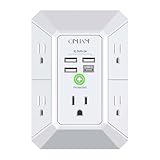
For added peace of mind, and specifically for those questionable airport outlets or situations where I need to power multiple things (like my camera battery charger and laptop), I carry a small, but solid, travel power strip. Not a giant, multi-outlet monstrosity, but a compact one with maybe 2-3 AC outlets and a couple of USB ports. It has built-in surge protection. The key is to get one that’s from a reputable brand.
I paid about $35 for mine a couple of years back, and it’s been worth every penny for the peace of mind. It’s not about expecting the airport outlet to explode, but about having a layer of protection for my gear, which is far more expensive than the power strip itself.
I also carry a couple of high-capacity power banks. These are lifesavers when there are no outlets to be found, or when all the outlets are occupied by people who arrived before you. I have one that’s 20,000mAh and can charge my phone about five times or my laptop once. It’s heavy, but it’s been the difference between finishing an important work email and being offline for hours.
Here’s a quick comparison of my typical travel charging gear:
| Item | Pros | Cons | Verdict |
|---|---|---|---|
| Standard Phone Charger | Lightweight, ubiquitous | Slow charging, can be flimsy | Okay for quick top-ups, not ideal for heavy use. |
| GaN Charger (65W+) | Compact, fast, efficient, multi-port | Can be pricier, might need an adapter for some countries | My daily driver for travel. Highly recommended. |
| Compact Travel Power Strip (with Surge Protection) | Charges multiple devices, adds protection | Adds bulk, not always needed | Key for busy airports or when needing to charge more than 2 things. |
| High-Capacity Power Bank | Portable power, no outlet needed | Heavy, requires pre-charging | A lifesaver when outlets are scarce or occupied. |
Practical Tips for Airport Charging
Beyond just choosing the right gear, there are some tactical moves you can make to snag a working outlet and get your charge on. First off, arrive early. Seriously, if you know you’re going to need to charge something, get to the airport with more time than you think you need. This gives you the luxury of choice. You can wander around and find an outlet that’s not just available, but in a good location (away from foot traffic, maybe with a seat nearby) and looks visually sound. I’ve found that outlets near less busy gates or in pre-security areas sometimes get overlooked but are perfectly functional.
Secondly, be strategic about your charging location. The outlets right next to the gate seating are prime real estate. They’re often occupied. Look for outlets in less obvious spots: near restrooms, in empty corners, or even in less crowded terminals if you have a long layover. Sometimes, the charging stations installed by the airport are a good bet, as they’re designed for public use and often have USB ports as well as standard outlets. They’re usually maintained more regularly.
Third, consider a portable charger that converts to a wall plug. Many power banks now have built-in AC prongs, so they can function as both a charger and a portable battery. This is incredibly efficient. You can charge your power bank while it’s plugged into the wall, and then use it to charge your devices later. It’s a two-in-one solution that saves space and hassle. I’ve seen these pop up more and more, and they are genuinely useful for travelers. (See Also: Are Arc Trip Outlets Required In Hillsborough County )
Fourth, don’t be afraid to ask. If you’re struggling to find a working outlet, politely ask airport staff or airline employees if they know of any available charging spots. They often know the hidden gems or areas that are less congested. I once found a perfectly good outlet tucked behind a plant in a quiet corner because a helpful gate agent pointed it out to me.
Lastly, always have a backup plan. Your best-laid plans can go awry. The outlet you thought you’d use might be broken, occupied, or non-existent. That’s where your power bank or a fully charged phone comes in. It’s not about being paranoid; it’s about being prepared. I’ve seen too many people desperately trying to find a charge, only to end up buying an overpriced, terrible-quality charger from the airport shop. Investing a little in portable power and reliable charging gear will save you stress and money in the long run.
The Faq: Will My Device Get Damaged?
Can Using an Airport Outlet Damage My Phone?
Generally, no, not if the outlet is in good condition. Most modern phones have internal protection against minor power fluctuations. However, if the outlet is physically damaged, has exposed wiring, or is experiencing severe electrical issues, there’s a risk. It’s why visual inspection and avoiding damaged outlets is so important.
Is It Safe to Use USB Ports at Airports?
USB ports provided by the airport are usually safe, but they can be slow. They are designed for low-power charging. Be cautious of unofficial USB ports or if you’re using a sketchy adapter that connects to a power bank or a car charger; these could potentially pose a risk if they are faulty.
What If an Airport Outlet Causes a Surge?
While rare in a well-maintained airport, surges can happen. A good quality surge protector is your best defense against electrical surges damaging your devices. However, for typical airport use, the risk is generally low compared to other potential issues like physical damage or poor connections.
Should I Use an Outlet Protector?
Outlet protectors (like surge protectors) can add a layer of safety. However, their effectiveness depends on the quality of the protector and the severity of the issue with the outlet. For general airport use, a good quality surge protector is a worthwhile investment for your expensive electronics, but it’s not a substitute for avoiding visibly damaged outlets.
Are the Charging Stations in Airports Safe?
Most official airport charging stations are designed with safety in mind and are regularly maintained. They often have built-in protections. However, like any public electrical fixture, they can be subject to wear and tear, so a quick visual check is always a good idea.
Verdict
So, to circle back: are airport outlets safe to use? For the most part, yes, they are. The vast majority are wired correctly and function just like they do in your home. But that ‘most part’ is where the nuance lies. You’re dealing with public infrastructure, which means wear and tear, potential for damage, and variable maintenance. My advice is always to be observant. Take those few seconds to look at the outlet before you plug in. If it looks dodgy, trust your instincts and find another one.
Don’t rely solely on the outlet being perfect. Invest in good quality charging gear – a reliable charger, maybe a compact surge protector, and definitely a power bank. These are small investments that can save you a lot of hassle, protect your expensive devices, and give you peace of mind when you’re on the go. It’s about mitigating risk, not eliminating it, because let’s be honest, you’re probably going to need that charge.
Next time you’re at the airport with a dying battery, remember to check, and then charge smart. What’s your go-to travel charging hack?