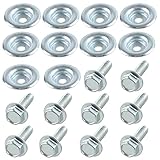
I remember the first time I wrestled with a stubborn suspension component. The old bolts were seized, and the new ones looked… different. They had these funny offset washers. My buddy, who’s been wrenching longer than I’ve been alive, just called them ‘cam bolts.’ But then I saw a part listing for ‘eccentric bolts’ for the same job. My brain did a little stutter-step. Are we talking about the same thing here, or is this some mechanic’s inside joke I’m not privy to?
This confusion is way more common than you might think, especially when you’re digging into suspension work or anything that requires fine adjustments on a car. The question of whether are alignment cam bolts and eccentric bolts the same pops up more often than you’d expect, and honestly, it’s a valid one.
The Cam Bolt vs. Eccentric Bolt Showdown: Same Difference?
Alright, let’s cut to the chase. For all intents and purposes, when mechanics and parts suppliers talk about alignment cam bolts and eccentric bolts in the context of vehicle suspension, they are talking about the exact same thing. There’s no secret handshake, no hidden technical distinction that separates them in this common application. They are functionally identical. Think of it like calling a soda a ‘pop’ or a ‘coke’ depending on where you grew up – the product is the same, just the name might vary.
So, why the two names? It boils down to how they work and what you’re doing with them. An ‘eccentric’ bolt is one whose head or nut is not concentric with the bolt’s shaft. In simpler terms, the hole it passes through isn’t perfectly centered. This slight offset is the magic. As you rotate the bolt, the eccentric washer (often part of the bolt assembly or a separate piece that spins with the bolt) moves the suspension component it’s attached to either inwards or outwards, closer to or further from the chassis. This movement is precisely what allows for fine-tuning of wheel alignment – camber and caster angles, specifically.
The term ‘cam bolt’ is more descriptive of its function in alignment. The offset head or washer acts like a cam, pushing or pulling the suspension part it’s connected to as it’s turned. It’s a simple, mechanical way to adjust angles that are normally fixed. I’ve spent hours trying to eyeball alignment on my old Honda Civic after replacing control arms, only to realize I needed these specific bolts to dial it in properly. Trying to bend or force the stock hardware just doesn’t cut it. These bolts provide a controlled, repeatable way to get that camber angle just right, so your tires don’t wear out unevenly like a cheap tire store’s ad flyer.
The common confusion often stems from the fact that other types of eccentric fasteners exist in different fields, and sometimes the terminology can bleed over. But in automotive suspension and alignment, ‘cam bolt’ and ‘eccentric bolt’ are interchangeable synonyms for the adjustable fastener designed to alter alignment angles.
How These Little Bolts Actually Adjust Your Wheels
The genius of these bolts lies in their simplicity. Imagine a standard bolt going through a hole.
If the bolt is perfectly centered in the hole, rotating it doesn’t move the component attached to it in any direction other than just tightening or loosening it. Now, take that same bolt, but imagine the hole it passes through in the suspension arm is slotted, or the bolt itself has an offset lobe on it, or, most commonly, it uses a washer that’s not centered on its own bore.
When you turn this eccentric bolt, that non-centered part forces the suspension component to shift. It’s like using a wedge – you push it in a little, and it forces something else to move sideways.
In a typical automotive suspension setup, these bolts usually replace a fixed bolt that holds a control arm or a similar component to the chassis. The original bolt might go through a round hole, offering no adjustment. The cam/eccentric bolt, however, typically passes through a slotted hole in the control arm or bracket. Attached to the bolt, between the control arm and the chassis, is the eccentric washer. (See Also: A 14 Millimeter Bolt Is 0 5512 Inches In Us Decimal )
This washer has a hole drilled off-center. As you rotate the bolt with a wrench, the eccentric washer spins.
Because its center is off, it pushes or pulls the control arm in one direction or the other within the limits of the slotted hole. Tighten the bolt, and the arm moves; loosen it slightly, and you can then reposition it.
Let’s say you need to adjust camber – the in-and-out tilt of the wheel. On many rear suspensions, the upper control arm bolts are often the cam bolts. Turning the bolt moves the arm closer to or further from the center of the car, changing the camber angle. For caster – the forward or backward tilt of the steering axis – you might find these bolts on the lower control arms or strut mounts in front suspensions.
The mechanic uses a degree finder or a specialized alignment machine to measure the angle, then turns the eccentric bolt until the desired specification is met. It’s a precise operation, and these bolts are the key tools for achieving it. I once tried to get my alignment done at a quick-lube place that didn’t have the right adjustable bolts, and they just told me ‘it’s out of spec, can’t fix it.’ That’s when I learned the value of having the right hardware, and the right mechanic, who knew how to use these bolts.
What to Look for When Buying Cam/eccentric Bolts
When you’re on the hunt for these specialized fasteners, you’ll want to pay attention to a few things to make sure you get the right part for your specific vehicle and repair. First and foremost is compatibility. The most important factor is the vehicle make, model, and year. Suspension components and their attachment points can vary wildly. A cam bolt designed for a 2005 Subaru WRX will be completely different from one for a 2010 Ford F-150, even if they both serve to adjust alignment.
Look for the specific application. Are you replacing a bolt for the front upper control arm, rear lower control arm, or strut mount? The part number or description should specify this. Manufacturers often sell these as kits, which is usually your best bet. A kit will typically include the eccentric bolt itself, and importantly, the necessary eccentric washer(s) and any specific nuts or locking hardware required. Trying to piece together a kit from random parts is a recipe for disaster and wasted money. I learned that the hard way; I bought just the bolt once, assuming I could reuse the old washer. It didn’t fit right, and the adjustment was sloppy. Cost me another $50 for the proper kit.
Pay attention to the material and finish. Most good quality cam bolts are made from hardened steel to withstand the stresses of suspension duty. They should have a protective coating like zinc plating or black oxide to prevent rust, especially if your car sees wet or salty conditions. The eccentric washer should also be solid and ideally have a toothed edge or a similar design that bites into the suspension component or chassis to prevent it from spinning loose under vibration. Some cheaper versions might have smooth washers, which are prone to loosening over time. Check reviews if you can; people often complain about parts that fail prematurely or don’t hold an alignment.
Common Mistakes and What Not to Do
One of the biggest blunders people make is thinking they can achieve precise alignment adjustments with standard, non-adjustable bolts or by trying to modify existing hardware. You can’t just drill a bigger hole or slot an existing round hole and expect good, repeatable results. The factory designed the suspension geometry with specific adjustment points for a reason. Using the wrong fasteners, or no adjustment fasteners at all, will lead to your alignment shop saying, ‘We can’t adjust this,’ or worse, your tires wearing out in half the expected time.
I saw a guy try to use a regular bolt with some washers he’d cut himself to adjust his Toyota Camry’s camber. Looked like a hack job, and within 5,000 miles, his front tires were bald on the inside edge. Total waste of money on tires. (See Also: Are 2000 Chevy 4 3 Head Bolts Reusable )
Another mistake is overtightening the cam bolt. While you want it snug enough not to loosen, cranking on it with all your might can strip the threads or damage the eccentric mechanism. The goal is to position the component accurately, not to exert maximum clamping force with the adjustment bolt itself. The main clamping force comes from the chassis or subframe connection, and the cam bolt just holds it in that adjusted position. Always follow the torque specifications provided by the vehicle manufacturer or the bolt supplier. If you’re unsure, it’s always better to be slightly under-torqued and have it checked again than to over-torque and cause damage.
Finally, don’t forget to get a proper four-wheel alignment done after installing the new cam bolts and making your adjustments. These bolts are the tools for adjustment, but they don’t magically align your car. You need to use them in conjunction with an alignment rack and the vehicle’s specifications. Adjusting them without measuring the actual angles is like trying to bake a cake without a recipe – you might end up with something edible, but it’s not going to be what you intended. And always, always check for looseness after a test drive. Sometimes, vibration can shift things slightly, and you want to catch that before it causes premature tire wear.
Real-World Scenarios: When You Actually Need Them
The need for alignment cam bolts, or eccentric bolts as we’ve established they are the same, typically arises after specific repairs or when dealing with modifications that affect suspension geometry. The most common scenario is replacing worn-out suspension components like control arms, ball joints, or bushings. When you remove and reinstall these parts, especially if the original bolts go through slotted holes, you’ll want to have new, adjustable cam bolts on hand. Even if the original holes are round, if the component was designed for adjustment later on, you’ll need the adjustable hardware to achieve that.
For instance, if you replace the rear lower control arm on a BMW E46, you’ll absolutely need eccentric bolts to adjust the camber. Without them, you’ll likely end up with excessive negative camber (the top of the tire tilted inwards), leading to rapid inner tire wear. I learned this the hard way on a friend’s car. We replaced the arm, bolted it up, and thought we were golden. A few thousand miles later, the inside of the rear tires looked like they’d been shaved down. That’s when we had to go back, buy the correct eccentric bolts, and get a proper alignment. That mistake cost us the price of the bolts plus a set of tires that were barely worn.
Another common situation is when a vehicle has been lowered. Lowering a car, especially with springs, almost always changes the suspension geometry. Camber and caster angles are affected, and often, the factory fixed bolts aren’t enough to correct these changes back into the optimal range.
This is where aftermarket adjustable suspension arms or, more commonly, eccentric bolts come into play. They provide the necessary range of adjustment to counteract the effects of lowering and bring the alignment back to spec, preventing tire wear and making sure proper handling. I’ve seen lowered cars that handled like a shopping cart with a wobbly wheel because the alignment was never properly set after the drop.
It’s not just about looks; it’s about drivability and saving your rubber.
Comparing Standard vs. Adjustable Bolts
The difference between a standard bolt and an alignment cam bolt (or eccentric bolt) is stark, and it’s all about adjustability. A standard bolt is just that: a cylindrical shaft with threads and a head. It passes through holes, and when tightened, it clamps components together. If the holes are round, there’s no inherent adjustability in the position of the clamped parts relative to each other in that axis. They are fixed. This is fine for many applications where precise adjustment isn’t needed or is handled elsewhere in the suspension system.
Alignment cam bolts, on the other hand, are designed specifically to create adjustability where it might not otherwise exist or to provide a wider range of adjustment than standard slotted holes. As we’ve discussed, this is achieved through an offset lobe on the bolt shank or, more commonly, an eccentric washer. This offset is the key. It allows you to rotate the bolt and, by doing so, incrementally shift the position of the suspension component it’s attached to. This is the difference between a fixed point and a movable point, controlled by turning a bolt. (See Also: Are All 12 Bolt Rear Ends Posi )
Here’s a quick rundown to highlight the contrast:
| Feature | Standard Bolt | Alignment Cam/Eccentric Bolt |
|---|---|---|
| Design | Concentric shaft and head | Offset lobe or eccentric washer |
| Function | Clamping, fixed positioning | Clamping AND adjustable positioning of connected component |
| Hole Type Required | Round or oversized round hole | Slotted hole in component/bracket is ideal; round hole can work if bolt has eccentric lobe |
| Adjustment Capability | None | Precise, incremental adjustment of alignment angles (camber, caster) |
| Common Use | General fastening, non-important joints | Suspension alignment, fine-tuning geometry |
| Verdict | Reliable for fixed connections. | Indispensable for alignment adjustment; key for preventing uneven tire wear. |
The value proposition of a cam bolt is immense. While they might cost a few dollars more than a standard bolt, the cost of premature tire wear, poor handling, and repeated alignment attempts without the proper hardware far outweighs the initial investment. For anyone doing suspension work that involves alignment adjustments, investing in the correct cam/eccentric bolts is not optional; it’s a necessity.
Frequently Asked Questions About Alignment Bolts
Are Cam Bolts and Eccentric Bolts the Same?
Yes, in the context of automotive suspension and alignment, cam bolts and eccentric bolts refer to the same type of fastener. The term ‘eccentric’ describes the bolt’s design (a non-centered lobe or washer), while ‘cam’ describes its function (acting like a cam to adjust suspension angles). So, for all practical purposes, they are interchangeable.
Can I Reuse My Old Cam Bolts?
It’s generally not recommended to reuse old cam bolts, especially if they show signs of wear, rust, or damage. The eccentric washer can also become worn or fused to the bolt, reducing its effectiveness. Replacing them with new ones makes sure proper adjustment and prevents potential loosening due to wear, saving you from future alignment issues and tire wear.
How Many Cam Bolts Do I Need for an Alignment?
The number of cam bolts needed depends entirely on the vehicle and the specific suspension components being adjusted. Typically, you’ll find them on control arm mounting points where camber or caster adjustment is required. Some vehicles might use two per axle, while others might only need them on one axle or even just one specific arm. Always consult your vehicle’s service manual or a reputable parts supplier for the correct quantity and location.
What Happens If I Don’t Use Cam Bolts When Needed?
If your vehicle requires cam bolts for alignment adjustments and you don’t install them, you will likely be unable to achieve the correct alignment specifications. This will lead to uneven tire wear (usually on the inside or outside edge of the tire), poor handling characteristics, and potentially compromised safety. Your alignment shop will likely inform you that the adjustment is not possible without the proper hardware.
Are Alignment Cam Bolts Universal?
No, alignment cam bolts are not universal. They are specific to the make, model, and year of the vehicle, and often to the specific suspension component they are designed to fit (e.g., front upper control arm vs. rear lower control arm). Using the wrong bolt will not work correctly and could be dangerous. Always verify compatibility before purchasing.
Verdict
So, to put it plainly: are alignment cam bolts and eccentric bolts the same? Yes, they are. Don’t let the different names confuse you when you’re ordering parts or talking to your mechanic. It’s the same piece of hardware designed to give you that important wiggle room for dialing in your suspension geometry.
I’ve wasted enough time and money on parts that looked right but weren’t, or by trying to cut corners on specialized fasteners. For suspension alignment, if the job calls for adjustable hardware, get the actual adjustable hardware. Your tires and your wallet will thank you in the long run. It’s a small investment for a big return in tire life and handling.
Next time you’re faced with a suspension repair that involves alignment, know what you’re looking for and don’t be afraid to ask if the shop is using the correct adjustable bolts if your vehicle requires them.