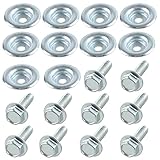
I remember staring at a pile of identical-looking bolts at the hardware store, trying to fix a wobbly workbench. They all looked the same, felt the same, and were priced almost identically. My brain screamed, ‘Are all 8 8 bolts same spex?’ I ended up grabbing a handful, only to find out later that some were stronger, some rusted faster, and one even snapped under stress. That’s when I learned the hard way that not all bolts are created equal, even when they wear the same markings.
It’s a common frustration. You need a specific fastener, and the sheer volume of options can be overwhelming. You think you’re buying a standard part, but subtle differences can lead to serious headaches down the line, from projects failing to, worse, safety hazards.
This isn’t about fancy, specialized aerospace fasteners. This is about the everyday bolts you’ll find holding your car together, your furniture sturdy, or your DIY projects from falling apart. Let’s cut through the confusion.
The Imperial vs. Metric Maze: Why Bolt Markings Matter
Okay, first things first: that ‘8.8’ you see stamped on a bolt isn’t just a random number. It’s a grade, a signifier of strength, and it’s a metric thing. If you’re used to the Imperial system – the one with inches and fractions like 1/4-20 or 1/2-13 – you’ve probably seen grades like 2, 5, or 8. These are different grading systems entirely.
So, are all 8 8 bolts same spex? No, not exactly. The ‘8.8’ designation refers to the minimum tensile strength and yield strength of the bolt, measured in megapascals (MPa). The first ‘8’ is roughly 1/10th of the nominal minimum tensile strength in MPa (so, 800 MPa), and the second ‘8’ is the ratio of yield strength to tensile strength, expressed as a percentage (so, 80% of 800 MPa, which is 640 MPa). This system, established by ISO standards and widely used in metric countries, gives you a quick, standardized way to understand a bolt’s load-bearing capacity.
Comparing this directly to Imperial grades is where things get tricky. An SAE Grade 5 bolt, for instance, has a minimum tensile strength of about 740 MPa, and a Grade 8 bolt is around 1040 MPa. So, a metric 8.8 bolt falls somewhere in the ballpark of an SAE Grade 5 bolt in terms of raw strength.
However, ‘in the ballpark’ isn’t good enough when you’re building something that needs to be reliable. The thread pitches, diameters, and even the material compositions can vary, meaning you can’t just swap a metric 8.8 for an SAE Grade 5 and expect everything to be fine. I once tried to use some metric bolts on a trailer hitch that was originally designed for SAE bolts.
The diameter was almost identical, but the thread pitch was slightly different. It screwed in, but it didn’t feel secure, and I pulled it out immediately.
Trust me, cross-system substitutions are a recipe for disaster.
The key takeaway here is that ‘8.8’ tells you a lot about a specific metric bolt’s performance characteristics. It’s a standardized language for strength. But it doesn’t tell you everything. You still need to worry about the diameter (like M8, M10, M12) and the thread pitch (how many threads per inch or mm). An M8x1.25 bolt (8mm diameter, 1.25mm pitch) is entirely different from an M8x1.0 bolt (8mm diameter, 1.0mm pitch), even though they both might be grade 8.8.
Beyond the Grade: Diameter, Thread Pitch, and Materials
So, we’ve established that the ‘8.8’ grade is a vital piece of the puzzle, but it’s not the whole picture. What else distinguishes one bolt from another, even if they both have ‘8.8’ stamped on their heads? It boils down to a few important factors: diameter, thread pitch, material composition, and importantly, the coating or plating.
Let’s start with diameter. This is usually straightforward. You’ll see metric diameters like M4, M5, M6, M8, M10, M12, and so on.
The ‘M’ stands for metric, and the number is the nominal diameter in millimeters. Easy enough.
But then there’s the thread pitch. For a given diameter, there can be multiple thread pitches. For example, an M10 bolt can have a standard pitch of 1.5mm (M10x1.5) or a fine pitch of 1.25mm (M10x1.25). (See Also: Are All Honda Atv Bolt Patterns The Same )
Fine threads have more turns per inch, which can provide a stronger connection in thinner materials and are less likely to loosen from vibration. However, they can also be more prone to cross-threading if you’re not careful. Always, always, always confirm the thread pitch you need. It’s a mistake I’ve made more times than I care to admit when rummaging for a replacement bolt in my overflowing toolbox.
I’ll grab what looks right, jam it in, and then spend ten minutes trying to back it out because it’s the wrong pitch and has mangled the threads. Painful.
Material composition, while often standardized for specific grades like 8.8, can still have subtle variations that affect performance. Most 8.8 bolts are made from medium-carbon steel, heat-treated to achieve their strength. However, the exact alloy mix, the quenching and tempering processes, and even the manufacturing tolerances can introduce slight differences in toughness and fatigue resistance. For most everyday DIY tasks, these differences are negligible. But if you’re working on something safety-important, like suspension components or structural elements, you want to make sure you’re getting bolts from a reputable manufacturer that adheres to strict quality control.
Then there’s the coating. This is HUGE and often overlooked. A plain, unplated 8.8 bolt made of carbon steel will rust almost immediately if exposed to moisture. That’s why you’ll see them with various coatings: zinc plating (often called ‘clear zinc’ or ‘yellow zinc’), black oxide, or even stainless steel.
Zinc plating offers decent corrosion resistance for dry or moderately humid environments. Black oxide is more for appearance and offers minimal corrosion protection. Stainless steel bolts offer excellent corrosion resistance but are typically weaker than their hardened steel counterparts and significantly more expensive.
So, you might have two M10x1.5 bolts, both grade 8.8, but one is plain steel and the other is zinc-plated. The plated one will last much longer outdoors.
| Feature | Metric Grade 8.8 Bolt | SAE Grade 5 Bolt | Verdict |
|---|---|---|---|
| Nominal Tensile Strength (approx.) | 800 MPa | 740 MPa | 8.8 is slightly stronger on paper. |
| Yield Strength (approx.) | 640 MPa | 550 MPa | 8.8 is significantly stronger in yield. |
| System | Metric | Imperial (SAE) | Cannot directly substitute; thread pitch and diameter are key. |
| Common Use | General machinery, automotive applications (where metric is standard). | Automotive, general construction (where Imperial is standard). | Always use the system specified for the application. |
| Corrosion Resistance (plain steel) | Poor | Poor | Coating is key for any exposure. |
When Strength Isn’t Everything: Load Types and Failure Modes
We talk a lot about tensile strength – how much a bolt can be pulled before it breaks. But in the real world, bolts experience more than just a straight pull. They deal with shear forces, vibration, torsion, and combinations of all of these. This is where simply comparing grade numbers can be misleading, and it’s a reason why ‘are all 8 8 bolts same spex’ is a question that needs more than a yes/no answer.
Shear force is probably the most common type of stress a bolt endures. Imagine two plates being bolted together, and then you try to slide them apart sideways. The bolt is being cut, or sheared. While tensile strength is important, the bolt’s ability to resist shear is often what prevents failure in applications like joining brackets or attaching hinges.
Different bolt designs and manufacturing processes can affect shear strength, even within the same grade. For instance, the shank diameter (the unthreaded part) is important for shear resistance. A fully threaded bolt, even if it’s grade 8.8, might be weaker in shear than a bolt with a longer unthreaded shank of the same diameter and grade because the threads are a weaker point.
Vibration is another silent killer of bolted joints. Think about anything that moves or is subjected to constant shaking – a car engine, a washing machine, or even a fence post in a windy area. Bolts can gradually loosen over time due to vibration. This is why locking nuts, lock washers, or thread-locking compounds are often used in addition to the bolt itself. The ‘strength’ of a bolt isn’t just about its breaking point; it’s also about its ability to maintain its clamping force under dynamic conditions. A slightly softer bolt that can deform just enough to create a tighter, more vibration-resistant joint might outperform a harder, more brittle bolt that simply shakes loose.
I had a classic moment of realization with a garden gate. The hinges kept loosening. I replaced the bolts with stronger ones, thinking that was the answer. They worked for a while, but eventually, they too started to loosen.
The problem wasn’t the bolt’s strength in a static pull; it was its inability to stay tight under the constant racking and vibration of the gate swinging in the wind. I ended up using a combination of nylon-insert lock nuts and a bit of thread locker. It’s not just about the bolt’s material specs; it’s about the entire fastening system and the forces it will encounter.
Understanding how a bolt will actually be loaded is more important than just picking the highest grade you can find. (See Also: Are Ak Bolts Interchangeable )
The concept of ‘toughness’ versus ‘brittleness’ also plays a role. High-strength bolts, especially if heat-treated improperly or if made from certain alloys, can become brittle. A brittle bolt might snap suddenly with little warning when subjected to shock loads or over-tightening. A tougher bolt, while perhaps having a slightly lower ultimate tensile strength, will bend or deform before it breaks, giving you a much better chance of noticing a problem before a catastrophic failure.
Common Mistakes and How to Avoid Them
Now that we’ve dug into the nitty-gritty, let’s talk about the screw-ups I’ve seen (and made!). Understanding the common pitfalls when dealing with bolts, especially when you’re asking yourself ‘are all 8 8 bolts same spex?’, can save you a ton of grief and money.
Mistake number one: Assuming all bolts of the same length and apparent diameter are interchangeable. This is the cardinal sin.
As we’ve discussed, thread pitch is important. Using a bolt with the wrong pitch might feel like it’s going in, but it can damage the threads on both the bolt and the nut or tapped hole. This weakens the joint and can make it impossible to properly secure whatever you’re fastening.
Always check the thread pitch. If you’re unsure, take the old bolt or nut to the hardware store and compare them side-by-side, or use a thread gauge if you have one. My first attempt at replacing a bolt on a bicycle frame ended with me having to re-tap the frame’s threaded insert because I grabbed a bolt with a slightly different pitch. Lesson learned the expensive way.
Mistake number two: Over-tightening. This is especially tempting with stronger bolts. You think, ‘If it’s strong, I can really crank it down!’ Wrong. Over-tightening can strip threads, snap the bolt head off, or even deform the parts you’re trying to join. Bolts have a recommended torque specification. While you might not always have a torque wrench handy for every little job, it’s good to have a feel for it. If it starts to feel excessively difficult to turn, stop and re-evaluate. Sometimes, a bit of lubrication on the threads can help you achieve proper tightness without excessive force, but be aware that lubricant can also alter the torque you need to apply for a given clamping force.
Mistake number three: Ignoring corrosion resistance. If your project is going outdoors, or in a damp garage, or anywhere moisture is a factor, using plain, unplated steel bolts is a quick way to invite rust. That rust not only looks terrible but it weakens the bolt over time and can seize it permanently in place. For exterior use, at a minimum, look for zinc-plated bolts.
For even better protection, stainless steel is ideal, but remember that its strength characteristics are different, and it’s more expensive. I once bolted some shelving to an exterior wall with plain steel bolts.
Within a year, they were so rusted I could barely get a wrench on them, and the whole shelf felt shaky. I replaced them with stainless steel, and the difference was immediate.
Mistake number four: Using the wrong grade for the job. While you don’t always need the strongest bolt available, using a bolt that’s too weak is a safety hazard.
A grade 4.6 bolt (which is pretty low strength) might be fine for holding a lightweight sign, but it’s absolutely inadequate for anything structural or load-bearing. The 8.8 grade offers a good balance of strength and cost for many applications, but it’s not a universal solution. Always consider the forces your bolted joint will experience and choose a grade that can safely handle them.
If in doubt, err on the side of caution and go for a higher grade, but remember that strength isn’t the only factor; toughness and corrosion resistance matter too.
Here’s a little table summarizing some common bolt types and their general suitability. It’s not exhaustive, but it gives you a rough idea: (See Also: Are All Bolt Patterns The Same )
| Bolt Type/Grade | Typical Material | Approx. Tensile Strength (MPa) | Best For | Common Pitfalls |
|---|---|---|---|---|
| Metric 4.6 | Low carbon steel | 400 | Light-duty, non-important applications (e.g., some furniture assembly). | Too weak for structural use; poor corrosion resistance without plating. |
| Metric 8.8 | Medium carbon steel, heat-treated | 800 | General machinery, automotive, structural components (where metric is standard). Good balance of strength and cost. | Can be brittle if not manufactured well; plain steel rusts easily. |
| Metric 10.9 / 12.9 | Alloy steel, heat-treated | 1000 / 1200+ | High-stress applications, heavy machinery, important automotive parts. | Very strong but can be brittle; expensive; requires precise torque. |
| SAE Grade 2 | Low carbon steel | 330 | Very light-duty, non-structural (e.g., light fixtures, some appliances). | Extremely low strength; prone to damage. |
| SAE Grade 5 | Medium carbon steel, heat-treated | 740 | General construction, automotive (where Imperial is standard). Similar to 8.8. | Corrosion issues without plating; can be brittle. |
| SAE Grade 8 | Alloy steel, heat-treated | 1040 | High-strength applications, important automotive chassis, structural bridge components. | Expensive; prone to brittleness; needs proper torque. |
| Stainless Steel (e.g., 304, 316) | Stainless steel alloy | Varies (typically lower than hardened carbon steel) | Corrosive environments, food-grade applications, marine. | Lower tensile strength than equivalent grades of carbon steel; more expensive; can gall (bind up) if over-tightened. |
Practical Tips for Buying and Using Bolts
Okay, you’ve got the gist of it. Bolts aren’t just lumps of metal. They’re engineered parts, and understanding a few practicalities can make your life much easier. So, when you’re staring down the bolt aisle and wondering ‘are all 8 8 bolts same spex?’, here’s what you should be doing.
First, always buy from reputable sources. This means established hardware stores, well-known online fastener suppliers, or direct from manufacturers if you’re buying in bulk. Avoid the bargain bin at the flea market or that sketchy online seller with impossibly low prices. High-quality fasteners are manufactured with strict tolerances and quality control. Cheap bolts might be made from inferior steel, have inconsistent heat treatment, or have plating that flakes off. I once bought a box of what were supposed to be grade 8.8 bolts online, and they felt… off. They were softer than they should have been, and I ended up snapping a few during assembly. That’s why sticking to known brands and suppliers is usually worth the slight premium.
Second, read the packaging or product description carefully. Don’t just look for the grade. Confirm the diameter, the thread pitch, the length, and the material/coating. Most reputable packaging will clearly state all of this. For example, it might say ‘M10 x 1.5 x 50mm, Grade 8.8, Zinc Plated Hex Bolt’. That’s the information you need. If the packaging is vague or missing key details, walk away. If you’re buying online, look for detailed specifications and clear images. Sometimes, a seller will list a bolt as ‘high strength’ without specifying the grade – that’s a red flag.
Third, keep an organized collection of common fasteners. This is a big deal for DIYers. Invest in a good set of bins or organizers and sort your bolts by size, grade, and thread pitch. Having a readily available supply of the right fasteners means you’re less likely to make a hasty substitution. It also saves you time searching. I have several small bins labeled ‘M6’, ‘M8 Standard’, ‘M8 Fine’, ‘M10’, etc., and inside each, I try to keep a mix of grades and plating types where appropriate. It took a bit of effort to set up, but it pays dividends every single time I need a bolt.
Fourth, when in doubt, over-spec. If you’re not entirely sure about the load requirements, it’s generally safer to use a bolt of a higher grade than you think you need, provided it’s the correct diameter and thread pitch. For instance, using a grade 10.9 or SAE Grade 8 where a 8.8 or Grade 5 might suffice is usually not a problem, as long as you don’t over-tighten them and they are compatible in terms of material and corrosion resistance. However, going from a higher grade down to a lower grade is where you introduce risk. It’s like choosing a safety feature; you’d rather have a bit more than you need than not enough.
Finally, consider the head type. While we’ve focused on strength and specs, the head shape matters for usability and clearance. Hex bolts (with a six-sided head) are the most common and are designed to be used with a wrench or socket. Other types include carriage bolts (round head with a square neck, useful for preventing rotation), cap screws (often used with Allen wrenches), and flange bolts (which have a built-in washer). Make sure the head type fits your application’s clearance and tool access requirements.
Faq: Your Bolt Questions Answered
Can I Use a Metric Bolt in a Standard (sae) Hole?
Generally, no, you cannot safely interchange metric and standard (SAE) bolts in the same hole without careful measurement. While diameters might seem similar, the thread pitches are almost always different. Forcing a metric bolt into an SAE threaded hole, or vice versa, will damage the threads and create a weak, unreliable joint. Always use bolts that match the threading of the hole you are fastening into.
What Does the Number on a Bolt Head Mean?
The numbers on a bolt head typically indicate its grade, which is a measure of its strength. For metric bolts, grades like 4.6, 8.8, 10.9, and 12.9 are common, with higher numbers indicating greater strength. For SAE bolts (Imperial system), grades 2, 5, and 8 are common, with grade 8 being the strongest. The specific numbers and their meanings are standardized by relevant organizations (ISO for metric, SAE for Imperial).
Is a Grade 8 Bolt Stronger Than an 8.8 Bolt?
A Grade 8 bolt (SAE/Imperial) is generally stronger in terms of minimum tensile strength than an 8.8 bolt (metric). SAE Grade 8 has a minimum tensile strength of around 1040 MPa, while metric 8.8 has a minimum tensile strength of around 800 MPa. However, metric 8.8 bolts often have a higher yield strength relative to their tensile strength than SAE Grade 5, making them very solid for many applications. They are not directly interchangeable due to the different threading systems.
How Do I Know If a Bolt Is Strong Enough?
Determining if a bolt is strong enough involves considering the load it will bear, the type of stress (tensile, shear, vibration), and the environment. For important applications, consult engineering specifications or charts that relate bolt grade and size to load capacity. For less important tasks, understand the typical uses of different grades: lower grades for light duty, 8.8/Grade 5 for general use, and 10.9/Grade 8 for heavy-duty or high-stress situations. Always consider corrosion resistance for outdoor or damp environments as well.
References
For detailed specifications on mechanical properties of fasteners, consult standards from organizations like the International Organization for Standardization (ISO) for metric fasteners and the Society of Automotive Engineers (SAE) for Imperial fasteners. Manufacturers’ technical data sheets also provide specific information on their products.
Final Thoughts
So, no, not all 8 8 bolts are the same spec. The ‘8.8’ tells you a baseline strength for metric bolts, but you still need to pay attention to diameter, thread pitch, material, and plating. Ignoring these details is like buying shoes without checking your size – you might get lucky, but you’re probably going to end up with blisters.
The real lesson here is to stop treating bolts as generic hardware. They are specific components designed for specific jobs. A little extra attention when you’re buying them – checking the packaging, understanding the difference between metric and Imperial, and considering the environment – can prevent a whole lot of frustration and potential failures down the road. It’s the difference between a job done right and a job you’ll have to redo.
Next time you’re at the hardware store, take an extra minute. Grab a magnifying glass if you have to. Your future self, the one who doesn’t have to fix a wobbly workbench or a collapsed shelf, will thank you.