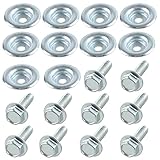
I remember staring at a pile of shiny new banjo bolts, all supposedly fitting the same brake line. My old one had finally decided to leak, and the auto parts store had a whole bin. “They’re all the same, right?” I mumbled to myself, grabbing the cheapest ones. Big mistake. Huge. That day taught me a hard lesson: no, they are absolutely not all the same. And if you’re asking are all banjo bolts the same, you’re probably on the verge of making the same expensive error I did.
This isn’t some fancy engineering deep dive. This is about real-world mechanics, the kind where a few millimeters can mean the difference between a smooth ride and a roadside breakdown. I’ve spent my fair share of weekends covered in grime, wrestling with stubborn fittings and cursing at parts that looked identical but refused to play nice.
So, let’s cut through the BS. Are all banjo bolts the same? Spoiler alert: definitely not. And understanding why can save you time, money, and a whole lot of frustration.
What Even Is a Banjo Bolt, Anyway?
Alright, let’s start with the basics. A banjo bolt is basically a specialized bolt used in fluid systems, most commonly in automotive and hydraulic applications. Think brake lines, oil coolers, fuel lines – anywhere you need a secure, leak-proof connection for a fluid hose. Its key feature is the hollow, threaded shaft that allows fluid to pass through.
The “banjo” part refers to the head, which is shaped like a ring or a loop, hence the name. This ring is where the sealing happens.
It usually has a hole through the center, and a washer (or two) on either side of the fitting it’s connecting to. When you tighten the bolt, it crushes these washers, creating a tight seal against the fitting and the hose adapter.
Simple enough, right? But like I said, the devil is in the details.
The common misconception, the one that got me into trouble, is that because they all look similar and serve the same basic function, they’re interchangeable. They’re not. The important differences lie in a few key areas: thread size and pitch, length, the diameter of the sealing surface on the bolt head, and sometimes even the material they’re made from. For instance, a banjo bolt for a brake system needs to handle significant pressure and temperature fluctuations, so it’ll often be made of hardened steel.
An oil line banjo bolt might have slightly different thread requirements or a different overall length to clear surrounding components. I once tried to use a slightly longer bolt on a turbo oil feed line, thinking it would give me more thread engagement. It bottomed out before it could properly seal, and I ended up with a tiny, persistent drip that took me hours to find. Lesson learned: length matters, and so does how deeply it threads in.
The sealing surface is another big one. The inner diameter of the hole in the banjo head and the outer diameter where the crush washer sits are important. If these aren’t matched to the fitting and the hose, you’re fighting a losing battle against leaks. It’s like trying to fit a square peg into a round hole, but with high-pressure fluid on the line.
And don’t even get me started on metric versus SAE threads. Trying to force the wrong thread pitch is a recipe for stripped threads and a ruined fitting, not to mention the potential for a catastrophic failure when that bolt eventually gives way under pressure. It’s not just about getting it in; it’s about getting it in correctly and having it hold.
The Subtle (and Not-So-Subtle) Differences You Must Know
So, what are these ‘differences’ we’re talking about? Let’s break them down. First off, thread size and pitch.
This is probably the most common pitfall. You’ll see common sizes like M10x1.0, M10x1.25, 3/8″-24, or 7/16″-20. These numbers tell you the diameter of the bolt (in millimeters or inches) and how many threads there are per inch (or the distance between threads in millimeters). Get this wrong, and the bolt simply won’t thread in, or worse, it’ll thread in partly and then bind, damaging both the bolt and the fitting.
I made this mistake with a simple power steering line once. I grabbed what looked like the right size, but the thread pitch was slightly off. (See Also: Are All Honda Atv Bolt Patterns The Same )
It went in a few turns, felt tight, and I thought I was golden. Fast forward a week, and I had fluid spraying everywhere under the hood. Turns out it was the wrong thread pitch for that specific power steering pump fitting.
Then there’s the length of the bolt itself, and more importantly, the length of the threaded portion. A banjo bolt needs to thread into a fitting deep enough to create a secure hold, but not so deep that it bottoms out before the sealing surface can do its job. This is where those seemingly identical bolts can vary.
One might have a longer shoulder before the threads start, or the threaded section might be shorter. This is especially important with aftermarket parts, where tolerances can sometimes be a bit looser. You might also find variations in the length of the threaded shank that protrudes through the fitting and into the component it’s attached to. This can be important for clearing other components or making sure it doesn’t interfere with internal mechanisms.
The diameter of the bolt head’s sealing flange is another area of variation. This flange is what the crush washer(s) seat against. If this diameter is too small, the washer might not seat properly, leading to leaks.
If it’s too large, it might not allow the washer to deform correctly. The hole through the banjo head also needs to be the correct size for the fluid flow required.
While less common for most DIYers, in high-performance or specialized applications, this can be a factor. Finally, material.
While most common banjo bolts are steel (often zinc-plated or cadmium-plated for corrosion resistance), you might encounter stainless steel for higher corrosion resistance, or even titanium in extreme performance builds. The material can affect strength, corrosion resistance, and weight, but for most everyday applications, steel is the standard.
Common Mistakes and How I Learned the Hard Way
My first major banjo bolt blunder happened years ago when I was trying to fix a leaky oil cooler line on an old pickup. I’d bought a universal banjo bolt kit from a big box store, figuring, you know, they’re all the same.
WRONG. The kit came with a bunch of different sizes and lengths, and I thought, “Great, I’ll find one that fits.” I picked one that seemed to thread in nicely. I put on the new copper crush washers, tightened it down snug, and topped off the oil.
Drove it around the block, and noticed a faint smoky smell. Pulled over, and there was oil weeping from the banjo fitting.
Not a gushing leak, but a steady, annoying weep. I tightened it more.
Still weeping. Frustrated, I decided to replace the entire fitting and the bolt. This time, I went to a proper auto parts store that had actual parts diagrams. Turns out, the bolt I used was almost the right thread size, but the pitch was just a hair off.
It went in, but didn’t seat properly, and the sealing surface on the bolt head wasn’t quite right for the fitting I had. I ended up wasting about $50 on bolts, washers, and a quart of oil that day. It wasn’t the cost, it was the principle of the thing. (See Also: Are Ak Bolts Interchangeable )
Thinking something so seemingly simple could be so complicated.
Another common mistake, and one I see people do constantly, is reusing old crush washers. These are designed to be a one-time use item. They deform when you tighten the bolt to create the seal.
Reusing them is like trying to un-crumple a piece of paper and expect it to be flat again. It just doesn’t work.
You’ll get leaks. Period. I’ve been tempted, especially when I’m in a pinch, but I’ve learned to always use new ones. Copper or aluminum are common.
Copper is generally preferred for higher temperatures and pressures, like in brake systems. Aluminum is often found in lower-pressure oil lines. Some banjo bolts might even come with their own integrated sealing washer, which simplifies things but also means you can’t just grab any old washer if you lose it.
People also sometimes over-tighten. Banjo bolts are not lug nuts. You don’t need to stand on the wrench. The seal is created by crushing the washers, not by deforming the fitting or the bolt head itself. Overtightening can strip the threads in the fitting, snap the bolt, or even crack the banjo head. For most automotive applications, a snug fit plus a quarter turn is usually sufficient, but always check the specific service manual for your vehicle or equipment if you can. I’ve seen stripped banjo fitting threads on engine blocks more times than I care to count, and that’s a repair that can get expensive very quickly.
| Feature | Common Variations | Why It Matters | My Verdict |
|---|---|---|---|
| Thread Size & Pitch | M10x1.0, M10x1.25, 3/8″-24, 7/16″-20 | Makes sure proper thread engagement and prevents stripping. Important for secure connection. | Absolutely Important. Wrong pitch = leak or stripped threads. Always verify. |
| Overall Length | Varies by application (e.g., 25mm, 30mm, 35mm) | Prevents bottoming out in the fitting before sealing, or makes sure clearance. | Important. Too short can mean insufficient thread engagement; too long can bottom out. |
| Threaded Shank Length | Varies | Affects how deep the bolt goes into the fitting and can impact clearance. | Situational. Mostly matters for clearance or when a fitting is exceptionally deep. |
| Head Sealing Flange Diameter | Slight variations exist | Affects how well the crush washer seats and seals. | Important. Needs to be compatible with washer size and fitting recess. |
| Material | Steel (plated), Stainless Steel | Corrosion resistance, strength, and temperature handling. | Application Dependent. Steel is fine for most; stainless for harsh environments. |
| Crush Washers | Copper, Aluminum | Create the seal. Must be new and correctly sized for the bolt/fitting. | A must. ALWAYS use new, correct washers. Reusing is asking for leaks. |
Choosing the Right Banjo Bolt: What to Look For
Okay, so you’ve decided you need a new banjo bolt. Where do you even start? First, and I cannot stress this enough, identify the EXACT specification of the bolt you need to replace. If you have the old one, look for any markings on it. Sometimes, the thread size and pitch are stamped right on the head or shank. If not, you’ll need to measure. For thread size, you can use a thread gauge if you have one, or carefully try it on a known bolt of a specific size (e.g., try it on a M10x1.0 bolt, then an M10x1.25 bolt, etc.). For pitch, a thread pitch gauge is your best friend. They’re cheap and incredibly useful.
If you’re working on a vehicle, your best bet is to consult the service manual. It will almost always list the exact specifications for all fittings and bolts.
Alternatively, you can use online parts catalogs for your specific make and model. Enter your vehicle’s year, make, and model, then navigate to the relevant system (brakes, cooling, oil, etc.)
and look for the hose or fitting assembly. The parts breakdown will often show the banjo bolt and its dimensions.
Websites like McMaster-Carr are fantastic resources for finding specific hardware. They have incredibly detailed spec sheets, and you can filter by thread size, length, material, and more. I’ve used them for everything from plumbing to custom hydraulic setups.
They might seem a bit industrial, but their search functionality is second to none.
When you’re shopping, pay attention to the description. Don’t just grab the first thing that says “banjo bolt.” (See Also: Are All Bolt Patterns The Same )
Look for the thread size, length, and the type of sealing surface. If it’s for a high-pressure system like brakes, make sure it’s rated for that. For example, many brake banjo bolts are specifically designed to work with a particular type of fitting and require two crush washers. Some fuel injection banjo bolts might have finer threads and different sealing mechanisms to prevent fuel leaks.
I learned this while trying to adapt a fuel rail from one engine to another. The original fuel rail used a very specific banjo bolt with an integrated O-ring and a specific thread. Trying to use a standard brake banjo bolt there would have been a disaster waiting to happen.
Even the material is worth considering. If your application is prone to corrosion, like a boat trailer brake system or a vehicle used in salty climes, opting for stainless steel can save you headaches down the line.
Finally, always buy new, high-quality crush washers. They are cheap insurance against leaks. Copper washers are generally preferred for brake lines and higher temperature applications due to their malleability and heat resistance. Aluminum is often used for lower-pressure oil lines. Make sure the inner diameter of the washer matches the inner diameter of the banjo bolt’s shank, and the outer diameter is compatible with the sealing flange on the bolt. Most parts stores sell banjo bolt kits that include the bolt and the correct number of washers, which is usually the easiest route for common applications.
Real-World Applications and Practical Tips
I’ve used banjo bolts in a surprising number of places. My first major project was rebuilding the braking system on a classic motorcycle. Those old bikes often had steel brake lines that used banjo fittings at the calipers and master cylinder. Getting those sealed perfectly was most important, and I spent hours just researching the correct bolt size and thread pitch for that specific model. Turns out, it was an obscure metric thread that wasn’t readily available at the local auto parts store. I had to order it online from a specialty motorcycle parts supplier. That experience really hammered home the fact that standardization isn’t always universal.
Another time, I was installing an aftermarket oil cooler on a sports car. The cooler had threaded ports, and the kit came with adapter fittings that used banjo bolts to connect to the vehicle’s oil lines. The problem was, the adapter fittings had a slightly different flange diameter than the original fittings on the car. This meant the original banjo bolts wouldn’t seal correctly with the new washers and fittings. I ended up having to buy a new set of banjo bolts that were specifically designed for that aftermarket kit, making sure the sealing surface and thread dimensions were compatible. It cost me an extra $30, but it saved me from a potential engine-destroying oil leak.
Here are a few practical tips I’ve picked up along the way:
- Always Replace Washers: I can’t say it enough. New crush washers every time. Copper for high pressure/temp, aluminum for lower pressure.
- Double Check Thread Pitch: This is the most common mistake. If you’re unsure, get a thread gauge or carefully test with known bolts.
- Buy from Reputable Sources: For important systems like brakes or fuel, stick to known brands or specialty suppliers. Avoid the cheapest generic bin if you can.
- Torque Wrench is Your Friend: If you can find the spec, use a torque wrench. If not, snug it up, then give it a gentle quarter-turn. Feel is important, but specs are better.
- Cleanliness is Key: Make sure the mating surfaces of the fitting and the bolt head are clean and free of debris before assembly.
I’ve even seen banjo bolts used in some high-end RV plumbing systems and in some industrial equipment. They’re incredibly versatile, but that versatility comes with a caveat: you must use the right one for the job. Trying to be clever and just grabbing whatever looks close is a false economy. You’ll end up spending more time and money fixing the inevitable leaks and damage.
The Faq: Sorting Out Banjo Bolt Confusion
Can I Use a Stainless Steel Banjo Bolt Instead of a Steel One?
Generally, yes, you can often swap a standard plated steel banjo bolt for a stainless steel one, provided the thread size, pitch, and length are identical. Stainless steel offers superior corrosion resistance, which can be a significant advantage in harsh environments or for longevity. However, make sure the stainless steel bolt is of adequate strength for the application, especially for high-pressure brake or hydraulic systems. Some very high-performance or specialized applications might have specific material requirements, so always check if you’re unsure.
How Tight Should I Make a Banjo Bolt?
The tightness of a banjo bolt is about achieving a proper seal through the crush washers, not about brute force. For most automotive applications, snug it up until the washers begin to compress, then tighten an additional quarter to half turn. It’s best to consult a service manual for specific torque values if available. Overtightening can strip threads, damage the fitting, or even crack the bolt head. Feel is important here; you want it firm and secure, but not strained.
What Happens If I Use the Wrong Size Banjo Bolt?
Using the wrong size banjo bolt can lead to several problems. If the thread size or pitch is incorrect, it may not thread in at all, or it could cross-thread and damage both the bolt and the fitting. If the bolt threads in but is slightly off in size or length, it might not seal properly, leading to leaks. In important systems like brakes, a poorly sealed or improperly fitted banjo bolt could lead to catastrophic failure, which is incredibly dangerous. It can also result in stripped threads in the component the bolt screws into, which is a much more costly repair.
Do I Really Need to Replace the Crush Washers Every Time?
Yes, you absolutely need to replace the crush washers every single time you remove and reinstall a banjo bolt. These washers are designed to deform and compress to create a seal. Once they’ve been compressed, they lose their ability to create a perfect seal if re-used. Reusing them is one of the most common reasons for banjo fitting leaks. Always use new, correctly sized copper or aluminum crush washers appropriate for your application.
Verdict
So, to circle back to the burning question: are all banjo bolts the same? The short, blunt answer is a resounding ‘no.’ My own costly experiences, from leaky oil lines to power steering fluid showers, are testament to that. The subtle differences in thread pitch, length, and sealing surface diameter matter more than you’d think, especially when dealing with pressurized fluid systems.
Trying to save a few bucks by using a generic or mismatched bolt is a gamble that rarely pays off. You’ll likely end up spending more on replacement parts, lost fluid, and your own valuable time trying to track down the leak. It’s always better to spend a little extra upfront to get the exact, correct part for the job. Your peace of mind, and your vehicle’s integrity, depend on it.
Next time you’re faced with a banjo bolt situation, take an extra five minutes. Grab a flashlight, look for markings, consult a manual, or measure carefully. It’s a small step that can prevent a mountain of headaches. And remember, when in doubt, err on the side of caution and get the spec right.