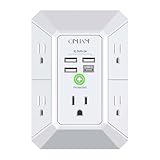
I stared at the plug, then at the outlet. Something felt… off. It’s a question that pops into your head when you’re fiddling with a charger in a weird spot or trying to plug something in with a bulky adapter: are all electrical outlets upside down? It’s not some deep philosophical quandary, just a nagging little detail that makes you question the world around you. For years, I’d just accepted the way outlets looked. But then, I started noticing it more. That little ‘smile’ shape, with the ground prong at the top. Why is it like that? Is it intentional, or just the way things happened to evolve?
The truth is, the orientation of our electrical outlets isn’t some random cosmic joke. There are actual reasons behind it, and surprisingly, they have a lot to do with safety and practicality. You might think it’s just about aesthetics, but it’s more than that. Let’s break down why your plugs might seem to be facing the wrong way, and what it all means for you and your home.
The Ground Prong: Your Safety Anchor
Okay, let’s get straight to the point. The reason why most electrical outlets have the ground prong facing upwards on a standard duplex receptacle is, quite frankly, safety. It’s the most obvious visual cue, right? You see that U-shaped hole above the two vertical slots. That’s the ground connection. The standard plug for most modern appliances has three prongs: two flat blades for the hot and neutral wires, and a round or U-shaped prong for the ground.
In North America, the National Electrical Code (NEC) dictates many of these standards. While the code doesn’t explicitly mandate the orientation of the receptacle slots themselves (meaning, it doesn’t say the ground must be up), it does specify the design of plugs and receptacles to make sure compatibility and safety. The common practice has become the ground-up orientation for a few practical reasons that I’ve come to appreciate after years of plugging and unplugging things.
First and foremost, if a plug is loose or partially pulled out, the ground prong is the last to disconnect. This is important because if a fault occurs and electricity starts arcing, the ground connection is the first line of defense. Keeping it connected for as long as possible is a good thing.
Think about it: if the ground was at the bottom and the plug wiggled out, a potentially live appliance could become a shock hazard much more easily. I’ve seen plenty of cheap extension cords where the plug didn’t quite grip, and the thought of that happening with the ground at the bottom made my stomach clench. Plus, when you’re plugging something in with a bulky adapter – you know, the ones that take up an entire outlet by themselves – having the ground hole on top often gives you a bit more clearance.
It’s not always perfect, but it generally allows the adapter to sit a bit more flush or at least prevents it from dangling precariously. I remember one time, I was trying to plug in a power strip with a thick right-angle plug, and the outlet was in a tight spot behind a desk. If the ground had been on the bottom, that plug would have been sticking out at an impossible angle, probably getting knocked loose constantly. The ground-up configuration, in that case, made all the difference.
This configuration isn’t just about aesthetics; it’s a subtle engineering choice for better electrical safety. It’s one of those things you don’t think about until it’s pointed out, but once you see it, you can’t unsee it. And the question of ‘are all electrical outlets upside down’ starts to feel a lot less like a silly thought and more like a genuine curiosity about design.
The ‘why’ Behind the Standard Design
So, we’ve established that the ground prong usually faces up. But why has this become the universal norm, and are there any exceptions? In North America, the standards are largely set by organizations like Underwriters Laboratories (UL) and the National Electrical Code (NEC). These bodies focus on safety and interoperability. The design of the NEMA (National Electrical Manufacturers Association) 5-15 receptacle and plug, the most common type in the US and Canada, has evolved over time to incorporate these safety features.
The dual-slot design with the ground hole above is intentionally configured. If a plug is inserted correctly, the ground prong makes contact first and breaks contact last during disconnection. This is a deliberate safety measure. Imagine a scenario where a wire inside an appliance becomes loose and touches the metal casing. If this casing is not properly grounded, and you touch it while also touching something else that’s grounded (like a metal pipe or even the earth), you could complete a circuit and get a nasty shock. The ground wire provides a path of least resistance for this fault current to flow safely to the ground, tripping a breaker or blowing a fuse, rather than through you.
Now, about exceptions. While the ground-up orientation is overwhelmingly common for standard residential and commercial outlets, you might occasionally see them installed with the ground prong facing down. This is often due to installer preference, or in some specific, less common outlet types. However, for the vast majority of us, the standard is ground-up. (See Also: Are American Outlets Ac Or Dc )
Some electricians argue that ground-down is actually superior in certain situations. Their reasoning is that gravity will help keep a heavy plug seated, and if the plug becomes partially dislodged, the hot and neutral prongs will break contact before the ground. This is a valid point, and you’ll find plenty of electricians who swear by the ground-down method. I’ve even seen homes where this is the consistent orientation.
It’s a friendly debate among professionals, with solid arguments on both sides. Personally, I’ve experienced both, and I haven’t noticed a significant difference in everyday use, but I do lean towards the ground-up for that initial plug-in safety margin I mentioned earlier.
It’s also worth noting that in other countries, plug and socket standards vary widely. Some use different prong shapes, some don’t have a ground pin at all (though these are becoming rarer for safety reasons), and their orientation might differ. So, the question ‘are all electrical outlets upside down’ is really only relevant to the specific types of outlets we commonly encounter in North America. The global electrical landscape is a fascinating, and sometimes confusing, mix of standards.
| Orientation | Common Rationale | My Verdict |
|---|---|---|
| Ground Prong Up | Safety: Ground is last to disconnect, first to connect. Better clearance for bulky adapters. | Reliable and generally safer for plug insertion/removal. My default preference. |
| Ground Prong Down | Safety: Gravity helps secure heavy plugs. Hot/Neutral disconnect before ground if partially pulled. | Valid arguments for stability with heavy loads. Still feels slightly less intuitive for initial contact. |
Beyond the Standard: Gfci, USB, and Smart Outlets
The electrical outlet world isn’t static, and newer technologies have introduced variations that play with the traditional layout. Ground-fault circuit interrupter (GFCI) outlets, for instance, are a common safety upgrade, especially in areas prone to moisture like kitchens and bathrooms. These outlets have a built-in breaker that trips if it detects an imbalance in current, significantly reducing the risk of electric shock. While they still maintain the standard receptacle face with two slots and a ground hole, their internal components are more complex. The orientation of the faceplate itself usually follows the ground-up standard, as the primary function is still electrical safety and compatibility with standard plugs.
Then we have the surge protector outlets and the increasingly popular USB outlets. Many surge protector outlets are designed as direct replacements for standard duplex receptacles. They often retain the familiar two slots and ground hole, sometimes with the ground facing up. Some are a bit wider to accommodate the surge protection circuitry, which can sometimes affect how many you can fit on a single wall plate.
USB outlets integrate USB ports directly into the outlet, allowing you to charge devices without a separate power adapter. These can come in various configurations. Some still have the traditional AC receptacles alongside the USB ports, adhering to the ground-up principle for the AC side.
Others might have a completely different form factor, but the underlying electrical safety principles still apply to the AC portion.
I remember installing a few USB outlets in my home office a couple of years back. I opted for ones that kept the standard NEMA receptacles, and thankfully, they were oriented ground-up. It made swapping out the old outlets a breeze. The only slight annoyance was that the USB ports themselves were usually at the bottom, which meant if I had a device with a large charging brick, it might slightly obstruct access to one of the USB ports.
But for charging my phone or tablet directly, it was incredibly convenient. No more hunting for an adapter!
It makes you wonder if the question ‘are all electrical outlets upside down’ will even be relevant as outlets become smarter and more integrated. (See Also: Are All Power Outlets Ac )
Smart outlets, which allow you to control devices remotely via an app, also usually maintain the standard AC receptacle configuration. The “smart” functionality is typically housed within the outlet’s body, behind the faceplate. So, for the most part, the physical arrangement of the slots and the ground prong remains consistent, even as the outlet gains new capabilities. This standardization is key to making sure that old plugs still fit into new, advanced outlets without major compatibility issues.
Common Mistakes and Misconceptions
One of the biggest mistakes people make regarding outlet orientation is not understanding its purpose. Many assume it’s purely aesthetic or arbitrary. This can lead to improper installation or a lack of concern about how plugs are seated. For instance, I’ve seen people force plugs into outlets in a way that bypasses the ground connection, or they’ll install outlets upside down (ground down) without understanding the implications, thinking it looks “neater” or fits a particular aesthetic. While the ground-down debate is valid among professionals, a homeowner randomly installing them that way without understanding the safety principles is a recipe for potential trouble.
Another common misconception is that all electrical outlets are the same worldwide. As I touched on before, this is far from true. Trying to plug a North American appliance into a European socket, or vice versa, without an adapter can not only damage your device but can also be incredibly dangerous. Different countries have different voltage and frequency standards, as well as different plug and socket designs. The question ‘are all electrical outlets upside down’ is really a question specific to certain regions, primarily North America, where the NEMA standards prevail. You wouldn’t ask that question in the UK, for example, where the sockets are entirely different and often have shutters for safety.
I also hear people questioning why some outlets seem “loose” or why plugs fall out. This isn’t usually a problem with the orientation itself, but rather with the wear and tear on the outlet’s internal contacts. Over time, the spring tension in the contacts can weaken, especially if heavy plugs are frequently plugged and unplugged or if the wrong type of plug is used. In such cases, the outlet needs to be replaced.
It’s a simple fix that many people ignore, which can lead to arcing and a fire hazard. I learned this the hard way after a plug on my old vacuum cleaner kept falling out of an outlet in my workshop. I kept pushing it back in, thinking it was just a weak plug.
Turns out, the outlet itself was worn out. A quick trip to the hardware store and about 15 minutes of work (after turning off the breaker, of course!) solved the problem. The new outlet held the plug firmly, and I felt a lot safer.
Finally, there’s the issue of “backstabbed” outlets. This is where wires are pushed into small holes on the back of the outlet rather than being secured with screws on the side. While faster for installers, these connections are notorious for loosening over time, leading to poor conductivity and potential fire hazards. Always make sure your outlets are wired correctly, ideally with screw terminals. This is more about installation quality than outlet orientation, but it’s a important safety aspect often overlooked.
Real-World Use and Practical Tips
In my own home, I’ve found that the standard ground-up orientation works perfectly fine for 99% of my needs. The majority of my appliances, chargers, and power strips are designed with this in mind. The key is to use the right equipment and make sure it’s installed correctly. For instance, if you have a lot of bulky adapters or power bricks, consider using a power strip that has widely spaced outlets. This can negate any clearance issues you might have with a standard wall outlet, regardless of its orientation. I invested in a couple of good power strips with rotating outlets, and they’ve been a lifesaver for managing my desk clutter.
When it comes to plugging things in, especially in tight spaces, a little technique goes a long way. If you’re using a standard plug, aim the two flat blades into the vertical slots first, then push the plug upwards to engage the ground prong. If you’re dealing with a right-angle plug or a bulky adapter, sometimes it’s easier to slightly angle the plug as you insert it, allowing the ground prong to engage first or simultaneously with the other two. It’s not rocket science, but a bit of finesse can prevent frustration and potential damage to your plugs or the outlet.
My contrarian opinion? While the ground-up orientation is the most common and has strong safety arguments, I actually don’t mind the ground-down installation when done correctly by a professional. (See Also: Are Arc Trip Outlets Required In Hillsborough County )
If the outlet is securely installed and the plugs fit snugly, the argument that gravity helps keep heavy plugs seated is quite compelling. I’ve had a few instances where a heavy power adapter seemed more stable when the outlet was ground-down.
However, I would never advocate for a homeowner to arbitrarily flip their outlets just because they think it looks better. Stick to the standard or have a qualified electrician assess and perform any non-standard installations.
It’s not worth the risk to ask ‘are all electrical outlets upside down’ and then experiment without knowledge.
A practical tip for those with older homes: if your outlets are the old two-prong type (no ground hole), consider upgrading them. Even if you don’t have a ground wire running to the outlet box, you can often install a three-prong outlet and have it labeled as “No Equipment Ground” by an electrician. This at least provides a more solid connection and is a step towards modern safety standards. And always, always turn off the circuit breaker before attempting any work on outlets. It sounds obvious, but in the heat of the moment, it’s the most important step to remember.
Why Do Electrical Outlets Have the Ground Prong on Top?
The ground prong is typically on top for safety reasons. It makes sure that the ground connection is the last to disconnect and the first to connect when plugging or unplugging. This provides a continuous path to ground for fault currents, protecting users from electric shock. It also often offers better clearance for bulky adapters.
Can I Install Electrical Outlets Upside Down?
While the National Electrical Code doesn’t strictly prohibit installing outlets with the ground prong facing down, it is generally recommended to follow the standard ground-up orientation for consistency and to use the safety benefits associated with it. If you choose to install them ground-down, make sure it’s done by a qualified electrician who understands the implications.
What Happens If I Plug Something Into an Outlet Upside Down?
If you mean plugging a standard three-prong plug into a receptacle that is installed with the ground prong facing down, it simply means the plug is inserted the “other way.” The appliance will still function normally. However, if you are trying to force a plug into an outlet in a non-standard orientation, you risk damaging the plug or the outlet, and potentially creating a safety hazard if the connections are not secure.
Are All Electrical Outlets the Same Worldwide?
No, electrical outlet and plug standards vary significantly by country. Different regions use different plug shapes, voltages, and frequencies. The common NEMA 5-15 receptacle found in North America is not compatible with outlets in most other parts of the world without the use of adapters and potentially voltage converters.
Conclusion
So, are all electrical outlets upside down? Not really, but the common orientation in North America is with the ground prong facing up, and there’s a good safety-driven reason for it. It’s a subtle design choice that contributes to the overall safety of your home’s electrical system, even if most people never give it a second thought. The debate between ground-up and ground-down is a real one among electricians, and both have their merits, but for everyday use, the established standard is usually the best bet.
Understanding these small details about your home’s infrastructure can save you headaches and, more importantly, keep you safe. Don’t just assume things are a certain way; a little curiosity can go a long way. Next time you plug something in, take a moment to appreciate the design, even if it’s just a simple electrical outlet.
If you’re ever unsure about your home’s wiring or feel like an outlet isn’t working quite right, don’t hesitate to call a qualified electrician. It’s a small investment for peace of mind and electrical safety.