I learned this the hard way, lugging a suitcase full of perfectly good gadgets across the pond, only to find my phone charger wouldn’t even glance at the wall socket. So, let’s cut to the chase: are all European outlets the same? Absolutely not. It’s a myth that causes headaches and, worse, expensive adapter purchases.
The visual similarity of some European plugs can be incredibly deceiving. You see a round pin, maybe two, and think, ‘Easy peasy.’ Then reality hits like a dropped hairdryer.
Understanding the differences isn’t just about avoiding a dead battery; it’s about saving money and making sure your electronics don’t go on a permanent vacation in a foreign socket.
The Tangled Web of European Plugs: It’s Not Just One Plug Fits All
When you first start looking into travel adapters or thinking about buying electronics to use in Europe, the question ‘are all European outlets the same?’ pops up like a persistent mosquito. The honest answer is a resounding ‘no.’ While there’s a lot of overlap and many countries have adopted similar standards, you’re still looking at a patchwork of plug and socket types. This isn’t some conspiracy; it’s a result of history, different national standards, and the slow pace of international standardization. Think of it like regional dialects – the language is the same, but the pronunciation and some words are different enough to cause confusion if you’re not prepared.
The most common plug types you’ll encounter are Type C (Europlug) and Type F (Schuko). The Type C is that simple two-round-pin plug you see on many low-power devices like phone chargers and laptop power bricks. It’s ungrounded and designed to fit into a wide variety of sockets, including Type E and Type F. The Type F, or Schuko (short for ‘Schutzkontakt,’ meaning protective contact), is a bit more solid. It’s also two round pins but has distinctive grooves on the sides for grounding. This is the standard in countries like Germany, Austria, the Netherlands, Spain, and Portugal.
But wait, there’s more! You’ve also got Type E, which looks very similar to Type F but has a hole for a grounding pin that sticks out from the socket. This is primarily used in France, Belgium, Poland, and Slovakia. Then there’s the Type G plug, the chunky three-rectangular-pin British-style plug, which you’ll find in the UK, Ireland, Malta, and Cyprus. And let’s not forget Type D and Type M, older, heavier-duty plugs used in places like India and some parts of Africa and Asia, which can sometimes still be found in older European buildings or specific industrial applications. It’s a real mess if you’re not paying attention.
The voltage is another story entirely, but the physical plug is the first hurdle. A plug that fits into a socket might not be safe or even functional if the voltage is wrong. Most of continental Europe operates on 230V, while the UK and Ireland are on 240V.
Most modern electronics, especially chargers for phones, laptops, and cameras, are dual-voltage (100-240V) and will happily adjust. However, things like hair dryers or electric shavers that aren’t explicitly marked as dual-voltage can fry if you plug them into the wrong voltage system.
I once bought a fancy European curling iron, thrilled to use it, only to discover it was a 230V-only model. My hotel room’s 120V equivalent would have been useless, and plugging it into a higher voltage socket in Europe would have been a disaster. Thankfully, I checked the label before plugging it in and had to buy a travel converter. That was a $50 lesson I won’t forget.
When you’re faced with the reality that are all European outlets the same, the next logical step is figuring out what you actually need. The key here is to stop thinking about countries and start thinking about plug types. Most travelers will primarily encounter Type C, E, and F. If you’re heading to the UK or Ireland, you’ll definitely need a Type G adapter. The Type C plug, the little two-pin wonder, is the most universal in terms of fitting into many different socket types (E and F). However, it doesn’t have a ground pin, which is important for higher-power appliances or devices with metal casings.
The most practical approach is to buy a universal travel adapter. These aren’t cheap, mind you – I’ve spent upwards of $30 for a decent one that doesn’t feel like it’s going to fall apart after two uses. But a good universal adapter has retractable pins for most major plug types (US, UK, EU, Australia) and often includes USB ports, which is a lifesaver. Look for one that clearly indicates which pins slide out and how they lock into place. I had one cheap universal adapter where the pins would randomly retract while I was trying to plug it in. It was infuriating. The ones with a sliding mechanism for each country’s pin set are generally more reliable.
When buying individual adapters for specific countries, pay attention to the socket type. For example, if you’re going to France, you need a Type E adapter. Germany and Spain use Type F. (See Also: Are American Outlets Ac Or Dc )
Italy has its own variations (Type L), though Type C often works. Switzerland has Type J, which looks a bit different with three pins arranged in a triangle. The important mistake people make is assuming that just because a plug fits, it’s the right adapter.
For instance, a Type C plug will fit into a Type G socket if you have a very basic adapter that just converts the pin shape, but it won’t be grounded, and it might not be the most secure connection. Always check the socket type in your destination country before you buy, or just go for the universal option.
Here’s a quick rundown of common European countries and their primary plug types. Remember, some older buildings might have variations, and international hotels often have universal sockets, but this is your best bet for general travel:
| Country | Primary Socket Type | Notes / Verdict |
|---|---|---|
| Germany | Type F (Schuko) | Very common. Type C plugs fit easily. |
| France | Type E | Similar to Type F but with a grounding pin hole. Type C fits. |
| UK | Type G | The big, rectangular three-pin. No Type C or F compatibility. |
| Spain | Type F (Schuko) | Similar to Germany. Type C fits. |
| Italy | Type L (often), Type C | Type L is common, but Type C is widely compatible. |
| Netherlands | Type F (Schuko) | Standard. Type C fits. |
| Portugal | Type F (Schuko) | Standard. Type C fits. |
| Greece | Type F (Schuko), Type C | Type F is prevalent. Type C fits. |
The verdict? Don’t assume. Always check your specific destination. For Europe, a universal adapter that covers Type C, E, F, and G is your best bet. It’s a little more upfront cost, but it saves you the panic and potential for buying the wrong thing on the ground.
Common Mistakes: Why Your Gadgets Might Not Work
The biggest mistake people make, and I’ve seen it firsthand with friends and even myself in my early travel days, is assuming that because a plug looks similar, it will work. This is where the myth that ‘are all European outlets the same’ really bites you. You might have a charger with two round pins that fits into a French Type E socket, but if you’re in the UK, it’s a non-starter. Your charger physically won’t fit into the Type G socket. Conversely, if you have a UK device (Type G plug) and you buy a simple adapter that just converts the pin shape to fit a Type F socket (Germany), you’re bypassing the grounding mechanism, which isn’t ideal for safety and stability, especially for higher-power devices.
Another common blunder is over-reliance on cheap, flimsy adapters. I once bought a pack of five ‘universal adapters’ for about $10 online. They looked okay, but the pins were loose, and the plastic felt brittle. One of them actually melted slightly when I plugged in my laptop charger in Germany. Thankfully, it didn’t cause any damage, but it was a stark reminder that you get what you pay for. A decent adapter should feel solid, and the pins should extend and retract smoothly without wobbling. The internal mechanism is what allows the pins to connect securely to the country’s wiring. A poor connection can lead to intermittent power, over-heating, and even damage to your device’s plug or the adapter itself.
Then there’s the voltage issue, which I touched on earlier. Many travelers pack a plug adapter but forget about voltage converters.
While most modern phone and laptop chargers are designed to handle a wide range of voltages (100-240V), older or simpler appliances like hair dryers, straighteners, or travel kettles often are not. If an appliance is rated for 110-120V and you plug it into a 230V socket in Europe without a voltage converter, you’re basically sending double the intended power to it.
The result is usually a puff of smoke, a burnt-out appliance, and a rather unpleasant smell. I learned this when I tried to use my old US-market hair dryer in Italy. Poof.
Lesson learned: always check the label. It will usually say something like ‘Input: 100-240V ~ 50/60Hz’.
If it only lists a lower voltage range (e.g., 110V), you need a converter. These converters are different from simple adapters; they actually change the incoming voltage. They can be bulky and expensive, so it’s often better to buy dual-voltage appliances for travel. (See Also: Are All Power Outlets Ac )
Finally, people sometimes forget that even within the broader ‘European’ context, some countries have very specific socket types that aren’t compatible with the most common Europlugs. Switzerland, for example, uses Type J, which has three pins in a triangular pattern and is not interchangeable with Type C, E, or F sockets. While Type C plugs might physically fit into some Type J sockets, it’s not a proper connection and could be unsafe. Always research the specific plug type for your destination country. Don’t just rely on generic ‘Europe’ adapters.
What About USB Outlets on Adapters?
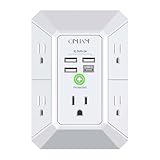
Many modern travel adapters come with built-in USB ports. This is incredibly convenient because it means you can charge your phone or tablet directly from the adapter without needing a separate USB wall charger for each device. You can often charge multiple devices simultaneously, provided the adapter has multiple USB ports and sufficient amperage. However, always check the adapter’s specifications to make sure it can handle the power draw of the devices you intend to charge. High-power devices like some laptops might still require their original AC adapter plugged into the main socket of the travel adapter, rather than relying solely on a USB port.
Real-World Use: My Adapter Horror Story (and How I Fixed It)
My worst adapter experience happened in a charming little Airbnb in Lisbon, Portugal. I’d done my usual pre-trip research, figured out they used Type F sockets, and packed a couple of reliable-looking European adapters. I plugged my phone charger into one, and it worked fine.
Great. Then I plugged in my travel hair dryer into another adapter connected to the same outlet strip (which I’d also brought). Within about 30 seconds, I heard a distinct ‘sizzling’ sound, and a wisp of smoke curled out from the adapter. The hair dryer was dead, and the adapter was fried.
Thankfully, nothing else was damaged, but I was stuck with damp hair for the entire trip, which, in the humid Portuguese summer, was less than ideal.
After that incident, I realized my mistake. I had brought adapters that were basically just shape converters for the pins. They allowed the plug to fit the socket but didn’t really have any solid internal circuitry to handle the power load or voltage fluctuations. The hair dryer was a 120V appliance that I had plugged into a 230V system with a cheap adapter. I should have either brought a dual-voltage hair dryer or a proper voltage converter. The adapter itself was also likely poorly made; the cheap plastic probably couldn’t handle the heat generated by trying to force the wrong voltage through it.
For the rest of that trip and every trip since, I’ve been much more deliberate. I invested in a high-quality universal travel adapter that has built-in surge protection and explicitly states it can handle various voltage inputs (though for appliances that are not dual-voltage, I still opt for travel-specific ones or leave them at home).
I also started carrying a small, lightweight voltage converter for any non-dual-voltage appliances I absolutely need. Most modern gadgets are dual-voltage, so it’s become less of an issue for phones and laptops, but for things like basic hair dryers or electric shavers, you still have to be vigilant.
My current favorite adapter has sturdy, retractable pins for multiple regions and multiple USB ports. It cost me around $40, but it’s been on about ten trips now and hasn’t missed a beat. That’s money well spent, far better than buying multiple cheap adapters that fail or, worse, damage my gear.
Practical Tips for Powering Up Abroad
So, you know that are all European outlets the same? No. What can you actually do to make sure your devices stay juiced up? First, always check the voltage and wattage rating on your electronics. Look for ‘Input: 100-240V’ to confirm it’s dual-voltage. If it only lists a lower voltage (like 110-120V), you’ll need a voltage converter, not just an adapter, for countries with higher voltage (like most of Europe). These converters can be bulky, so for high-draw items like hair dryers, it’s often easier and cheaper in the long run to buy a travel-specific dual-voltage model or just plan to use hotel amenities or local shops.
Second, invest in a quality universal travel adapter. I’ve said it before, but it bears repeating. A good one will have retractable pins for various regions (UK, EU, US, Australia) and usually a few USB ports. Brands like Belkin, Anker, or Targus often make reliable ones. Look for one that feels sturdy, with smooth-moving pins and a secure locking mechanism. These adapters are designed to accept different plug types and convert them to a usable format for the socket you’re using. They handle the physical conversion, but they don’t change the voltage. That’s the important distinction between an adapter and a converter. (See Also: Are Arc Trip Outlets Required In Hillsborough County )
Third, consider the number of devices you need to charge. If you’re traveling with a phone, a tablet, a smartwatch, and maybe a camera, a universal adapter with multiple USB ports is a lifesaver. You can charge several devices simultaneously from one wall socket. Just make sure the adapter’s total amperage output can support all your devices. For example, if you have two phones and a tablet, you’ll want an adapter that can output at least 3-4 amps total across its USB ports to charge them efficiently.
Fourth, don’t forget about power strips. If you’re staying in a hotel room or an apartment with limited outlets, bringing a small, portable power strip with surge protection can be incredibly useful. You plug the power strip into your travel adapter, and then you have multiple outlets (and USB ports, if your strip has them) to plug all your devices into. Just make sure the power strip itself is rated for the voltage in your destination country. Most travel power strips are designed for universal voltage use or are specifically made for higher-voltage systems.
Finally, always have a backup plan. If possible, carry a small, cheap adapter for the most common plug type in your primary destination (e.g., Type F for mainland Europe, Type G for the UK). This way, if your main universal adapter fails or gets lost, you’re not completely stranded. These basic adapters are inexpensive and can save you a lot of hassle. Having a portable power bank for your phone is also a smart move, giving you power on the go when you can’t get to an outlet.
Faq: European Plug and Outlet Mysteries Solved
Are All European Electrical Outlets the Same Voltage?
No, not exactly. While most of mainland Europe operates on 230V at 50Hz, the UK and Ireland are on 240V at 50Hz. For most modern electronics like phones and laptops with dual-voltage chargers (100-240V), this difference is negligible and they will work fine. However, older or simpler appliances that are not dual-voltage can be damaged if plugged into a socket with a significantly higher voltage than they are designed for.
What Is the Most Common Plug Type in Europe?
The most common plug types are Type C (Europlug) and Type F (Schuko). The Type C is a simple two-round-pin plug found on many low-power devices like phone chargers, and it fits into a wide variety of sockets. The Type F (Schuko) is a two-round-pin plug with side grounding clips, common in countries like Germany, Spain, and the Netherlands. Many countries use sockets that accept both Type C and Type F plugs.
Do I Need a Voltage Converter or Just an Adapter for Europe?
This depends on your electronics. If your devices explicitly state ‘Input: 100-240V’ on the label, you only need a plug adapter to physically fit the socket. If a device is rated for lower voltage (e.g., 110-120V) and does not say it’s dual-voltage, you will need a voltage converter to safely use it in Europe’s higher voltage outlets. Converters are bulkier and more expensive than simple adapters.
Can I Plug My American Appliances Directly Into European Outlets?
Absolutely not. American appliances typically use Type A or Type B plugs and operate at 120V. Most European outlets are designed for Type C, E, F, G, or other European plug types and operate at 230-240V. Plugging an American appliance directly into a European outlet without the correct adapter and potentially a voltage converter will likely damage the appliance and could be a fire hazard.
Conclusion
So, to put it plainly: are all European outlets the same? No, and anyone who tells you otherwise is either misinformed or trying to sell you a one-size-fits-all solution that doesn’t exist. The variety of plug types and voltages across the continent means you can’t just grab any old adapter and expect it to work everywhere. I’ve learned that spending a bit more on a quality universal adapter and understanding the voltage requirements of my devices has saved me a lot of hassle and money in the long run.
My advice? Do your homework before you go. A quick search for the specific countries you’re visiting will tell you what you need. Don’t get caught out with dead devices or, worse, damaged gear. A little preparation goes a long way.
What’s your worst travel adapter story? Share it in the comments below!