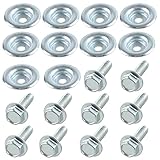
You’re staring at your oil pan, gasket smeared with old RTV, and a handful of loose bolts. Suddenly, a nagging question pops into your head: are all oil pan bolts the same? I remember the first time this happened to me. I’d stripped a few on an old Honda Civic, figured I’d just grab a box of generic hardware store bolts, and bam! Engine leak. Not so fast, buddy. Turns out, this seemingly simple question has more layers than a greasy onion.
It’s easy to assume that bolts are just bolts, especially when you’re in a bind and just need to get that oil pan back on. But trust me, when it comes to something as important as sealing your engine’s lifeline, there’s a lot more going on than meets the eye.
Why Those Little Bolts Matter More Than You Think
Let’s get one thing straight right off the bat: no, not all oil pan bolts are the same. This isn’t some obscure technicality; it’s the difference between a dry engine and a constant, embarrassing oil slick under your car. I learned this the hard way.
I was working on a friend’s Jeep Grand Cherokee, replacing a leaky oil pan gasket. I got the old pan off, cleaned everything up, and then reached for the box of assorted bolts I’d bought at the local auto parts store.
They looked about right, same thread pitch, same general size. I snugged them down, torqued them to spec, and thought I was golden. Two days later, my friend called, the smell of burning oil filling his garage. Turns out, the bolts I used were slightly longer, and when the engine heated up and expanded, they were just enough to put a tiny, imperceptible stress on the oil pan itself, creating micro-leaks.
Cost me a new oil pan and a lot of wasted time.
The oil pan bolt isn’t just a fastener; it’s a carefully engineered component designed to hold a specific pressure and temperature range while maintaining a seal. Think about it: the oil pan lives at the bottom of the engine, exposed to road grime, potential impacts from debris, and temperature fluctuations from scorching hot oil to frigid winter mornings.
The bolts need to be strong enough not to stretch or break under the load, but also the right length and diameter to compress the gasket evenly without over-stressing the pan or the crankcase threads. The common advice you’ll find everywhere is to use the exact OEM (Original Equipment Manufacturer) bolts or a specified aftermarket replacement. And you know what? For once, that common advice is actually spot on.
The Nitty-Gritty: What Makes Oil Pan Bolts Different?
So, what exactly separates one oil pan bolt from another? It boils down to a few key factors, and ignoring any of them is asking for trouble.
First up, material and grade. These aren’t your average hardware store bolts. Most OEM oil pan bolts are made from hardened steel, often with specific coatings to resist corrosion. The grade of steel matters – it dictates the bolt’s tensile strength.
A bolt that’s too weak will stretch under the clamping load, leading to a poor seal and potential failure. A bolt that’s too strong, if it’s a different material that doesn’t flex the same way, can actually crack the oil pan or strip the threads in the engine block.
It’s a delicate balance. (See Also: Are All Honda Atv Bolt Patterns The Same )
Next, length and diameter. This is where my Jeep incident came in. Even a millimeter or two difference in length can cause issues. If a bolt is too long, it can bottom out in the threaded hole, preventing proper clamping of the oil pan. Worse, as I discovered, it can stress the pan itself. Too short, and it won’t engage enough threads for a secure hold. The diameter, or thread pitch, has to be an exact match for the threads in the engine block and the oil pan flange. Mismatching these is a recipe for stripped threads, which is a whole other ballgame of expensive repairs.
Then there’s the head style and size. This is important for access and torque. Many oil pans use specific bolt head types, like a 10mm or 12mm flange head, to allow for proper tool engagement and to spread the load over a slightly larger area of the oil pan.
Some might have different head heights or shapes to clear surrounding components. If you use a bolt with a head that’s too large, it might not fit.
Too small, and your wrench or socket might slip, rounding off the head and making removal a nightmare. The thread locking mechanism can also differ. Some factory bolts have pre-applied thread locker, while others rely on a torque specification and gasket to prevent loosening. Using a bolt with the wrong type or amount of thread locker can cause it to either vibrate loose or be impossible to remove later.
The Importance of Torque and Seating
This ties back to length and head style. Proper torque is useless if the bolt isn’t seated correctly or if the bolt itself is the wrong type. The torque specification provided by the manufacturer is calculated based on the specific bolt material, diameter, and the clamping force required for that particular gasket and oil pan. Using the wrong bolt means the torque spec is basically meaningless, as you won’t achieve the intended clamping force, or you’ll apply too much stress. It’s like trying to measure a liquid with a ruler – the tool is wrong for the job.
Common Mistakes and Why They Cost You
You might be thinking, “Okay, so I need the right bolts. What could go wrong?” Oh, you’d be surprised. The most common mistake, as I’ve already confessed to, is assuming generic bolts will work. That box of assorted metric bolts from the discount store is a tempting shortcut, but it’s a gamble you’ll almost always lose.
I’ve seen guys try to reuse old bolts too, which is a terrible idea. Bolts, especially smaller ones like oil pan bolts that are subject to vibration and thermal cycles, can weaken over time. They can stretch, develop microscopic cracks, or the threads can get damaged. Reusing them is like trying to use a worn-out bungee cord – it might hold for a bit, but it’s going to fail eventually.
Another big mistake is not properly cleaning the bolt holes and the engine block surface. Even if you have the right bolts, dirt, old gasket material, or metal shavings left in the threaded holes can prevent the bolt from seating fully. This leads to inaccurate torque readings and a poor seal. I once spent an extra hour cleaning out a single bolt hole on a Ford F-150 because some idiot (not me, this time!) had cross-threaded a bolt and left shavings behind. It’s tedious work, but absolutely necessary.
Over-tightening is another classic. People think “tighter is better,” especially when they’re worried about leaks. This is incredibly damaging. Over-torquing oil pan bolts can: 1) Strip the threads in the engine block, which is a major repair. 2) Warp or crack the oil pan. 3) Compress the gasket too much, squeezing it out from between the pan and the block, leading to leaks. 4) Cause the bolt itself to stretch or snap. The torque specs are there for a reason, and they are usually quite low, often just a few foot-pounds. You’re not tightening lug nuts here; you’re gently persuading a seal.
Finally, not following the correct tightening sequence. Most oil pans have a specific bolt tightening pattern, usually starting from the center and working outwards in a criss-cross pattern. This makes sure even pressure is applied to the gasket, preventing high spots and low spots that can lead to leaks. Skipping this step is like trying to inflate a balloon by blowing only on one side – it’s going to create uneven stress and likely pop.
My Personal Blunder with the ‘universal’ Bolt Kit
I had a real “aha!” moment with a project car, an old Toyota Corolla that was a bit rough around the edges. I decided to tackle the oil pan gasket. I was young, cocky, and didn’t have a lot of money. I bought a “universal” oil pan bolt kit from a questionable online seller. (See Also: Are Ak Bolts Interchangeable )
It had a ton of different sizes and lengths, promising to fit anything. I picked out what looked like the right ones, put them in, torqued them down, and drove off. Within a week, I had a steady drip.
I pulled the pan again, thinking maybe I messed up the gasket. Nope. I looked closer at the bolts.
The heads were slightly softer metal, and my socket had already started to round them. More importantly, the thread pitch on a few of them was just off enough that they went in, but didn’t create a tight seal. The engine was basically weeping oil because I’d chosen the cheap, ‘fits-all’ solution. I ended up buying the genuine Toyota bolts, and the leak stopped instantly.
That lesson cost me maybe $30 in the wrong bolts and another gasket, but the knowledge was priceless. Don’t be like young, broke me.
When Can You Actually Get Away with It? (rarely!)
Okay, so when, if ever, can you get away with not using OEM or exact-spec bolts? Honestly, very, very rarely. If you’re dealing with a truly generic, flat-bottomed oil pan on a very old, very simple engine, and you can find hardware store bolts that exactly match the thread pitch, diameter, and length, and you’re meticulous about cleaning, torquing, and following the sequence, you might be okay. But why take the chance? The cost of a proper set of oil pan bolts is usually peanuts compared to the cost of a blown gasket, a damaged pan, or stripped engine block threads.
I’ve heard of people using high-grade stainless steel bolts as replacements in certain applications, especially where corrosion is a major concern (like classic cars in salty climates). However, this requires a deep understanding of material science and engineering. Stainless steel has different expansion rates and strength characteristics than the hardened steel typically used for OEM bolts. If the wrong grade of stainless is used, or if it’s not the correct length and diameter, you’re back to square one. So, unless you’re an engineer or have done extensive research on the specific material properties for your exact vehicle, steer clear.
The only other scenario where you might be tempted is if you’re in a complete emergency, miles from anywhere. In that case, you might have to grab whatever you can find at a local parts store. But your absolute first priority upon returning home should be to order the correct bolts and replace the temporary ones. Think of it as a very temporary bandage, not a permanent fix.
A Comparison of Bolt Types (when It Matters)
| Bolt Characteristic | OEM/Correct Spec | Generic Hardware Store | Opinion/Verdict |
|---|---|---|---|
| Material & Grade | Hardened steel, specific grade for strength and fatigue resistance | Often lower grade steel, inconsistent quality, may not be hardened | Important. OEM grade is engineered for the load. Avoid generic. |
| Length & Diameter | Exact match to factory specification | May be close, but minor differences can cause leaks or damage | Important. Even 1-2mm can be an issue. Measure twice, buy once. |
| Thread Pitch | Precise match to engine block and oil pan threads | Often standard sizes, but slight variations exist that prevent a good seal | A must. Mismatched threads strip easily or seal poorly. |
| Head Style/Size | Designed for tool access and proper load distribution | Can be too large to fit, too small to grip, or made of softer metal | Important for installation and preventing damage. |
| Corrosion Resistance | Often treated or coated for durability | Varies wildly, may rust quickly in humid or salty environments | Nice to have, but not at the expense of proper fit and strength. |
The table above highlights why shortcuts rarely pay off. The investment in the correct bolts is minimal compared to the potential headache and cost of a failure. Remember that official documentation, like a vehicle’s factory service manual, will list the exact specifications. For instance, according to many automotive service manuals I’ve referenced over the years, specifications for oil pan bolt torque are typically in the range of 6-10 ft-lbs (Newton-meters vary but are similarly low), which underscores the need for precision rather than brute force.
Practical Tips for Getting It Right
So, how do you avoid my mistakes and make sure you’re using the right bolts? It’s simpler than you might think, but requires a little diligence. The absolute best way is to get the OEM part number for your specific year, make, and model. You can usually find this in your car’s service manual.
If you don’t have one, many online auto parts retailers have VIN decoders or year/make/model lookup tools where you can find the exact part number. Once you have the number, you can order from a dealership or a reputable online OEM parts supplier.
I often find that the cost difference between genuine OEM bolts and a quality aftermarket replacement designed specifically for my vehicle is often negligible, making the choice easy. (See Also: Are All Bolt Patterns The Same )
Alternatively, if you’re replacing the gasket, many gasket manufacturers offer complete oil pan gasket kits that include new bolts. These kits are usually designed to be a direct replacement for the factory hardware. When buying a kit, check reviews and the manufacturer’s reputation. Some brands are much better than others. I’ve had good luck with Fel-Pro for gaskets and related hardware, for example. If the kit doesn’t specify it includes new bolts, or if you’re unsure, it’s always better to buy a separate set of confirmed correct bolts.
When you get your new bolts, inspect them carefully. Make sure they look identical to the originals in terms of length, head style, and thread pitch.
If you’re replacing them one by one (which is a bit fiddly but can be done on some vehicles if you’re careful not to drop the pan), use the old bolt as a direct comparison. Always clean the bolt threads and the threaded holes in the engine block.
A little brake cleaner or degreaser and a blast of compressed air can work wonders. Use a torque wrench – don’t guess.
And follow the tightening sequence to the letter. It might seem like overkill, but it’s the best way to guarantee a leak-free seal and protect your engine.
People Also Ask:
Are Oil Pan Bolts a Standard Size?
No, oil pan bolts are generally not a standard size across all vehicles. While there might be common thread pitches or head sizes (like 10mm or 12mm), the exact length, thread diameter, and grade of the bolt are specific to the vehicle’s make, model, and engine. Using generic bolts without verifying their exact specifications is a common cause of leaks and potential engine damage.
Can I Use Regular Bolts for an Oil Pan?
It’s strongly advised against using regular hardware store bolts for an oil pan. These bolts often lack the specific material strength, correct length, and precise thread pitch required to create and maintain a proper seal. The consequences can range from minor leaks to stripped engine block threads or even cracking the oil pan itself, leading to more expensive repairs.
What Happens If I Use the Wrong Oil Pan Bolts?
Using the wrong oil pan bolts can lead to several problems. The most common is an oil leak due to improper gasket compression. They can also be too long and damage the oil pan or bottom out, preventing proper clamping. If they’re too short, they won’t engage enough threads for a secure hold. In severe cases, incorrect bolts can strip threads in the engine block, leading to costly repairs like thread inserts or engine block replacement.
How Tight Should Oil Pan Bolts Be?
Oil pan bolts should be tightened to a very specific, low torque specification, typically ranging from 6 to 10 foot-pounds (or around 8 to 14 Newton-meters). This information is found in the vehicle’s service manual. Over-tightening is a very common mistake and can easily damage the oil pan, the gasket, or the engine block threads, leading to leaks or necessitating expensive repairs.
Final Verdict
So, to finally put this to bed: no, all oil pan bolts are absolutely not the same. It’s a detail that seems minor, but the consequences of getting it wrong are anything but. I’ve seen too many people, myself included, learn this lesson the hard way through leaks, wasted parts, and extra labor. The few bucks you might save on a generic bolt set is never worth the potential pain.
Your best bet, every single time, is to get the exact OEM bolts or a high-quality replacement specifically designed for your vehicle. Check your service manual, use a VIN decoder, or buy a reputable gasket kit that includes new hardware. Don’t guess, don’t assume, and for the love of all that is leak-free, don’t overtighten them. Get the right tools, the right parts, and do it right the first time.
If you’re still unsure after reading this, or if you’re staring at a pile of bolts and have no idea which ones are correct, do yourself a favor and consult a professional mechanic. It’s better to pay for an hour of their time than to pay for an entirely new oil pan and potentially a much bigger engine repair down the line. Ultimately, understanding whether all oil pan bolts are the same is about respecting the engineering that went into your vehicle and avoiding unnecessary headaches.