I remember staring at the stack of plywood sheets at the lumber yard, feeling completely overwhelmed. The guy behind the counter was rattling off terms like “CDX,” “AC,” and “marine grade,” and I just wanted something sturdy for a workbench. Seriously, are all plywood the same? I ended up buying the wrong stuff, and let me tell you, it was a waste of my hard-earned cash and a whole weekend of frustration. It looked fine, but when I started putting tools on it, it bowed like a sad trombone.
That’s when I realized how much I didn’t know, and how little reliable, no-bullshit information was out there. Most places just list specs, but nobody tells you what actually matters when you’re trying to build something that won’t fall apart.
So, let’s cut through the BS. We’re going to talk about what makes plywood, well, plywood, and why you absolutely cannot treat every sheet like it’s interchangeable.
Why Plywood Isn’t Just Wood Slices Stuck Together
Look, at its core, plywood is pretty simple: thin layers of wood veneer, glued together with their grain running at right angles to each other. This cross-graining is the secret sauce. It’s what makes plywood stronger, more stable, and less prone to warping or shrinking than a solid piece of wood the same thickness. Think of it like a brick wall versus a single plank – the bricks layered and offset make it way tougher to break.
But here’s the kicker: not all wood veneers are created equal, and neither are the glues. This is where the confusion starts and where you start seeing prices jump from, say, $20 a sheet to $80 or more. The type of wood used for the core and the face veneers, how many plies (layers) are in there, and the type of glue holding it all together – these are the things that decide if you’re getting something for a temporary shed wall or a piece that needs to hold up a fancy kitchen cabinet for decades.
For instance, cheap plywood might use softer, lower-grade woods for its inner layers, sometimes with big gaps or knots. These aren’t structural nightmares for a basic shelf, but try to put any real weight on it, and you’ll see it sag faster than a politician changing their mind. The face veneer, the pretty side you see, is often graded separately. You can have a decent core with a terrible face (think lots of patches, dark streaks, and rough texture) or a nice face over a mediocre core. It’s a balancing act, and manufacturers cater to different needs and budgets.
I once bought some cheap utility-grade stuff for a temporary doghouse. Seemed okay at first. A year later, after a couple of good storms, it was starting to delaminate where the rain got in. The glue just couldn’t handle the moisture. That was a hard lesson: the cheap option often costs more in the long run when it fails prematurely.
So, no, are all plywood the same? Absolutely not. It’s a spectrum, and knowing where you fall on that spectrum is key to not wasting money or ending up with a project that looks like it was built by a beginner (even if you are a beginner).
Decoding the Grades: What Those Letters Actually Mean
This is where most people get lost, and honestly, it’s a bit of a mess. The grading system for plywood, especially the common A-D grades, is more about the appearance of the face veneer than the structural integrity of the whole sheet. It’s like judging a book by its cover, but the cover has some pretty significant flaws.
Here’s a simplified breakdown you’ll see a lot, particularly with pine and fir plywoods common in North America:
| Grade | Face Veneer | Back Veneer | Core | Verdict |
|---|---|---|---|---|
| A | Smooth, paintable, few repairs. Looks good. | Usually B or better. | Generally good. | Best for furniture, cabinets, anything you want to look nice without much filling. Overkill for utility work. |
| B | Slightly more imperfections than A – small patches, limited knots. Still decent. | Usually C or better. | Okay. | Good for general use where appearance matters but perfection isn’t needed. |
| C | More significant repairs, larger knots, some discoloration. Not pretty. | Usually C or D. | Can be weaker, more gaps. | Utility grade. Fine for subfloors, sheathing, basic utility projects where looks don’t matter. You might see some football-shaped patches. |
| D | Numerous defects, large knots, holes. Functional, but ugly. | D grade. | Often has voids. | Cheapest. Only for situations where appearance and strength are absolutely secondary. Think temporary forms or hidden structural elements. |
Then you have those confusing designations like ‘CDX’. The ‘C’ and ‘D’ refer to the veneer grades on each side, and the ‘X’ stands for exterior glue. This is a common one you’ll see at hardware stores for general construction. It’s decent for sheds, basic framing, or utility shelving, but don’t expect it to look like furniture-grade hardwood.
Another one you might encounter is ‘AC’ or ‘BC’ plywood. This tells you the face veneer is A-grade, and the back is B or C. These are generally better looking and smoother on one side, making them good for projects where one side will be visible and the other won’t. They’re pricier but worth it if you’re aiming for a smooth finish or need a good painting surface.
Honestly, the numbers of plies also matter. A 5-ply 3/4-inch sheet is generally stronger and more stable than a 3-ply sheet of the same thickness. More layers mean more glue lines and better internal support. Don’t just look at the thickness; consider the ply count if strength is a concern.
My mistake early on was buying “plywood” without looking at the grade. I needed something for cabinet doors, and I grabbed a sheet that looked okay from a distance. Up close, it was a mess of dark streaks and rough patches that took hours of sanding and filling to make presentable. If I’d paid attention to the ‘AC’ or ‘BC’ designation, I would have saved myself a ton of grief. (See Also: Can A 4x8 Plywood Fit In A Honda Pilot )
The Glue Factor: Exterior vs. Interior
This is a big one, and frankly, it’s often overlooked by DIYers and even some pros who aren’t paying close attention. The type of glue used to hold those wood veneers together is most important to a plywood sheet’s performance, especially when moisture is involved. You’ve got interior glues and exterior glues, and they are NOT interchangeable.
Interior glues, often urea-formaldehyde (UF) based, are perfectly fine for projects that will stay dry. Think furniture, cabinet interiors, or decorative panels in a climate-controlled house. They create a strong bond, but they break down when exposed to moisture, humidity, or temperature fluctuations. If you use interior-grade plywood for something outdoors, even if it’s painted or sealed, that paint or sealant is just a temporary shield. Eventually, moisture will seep in, and the glue will fail, leading to delamination – the layers peeling apart like an old onion. I’ve seen it happen on outdoor furniture way too many times. It’s not pretty, and it’s completely avoidable.
Exterior glues, on the other hand, are designed to withstand prolonged exposure to water, humidity, and even freeze-thaw cycles. These glues are typically phenolic or melamine-formaldehyde based. Plywood made with these glues will have an ‘X’ designation (like CDX, which I mentioned) or be explicitly labeled as exterior grade. This doesn’t mean the wood itself is magically waterproof – it can still rot if exposed to the elements long enough – but the bond between the layers will hold strong. This is what you need for any outdoor structure: sheds, decks, fences, outdoor furniture, or anything that might get rained on or sit in a damp environment.
There’s also a middle ground, sometimes called “Moisture Resistant” or MR grades. These are better than interior glues but not as solid as true exterior glues. They can handle occasional dampness or high humidity but aren’t meant for direct water exposure. They’re a good choice for garage shelving or workshop benches that might get a bit steamy but aren’t exposed to rain.
The temptation to save a few bucks by using interior plywood for an exterior project is strong. I get it. But that’s a false economy. When that plywood starts to delaminate after a year or two, you’ll be buying new material and spending twice the time. It’s one of those ‘buy it right, buy it once’ situations. Always check the label or ask if you’re unsure, especially if your project is anything other than indoor furniture.
The ‘marine Grade’ Myth and Other Specialized Plywoods
When you start looking at the higher end of the plywood spectrum, you’ll encounter terms like “marine grade” and “baltic birch.” These aren’t just fancy marketing terms; they represent significant differences in construction and intended use, and they come with a heftier price tag.
Marine grade plywood is the heavy hitter. It’s built to withstand constant exposure to water and is designed for boats, docks, and other marine applications.
What makes it special? Firstly, it uses waterproof glue (phenolic resin) that will absolutely not delaminate. Secondly, and just as importantly, the veneers themselves are high quality.
You won’t find the voids, knots, or patches common in lower grades. Every single ply is sound wood.
This makes it incredibly strong and stable. I used some marine grade for a workbench top in my garage, knowing it might get damp from spills or condensation. It’s overkill for many applications, but the peace of mind and the flawless surface were worth the extra $50 a sheet for that project.
It’s also often made from species that are naturally more resistant to rot, like Douglas Fir or certain tropical hardwoods.
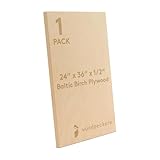
Baltic birch is another beast entirely. While it’s technically plywood, it’s constructed differently. Instead of having a few thicker plies, it’s made of many, many thin birch veneers stacked and glued.
This results in a super stable, exceptionally strong sheet with no voids and edges that are solid all the way through. The face and back veneers are usually high-grade birch, giving it a clean, uniform appearance. It’s fantastic for cabinet carcasses, drawer sides, and anywhere you need strength and a smooth, paintable surface without the potential for voids to show through. (See Also: Can Bondo Be Applied To Plywood )
It’s also great for laser cutting and CNC work because of its density and lack of voids. The downside? It’s pricey, and you’re often paying for a higher grade of wood than you might need for a simple utility project. It’s overkill if you’re just building a basic storage shelf in the garage.
What about those other fancy panels? You might see “aircraft plywood,” which used to be made with specific hardwoods and very strong glues for aircraft construction – incredibly strong but also incredibly expensive and often not readily available. Or “furniture grade” plywood, which is basically high-quality hardwood plywood (like birch, maple, or oak veneer) with a good finish, meant for visible parts of furniture where appearance is key.
The biggest mistake people make here is assuming that if it’s expensive, it must be the “best” for their project. Marine grade is the best for boats, but it’s often unnecessary and costly for a simple shed wall. Baltic birch is amazing for cabinets, but you don’t need it for subflooring. Understand what makes these special types different, and then decide if those specific features are worth the extra cash for your particular job.
What Is Baltic Birch Plywood?
Baltic birch plywood is a specific type of plywood known for its numerous thin birch veneers, typically 1mm thick, layered at right angles. It has a solid core with no voids or gaps, making it exceptionally strong, stable, and resistant to warping. The face and back veneers are usually high-grade birch, offering a smooth, uniform appearance suitable for finishing and visible applications like furniture and cabinetry.
What Is Marine Grade Plywood Used for?
Marine grade plywood is designed for applications involving constant or frequent exposure to water and high humidity. This includes boat building, marine construction, docks, outdoor furniture, and any project where resistance to delamination and rot is important. It features waterproof glue and high-quality, void-free veneers.
Common Mistakes and How to Avoid Them
Alright, let’s talk screw-ups. I’ve made my fair share, and learning from them is what separates a decent project from a disaster. When it comes to plywood, there are a few classic blunders that pop up time and again.
Mistake number one: Buying based solely on price. As we’ve covered, the cheapest plywood is cheap for a reason. It’s often made with lower-grade wood, more voids, and weaker glues. This means it’s more likely to warp, sag, or delaminate prematurely. I once built a simple shed with the cheapest plywood I could find. Within two years, the roof sheathing was visibly sagging, and some of the side panels were starting to delaminate where the rain had wicked in. It looked like a cheap, temporary structure, which is exactly what it became.
Mistake number two: Not considering the ‘X’ factor (exterior glue). This is a massive one for outdoor projects. People grab that CDX plywood for a planter box, thinking the ‘X’ means it’s tough. It is tougher because of the glue, but the wood itself can still degrade. If the project is going to be exposed to weather, you need exterior-grade glue. If it’s going to be in a damp garage or basement, moisture-resistant (MR) is a good bet. Using interior glue anywhere moisture is a possibility is a recipe for delamination disaster. I learned this the hard way when a “waterproof” outdoor table I made with interior glue started peeling after a particularly wet spring.
Mistake number three: Not checking the veneer quality. Even on higher grades, there can be significant variation. Always try to look at the sheets before you buy if appearance matters. I’ve seen ‘A’ grade plywood with streaks so dark they looked like water stains, and ‘B’ grade with fewer visible patches than some ‘A’ grade sheets. If you’re painting, a few minor imperfections might be okay, but if you’re staining or clear-coating, you want a smooth, consistent surface. Pay attention to the number of patches (knots that have been cut out and replaced with small wood plugs) and the general color consistency.
Mistake number four: Underestimating the need for support. Plywood, even thicker stuff, has limits. A 1/2-inch sheet might be fine for wall sheathing, but it will sag significantly if used for a shelf without proper bracing. A good rule of thumb for shelves is to use 3/4-inch plywood and keep spans under 24-30 inches without additional support. For anything holding significant weight, like a workbench, you might need to double up the plywood or add a substantial apron and supports underneath. I once built a workbench with a single layer of 3/4-inch plywood, and it developed a noticeable dip in the middle after about six months of holding tools.
Mistake number five: Not accounting for the finish. If you’re painting, you can get away with lower-grade veneers (like C or D) on the non-visible sides. But if you’re staining or applying a clear coat, you need a good quality hardwood plywood with a smooth face veneer. Trying to stain cheap construction-grade plywood is often a losing battle – the grain is rough, the patches look terrible, and it just doesn’t take stain evenly.
How Do I Make Plywood Waterproof?
Making plywood waterproof involves a combination of using the right type of plywood and applying a solid sealing system. Start with exterior-grade plywood, which uses waterproof glue and is designed to withstand moisture. Then, apply multiple coats of a high-quality exterior sealant or paint. For maximum protection, especially in harsh environments, consider using epoxy resin or a marine-grade varnish. Make sure all edges are thoroughly sealed, as they are the most vulnerable areas for water ingress.
What’s the Difference Between Hardwood and Softwood Plywood?
Hardwood plywood is made from wood species like oak, maple, birch, or mahogany, and is generally more dense, durable, and aesthetically pleasing, often used for furniture and cabinetry. Softwood plywood, typically made from pine, fir, or cedar, is lighter, less expensive, and easier to work with, commonly used for construction, sheathing, and utility purposes. The face veneers of hardwood plywood are usually graded for appearance, while softwood plywood is graded more for structural integrity and utility. (See Also: Can Cat Plywood Be Used For Exterior Siding )
Real-World Uses: Where Plywood Shines (and Where It Doesn’t)
So, we’ve talked a lot about the what and why. Now, let’s ground this in reality. Where does plywood actually earn its keep, and where should you probably look for something else?
Construction is the obvious big one. Plywood is the backbone of modern building for a reason. It’s used for:
- Sheathing: Covering walls, roofs, and floors to provide structural rigidity and a base for finishes. CDX is your go-to here – it’s strong enough, weather-resistant enough (with the exterior glue), and affordable.
- Subflooring: Providing a stable, flat surface over joists for your finished flooring. Again, 3/4-inch CDX or higher is common.
- Framing: Although solid lumber is used for studs and beams, plywood is often used for bracing and structural components like headers or built-up beams.
- Sheds and Outbuildings: For anything exposed to the elements, exterior-grade plywood is key.
Beyond construction, it’s a DIYer’s best friend for a ton of projects:
- Workbenches: A solid workbench is a must. Using 3/4-inch plywood, often doubled up on the top, creates a durable and relatively inexpensive work surface.
- Shelving: From garage storage to pantry shelves, plywood is a go-to. Just remember to brace it properly based on the span and expected load.
- Cabinetry: For cabinet boxes and drawer construction, birch plywood or high-quality hardwood plywood (like AC or BC grades) is excellent. It’s stable and takes finishes well.
- Furniture: Simple furniture pieces, accent tables, or even built-ins can be made from good quality hardwood plywood.
- Jigs and Fixtures: In any workshop, plywood is invaluable for creating templates, jigs, and shop-made tools.
Now, where does plywood fall short? When you need:
- A perfect, knot-free, solid wood look for fine furniture: While you can get high-end hardwood plywood with beautiful veneers, it will never quite have the same deep, natural grain and character as solid hardwood. Plus, the edges often show the plies unless you cover them or use edge banding.
- Extreme structural strength under specific types of stress: For certain load-bearing applications that require specific flex characteristics or extreme shear strength in one direction, engineered lumber or solid beams might be a better choice.
- To be absolutely certain of zero moisture penetration: While marine grade is excellent, if you’re building something that will be constantly submerged or in direct, prolonged contact with water (like a boat hull in the water), you’re looking at specialized fiberglass or composite materials, not just plywood.
- An extremely precise, stable material for very fine woodworking: While Baltic birch and aircraft ply are very stable, they can still move slightly with humidity changes. For applications requiring absolute dimensional stability under all conditions, you might need to look at materials like MDF (with its own issues) or specialized plastics.
The key is matching the material to the job. Don’t use cheap CDX for a fine dining table, and don’t spend a fortune on marine grade for a garden planter box unless you want it to last forever and look perfect.
What Is the Best Plywood for Shelves?
For most shelving applications, 3/4-inch thick plywood is ideal. CDX grade is a common and cost-effective choice for garage or utility shelves, but for a cleaner look or if you plan to paint or finish it, consider AC or BC grade plywood. Make sure spans are not too wide (typically under 30 inches) to prevent sagging; consider doubling up the plywood or adding support brackets for heavier loads.
What Is Cdx Plywood?
CDX plywood is a common construction-grade panel. The ‘C’ and ‘D’ refer to the veneer grades on the face and back, respectively, indicating moderate to significant cosmetic defects. The ‘X’ signifies that it’s made with exterior-grade glue, making it suitable for applications exposed to weather, such as roof and wall sheathing, or outdoor structures. It’s a good balance of cost and durability for general construction.
Can I Use Any Plywood for Outdoor Projects?
No, you absolutely cannot use any plywood for outdoor projects. Only use plywood explicitly rated for exterior use, which means it must have exterior-grade glue (often indicated by an ‘X’ in its designation, like CDX). Even with exterior glue, the wood itself can still degrade over time if not properly sealed and maintained. For very wet environments, marine-grade plywood is the best option.
How Do I Choose the Right Thickness of Plywood?
The required thickness of plywood depends on the application and the expected load. For general sheathing (walls, roofs) and basic shelving, 1/2-inch or 5/8-inch is often sufficient. For structural subflooring, workbench tops, or shelves that will bear significant weight, 3/4-inch is recommended. Thicker plywood offers greater strength and rigidity but is also heavier and more expensive.
What Is the Difference Between Plywood and Osb?
Plywood is made from thin layers of wood veneer glued together with alternating grain direction, providing excellent strength and stability. OSB (Oriented Strand Board) is made from compressed layers of wood strands or flakes arranged in specific orientations and bonded with resin. OSB is generally less expensive than plywood and offers good structural integrity for sheathing and subflooring, but it can be more susceptible to moisture damage and can swell unevenly if exposed to water.
Is Hardwood Plywood Better Than Softwood Plywood?
Whether hardwood plywood is “better” depends on the application. Hardwood plywood (made from species like oak, maple, birch) is generally stronger, more durable, and has a finer, more attractive grain pattern, making it ideal for furniture, cabinetry, and visible finishes. Softwood plywood (made from pine, fir) is lighter, cheaper, and easier to work with, making it suitable for construction sheathing, subflooring, and less visible structural uses.
Final Verdict
So, to answer the burning question: are all plywood the same? A definitive no. From the cheap utility panels meant for temporary jobs to the high-end marine grade built for saltwater immersion, there’s a huge range. The grade of the wood, the type of glue, and the number of plies all contribute to its strength, stability, and price.
My biggest takeaway over the years is this: stop looking at plywood as a generic commodity. Start thinking about it like any other building material. For a shed wall, CDX is probably fine. For a kitchen cabinet, you’re going to want something much nicer, like birch or a hardwood veneer. And for anything that’s going to get wet, the exterior glue is a must.
Next time you’re at the lumber yard, don’t just grab the cheapest sheet that looks about right. Take a second to check the grade, ask about the glue, and consider how the wood will actually perform in your project. It’ll save you headaches, money, and a whole lot of frustration down the line.