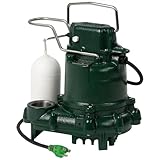
So, you’ve got water in the basement again, or maybe you’re just prepping for the inevitable. You’re staring at your sump pump and its pipe, wondering if a quick trip to the hardware store for a replacement is as simple as grabbing any old piece of plastic.
I’ve been there. Stood in aisle three, surrounded by PVC, ABS, and a confusing array of diameters, feeling like I needed an engineering degree just to get water away from my foundation. The honest truth? No, are all sump pump discharge pipe same size is a question that trips a lot of people up, and getting it wrong can lead to more headaches than you bargained for.
Let’s cut through the noise. This isn’t rocket science, but there are definitely details that matter.
What Size Sump Pump Discharge Pipe Do I Actually Need?
Look, when I first installed my sump pump system about ten years ago, I grabbed what looked “standard.” It was some gray, rigid plastic pipe. Seemed fine.
Then came the torrential downpour of ’17. My sump pump was kicking on like a racehorse, but the basement was still… damp. Not flooded, thank God, but definitely not dry.
I remember standing there, listening to the pump chug away, water gurgling back down the pipe, and thinking, “Is this thing even working right?” Turns out, the diameter of that discharge pipe was a bottleneck. The pump was moving a ton of water, but it was struggling to push it all through a pipe that was too small.
It’s like trying to drink a milkshake through a coffee stirrer – frustrating and inefficient.
The most common size you’ll find for residential sump pump discharge is 1-1/2 inch diameter. This is usually sufficient for most standard submersible and pedestal pumps moving water at typical rates.
It’s the go-to size for a reason: it balances flow rate with the power output of most consumer-grade pumps. However, and this is a big ‘however,’ it’s not a universal fit for every situation. If you have a high-volume sump pump, one designed to move a significant number of gallons per minute (GPM), or if your discharge line is exceptionally long or has a lot of bends, you might need a larger diameter pipe.
Think 2-inch pipe, for instance. A larger pipe offers less resistance, allowing the pump to push water out more freely. This reduces strain on the motor, potentially extends the pump’s life, and, most importantly, gets the water away from your house faster and more reliably. Don’t just assume 1-1/2 inch is the magic number; check your pump’s specifications.
They’ll usually tell you the recommended or maximum discharge pipe size for optimal performance. Ignoring this is a common mistake, and one that can cost you in terms of pump efficiency and potential basement dampness.
The material of the pipe also plays a role, though size is usually the primary concern for flow. You’ll mostly see PVC (polyvinyl chloride) or ABS (acrylonitrile butadiene styrene) for rigid discharge lines. ABS is generally more impact-resistant and tolerates colder temperatures better than PVC, which can become brittle.
For flexible discharge lines, you’ll encounter corrugated plastic or reinforced rubber hoses. While flexible options are easier to route, they can sometimes kink or get clogged more easily than rigid PVC or ABS if not installed properly or if debris is present.
The key takeaway here is that while 1-1/2 inch is the norm, it’s not the only size, and deviating without understanding your pump’s capabilities and your home’s needs is asking for trouble.
The Truth About Sump Pump Discharge Pipe Sizing
Here’s where things get a bit murky, and where a lot of well-meaning DIY advice goes sideways. People see a pipe, they think “pipe,” and they figure any pipe will do. That’s a fallacy. (See Also: Are Pumpkin Seed Husks Edible )
Are all sump pump discharge pipe same size? Absolutely not. The common wisdom often stops at “1-1/2 inch is standard,” and that’s where the conversation ends. But that’s like saying all garden hoses are the same because they connect to a spigot.
The reality is, pump performance is directly tied to the discharge piping. A pump rated for 40 GPM might struggle to deliver even half that if it’s pushing through a pipe that’s too narrow for its volume, or if that pipe is excessively long. I once helped a buddy who was having constant issues. His pump was running, but the water level wasn’t dropping fast enough.
We measured his discharge pipe – 1-1/4 inch. His pump?
A beast rated for a serious GPM. He’d gone with a smaller pipe because it seemed easier to maneuver around his old basement walls. Swapping to a 1-1/2 inch line, and then later to a 2-inch line as he upgraded his pump, made a night-and-day difference. The old advice about “just use 1-1/2 inch” was actively hurting his system.
Factors like head pressure (the vertical distance the water needs to be lifted) and friction loss (resistance from the pipe’s interior surface and any bends) are important. The longer the pipe run and the more elbows you have, the more resistance the pump faces. A smaller diameter pipe dramatically increases this friction loss.
So, if your pump is in the basement and discharges out the side of your house 30 feet away, at ground level, that’s one thing. If it has to go up 10 feet to a second-story window, that’s a completely different beast that demands more careful pipe sizing. Some manufacturers will even offer different discharge fittings on their pumps to accommodate larger pipe sizes, a clear indicator that standardization isn’t always the best approach for everyone. Don’t be afraid to check the pump’s manual or the manufacturer’s website for their recommendations on discharge pipe diameter and length.
They’ve done the engineering; let their data guide you.
I’ve seen people try to use corrugated flexible pipe exclusively, even for very long runs. While it’s easy to install, its internal corrugations create significantly more friction than a smooth-walled PVC or ABS pipe. Over time, these can also become brittle and crack, especially if exposed to freezing temperatures. If you must use flexible pipe, try to keep the runs as short as possible and make sure it’s the correct diameter for your pump. Often, a combination of rigid pipe for the main run and a short section of flexible pipe right at the pump can be the best compromise for vibration dampening and ease of installation without sacrificing too much efficiency.
Common Sump Pump Discharge Pipe Mistakes (and How to Avoid Them)
Mistake number one, and it’s a doozy: using the wrong material. People often think “plastic pipe” is all the same. Wrong.
For a permanent, buried, or exposed discharge line, you want something durable. Standard Schedule 40 PVC is common and works well for many applications.
It’s rigid, relatively inexpensive, and easy to work with using standard PVC cement and primer. However, ABS pipe is often a better choice in colder climates or where impact resistance is a concern. I had a neighbor whose discharge line got hit by a snowblower one winter, cracking a PVC pipe.
He had to dig it up and replace it. If he’d used ABS, it might have survived. Another material issue is using thin-walled drain pipe (like DWV pipe) where you need pressure-rated pipe.
While it looks similar, it’s not designed to handle the constant pressure from a sump pump. It’s more prone to cracking or collapsing.
Mistake number two: not checking for freeze protection. If your discharge pipe exits above ground and is exposed to freezing temperatures, water left in the pipe can freeze and expand, splitting the pipe or creating a blockage. This is a common reason for pump failure in winter. (See Also: Are Pumpkin Seed Acid Or Alkaline )
The fix? Make sure the pipe has a downward slope away from the house so all water drains out after the pump cycle. Some people install a small weep hole near the house foundation or a special check valve that allows residual water to drain.
For extremely cold climates, burying the discharge line below the frost line is the most reliable solution, though it’s more labor-intensive. I remember one frosty November morning, I went to check my pump, and it was silent. The discharge line was frozen solid.
I spent two hours with a heat gun (carefully!) trying to thaw it. Lesson learned: gravity drainage and, if possible, burying the line is key.
Mistake number three is the one I touched on earlier: assuming a standard size fits all. People buy a pump and then just buy the first pipe they see that looks like it connects to the pump outlet. If your pump is rated for 60 GPM and you connect it to a 1-1/4 inch pipe for a 50-foot run, you’re asking the pump to work way harder than it needs to. This leads to overheating, reduced efficiency, and premature failure.
Always consult your pump’s manual. It will typically specify the recommended discharge pipe diameter based on flow rate and common run lengths. If you have an unusually long run or many bends, you might even need to step up to a larger diameter pipe (like 2-inch) to compensate for the increased friction loss.
Mistake number four: improper connections and fittings. Using the wrong type of glue or sealant, or not letting it cure properly, can lead to leaks. Also, making too many sharp 90-degree turns with rigid pipe. While sometimes unavoidable, each bend adds resistance. If you need to change direction, use two 45-degree elbows instead of one 90-degree elbow to create a gentler curve. This reduces strain on the pump. Finally, consider where the discharge water is going. Dumping it right next to your foundation is useless and can actually make drainage problems worse. Make sure it discharges a good distance away from your home, ideally onto a sloped area that directs water further downhill and away from your basement.
| Material | Common Sizes (ID) | Pros | Cons | My Verdict |
|---|---|---|---|---|
| Schedule 40 PVC | 1-1/2″, 2″ | Inexpensive, easy to cut and glue, widely available | Can become brittle in cold, less impact resistant than ABS | Good all-around choice for moderate climates. Affordable and reliable. |
| ABS | 1-1/2″, 2″ | More impact resistant, better in cold temperatures | Slightly more expensive than PVC, can be more susceptible to UV degradation if exposed | My preferred choice for exposed lines or colder regions. Worth the extra cost for durability. |
| Corrugated Flexible Plastic Hose | 1-1/4″, 1-1/2″, 2″ | Easy to install, flexible for tight spots, vibration dampening | Higher friction loss, prone to kinking/crushing, can degrade over time, potential for freeze-up if not drained | Okay for short, temporary connections or where extreme flexibility is needed, but avoid for main runs if possible. |
Choosing the Right Fittings and Installation Techniques
Beyond just the pipe itself, the fittings and how you put it all together matter immensely. Getting the discharge pipe connected to the pump is the first hurdle. Most sump pumps come with a discharge outlet that’s threaded, usually with a male NPT (National Pipe Thread) fitting.
You’ll then need a female fitting to connect your pipe. For a 1-1/2 inch setup, this is commonly a 1-1/2 inch female threaded adapter that you glue onto your PVC or ABS pipe. Make sure you use the correct primer and cement for the type of plastic you’re working with – PVC cement for PVC, ABS cement for ABS.
They are not interchangeable. And for crying out loud, let the cement cure fully.
I’ve seen people rush this, and the pipe ends up leaking under pressure, sometimes right at the most inopportune moment, like during a heavy rainstorm.
When connecting rigid pipe sections together or to fittings, use couplings. Again, proper primer and cement application is key. For the transition from the pump to the pipe, many people opt for a flexible rubber coupling with hose clamps. This can help absorb vibration from the pump, reducing noise and stress on the pipe system. It also makes it easier to align the pipe if the pump isn’t perfectly positioned. Just make sure it’s rated for the pressure and that the clamps are tight. I’ve had a rubber coupling loosen up over time due to vibration, leading to a minor but annoying leak right at the pump base. Regular checks are a good idea.
One technique I’ve learned to appreciate is the use of unions. A union fitting is basically a three-piece connector that allows you to easily disconnect and reconnect sections of pipe without cutting. This is incredibly handy for maintenance, like if you need to remove the pump for service or clear a blockage in the discharge line. While they add a bit to the cost and complexity, the convenience they offer down the line is often worth it. You can find threaded unions that screw onto your male and female adapters, or glued unions for PVC/ABS. For a permanent installation, I’d strongly consider putting a union somewhere accessible between the pump and the main discharge line.
Finally, securing the pipe is important. If you have a long horizontal run, you’ll want to support it to prevent sagging. Use pipe hangers or straps screwed into joists or walls every few feet, depending on the pipe diameter and stiffness. For vertical runs, make sure they are anchored securely at the top and bottom. This prevents unnecessary stress on fittings and the pump outlet. A sagging or poorly supported pipe is more prone to cracking or developing leaks over time. It’s the small details in installation that often separate a reliable system from one that’s a constant headache.
When to Consider a Larger Diameter Discharge Pipe (2-Inch and Beyond)
So, when does that standard 1-1/2 inch pipe just not cut it anymore? The most obvious sign is if your sump pump is consistently running for extended periods, or if you notice water pooling or backing up around the discharge pipe outlet even when the pump is running. (See Also: Are Organic Pumpkin Seeds From China Bad )
This suggests the pump is struggling to move water efficiently. Another key indicator is the pump’s own performance rating. If you have a high-volume pump, one designed to move 60, 70, or even 100+ gallons per minute, you’re likely going to be underserved by a 1-1/2 inch pipe, especially if the discharge run is more than a few dozen feet or involves several bends. The pump manufacturer often provides charts or guidance on recommended pipe sizes based on flow rate and discharge distance.
Ignoring this can severely limit your pump’s effectiveness and even lead to premature motor burnout.
I learned this the hard way after upgrading my old sump pump. The new one was a beast, capable of moving a lot more water. I kept the old 1-1/2 inch discharge pipe. For a while, it seemed okay, but then I noticed the pump cycling more often than expected, and the discharge stream wasn’t as strong as I thought it should be.
My neighbor, who’s a plumber, came over and pointed it out. “You’ve got a racehorse engine on a bicycle frame,” he said. He convinced me to step up to a 2-inch line. The difference was astonishing.
The water sprayed out with much more force, and the pump cycle times reduced noticeably. It felt like the pump was finally breathing properly. The initial cost of the larger pipe and fittings was a bit more, but the peace of mind and improved performance were well worth it. I estimated I spent about $150 on the pipe, fittings, and glue, spread across a few trips to the store.
Friction loss is your enemy here, and it increases exponentially with pipe diameter and flow rate. A longer discharge line, say 75-100 feet or more, will benefit greatly from a larger diameter pipe. Similarly, if your discharge route involves many elbows (more than three or four), the increased resistance means a larger pipe is advisable. Even if your pump isn’t technically a “high-volume” model, if you have a challenging discharge setup, upsizing can still provide benefits in terms of efficiency and longevity. Some commercial or industrial sump pump systems might even use 3-inch or 4-inch discharge pipes, but for most residential basements, 2-inch is the largest size you’ll typically encounter or need, unless you have very specific, high-demand requirements.
When you do step up to a larger diameter, make sure your sump pump’s outlet fitting can accommodate it. Many pumps are designed with interchangeable discharge adapters, or they might come standard with a larger outlet. If not, you’ll need to find an adapter that fits your pump and transitions to the larger pipe size. This is another area where manufacturers provide important specs. Always double-check compatibility. Don’t assume a 1-1/2 inch pump outlet can just be forced onto a 2-inch pipe without proper adapters. Using reducer bushings where you’re connecting to a smaller pump outlet is common, but make sure it’s a secure, leak-proof connection.
Common Questions About Sump Pump Discharge Pipes
What Is the Standard Size of Sump Pump Discharge Pipe?
The most common standard size for sump pump discharge pipe in residential settings is 1-1/2 inches in diameter (inside diameter). This size is generally suitable for most typical residential sump pumps and discharge line lengths. However, it is not a universal size, and larger or smaller sizes may be appropriate depending on the pump’s flow rate and the length and complexity of the discharge pipe run.
Can I Use a Smaller Pipe Than What My Pump Recommends?
Using a pipe smaller than what your pump recommends is a bad idea. It creates excessive back pressure and friction, forcing the pump to work harder, reducing its efficiency, potentially leading to overheating, and shortening its lifespan. It can also lead to increased noise and a weaker water discharge. Always adhere to the manufacturer’s recommendations for pipe size.
How Long Can a Sump Pump Discharge Pipe Be?
While there isn’t a strict maximum length, the longer the discharge pipe, the more friction loss your pump will encounter. For a standard 1-1/2 inch pipe, runs beyond 75-100 feet can significantly impact performance and might necessitate a larger pipe diameter (like 2 inches) or a higher-capacity pump. Always consider the total dynamic head, which includes vertical lift and friction loss, when determining the appropriate pipe length and diameter.
Do I Need a Check Valve on My Sump Pump Discharge Pipe?
Yes, a check valve is highly recommended and often included with sump pump systems. It prevents water from flowing back down the discharge pipe into the sump pit after the pump shuts off. This stops the pump from short-cycling and makes sure that the discharge line remains primed for the next pumping cycle, maintaining efficiency and preventing potential water damage.
Conclusion
So, to circle back to the big question: are all sump pump discharge pipe same size? No, they are not. While 1-1/2 inch is the most common size you’ll find and often adequate, it’s important to understand your specific needs.
Factors like your pump’s GPM rating, the total length of your discharge pipe, and the number of bends along the way all play a significant role in determining the optimal pipe size. Using too small a pipe is a performance killer, and it’s a mistake I’ve seen (and made) that’s easily avoidable with a little research.
Before you buy anything, pull out your sump pump’s manual. Check the recommended discharge pipe size for your model and run length. If you’re unsure, or if you have an unusually long pipe run or a high-volume pump, consider stepping up to a 2-inch pipe. It’s a small investment that can make a world of difference in keeping your basement dry and your pump running smoothly for years to come.