Look, I’ve been down in my basement more times than I care to admit, usually with a flashlight and a growing sense of dread. One of the things that used to drive me absolutely bonkers was the discharge pipe setup for my sump pump. I’d see all these different adapters and fittings at the hardware store, all looking vaguely similar, and wonder, are all sump pump PVC attachments the same? The short answer? Heck no. It’s a question that seems simple, but the wrong fitting can lead to a flooded basement, which is definitely not simple.
I remember one particularly rainy Tuesday, after a ‘quick fix’ I thought I’d nailed, hearing that tell-tale gurgling sound. Turns out, the cheap adapter I’d slapped on wasn’t quite sealing right under pressure. Water was seeping out, not just into the pit, but onto the floor. Lesson learned the hard way: not all plastic is created equal, especially when it’s holding back a potential watery disaster.
This isn’t rocket science, but it’s also not something you want to guess at. Let’s cut through the jargon and figure out what’s what.
Why Your Sump Pump Discharge Pipe Isn’t Just ‘pipe’
So, you’ve got a sump pump – the unsung hero of your basement, silently working to keep your home dry. But it doesn’t just magically make water disappear. It needs a way to push that water out, and that’s where the discharge pipe comes in. This pipe connects to the pump’s outlet and directs the water away from your foundation. When we talk about ‘attachments,’ we’re usually referring to the fittings, adapters, and couplings that make this whole system work. Think of them as the elbows, joints, and connectors that allow the pipe to go from the pump, up and out of your house, and eventually into your yard or a municipal drain.
The most common material you’ll see for these attachments, and for the pipe itself, is PVC (polyvinyl chloride). It’s cheap, readily available, and relatively easy to work with. But here’s the kicker: just because it’s PVC doesn’t mean it’s interchangeable.
You’ve got different diameters, different thread types (or lack thereof), and different pressure ratings. A fitting designed for a garden hose is going to be useless, and potentially disastrous, when hooked up to a sump pump that’s shoving gallons of water out every minute.
I once tried to jury-rig a connection using a plumbing adapter that was a size too small, thinking I could just force it. Big mistake.
It created a weak point, and during the next heavy storm, it blew apart like a champagne cork, sending water everywhere. I spent a good $180 on water damage cleanup and a proper replacement fitting because I got cheap and lazy.
The pressure generated by a sump pump, especially a larger one or one with a long discharge run, can be significant. A flimsy or improperly sized fitting will crack, leak, or even detach entirely. It’s not just about getting water out; it’s about getting it out reliably. The common advice to just grab any PVC fitting at the store is flat-out wrong. You need to match the pump’s outlet size, the pipe size you’re using, and consider the overall pressure and flow rate. Ignoring these details is a gamble you don’t want to lose when the rain starts pounding.
The Nitty-Gritty: What to Actually Look For
When you’re staring at that wall of plumbing parts, what’s the difference between one PVC elbow and another? It boils down to a few key things: size, type of connection, and material quality. First off, size is king. Your sump pump will have an outlet port, usually threaded or with a smooth spigot for a clamp.
You need to match the fitting to that outlet. Common sizes are 1-1/4 inch and 1-1/2 inch, but you might find others. Measure your pump’s outlet or check its manual. If you’re using rigid PVC pipe for the discharge, you’ll need fittings that are designed for that pipe diameter.
For example, a 1-1/2 inch pump outlet might connect to a 1-1/2 inch coupling, which then connects to 1-1/2 inch Schedule 40 PVC pipe. (See Also: Are Pumpkin Seed Husks Edible )
Next, consider the connection type. You’ll see threaded fittings (often called ‘female pipe thread’ or FPT, and ‘male pipe thread’ or MPT) and slip fittings.
Slip fittings are designed to be glued onto the pipe using PVC cement. For a sump pump discharge, you often want a combination. Many pumps have a threaded outlet, so you might start with a threaded adapter that then transitions to a slip connection for your PVC pipe. Or, you might use a threaded adapter that has a barbed end for a hose clamp connection if you’re using flexible discharge hose.
The key is a secure, watertight seal. A loose threaded connection or a hose that isn’t clamped down tight enough is an invitation for leaks.
Material quality is also a factor, though it’s harder to judge at a glance. Look for fittings labeled ‘Schedule 40’ or ‘Schedule 80’ for PVC.
Schedule 40 is standard for most residential plumbing and is generally sufficient for sump pump discharge. Schedule 80 is thicker-walled and can handle higher pressures, but it’s usually overkill and more expensive. Avoid fittings that feel flimsy or look like they might crack easily.
Sometimes, the cheaper, unbranded options are made from lower-grade plastic that degrades faster in sunlight (if your discharge pipe is exposed) or under constant water pressure. I once bought a cheap adapter that became brittle after only a year, cracking in the cold weather. Now I tend to stick with reputable brands for important components like this, even if it costs a few extra bucks.
Common Mistakes That Flood Basements
The number one mistake I see people make – and I’ve made variations of it myself – is using the wrong size fitting. It seems obvious, but when you’re in a bind, or just trying to save a trip back to the store, people often try to force a fit. This can lead to cracked fittings, stripped threads, or a seal that just won’t hold. A 1-1/4 inch fitting will NOT properly attach to a 1-1/2 inch outlet without some serious (and usually unreliable) improvisation. The result? Leaks, and the eventual need for a proper replacement, costing you more time and money.
Another common blunder is inadequate securing of flexible discharge hoses. Many sump pump systems use a flexible, corrugated hose. While convenient, these need to be securely clamped to the pump outlet or the adapter.
A single hose clamp, or worse, no clamp at all, is a recipe for disaster. When that pump kicks on and starts pushing water, a loosely attached hose can wriggle free, spraying water all over your basement.
I learned this the hard way after a storm where my pump worked overtime. The hose, only secured with one flimsy clamp, managed to slip off, and I woke up to a good inch of water in the lowest corner of my basement. It wasn’t a flood, but it was enough to make a mess and require a lot of mopping.
It cost me about $30 for a decent heavy-duty hose clamp and some PVC primer and cement to make sure a solid connection to the adapter. (See Also: Are Pumpkin Seed Acid Or Alkaline )
People also often forget about the discharge pipe’s path and potential for freezing. If your discharge pipe runs above ground in an area that freezes, the water trapped inside can freeze and expand, cracking the pipe or fittings.
This is particularly true for rigid PVC. While fittings are generally solid, prolonged freezing can stress any plastic. A simple solution is to make sure the pipe has a continuous downward slope away from the house so water drains out completely, or to use a freeze-resistant discharge kit if your climate demands it. I’ve also seen folks install the discharge too close to the house, meaning that when the pump runs, it just dumps water right back down next to the foundation, defeating the whole purpose and potentially making the problem worse.
A Simple Comparison: Fittings for Different Needs
| Fitting Type | Best For | Pros | Cons | Verdict |
|---|---|---|---|---|
| Threaded Adapter (NPT) | Connecting to pumps with threaded outlets | Secure connection when properly tightened | Can overtighten and crack, requires matching threads | Reliable if the pump has a threaded outlet |
| Barbed Adapter + Hose Clamp | Connecting flexible discharge hose | Easy to install, flexible | Hose can slip off if not clamped securely, potential for kinks in hose | Good for flexible hose, but requires diligence with clamping |
| Slip-Fit Coupling | Connecting rigid PVC pipe | Glued for a permanent, strong bond | Requires PVC primer and cement, less forgiving of alignment errors | The go-to for rigid PVC pipe connections |
| Reducing Coupling | Connecting different pipe sizes | Allows for downsizing or upsizing pipe | Can create a restriction, must be the correct size reduction | Use only when absolutely necessary and with correct sizing |
As you can see, there’s no one-size-fits-all answer. You have to consider what you’re connecting from and what you’re connecting to, and then choose the fitting that provides the most secure and appropriate transition.
The Real-World Sump Pump Plumbing Experience
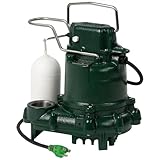
Let’s talk about putting this all together in the real world. You’ve got your sump pit, the pump sitting in it, and a discharge outlet on the pump. Often, this outlet is a threaded female port. The easiest and most solid way to start your discharge line is with a threaded adapter. For a 1-1/2 inch pump outlet, you’d look for a 1-1/2 inch NPT (National Pipe Thread) female to 1-1/2 inch male adapter, or a 1-1/2 inch NPT female to 1-1/2 inch slip adapter. The male thread screws into the pump, and then you’ve got either another threaded connection (less common for the next step) or a slip connection ready for PVC pipe cement.
If you’re using flexible discharge hose, you’ll typically screw a threaded adapter with a barbed fitting onto the pump outlet. Then, you slide a heavy-duty hose clamp over the barbed end of the adapter, slide your flexible hose onto the barbed end, and then tighten the clamp down very securely. I always recommend using at least two hose clamps, spaced a few inches apart, for extra peace of mind. I learned this after seeing a single clamp fail under pressure during a prolonged pumping cycle.
The hose didn’t completely detach, but it stretched and allowed enough water to seep out to create a damp patch on my basement floor. It wasn’t a disaster, but it was a clear sign I needed to up my clamping game.
A good set of stainless steel hose clamps will run you about $10-$15 for a few, and they are worth every penny.
If you’re going with rigid PVC pipe, which is generally preferred for permanent installations as it’s less prone to kinking and collapse, you’ll connect your adapter (threaded to slip) to the first piece of pipe using PVC primer and cement. Make sure you clean both the pipe end and the inside of the fitting with primer, apply the cement evenly, and twist the pipe and fitting together with a quarter-turn to spread the cement. Hold it firmly for about 30 seconds to prevent it from backing out. You’ll repeat this process for each section of pipe and every fitting, like elbows or couplings, as you run the line away from the house.
The National Fire Protection Association (NFPA) doesn’t directly regulate sump pump discharge piping, but general plumbing best practices, often guided by local building codes and manufacturer recommendations, emphasize secure, leak-free connections. Using the correct primer and cement, and allowing adequate cure time (check the can, usually 24 hours for full strength), is a must for a lasting seal.
When ‘good Enough’ Leads to Wet Floors
I’ve seen people get incredibly creative (and wrong) with sump pump discharge. There was a guy in my old neighborhood who used a bunch of duct tape and some questionable rubber sheeting to join his pipe. It lasted about two rainstorms before it gave way, flooding his entire finished basement. That’s the extreme, but even less dramatic shortcuts can cause problems. Trying to connect a 1-1/2 inch pipe to a 1-1/4 inch pump outlet using just brute force and hope is a common mistake. You might get it on, but the seal is compromised, and the plastic is stressed. It’s a ticking time bomb.
Another thing that trips people up is the material quality of the flexible hose itself. Not all flexible sump pump discharge hoses are created equal. Some are thin-walled and easily kink, which restricts water flow and puts more strain on the pump and fittings. (See Also: Are Organic Pumpkin Seeds From China Bad )
Others are made from cheaper plastics that become brittle and crack when exposed to UV light or temperature changes. I learned this when I replaced my first flexible hose. The cheap one I bought online looked fine, but within six months, it had developed hairline cracks where it met the adapter.
Water was seeping out, creating a constant dampness. My mistake was not checking the reviews or looking for hoses specifically rated for outdoor use and UV resistance.
Spending an extra $20 on a better quality hose saved me from future headaches and potential water damage. A good hose will feel substantial, and the corrugations should be deep and evenly spaced.
The advice to just “get a PVC fitting that looks right” is the kind of blanket statement that leads to problems. It’s like saying “get a bolt that looks right” for your car’s wheel. You need the specific bolt. For sump pump discharge, the specific fitting is one that matches your pump’s outlet size and type, and your chosen discharge pipe material (rigid PVC, flexible hose).
Don’t guess. Don’t compromise. If you’re unsure, take a picture of your pump’s outlet and bring it to a knowledgeable person at a good hardware store, or consult your pump’s manual. It’s far cheaper and less stressful to get it right the first time.
I’ve spent enough Saturday mornings troubleshooting leaks to know that preventative measures are always the best policy.
Can I Use a Standard Pvc Coupling for My Sump Pump Discharge?
You can, but only if it’s the correct size and type for your pump outlet and the discharge pipe you are using. Most standard PVC couplings are slip-fit, meaning they are designed to be glued onto a pipe. You’ll likely need a specific adapter to connect from your pump’s outlet (which might be threaded) to the PVC coupling.
What Is the Difference Between Schedule 40 and Schedule 80 Pvc Fittings?
Schedule 40 PVC has a thinner wall and is suitable for most residential sump pump discharge applications. Schedule 80 PVC has a thicker wall, is stronger, and can handle higher pressures, but it’s generally overkill for a standard sump pump and more expensive. For most homeowners, Schedule 40 is the appropriate choice.
Do I Need Primer and Cement for All Pvc Connections?
Yes, for any permanent PVC connection, you absolutely need PVC primer and cement. The primer cleans and softens the surfaces, and the cement chemically welds the pieces together, creating a strong, watertight bond. For temporary connections or those using hose clamps, glue is not used.
How Often Should I Check My Sump Pump Discharge Line?
It’s a good idea to check your sump pump discharge line at least once a year, and especially before and after periods of heavy rain or potential freezing. Look for any signs of leaks, cracks, blockages, or loose connections. Running the pump manually (if possible) can help you spot issues under pressure.
Final Thoughts
So, are all sump pump PVC attachments the same? Absolutely not. I’ve seen firsthand how a seemingly minor difference in size, thread type, or even the quality of the plastic can turn a small plumbing task into a messy, expensive problem. Whether you’re connecting to a threaded pump outlet with a barbed adapter for a hose, or running rigid PVC, the key is to match fittings to your pump and pipe, secure everything properly, and use quality materials.
Don’t make the mistake of thinking any old piece of plastic will do. Take the time to identify your pump’s outlet size and type, and then select the corresponding adapter or fitting. If you’re using flexible hose, invest in good hose clamps. If you’re using rigid pipe, get the right primer and cement and make sure a solid bond. Your basement – and your wallet – will thank you for it.
Next time you’re at the store staring at those fittings, remember this: getting the right sump pump PVC attachment is a small step that prevents a giant headache. If you’re unsure, don’t guess; ask for help or consult your pump’s manual before you buy. A little foresight goes a long way in keeping your home dry.