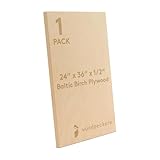
I remember staring at a sheet of what was supposed to be premium white oak plywood, ready to build a cabinet. The veneer looked gorgeous, a warm, consistent grain. But as I started cutting, I noticed something off. The edges of the inner layers, the plys, weren’t exactly the same creamy white I expected. It made me wonder: are all the plys in white oak plywood white oak? It’s a question that pops up more than you’d think when you’re deep into a project and want to know what you’re really getting.
You buy it because it says ‘white oak,’ and your brain just assumes the whole darn thing is made of that fancy hardwood, from top to bottom, inside and out. But in the world of plywood manufacturing, things are rarely that simple, especially when you’re trying to balance cost, stability, and appearance.
Let’s cut through the marketing hype and get down to brass tacks about what’s really inside that sheet.
The Veneer Deception: What You See vs. What You Get
So, you’ve picked out a sheet of plywood because it boasts a beautiful white oak face veneer. That’s the part that matters for looks, right? For most furniture and cabinetry, that top layer is indeed real white oak, carefully selected for its grain pattern and color. But plywood isn’t a solid slab; it’s a sandwich, and the layers inside – the plys – are where the real story unfolds. The question ‘are all the plys in white oak plywood white oak’ often comes down to economics and engineering.
Manufacturers use a core of other wood species to provide strength and stability. Think of it like a really good steak dinner: you want the prime cut on top, but the underlying structure needs to be solid. While some high-end, specialty plywoods might use white oak for all their inner layers (often called ‘all-hardwood core’ or ‘baltic birch’ style construction for birch), your standard, run-of-the-mill ‘white oak plywood’ almost certainly uses less expensive woods for the core plys. These are typically species like poplar, pine, fir, or even lower-grade hardwoods. These woods are chosen for their stability, consistent structure, and most importantly, their lower cost compared to solid white oak.
Why does this matter? Well, for a lot of applications, it doesn’t. If you’re building cabinet boxes that will be painted, or the insides of drawers that will never be seen, the core material is largely irrelevant.
However, if you’re building something where the edges will be visible and you want a consistent appearance, or if you’re working on a project where you plan to edge-band with solid oak, knowing what’s underneath is important. Sometimes, the contrast between the white oak veneer and a darker softwood core can be quite noticeable, and not in a good way. I learned this the hard way trying to make floating shelves. The face looked amazing, but when I routed the edges to round them over, the dark pine core showed through, making the whole thing look cheap.
I ended up having to painstakingly fill and paint the edges, which was a pain I could have avoided with a little more foresight.
The key takeaway here is that ‘white oak plywood’ primarily refers to the quality and species of the face veneer. The inner construction can vary significantly. It’s a bit like buying a car with leather seats; the seats are leather, but the dashboard might be vinyl, and the engine block is definitely not made of the same stuff as the upholstery. Understanding this distinction helps you choose the right material for your project and avoid those frustrating surprises mid-build.
What to Actually Look for: Beyond the Label
Navigating the world of plywood can feel like a minefield, especially when labels can be a bit… aspirational. When you’re asking yourself, ‘are all the plys in white oak plywood white oak,’ the honest answer is usually no, not for standard grades. So, what should you be looking for if you need more than just a pretty face? It’s all about peeling back the layers, metaphorically speaking, and checking the specifics before you buy.
First off, look for information on the core. Reputable manufacturers will often specify the core material. Terms like ‘poplar core,’ ‘fir core,’ or ‘combination core’ (meaning a mix of species) are good indicators. If the sheet is labeled ‘all hardwood,’ that’s a step up, but it doesn’t automatically mean it’s white oak all the way through.
It just means the inner plys are some type of hardwood, not a softwood like pine or fir. For projects demanding a consistent appearance from edge to edge, or where the edges will be exposed and finished naturally, you’ll want to seek out ‘all white oak plywood’ or ‘baltic birch’ (though birch is a different species, it’s known for its quality layered core). Baltic birch is often a fantastic choice because its birch plys are consistent in color and strength, and it finishes beautifully.
Another thing to check is the number of plys and their thickness. More plys generally mean a stronger, more stable panel. Standard plywood might have 5-7 plys. High-quality hardwood plywood, especially for demanding applications, can have 9, 13, or even more plys. Thicker plys also contribute to overall panel strength and reduce the likelihood of voids (empty spaces within the core) which can cause issues when routing or screwing. Look at the edge of the sheet: can you see distinct layers? Are they uniform in thickness? Do they look like solid wood, or are there visible gaps or inconsistencies? (See Also: Can A 4x8 Plywood Fit In A Honda Pilot )
Pay attention to the grade. Plywood grades often refer to the quality of the veneers on the face and back. For white oak, you might see grades like A, B, C, or D, where A is the highest quality (smooth, paintable, or wood-grain showing).
However, this grading primarily applies to the visible surfaces. It doesn’t tell you much about the core.
Some higher-end plywoods will also have a ‘plywood grade’ rating that speaks more to the construction of the entire panel, including the core. Look for notations like ‘AC’ (A grade face, C grade back) or ‘AA’ (both faces A grade). For a truly solid construction with consistent inner layers, you’re often looking at specialty products, which will come with a higher price tag. Don’t be afraid to ask the lumberyard or salesperson for clarification.
A good supplier will be able to tell you what species make up the core of their white oak plywood.
Common Mistakes That Cost You Time and Money
We’ve all been there – you grab what you think is the perfect material, only to discover its flaws halfway through your project. When it comes to plywood, especially white oak, there are a few common mistakes that can turn a dream build into a woodworking nightmare. These aren’t just minor inconveniences; they can lead to wasted material, extra labor, and a final product that doesn’t meet your expectations. The first and most common blunder is assuming that ‘white oak plywood’ means the entire panel is made of white oak. As we’ve established, this is rarely the case for standard grades. Blindly buying based on the face veneer alone is a recipe for disaster if your project demands more.
A related mistake is not considering the application of the plywood. If you’re building something that will be painted, the core material is less important. A poplar or fir core is perfectly fine and will save you money.
However, if you’re building a piece of furniture with exposed edges that you want to finish naturally, or if you plan on edge-banding with solid white oak, then a softwood core will stick out like a sore thumb. You’ll end up with a dark, grainy line next to your beautiful oak, and you’ll have to either live with it, cover it up with wood filler (which never looks quite right on a natural finish), or spend extra time and money applying solid oak edge banding. I once tried to save a few bucks on a workbench top by using a cheaper sheet of oak plywood.
The top surface was fine, but the edges? A patchwork of different woods that looked terrible once sanded and oiled. It took me an extra weekend to rip the edges off and glue on solid oak strips.
Another common pitfall is overlooking the quality of the core construction itself, beyond just the species. Even if the core is made of a decent wood, a panel riddled with voids can be a major problem. Voids are empty spaces between the layers. They can cause the plywood to delaminate (layers separating) under stress, make it difficult to get a clean cut when routing, and lead to screws pulling out easily.
When you’re inspecting a sheet, look at the edges. Are the plys tightly pressed together, or are there noticeable gaps? Some manufacturers might use lower-grade materials or less rigorous pressing methods for the inner core, which can lead to these voids. This is particularly an issue with cheaper imported plywoods, though it can happen with domestic brands too.
Finally, there’s the mistake of not planning for expansion and contraction. Wood moves with changes in humidity. While plywood is more stable than solid wood, the core material and the glue lines can still react to environmental changes. Using a sheet with a very inconsistent or poorly constructed core can lead to warping or twisting over time, especially if the project is exposed to fluctuating moisture levels. For important projects, investing in higher-quality plywood with a consistent, stable core is often the most cost-effective decision in the long run, preventing future headaches and making sure a lasting, beautiful result. Understanding these common mistakes helps you avoid them and make more informed purchasing decisions.
Real-World Use Cases: Where Core Matters (and Where It Doesn’t)
Let’s get practical. When you’re standing in the lumberyard, trying to decide which sheet of plywood to load into your truck, you need to know when the core material really matters and when you can just focus on that pretty white oak face. The short answer is: it depends entirely on what you’re making and how you plan to finish it. (See Also: Can Bondo Be Applied To Plywood )
Applications where the core material matters significantly:
- Fine Furniture with Exposed Edges: If you’re building a table, a credenza, or anything where the edges of the plywood will be visible and you want to showcase the wood, the core is important. Using a sheet with a softwood or mixed-wood core will result in a noticeable, often darker, line when you sand and finish the edges. For projects like this, you want either an ‘all hardwood core’ plywood, ideally one specifically stated to be all white oak if you can find and afford it, or a premium birch plywood (like Baltic birch) which has a consistent, attractive, light-colored core.
- Projects with Edge Banding (Natural Finish): If you plan to apply solid wood edge banding that you’ll then sand flush and finish naturally, the core material underneath the banding needs to be compatible in terms of stability and color if the banding is thin. A very dark core might show through a thin oak banding under certain lighting conditions or if the banding isn’t perfectly applied.
- Structural Components Where Appearance is Secondary But Stability is Key: While the face veneer might be white oak for aesthetics, if you’re building drawer boxes, cabinet interiors, or even structural elements for larger pieces where screws will be driven repeatedly, a stable, void-free hardwood core is advantageous. It provides better screw holding power and overall rigidity than a softwood core, even if you never see it.
Applications where the core material is less of a concern:
- Painted Cabinets and Furniture: If your project is going to be painted, the core species is largely irrelevant. The face veneer is what you’re painting over, and as long as it’s a decent quality veneer, it will provide a smooth surface for your paint. Poplar, fir, or pine cores are economical and perform perfectly well here.
- Substrates for Laminates or Veneers: If you plan to cover the entire sheet with a laminate, vinyl, or a different species of veneer, the core material is less important, provided it’s structurally sound. The surface you’re adhering to is what counts.
- Workshop Jigs, Fixtures, and Sacrificial Surfaces: For items used in the workshop that don’t need to look pretty, like jigs, cutting sleds, or workbench tops that you don’t mind getting beat up, any grade of plywood with a white oak face might be overkill. However, if you happen to have a piece of it around, it will certainly be more durable than particleboard.
My own experience leans heavily into the ‘exposed edges matter’ camp. I once built a built-in bookcase using what I thought was good quality white oak ply. The shelves looked fantastic, but the exposed bottom edges of the cabinet carcasses?
They showed a clear line of dark fir. It drove me nuts for years until I finally faced them with solid oak. Lesson learned: always think about all the surfaces that will be seen and how you’ll finish them.
For a project where the edges are visible and you want a natural finish, you’re often better off spending a bit more on an all-hardwood core ply or even using a good quality birch plywood and then applying a white oak veneer yourself if you absolutely need that specific look.
The “all Hardwood” Claim: What It Really Means
The term ‘all hardwood’ when applied to plywood can be a bit of a grey area, and it’s a prime example of why you need to dig a little deeper than the marketing speak. When a manufacturer claims their white oak plywood has an ‘all hardwood’ core, it should mean that all the inner layers, the plys, are made from hardwood species. This is a step up from plywood that uses softwood cores like pine or fir. Hardwoods are generally denser, stronger, and more stable than softwoods, which can lead to a more durable and warp-resistant panel.
However, ‘all hardwood’ doesn’t necessarily mean ‘all white oak.’ The core could be a mix of various hardwoods. Common hardwoods used in plywood cores include poplar, maple, birch, and sometimes even lower-grade oak or other regional hardwoods. Poplar is a very common choice because it’s relatively inexpensive for a hardwood, it’s stable, and it takes finishes well. Maple and birch are also excellent choices, offering great strength and a consistent appearance. So, if you see ‘all hardwood core,’ you’re likely getting a better quality panel than one with a softwood core, but you still might not have white oak all the way through.
This distinction is important for a few reasons. Firstly, color consistency. If you’re planning to have exposed edges and want a uniform look, a core made of mixed hardwoods might still present color variations that you don’t want. A poplar core is usually a pale yellow-green, maple is off-white, and birch is a light creamy color.
These are generally quite neutral and blend well with a white oak face veneer, especially if you’re not aiming for an absolutely perfect match edge-to-edge. However, if you were hoping for the core to be white oak, you’d need to look for a panel specifically advertised as having an ‘all white oak core’ or ‘all white oak construction.’ These are typically much more expensive and less common.
Secondly, structural properties. While all hardwoods are generally superior to softwoods in terms of strength and stability, there can still be differences. For example, birch and maple are known for their exceptional hardness and stability, making them excellent core materials. Poplar is good, but slightly softer.
The specific species used in an ‘all hardwood’ core will influence the overall performance of the panel. If you’re building something that will be subjected to significant stress, like a workbench or heavy-duty shelving, knowing the exact hardwood species in the core can be beneficial.
For most furniture and cabinetry, however, an ‘all hardwood’ core is a good indicator of quality construction, even if it’s not white oak. It signifies a commitment to better materials than the cheapest softwood cores. (See Also: Can Cat Plywood Be Used For Exterior Siding )
When in doubt, always ask. If the label says ‘all hardwood,’ question the salesperson or distributor about what specific species are typically used in the core. This due diligence will save you potential headaches down the line. For instance, I once used an ‘all hardwood’ ply for some drawer boxes, and while they were strong, the slight greenish hue of the poplar core was noticeable when the drawers were fully extended. It wasn’t a deal-breaker, but it wasn’t the smooth look I was going for. If I’d asked beforehand, I might have opted for a birch core.
The Myth of the Solid Wood Core and a Pro Tip
Let’s address a common misconception that often pops up when people start asking, ‘are all the plys in white oak plywood white oak?’ The idea that plywood, by its nature, should have a core made of the same species as its face veneer is largely a myth, or at least an oversimplification. Plywood’s fundamental advantage is its engineered strength and stability, achieved by cross-graining thin layers (plys) of wood. This construction method allows manufacturers to use less expensive wood species for the bulk of the panel while still achieving excellent performance, especially when a high-quality veneer is used for the visible surfaces.
The reason for using different wood species in the core is primarily economic and structural. White oak is a beautiful hardwood, but it’s also relatively expensive and can be prone to movement if not handled properly. Using it for every single ply in a large sheet would make the plywood prohibitively costly for most applications. Instead, manufacturers use woods like poplar, fir, pine, or even lower-grade hardwoods for the inner plys. These woods are chosen for their stability, their consistent grain structure which bonds well, and their lower price point. This combination allows for a panel that is strong, stable, and affordable, with the desirable aesthetic of white oak on the outside.
Now, for a pro tip that many DIYers and even some professionals overlook: If you really want that smooth look of white oak from edge to edge, but can’t justify the cost of true all-white oak core plywood (which is rare and pricey), consider buying a good quality baltic birch plywood and applying your own white oak veneer to the face and edges. Baltic birch typically has 9-13 plys of solid birch, all of consistent thickness and color, creating an incredibly stable and strong panel. The birch core is a light, neutral color that, when properly veneered, will look fantastic. You can get sheets of white oak veneer that are already edge-glued to a paper or fabric backing, making application much simpler than you might imagine. For projects where the edges are absolutely important, this method offers superior control over the final appearance and can often be more cost-effective than hunting down rare, all-white oak core panels.
Another angle: when you’re making cuts, especially with a table saw or router, pay attention to the dust. If you’re cutting and the dust is light-colored and fine, it’s likely from a lighter wood like poplar or birch. If it’s darker and more stringy, it could be pine or fir. This sensory clue can help you confirm what’s lurking inside. Don’t be fooled by the name ‘white oak plywood.’ While the face veneer is the star of the show for looks, understanding the core construction is vital for structural integrity, finishing, and ultimately, the success of your project. It’s a lesson learned through experience, often after an expensive mistake.
People Also Ask
What Is the Difference Between White Oak Plywood and Oak Plywood?
The main difference lies in the species of oak used for the face veneer. ‘White oak plywood’ specifically uses white oak veneer, known for its cooler, grayer tones and straighter grain patterns. ‘Oak plywood’ is a broader term and could use red oak, which typically has warmer, pinker tones and a more varied grain, or a mix of oak species. The core construction can vary for both, so always check the specifications if the inner layers are important for your project.
Is White Oak Plywood Good for Cabinets?
Yes, white oak plywood is an excellent choice for cabinets, especially for the visible exterior parts like doors and drawer fronts, thanks to its attractive grain and durability. For cabinet boxes, the core material becomes more important; if the edges will be seen, opt for an all-hardwood core. If the boxes will be painted or hidden, a standard plywood with a softwood or combination core is often sufficient and more economical.
Is All Hardwood Plywood the Same as Cabinet-Grade Plywood?
Not necessarily. ‘All hardwood plywood’ refers to the species used in the core (all hardwoods, not softwoods), indicating better quality and stability. ‘Cabinet-grade plywood’ is a broader term that usually implies a good quality face veneer and a stable, void-free core suitable for cabinetry. While many cabinet-grade plywoods are all hardwood, you can find cabinet-grade plywood with softwood cores that are acceptable for painted applications. Conversely, not all ‘all hardwood’ plywood is necessarily ‘cabinet-grade’ if the face veneer quality is poor or if there are still internal voids.
What Is the Best Grade of Plywood for Furniture?
For furniture where appearance is key, you’ll want a high-grade face veneer, typically an ‘A’ grade. If the edges will be exposed and finished naturally, look for ‘all hardwood’ core construction or even ‘all white oak core’ if your budget allows. Baltic birch is also a superb choice for furniture due to its strength, stability, and attractive layered edge. For painted furniture, a ‘B’ or ‘C’ grade face with a softwood core can be perfectly adequate and more budget-friendly.
Final Verdict
So, to finally answer the burning question: are all the plys in white oak plywood white oak? In almost all standard cases, the answer is a resounding no. The face veneer will be white oak, giving you that desired look, but the layers beneath are almost certainly a different, more economical wood species. This is standard practice in the industry for good reason – it balances cost, stability, and appearance.
Understanding this distinction is the key to avoiding costly mistakes and making sure your projects turn out exactly as you envision. If those inner layers matter for your specific application, do your homework. Look for ‘all hardwood core’ or even specialty ‘all white oak core’ panels, or consider veneering a high-quality baltic birch panel yourself for a truly smooth result. Don’t let the label fool you; always inspect the edges and ask questions.
Next time you’re at the lumberyard, trust your eyes, read the fine print, and remember that the ‘white oak’ on the label refers primarily to the beautiful skin, not necessarily the entire body of the wood.