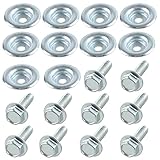
I remember the first time I tried to build a custom bike rack for my old pickup. I’d seen all these fancy, lightweight aluminum parts online and figured, why not go all-in? I ended up with a rack that looked slick, but after a few heavy loads, I started hearing this awful creaking. Turns out, some of those shiny aluminum bolts I’d lovingly tightened were starting to stretch and warp. That’s when the question really hit me: are aluminum bolts strong enough for anything serious?
It’s easy to get swept up in the allure of aluminum – it’s lighter, it doesn’t rust like steel. But ‘strong’ isn’t just one thing, and for many applications, aluminum bolts are a recipe for disappointment if you don’t know what you’re doing. This isn’t about a gentle suggestion; it’s about saving you money and headaches.
Aluminum Bolts: Stronger Than You Think, or Just Lighter?
Let’s cut to the chase. Are aluminum bolts strong? Yes, but with a massive asterisk the size of a truck tire. They are not inherently as strong as steel bolts, plain and simple. If you’re looking for brute force, for something that needs to withstand extreme tension or shear forces day in and day out, steel is usually your go-to. Think structural beams, engine mounts, or anything that could catastrophically fail and cause serious injury. Aluminum alloys are lighter, and that’s their main selling point. For applications where weight is the absolute enemy – like in aerospace, high-performance bicycles, or certain sporting goods – aluminum alloys offer a good strength-to-weight ratio. But ‘good’ doesn’t always mean ‘enough’.
I learned this the hard way trying to assemble a high-end drone frame a few years back. The instructions called for specific aluminum bolts. I thought, “It’s for a drone, it has to be strong enough!” I overtightened a few, thinking I was just getting a secure fit. A few flights later, one of the motors started wobbling precariously. A quick inspection revealed the bolt boss had cracked around the bolt head. Not the bolt itself snapping, but the material it was threaded into failing because the bolt was either too tight or the alloy wasn’t up to the vibration and stress. That was a pricey mistake, and a wake-up call.
The strength of an aluminum bolt depends heavily on the specific alloy used. Not all aluminum is created equal. Alloys like 6061-T6 are very common and offer a decent balance of strength, corrosion resistance, and machinability. This is probably what you’ll find in most off-the-shelf aluminum bolts for general purposes. However, there are stronger aluminum alloys, like those used in aerospace, but they come at a higher cost and are often not readily available for consumer-level products. For most of us, the aluminum bolts we encounter are the ‘good enough for some things’ kind, not the ‘can hold up a bridge’ kind.
When people ask if aluminum bolts are strong, they’re often comparing them implicitly to steel. And in a direct head-to-head tensile strength test, steel will almost always win. However, the context matters immensely. For a titanium exhaust tip clamp on a motorcycle, or for securing fairings on a race bike where every gram counts, a high-grade aluminum bolt might be perfectly adequate and preferable due to weight savings. The issue arises when people assume ‘aluminum bolt’ means it can do the job of a ‘steel bolt’ just because it’s a bolt.
What to Look for: The Devil Is in the Alloy Details
So, you’ve decided you’re going to try aluminum bolts for something. Good for you, if you’ve got a good reason beyond just liking shiny things. The first thing you absolutely MUST do is figure out the specific alloy. Look for markings on the bolt head or packaging. The most common one you’ll see for anything reasonably strong is 6061-T6. The ‘T6’ is important – it signifies a heat treatment that significantly increases strength. Without that treatment, it’s much weaker. If you see something like 5052, that’s generally more for corrosion resistance and formability, not high-strength applications. It’s softer.
Beyond the alloy, check the thread pitch and diameter. Are they standard metric or imperial sizes? This is less about strength and more about fitment, but it’s important for making sure you don’t strip threads or have a loose connection. I once bought what I thought were standard M6 aluminum bolts for a bracket, only to find they had a fine thread pitch. They looked identical, but the engagement with the nut was terrible, and I ended up cross-threading one trying to force it. A simple mistake, but it ruined the part and the bolt.
Here’s a little table I put together based on my own experiences and what I’ve seen fail: (See Also: Are All Honda Atv Bolt Patterns The Same )
| Aluminum Alloy (Common) | Typical Use Case | Strength Verdict | My Opinion |
|---|---|---|---|
| 5052 | General fabrication, decorative parts, tanks, sheet metal work. | Low to Moderate | Avoid for any load-bearing applications. Good for non-important covers. |
| 6061-T6 | Frames (bikes, drones), brackets, moderate load applications, general hardware. | Moderate | Your best bet for most general aluminum bolt needs. Still not for heavy duty. |
| 7075-T6 | Aerospace, high-stress structural components, high-performance sporting goods. | High (for aluminum) | If you can find it and afford it, it’s strong. But overkill for most DIY. |
| Pure Aluminum (1xxx series) | Electrical conductivity, very soft applications. | Very Low | Don’t even think about it for anything requiring strength. |
The ‘strength’ of a bolt isn’t just about its tensile strength either. It’s also about its shear strength (resistance to being cut or ripped apart), its fatigue life (how many stress cycles it can endure before failing), and its resistance to galling. Aluminum bolts are particularly prone to galling, which is a form of friction wear where surfaces in contact seize or tear. This is why using anti-seize compound is often recommended, but it can sometimes reduce the torque you can achieve, impacting the clamping force.
The Common Mistakes People Make with Aluminum Bolts
The biggest mistake, hands down, is treating them like steel. People grab their torque wrench, set it to the value they’d use for a steel bolt of the same size, and crank away. That’s a fast track to stripped threads, stretched bolts, or even cracked components. Aluminum is a softer metal. It deforms more easily under stress. Overtightening is not just bad; it’s often catastrophic for aluminum fasteners. You need to be gentler, follow manufacturer specifications precisely, and understand that the clamping force you achieve might be lower than with steel, even if the torque value seems similar.
Another mistake is using the wrong grade of aluminum. As I mentioned, 6061-T6 is common, but if you grab something that’s just labeled ‘aluminum’ or is from a cheap, no-name brand, it could be a much softer alloy that’s barely stronger than cheese. I’ve seen people try to use aluminum bolts for things like suspension components on a go-kart or to attach a trailer hitch. Just… don’t. That’s not what they are designed for. It’s like trying to use a plastic spoon to dig a hole in concrete.
I once tried to replace a few steel bolts on a motorcycle exhaust bracket with aluminum ones to save a tiny bit of weight and reduce heat transfer. I was meticulous, using a torque wrench set to the lowest reasonable value for aluminum. Within a week, two of the bolts had worked themselves loose.
Vibrations from the engine had caused them to back out. This is a common issue: aluminum bolts have a lower clamping force retention than steel, especially under vibration. So, even if they don’t snap or stretch, they might just decide to leave the party on their own.
For important components like exhaust systems, where heat and vibration are constant, steel or specialized high-temperature alloys are the only sensible choice.
People also forget about corrosion. While aluminum doesn’t rust like steel, it can corrode, especially when in contact with dissimilar metals. This is galvanic corrosion. If you bolt aluminum to steel without proper isolation (like using a plastic or nylon washer and making sure the surfaces don’t directly touch), the aluminum will corrode away much faster, weakening the connection. It’s a slow burn, but it will eventually compromise the bolt’s integrity. I’ve seen aluminum bolts on boat trailers that looked like they’d been attacked by acid after just a year in saltwater. The threads were pitted and rough, and they were nowhere near as strong as they should have been.
Real-World Uses: Where Aluminum Bolts Actually Shine
So, if they’re not for everything, where do aluminum bolts actually make sense? Think about applications where weight savings are most important and the loads are moderate and well-defined. High-performance bicycles are a prime example. Many components – stem bolts, seatpost clamps, bottle cage mounts – use aluminum bolts, often titanium ones, to shave off grams. These are highly engineered parts where the loads are calculated and the materials are chosen very carefully. You wouldn’t use the same bolts on your commuter bike that you would on a downhill mountain bike, and the same applies to aluminum versus steel. (See Also: Are Ak Bolts Interchangeable )
Aerospace is another big one. Aircraft manufacturers use a lot of specialized aluminum alloys for their fasteners. The weight savings on a plane that weighs tens of thousands of pounds can translate into significant fuel efficiency improvements. These are not your hardware store aluminum bolts; they are engineered to incredibly high standards and made from premium alloys like 7075-T6, often with special coatings for corrosion and galling resistance. The cost is astronomical, but for aviation, safety and efficiency are a must.
Sporting goods often use aluminum fasteners for weight reduction. Think about high-end camping gear, archery equipment, or even the housings for certain electronics where portability is key. For instance, I used some small M3 aluminum bolts to secure a custom camera mount to a lightweight tripod. The camera wasn’t heavy, and the tripod itself was the main load-bearing item. The aluminum bolts provided a secure, lightweight connection without adding unnecessary bulk. They looked good too, which is a bonus when you’re trying to make something look sleek.
In the world of DIY, you might find them useful for non-structural decorative elements, or for components that experience very low static loads. For example, if you’re building a custom interior panel for a car or a display case for collectibles, and you need to attach a lightweight aluminum panel with a few small bolts, aluminum fasteners might be appropriate. Just make sure the panel isn’t going to rattle loose, or that the failure of the bolt wouldn’t cause any damage or injury. It’s all about matching the bolt’s capabilities to the specific demands of the application. If you’re asking yourself, “are aluminum bolts strong enough for this?”, and there’s any doubt, the answer is probably no.
Practical Tips and When to Just Use Steel
Here’s the golden rule: if there’s any question about whether an aluminum bolt can handle the load, use steel. Seriously. The cost difference is usually negligible compared to the potential cost of failure – whether that’s a broken part, a damaged item, or worse, an injury. Steel bolts come in various grades (like Grade 5 or Grade 8 in imperial, or Class 4.6, 8.8, 10.9 in metric) that denote their strength. These grades provide a predictable and reliable level of performance for a wide range of applications. You can’t get that same predictable, high-level performance from most common aluminum bolts.
When you do use aluminum bolts and need to make sure they hold their torque, consider using a thread-locking compound. However, be mindful of the type. A permanent threadlocker might make it impossible to remove them later, which could be an issue if you plan on doing maintenance. A medium-strength or even a removable threadlocker (often blue) can help prevent loosening due to vibration. Always check the manufacturer’s recommendations for the specific bolt and application. Some threadlockers can react with certain aluminum alloys, so do your homework.
When tightening aluminum bolts, use a torque wrench and follow specifications religiously. If you don’t have a spec, err on the side of caution. You want the bolt to be snug and secure, but not deformed. A good rule of thumb for aluminum is to start with a lower torque setting than you might expect and gradually increase it, feeling for any signs of stretching or the bolt head digging into the material. If you’re using a standard bolt, aim for about 50-60% of the torque you’d use for a steel bolt of the same size and thread pitch. But again, manufacturer specs are king here.
For any application that involves significant vibration, heat, or dynamic loads – like engine components, suspension parts, or anything on a vehicle that’s not purely cosmetic – just use steel. The reliability and strength of steel are hard to beat, and it’s often the more cost-effective choice in the long run when you factor in the potential for failure with aluminum. My bike rack incident, and the subsequent need to buy steel bolts to replace the bent aluminum ones, taught me that lesson well. It’s just not worth the risk for many things.
Are Aluminum Bolts Good for Structural Applications?
Generally, no. While some high-strength aluminum alloys exist, they are typically not as strong as steel and are more prone to deformation and fatigue. For important structural connections where failure could lead to significant damage or injury, steel bolts are almost always the safer and more appropriate choice. (See Also: Are All Bolt Patterns The Same )
Can Aluminum Bolts Be Used in Outdoor Environments?
Yes, aluminum bolts are often suitable for outdoor environments because they are highly resistant to rust and corrosion. However, they can still corrode when in contact with dissimilar metals, so proper isolation techniques are recommended. Their strength can be compromised by prolonged exposure to harsh chemicals or extreme temperatures.
What Is the Main Advantage of Using Aluminum Bolts?
The primary advantage of aluminum bolts is their significantly lower weight compared to steel bolts. This makes them ideal for applications where weight reduction is a important factor, such as in aerospace, high-performance vehicles, and sporting equipment.
How Do I Prevent Aluminum Bolts From Galling?
To prevent galling, it’s recommended to use an anti-seize compound specifically designed for aluminum fasteners. Additionally, make sure that the threads are clean and free of debris. Applying a light coating of grease or a specialized thread lubricant can also help reduce friction and prevent seizing during installation.
Are Aluminum Bolts Stronger Than Titanium Bolts?
No, titanium bolts are generally significantly stronger and more durable than aluminum bolts. Titanium offers a superior strength-to-weight ratio, exceptional corrosion resistance, and higher temperature tolerance, making it a premium choice for demanding applications where both strength and weight are important.
Final Verdict
So, to wrap this up, are aluminum bolts strong? They can be, for specific, lighter-duty applications where weight is the main concern. But if you’re looking for brute strength, reliability under heavy stress, or anything where failure isn’t an option, you’re almost always better off reaching for steel. It’s not about being a snob; it’s about using the right tool for the job and not finding yourself fixing a failure down the line because you chased a shiny object.
Don’t be like me and learn the hard way by overtightening, stripping threads, or having things fall apart. Always check the alloy, understand the loads involved, and when in doubt, over-engineer with steel. Your future self, and your wallet, will thank you.
Next time you’re faced with a fastener choice, ask yourself: does this really need to be aluminum, or is steel the sensible, stronger option?