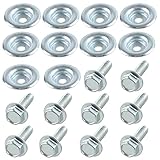
I remember the first time I tried to fix my old pickup truck. Had a bolt snap, no big deal, right? Grabbed what I thought was a spare from my overflowing toolbox. Wouldn’t thread. At all. Felt like an idiot. Turns out, not all bolts are created equal, and when it comes to whether are American bolts SAE, the answer is… it’s complicated, but mostly yes.
This whole SAE versus Metric thing can be a real headache if you don’t know what you’re looking at. You end up buying the wrong size, stripping threads, or just plain not getting the job done. I’ve spent way too much time and money chasing down the right fastener.
Let’s cut through the noise. If you’re working on anything made in the US, or even a lot of stuff from elsewhere that’s been adapted for the American market, you’re probably dealing with SAE.
Why the Confusion: Sae vs. Metric in the U.S.
Okay, let’s get this straight upfront: the vast majority of fasteners manufactured and used in the United States are SAE (Society of Automotive Engineers), also often referred to as ‘Inch’ fasteners. This system uses inches for measurement rather than millimeters. So, when you’re talking about whether
are American bolts SAE
, the answer is overwhelmingly yes. Think about your car, your motorcycle, most appliances, and even a lot of furniture. They’re all likely held together with SAE bolts, nuts, and screws.
The confusion often creeps in because the rest of the world, and increasingly even some modern American manufacturing, uses the Metric system. It’s a global standard, and frankly, it’s more logical. But legacy systems die hard, especially in heavy industry and automotive. My first wrench set, bought when I was barely old enough to drive, was all SAE. I learned on those. Then I got a job working on a European car, and suddenly I was swimming in millimeters. It’s a pain, but you adapt.
The key difference lies in how they’re measured and specified. SAE bolts are described by their diameter in inches (like 1/4″, 5/16″, 3/8″) and by the number of threads per inch (TPI). For example, a 1/4″-20 bolt means it’s a quarter-inch in diameter with 20 threads per inch. Metric bolts, on the other hand, are specified by their diameter in millimeters (like M6, M8, M10) and their pitch, which is the distance between threads, also in millimeters (e.g., M8 x 1.25, meaning an 8mm diameter bolt with a 1.25mm pitch).
Trying to force a Metric bolt into an SAE thread, or vice-versa, is a recipe for stripped threads and frustration. I’ve seen DIYers do it, thinking they’re close enough. Spoiler alert: they’re not. It’s like trying to screw a square peg into a round hole. It just won’t go, and if you force it, you’re going to break something expensive or make a repair job much harder than it needs to be. The thread pitch and angle are different, and they simply don’t mesh. (See Also: Are All Honda Atv Bolt Patterns The Same )
Identifying Sae Bolts: What to Look For
So, how do you know if you’re dealing with an SAE bolt? It’s not rocket science, but it does require a bit of observation. The most obvious clue is where the item was manufactured or designed. If it’s a classic American car, a piece of farm equipment, or anything built before the widespread adoption of metric standards in the late 20th century, it’s almost certainly SAE. This applies to a huge chunk of the tools and hardware you’ll find at a typical US hardware store.
Beyond the origin, you can look at the markings on the bolt head itself. SAE bolts often have different markings to indicate their strength grade. While this isn’t a direct indicator of SAE versus Metric, it’s part of the SAE system. Common SAE grades are Grade 2 (plain head, weakest), Grade 5 (often three radial lines), and Grade 8 (often six radial lines, very strong). Metric bolts use a different system, typically numbers like 4.6, 8.8, or 10.9, with the first digit indicating tensile strength and the second indicating yield strength.
The most reliable way, though, is to use a measuring tool. You’ll need a ruler or caliper that can measure in inches and a thread gauge. For the diameter, you’re looking for fractions of an inch. For the thread count, you’ll count how many threads are present within one inch. A common SAE bolt size is 1/4 inch diameter with 20 threads per inch (1/4-20). Another is 5/16 inch diameter with 18 threads per inch (5/16-18).
Here’s a handy little chart that can help you spot the common sizes. Notice how these are all expressed in inches:
| Nominal Diameter (in) | Threads Per Inch (TPI) | Common Use/Verdict |
|---|---|---|
| #6 | 32 | Small electronics, hobbyist projects. Not super common for heavy-duty stuff. |
| #8 | 32 | Similar to #6, often found in appliances. |
| #10 | 24 or 32 | Common in electronics and lighter fixtures. Stick with the correct TPI! |
| 1/4 | 20 or 28 | Ubiquitous. Car parts, furniture, general construction. 20 TPI is more common. |
| 5/16 | 18 or 24 | Stronger than 1/4. Used where more load is expected. Good for brackets. |
| 3/8 | 16 or 24 | Heavy-duty applications. Think suspension components or large machinery. |
| 1/2 | 13 or 20 | For serious structural stuff. Frames, large equipment. Don’t mess around here. |
My personal experience is that the 1/4-20 and 5/16-18 sizes are the ones you’ll encounter most often in everyday repairs. If you buy a bolt and it’s listed as ‘1/4-20’, you’re almost certainly looking at an SAE bolt.
Common Mistakes and How to Avoid Them
The biggest mistake people make, and trust me, I’ve made it too, is assuming a bolt is a bolt. You see a pile of bolts, you grab one that looks about the right size, and you start screwing. This is where the real pain begins. The most common error is trying to use a Metric bolt in an SAE hole, or vice versa. They might look identical, especially for smaller diameters, but the threads are cut at different angles and with different pitches. Forcing it will strip the threads in the hole (like a nut or a pre-tapped boss) or on the bolt itself. This turns a simple fix into a much bigger problem.
Another mistake is not checking the thread pitch. Even within the SAE system, there are different TPIs for the same diameter. For example, a 1/4-inch bolt can be 20 TPI or 28 TPI (coarse vs. fine thread). They won’t interchange. If a manufacturer calls for a 1/4-20 bolt, using a 1/4-28 will feel loose and won’t hold properly, and trying to force it might cross-thread. I learned this the hard way trying to reassemble a motorcycle fairing. One bolt was different, and it took me hours to figure out why it wouldn’t tighten correctly.
Then there’s the strength issue. Just because a bolt fits doesn’t mean it’s strong enough. Using a low-grade SAE bolt (like a Grade 2) where a high-grade one (like a Grade 8) is required can lead to failure under load. This is a safety hazard, especially in automotive applications where components are under constant stress. Always check the grade marking on the original bolt if you can, or consult the manufacturer’s specifications. (See Also: Are Ak Bolts Interchangeable )
Finally, people often don’t buy a few extra. When you’re in the middle of a job, especially an older vehicle or piece of equipment, it’s not uncommon for bolts to be rusted, seized, or just plain break off when you try to remove them. Having a few spares of the correct size and type on hand can save you a trip to the store and a lot of downtime. I always buy at least two or three extra when I know I’m going to be dealing with old fasteners.
When Metric Crept in: Modern American Manufacturing
While the legacy of SAE is strong in the US, it’s not the whole story anymore. Modern American manufacturing, especially in areas like electronics, aerospace, and even some newer automotive designs, often incorporates Metric fasteners. This is largely due to globalization and the desire to standardize components across international production lines. If a company is building a product in the US but selling it worldwide, they might opt for Metric fasteners to simplify supply chains.
So, if you’re working on a relatively new American-made appliance, a piece of electronics, or a car from the last 10-20 years, there’s a good chance you’ll encounter Metric sizes. For example, many modern power tools, from drills to saws, use Metric bolts for assembly. Even some American car manufacturers have started using a mix of SAE and Metric bolts on different parts of the same vehicle. My own recent car has some Metric bolts holding the undercarriage shields on, while the suspension is pure SAE.
This is where having a good set of both SAE and Metric tools and fasteners is absolutely necessary. You can’t afford to be caught out. A complete socket set that includes both inch and millimeter sizes is a must. Same goes for wrenches. For fasteners, it’s wise to have a selection of common SAE sizes (like 1/4-20, 5/16-18, 3/8-16) and common Metric sizes (like M6x1.0, M8x1.25, M10x1.5).
A bit of advice: if you’re unsure, and you absolutely can’t tell from markings or measurements, the safest bet is often to buy a small assortment pack of the suspected size in both SAE and Metric. They aren’t that expensive, and it’s cheaper than a stripped thread or a trip back to the hardware store. This is one of those times where a little foresight saves a lot of hassle. It’s also worth checking the manufacturer’s service manual or technical documentation if you can get your hands on it. That’s the definitive source.
Sae vs. Metric: A Practical Comparison
Let’s break down how these two systems really stack up in practical terms. You’re out in the garage, trying to fix something, and you need a bolt. The question of
are American bolts SAE
is front and center. Here’s a head-to-head that might clarify things: (See Also: Are All Bolt Patterns The Same )
- Measurement Units: This is the most fundamental difference. SAE uses inches and fractions of an inch for diameter and threads per inch (TPI) for pitch. Metric uses millimeters for diameter and pitch.
- Thread Pitch: While both systems have coarse and fine threads, the actual spacing is different. A 1/4-20 SAE bolt (20 TPI) has a pitch of roughly 1.27 mm. An M6 Metric bolt (which is about 0.236 inches in diameter) often has a pitch of 1.0 mm or 1.25 mm. They are not interchangeable.
- Head Markings: As mentioned, SAE uses dots or radial lines (Grade 2, 5, 8), while Metric uses numbers (4.6, 8.8, 10.9) to indicate strength. This is a quick visual cue once you know what to look for.
- Tooling: You need different wrenches and sockets for SAE and Metric fasteners. Using the wrong tool can round off the bolt head, making it impossible to remove or tighten. I’ve seen bolt heads absolutely mangled because someone tried to use a 10mm socket on a 3/8″ bolt. They look close, but they’re not the same.
- Availability: In the United States, SAE fasteners are incredibly common and readily available in virtually any hardware store, auto parts store, or big box retailer. Metric fasteners are also widely available, but you might find a wider selection of SAE sizes in older, more traditional hardware stores.
- Precision: The Metric system, being a decimal-based system, is often considered more precise and easier to work with mathematically. However, for the vast majority of hands-on mechanical work, the SAE system is perfectly adequate and what most Americans are accustomed to.
Here’s where I stand: For anything built in the US before, say, the early 1980s, it’s almost certainly SAE. For newer stuff, it’s a coin toss, but many American manufacturers still use SAE for structural components and metric for lighter duty or imported parts. My rule of thumb: if it feels like a standard American tool fits it, it’s probably SAE. If you have to dig out a smaller, unfamiliar socket, it might be metric.
Are All American Bolts Sae?
No, not all American bolts are SAE. While SAE (or Inch) fasteners are historically dominant and still very common in American manufacturing, especially for older vehicles and equipment, modern American production often incorporates Metric bolts to align with global standards or for specific design requirements. So, while many are SAE, you will encounter Metric bolts on American-made items.
How Do I Know If a Bolt Is Sae or Metric?
You can usually tell by looking at the markings on the bolt head, measuring the diameter in inches versus millimeters, or counting the threads per inch versus the metric pitch. SAE bolts are typically measured in fractions of an inch with a specific number of threads per inch (e.g., 1/4-20). Metric bolts are measured in millimeters (e.g., M8x1.25).
Can I Use a Metric Bolt in an Sae Hole?
Generally, no. While some sizes might be very close, the thread pitch and angle are different. Forcing a Metric bolt into an SAE thread, or vice versa, will likely result in cross-threading, stripping the threads of both the bolt and the hole, and rendering them unusable. It’s important to use the correct fastener type.
What’s the Difference Between Sae and Metric Bolt Grades?
SAE bolts use a system of dots or radial lines (Grade 2, 5, 8) to denote strength, with Grade 8 being the strongest. Metric bolts use a two-digit number system (e.g., 8.8, 10.9), where the first digit indicates tensile strength and the second indicates yield strength. Both systems are designed to classify the mechanical properties of the fasteners.
Verdict
So, to circle back to the main question:
are American bolts SAE
? For the most part, especially if you’re working on anything with a bit of history or traditional American engineering, the answer is a resounding yes. They’re the backbone of a lot of the stuff we rely on.
However, don’t get caught completely blindsided. The world is a global marketplace, and modern manufacturing, even here in the States, often uses Metric fasteners. Having a good grasp of both systems, the right tools for both, and a bit of patience will save you a world of headaches. Always measure twice, buy once, and if in doubt, grab a few spares of both types.
Next time you’re faced with a stripped bolt or a fastener that won’t fit, take a moment to identify its system before you reach for the wrong tool. It’s a small detail that makes a huge difference in getting the job done right.