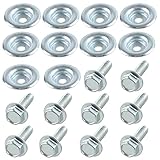
I remember the first time I encountered one. A seemingly simple furniture assembly, and suddenly I was staring at this weird, threaded doodad that didn’t quite look like a regular bolt. It was an open bolt. My immediate thought was, ‘What fresh hell is this?’ I’d seen plenty of nuts, bolts, and screws in my life, but this? This felt like a deliberate design choice to make things more complicated. So, to answer the burning question: are any iuise open bolts? Absolutely. And frankly, they can be a royal pain in the backside if you’re not prepared.
This isn’t some niche, obscure fastener you’ll only find in a spaceship. You’ll run into them, and when you do, you’ll probably wonder why they exist. I certainly did. Let’s get into what these things are and if they’re worth the hassle.
The Real Deal with Open Bolts: What Are They, Anyway?
Look, the term ‘open bolt’ itself sounds a bit… unfinished, doesn’t it? Like a door left ajar. And in a way, that’s exactly what they are. Unlike a standard bolt that’s threaded all the way down its shank, an open bolt – or more accurately, a fastener that behaves like an open bolt in certain contexts – typically has a smooth shank for a good portion of its length, with threads only at the very end. Think of it like a screw that forgot to finish its threading job. But this isn’t a manufacturing defect; it’s by design. The smooth shank is there for a reason, and it usually involves precise alignment or preventing stress concentration.
The ‘iuise’ part, as you’re asking, likely refers to specific applications or perhaps a colloquialism for how they’re used in certain industries or by certain manufacturers. I’ve seen them most commonly in furniture assembly, especially flat-pack stuff that’s designed for quick assembly and disassembly, and sometimes in electronics or specialized machinery. The idea is that the smooth shank passes through a pre-drilled hole, and only the threaded end engages with a mating part, like a nut or a threaded insert. This allows for a really clean fit and can sometimes be quicker to assemble because you’re not fighting threads all the way down.
My own run-in with these involved a bookshelf that promised ‘easy assembly in 15 minutes.’ Ha! It took me forty-five minutes, mostly because I kept trying to force a regular bolt into a hole meant for one of these open-shank types. The smooth part of the shank is meant to glide through the material, and then the threads catch on the receiving end. When you’re dealing with multiple pieces of particleboard or MDF, this smooth shank is supposed to make sure everything lines up perfectly without binding. It’s supposed to be elegant. Sometimes, it is. Other times, it’s just a recipe for stripped threads or wobbly connections if the tolerances aren’t spot on.
The confusion often arises because we’re so used to bolts and screws being fully threaded. So, when you see that length of smooth metal, your brain screams ‘wrong part!’ I’ve seen people try to grind down regular bolts to make them fit, or worse, force the wrong fastener entirely. That’s where the real problems start. The beauty of the open bolt design, when it works, is that it creates a very strong, precise connection because the entire smooth shank can be supported by the material it passes through, reducing shear stress on the threads themselves. It’s a bit like a rivet in that regard, but with the added benefit of being threaded for a strong grip.
Why Would Anyone Design Such a Thing? The ‘why’ Behind the Shank
This is where the skepticism kicks in for many of us. Why create a fastener that seems… incomplete? The primary reason, and it’s a good one, is to make sure precise alignment and prevent unwanted thread engagement. Think about assembling furniture.
You’ve got panels that need to slot together perfectly. If you’re using a fully threaded bolt, the threads can start to catch on the edge of the material as you’re trying to slide the panels together. This can cause friction, misalignment, and even damage the material.
An open bolt, with its smooth shank, slides through the hole in one piece of material without resistance. Then, the threaded portion engages with a nut, threaded insert, or a tapped hole in the second piece of material.
This smooth shank allows the two (or more) pieces to be brought into perfect contact before the threads even do their work. It’s like having a pilot pin that guides everything into place. This is particularly useful in applications where you need a tight, gap-free fit, or where repeated assembly and disassembly is expected. The smooth shank also reduces the risk of cross-threading during the initial insertion phase. You can’t cross-thread a smooth shank, can you? It’s only when that threaded end finds its mark that the potential for error exists. This design choice aims to simplify the initial joining process, making it faster and less prone to user error during the ‘alignment’ stage.
I had a friend, bless his heart, who was trying to assemble an entertainment center. He bought what he thought were standard bolts for it. Turns out, the design relied on these open-shank bolts. He spent hours trying to force his bolts, convinced the pre-drilled holes were too small or somehow misaligned. He ended up stripping the threads on half his ‘bolts’ and putting gouges in the wood panels. When I finally saw what he was dealing with, it was obvious. The smooth shank was meant to glide through the first panel, and then the threaded end would bite into the embedded nut in the second panel. His frustration was epic, and entirely avoidable if he’d understood the fastener’s purpose. (See Also: Are All Honda Atv Bolt Patterns The Same )
Another angle is in situations where the bolt might pass through multiple components, and you only want the threads to engage at the very end, perhaps in a specific captive nut or a designated threaded boss. This prevents the bolt from being accidentally overtightened and crushing intervening materials. It’s a subtle distinction, but important for the intended performance of the assembly. So, while they might look ‘wrong’ to our eyes, they are often a deliberate engineering choice for stability, ease of assembly, and durability in specific scenarios. They’re not inherently bad, just different, and they require understanding their unique function.
When Things Go Wrong: Common Mistakes with Open Bolts
Okay, let’s talk about the screw-ups. Because, trust me, I’ve seen them, and I’ve probably made a few myself before I learned my lesson. The biggest mistake, hands down, is trying to use a regular, fully threaded bolt when an open-shank bolt is specified. I touched on this in the intro, but it bears repeating because it’s so common.
People see a bolt hole, they grab a bolt. Simple, right? Wrong. If the design calls for an open bolt, it’s usually because that smooth shank is key for alignment or to allow the pieces to sit flush before the threads grab.
Jamming a threaded bolt in there early can force the pieces apart, strip the threads in the nut or insert, or even crack the material you’re screwing into, especially if it’s MDF or particleboard.
Another classic blunder is overtightening. Because the smooth shank allows the bolt to slide in so easily, people sometimes get a false sense of security and think they can just crank it down with all their might.
But those threads at the end are still just threads. Overtightening can strip the threads in the receiving nut or insert, or worse, it can pull the insert right out of the material.
I saw a guy assemble a whole dining table once, and by the time he was done, every single bolt was over-tightened. The legs wobbled like crazy because the inserts were starting to pull out. He’d just kept going until he felt resistance, rather than stopping when the joint was snug.
That was a $500 table destined for the curb.
Then there’s the ‘wrong tool for the job’ scenario. Some open-bolt systems use specialized heads or require a specific turning motion to seat them correctly. Trying to use an impact driver on a delicate open-bolt system can be catastrophic. You’re likely to either strip the head of the fastener or, as mentioned, overtighten and damage the assembly. I learned this the hard way with some small electronic enclosures. I was in a rush, grabbed my trusty cordless drill, and ended up stripping the heads of three tiny, specialized bolts. Had to order replacements, which took two weeks. Lesson learned: pay attention to the tool recommendations.
Finally, and this is a bit more subtle, people sometimes don’t realize the importance of the mating component. An open bolt relies on a well-formed nut, threaded insert, or tapped hole. If that receiving part is damaged, cross-threaded, or just poorly made, the open bolt system won’t work as intended. It’s a team effort. You can have the perfect open bolt, but if the hole it’s going into is a mess, you’re still going to have problems. Always inspect the receiving threads or insert before you start, and make sure it’s clean and undamaged. It’s the often-overlooked half of the connection, and it matters just as much. (See Also: Are Ak Bolts Interchangeable )
Real-World Applications: Where Do You Actually Find Them?
So, you’ve seen them, you understand the basic idea, but where do these peculiar fasteners pop up in the wild? As I’ve mentioned, furniture assembly is a huge culprit. Flat-pack furniture from places like IKEA, Wayfair, or any retailer selling self-assembly items often employs these. It’s about making the process as idiot-proof as possible during the initial alignment phase. Think of the cam-lock systems that often accompany these bolts. The bolt goes through one piece, the cam lock in the other piece grabs onto the threaded end. The smooth shank makes sure the panels sit perfectly flush before you turn the cam. It’s a common combination you’ll find in wardrobes, desks, and shelving units.
Beyond furniture, you’ll see them in certain types of electronic enclosures. Devices that need to be assembled and disassembled for maintenance or upgrades might use them to make sure panels fit snugly and without gaps. The smooth shank can help maintain the integrity of internal components by not putting undue pressure on them during assembly. I worked on a project once involving custom server racks where certain panels were secured with these. It allowed for a very precise fit, preventing any airflow leaks, which was important for cooling.
Automotive applications, especially in interior trim or less important structural components, can also feature them. Think about door panels, dashboard components, or seat mountings where precise alignment is key and the component might not be under extreme load. The smooth shank helps prevent the threads from damaging surrounding plastic or fabric during installation. It’s a way to make sure a clean, professional finish, even for parts that are user-replaceable.
You might also find them in recreational equipment, like some types of bicycles or outdoor gear, where lightweight construction and ease of assembly are prioritized. For example, attaching a fender or a rack to a frame might use a fastener like this. The smooth shank allows the bolt to pass through the frame’s mounting hole and then thread into a nut or insert on the fender/rack itself, making sure a flush mount and proper alignment.
I’ll be honest, the first time I saw one on a high-end piece of camera gear, I was surprised. It was used to attach a protective cage to the camera body. The precision needed there meant that a bolt that allowed for perfect alignment before threading was a sensible choice. So, while they might seem like a ‘cheap’ or ‘lazy’ design to some, they’re often a practical solution for specific engineering challenges, focusing on ease of assembly, precision, and a clean finish.
My Personal Test: How Do They Hold Up in Real Life?
I’ve put these open-shank fasteners through their paces, sometimes intentionally, sometimes accidentally. My most memorable (and frustrating) experience was with a modular shelving system I bought about five years ago. The marketing promised ‘effortless assembly.’ It came with a bag of these odd-looking bolts. The instructions were clear enough, showing the smooth shank gliding through one piece and the threaded end engaging with a captive nut in the other. But my brain kept screaming, ‘This isn’t a proper bolt!’
The first couple of connections went okay, but by the fourth shelf, I was rushing. I tried to force a connection where the panels weren’t quite flush. The smooth shank slid in fine, but when I started threading, I felt resistance.
Instead of stopping and realigning, I gave it a bit more torque. Snap. The threaded end sheared off inside the captive nut. Now I had a bolt stuck halfway, and the nut was probably compromised.
I spent the next hour trying to extract the broken piece, which involved a lot of swearing, a drill, and eventually a screw extractor kit. I ended up having to replace the captive nut, which meant disassembling half the shelf unit.
Expensive lesson in patience and respecting the design. (See Also: Are All Bolt Patterns The Same )
On the flip side, I’ve also used them in projects where they’ve performed brilliantly. I built a custom workbench a couple of years back using a mix of standard fasteners and some open-shank bolts for attaching the tabletop support beams. The smooth shank allowed me to perfectly align the heavy beams to the legs before I even started threading. This was important because I was working alone, and getting those heavy pieces into position and aligned perfectly before they were secured was a lifesaver. Once threaded, the connection was rock solid. They held up just as well as any fully threaded bolt I used elsewhere, maybe even better because the entire shank was supported.
Here’s a contrarian take: everyone says you need super-high-torque fasteners for anything structural. I disagree when it comes to these specific open-bolt applications. For things like furniture or enclosures where the primary goal is alignment and a secure, non-wobbly fit rather than holding a bridge together, the holding power of the threaded portion, when properly seated and not overtightened, is perfectly adequate. The smooth shank provides stability that a fully threaded bolt might lack if it were slightly too long or the holes weren’t perfectly precise. My workbench beams, under significant load, haven’t budged an inch. The key is understanding the load the fastener is meant to bear and making sure the mating threads are in good condition.
The main takeaway from my personal experience is this: these fasteners are not inherently bad. They are specialized tools. When used as intended, in the applications they were designed for, they work exceptionally well. When misused or misunderstood, they become a source of immense frustration. So, the question ‘are any iuise open bolts’ isn’t just about existence, but about understanding their purpose. For me, they’ve gone from being an annoyance to a tool I respect, albeit one that requires a bit of upfront understanding and careful handling.
Tips for Success: Making Open Bolts Work for You
Alright, you’ve encountered the dreaded open bolt, and you don’t want to repeat my broken-bolt fiasco. Here’s how to make life easier:
- Read the Instructions (Seriously): I know, I know. But for these, it’s vital. The diagrams will show you how the smooth shank and threaded end are supposed to interact. Don’t skip this step. Pay attention to the orientation.
- Inspect Everything: Before you even pick up the bolt, check the receiving hole or insert. Is it clean? Are the threads intact? If it’s a captive nut, is it seated properly? A damaged receiving part will ruin your day, no matter how perfect your bolt is.
- Align First, Thread Second: This is the golden rule. Get the pieces of your assembly perfectly aligned, with the smooth shank of the bolt passing cleanly through the first piece and into the receiving hole of the second. Then start threading. Don’t try to force alignment by threading.
- Gentle Start: When you begin threading, do it by hand. Feel for the threads to engage smoothly. If you feel any resistance, stop. Back it out and try again. This is where cross-threading happens, and it’s a fast track to stripped threads or broken bolts.
- Know When to Stop: This isn’t about maximum effort. It’s about a snug, secure fit. Once the bolt is threaded in and the joint is tight, stop turning. Overtightening can strip threads, crack material, or pull out captive nuts. If you’re using a power tool, set the clutch to a low torque setting.
- Use the Right Tools: If the fastener has a specific head type (like a Torx or a security bit), use the correct driver. Using the wrong tool will chew up the head, making it impossible to tighten or remove later. For delicate applications, a manual screwdriver or a drill with a low-torque clutch is your friend.
- Have a Backup Plan (Maybe): If you’re dealing with a lot of these, especially in a important assembly, it doesn’t hurt to have a few spare captive nuts or threaded inserts on hand. And if you’re prone to my ‘broken bolt’ incident, a basic screw extractor kit can be a lifesaver.
By following these steps, you can avoid the common pitfalls and actually appreciate the functionality that these fasteners offer. They’re designed to make certain assembly tasks easier and more precise. Don’t let their unusual appearance intimidate you; just treat them with the respect they deserve.
Faq: Answering Your Burning Questions About Open Bolts
What Exactly Is an ‘open Bolt’ in the Context of Fasteners?
An ‘open bolt’ fastener, or more commonly a bolt with an unthreaded shank, is designed with a smooth section of shaft below the head, with threads only at the very tip. This contrasts with traditional bolts that are threaded along most or all of their shaft length. The smooth shank is intended to pass through material without engaging threads, allowing for precise alignment of joined parts before the threaded end engages a nut or insert. This design aims to prevent cross-threading during initial assembly and makes sure parts sit flush.
Are Open Shank Bolts Weaker Than Fully Threaded Bolts?
Not necessarily weaker, but their strength is application-dependent. For shear strength, a fully supported smooth shank can be very solid. The ultimate tensile strength depends on the threaded portion and the mating nut/insert. In applications where alignment and a flush fit are most important, and the load isn’t extreme shear, they perform excellently. For high-tensile load applications where the full thread engagement is needed for maximum grip, a fully threaded bolt might be preferred.
Can I Use a Regular Bolt If the Instructions Call for an Open Bolt?
Generally, no. If an open-bolt design is specified, it’s usually for a functional reason, like making sure precise alignment or preventing damage to materials. Using a fully threaded bolt can lead to misalignment, stripped threads in the material or nut, or cracked panels, especially in softer materials like particleboard or MDF. Always try to use the fastener specified by the manufacturer for the best results.
How Do I Know If a Fastener Is an ‘open Bolt’ Type?
Visually, it will have a significant portion of its shaft below the head that is smooth and free of threads. The threads will only be present at the very end, near the tip. If you’re unsure, compare it to a standard fully threaded bolt; the difference in the shank length will be obvious. Manufacturers often label these types of fasteners in their parts lists or instructions, sometimes referring to them as ‘unthreaded shank bolts’ or similar.
Final Verdict
So, to circle back: are any iuise open bolts? Yes, they absolutely exist, and they’re not some mythical creature. They’re a practical design choice for specific assembly needs, often found in furniture, electronics, and other areas where precise alignment and ease of initial joining are important. They can be a real headache if you’re not prepared, but understanding why they’re designed that way is half the battle.
My advice? If you see one, don’t panic. Just treat it with a bit more respect than your average bolt. Pay attention to the instructions, take your time with the alignment, and don’t force it. You’ll save yourself a lot of frustration, and your project will thank you for it. Next time you’re wrestling with flat-pack furniture, you’ll know exactly what you’re dealing with.