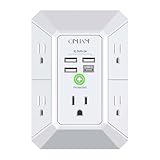
I remember the first time I really went to town on a workshop setup in my detached garage. Full of ambition, I wired it all up myself. I figured, hey, it’s just a garage, right? How bad could it be? Turns out, I was leaving a lot to chance, especially when it comes to safety. You might be wondering, are arc resistant outlets required in a detached garage, and honestly, the answer isn’t as simple as a ‘yes’ or ‘no’ without a little digging.
For a long time, I thought the National Electrical Code (NEC) was this stuffy rulebook that only applied to new homes. But the more I learned about electrical safety, particularly in spaces where sparks might fly (literally, if you’re grinding metal), the more I realized how much I didn’t know. It’s easy to overlook these details when you’re just trying to get your tools powered up.
This isn’t about scare tactics; it’s about making smart choices for your space and your peace of mind. Let’s break down what you actually need to know, without all the corporate jargon.
What Are Arc-Resistant Outlets and Why Should You Care?
Alright, let’s get down to brass tacks. You’ve probably seen those little labels on some outlets, or maybe your electrician mentioned them. These are arc-resistant receptacles, or ARRs. So, what’s the big deal? Imagine this: you’re plugging in a tool, maybe an older extension cord with some worn insulation, or perhaps there’s a bit of dust and metal shavings lurking around. If something goes wrong inside the outlet – a loose wire, a frayed plug prong – you can get an electrical arc. Think of it like a tiny lightning bolt happening inside your wall.
This arc generates intense heat, sparks, and can even cause a small explosion of molten metal and hot gases. In a typical home living room, this might just trip a breaker and be a bit startling. But in a garage, especially a detached one where you might have flammable materials like solvents, rags, or even just dry wood, that arc can quickly turn into a serious fire hazard.
I learned this the hard way when a cheap extension cord I was using for my angle grinder shorted out near some oily rags. Thankfully, it just blew the breaker, but the smell of ozone and the scorch mark on the wall were enough to make me sweat. That’s where arc-resistant outlets come in. They are specifically designed with internal mechanisms to prevent an arc from escaping the receptacle housing and igniting a fire.
They’re built tougher, with shutters that block the slot openings unless a plug is fully inserted, and often have enhanced insulation and contact points to reduce the chance of an arc forming in the first place.
The primary goal of an arc-resistant outlet is containment. If an arc does happen, it’s designed to stay inside the device, protecting you and your property from immediate ignition. It’s not a magic bullet that prevents all electrical faults, but it’s a significant layer of defense, especially in environments where the risk of ignition is higher. For anyone working with tools, especially power tools that can draw a lot of current or generate dust, this is not a feature to scoff at.
It’s about proactive safety measures, not just reacting when something goes wrong. They’re built to withstand the conditions often found in workshops – dust, potential for impact, and the heavy use that can sometimes lead to wear and tear on plugged-in devices. The cost difference between a standard outlet and an arc-resistant one is usually pretty small, maybe a few extra dollars per outlet.
When you consider the potential cost of a fire, it’s a no-brainer for me. (See Also: Are American Outlets Ac Or Dc )
Do Building Codes Actually Mandate These in Garages?
This is the million-dollar question, isn’t it? The short answer is: it depends on when and where your garage was built, and what specific rules are in play. The big one everyone points to is the National Electrical Code (NEC).
The NEC is updated every three years, and its requirements can change. For a long time, the NEC didn’t specifically mandate arc-resistant outlets in detached garages for residential applications.
However, things have been evolving. Starting with the 2017 NEC, there’s been a push towards greater safety in various locations. For detached garages, the requirement for arc-resistant outlets often hinges on whether the garage is considered a dwelling unit or if it falls under specific industrial or commercial-type occupancies, which is rare for a typical homeowner.
More recently, the NEC has expanded requirements for arc-fault circuit interrupters (AFCIs) and ground-fault circuit interrupters (GFCIs). AFCIs are designed to detect dangerous electrical arcs and shut off power before a fire can start. While not the same as an arc-resistant outlet, they address a similar hazard. For new construction or significant renovations, you’ll find that inspectors are increasingly looking for compliance with the latest NEC versions. This means that depending on your local jurisdiction’s adoption of the NEC, and the specific application of your garage (e.g., if it’s attached, if it has specific power demands), arc-resistant outlets might be required.
The key thing to understand is that local building codes often adopt the NEC but can also add their own amendments or stricter requirements. So, while the NEC might not explicitly say “all detached garages must have arc-resistant outlets,” your local inspector might enforce it, or the code might apply indirectly through other regulations related to fire safety or specific types of electrical installations. I once had an inspector tell me that while not strictly mandated for my detached workshop at the time, he strongly recommended it due to the proximity of flammable materials and the heavy use of power tools. He even showed me a report from a local fire department about a garage fire that started from an electrical fault.
It’s not just about passing an inspection; it’s about understanding the intent behind the rules. If your garage is considered a separate dwelling unit (like an accessory dwelling unit or ADU), then the requirements for living spaces would likely apply, which often includes arc-fault protection.
So, if you’re building new or doing major electrical work, the first place you should look is your local building department’s adopted code. Don’t just assume. A quick call or visit can save you headaches and, more importantly, make sure your space is as safe as it can be. The NEC is a living document, and safety standards are always getting updated, so what was acceptable five years ago might not be today.
Comparing Standard, Gfci, and Arc-Resistant Outlets
Let’s break down the different types of outlets you might encounter, because it’s easy to get them confused, and honestly, I used to. You’ve got your standard duplex outlet, the one you see everywhere. Then you have GFCI outlets, and finally, the arc-resistant ones we’re talking about. They all serve different purposes, and sometimes, you might need more than one type of protection.
A standard outlet is just that – standard. It provides power. That’s it. It doesn’t offer any special protection against ground faults or arcs. They’re the cheapest and most basic option. A GFCI (Ground Fault Circuit Interrupter) outlet is designed to protect people from electric shock. It constantly monitors the current flowing in the circuit. If it detects an imbalance – meaning electricity is flowing somewhere it shouldn’t be, like through a person to ground – it trips and cuts off power very quickly. You’ll find these required in wet locations like bathrooms, kitchens, and outdoors. They’re great for preventing electrocution but don’t specifically stop arcs from igniting fires. (See Also: Are All Power Outlets Ac )
Now, the arc-resistant outlet (ARO). As we discussed, its primary job is to contain an electrical arc within the receptacle itself, preventing it from igniting surrounding materials. This is particularly important in areas where flammable vapors, dust, or materials might be present. It’s important to note that an arc-resistant outlet is not a replacement for GFCI protection where that is required by code, nor is it necessarily a replacement for AFCI protection.
Here’s a little table to sum it up:
| Outlet Type | Primary Function | Protection Against | Typical Use Case | My Verdict |
|---|---|---|---|---|
| Standard Outlet | Provides power | None | General use in dry locations | Fine for a bedroom, but not ideal for a workshop. |
| GFCI Outlet | Protects against shock | Ground faults (electrocution risk) | Bathrooms, kitchens, outdoors, garages (often) | Key where water or moisture is present. A must-have in a garage. |
| Arc-Resistant Outlet | Prevents arc ignition | Electrical arcs causing fires | Workshops, garages with flammable materials, high-risk environments | Smart added safety, especially if you’re doing anything remotely hazardous. Worth the small extra cost. |
Sometimes, you can get combination devices, like a GFCI outlet that is also arc-resistant. These offer dual protection. The confusion often arises because both GFCI and AFCI breakers protect circuits from different types of electrical faults. Arc-resistant outlets are a hardware-level solution within the receptacle itself. For a detached garage, especially one used as a workshop, I’d lean towards having GFCI protection on all circuits, and if the risk assessment for your specific use warrants it (and local codes dictate), then arc-resistant outlets become a very sensible choice. It’s about layering your safety measures.
Real-World Use Cases and Experiences
Let’s talk about how this plays out in the real world, beyond the code books. My detached garage is my sanctuary for projects. I’ve got everything from woodworking tools to metal fabrication equipment in there. Early on, I just used standard outlets, figuring it was no different than any other part of the house. Then I started grinding metal. The sparks, man. They go everywhere. And that’s when the nagging thought started: what if one of those sparks, or a bit of dust, somehow finds its way into a standard outlet and causes a problem? It felt like I was just waiting for something to go wrong.
I remember one time, I was running a heavy-duty sander, and the cord was getting pretty warm. I reached down to unplug it, and the plug felt a bit loose in the outlet. I jiggled it, and for a split second, I saw a tiny blue flash inside the outlet opening. Nothing happened – the breaker didn’t trip, no fire, thank goodness. But that little flash sent a jolt of adrenaline through me. That’s the kind of thing an arc-resistant outlet is designed to contain. It’s not just about meeting code; it’s about peace of mind when you’re working on projects that push the limits of your electrical system.
I’ve also heard stories from folks who have had issues. A friend of mine had a fire start in his garage when a faulty battery charger, plugged into a standard outlet, shorted internally. The arc ignited some old paint cans nearby. It wasn’t a huge fire, but it did significant damage and was a terrifying close call. His insurance company even asked him afterward why he didn’t have arc-fault protection or arc-resistant outlets installed, even though his garage predated some of the stricter code requirements. It shows that even if it’s not strictly required by your local code right now, the insurance industry and fire departments see the value in these protections.
For a detached garage, you’re often dealing with more than just dust. You might have sawdust, metal shavings, oil residue, or even flammable solvents for cleaning or finishing. These are all things that can easily be ignited by a stray spark.
Standard outlets offer no protection against this specific risk. GFCI outlets protect you from shock, which is vital, but they don’t stop a fire from starting if the arc itself is contained within the receptacle and then ignites something external.
That’s why, in my opinion, arc-resistant outlets are a significant upgrade for any workshop environment. They are a proactive measure against a very real and potentially devastating hazard. They might not be legally mandated everywhere for a detached garage, but for anyone who uses their garage for DIY, hobbies, or any kind of work that involves power tools, they are a wise investment. (See Also: Are Arc Trip Outlets Required In Hillsborough County )
Practical Tips for Upgrading Your Garage Outlets
So, you’ve decided you want to make your detached garage safer, and you’re thinking about upgrading your outlets. Good on you. It’s a relatively straightforward DIY project if you’re comfortable with basic electrical work, or an easy job for an electrician. First things first: turn off the power! Go to your breaker box and shut off the circuit you’ll be working on. Double-check with a voltage tester at the outlet itself to make sure the power is definitely off. I can’t stress this enough – electricity is not forgiving.
When you’re buying new outlets, decide what you need. As we’ve discussed, GFCI protection is highly recommended, if not required, for garages due to the potential for moisture and the general environment. You can get a standard GFCI outlet, or you can look for an arc-resistant GFCI combination outlet. These offer the best of both worlds: protection against ground faults (shocks) and containment of arcs. If your local code does require AFCI protection for your garage circuits (which is becoming more common, especially in newer codes), you might need to install an AFCI breaker at the panel instead of, or in addition to, AFCI outlets. It’s best to check your local code or consult an electrician on this point.
When you remove the old outlet, take a picture of how the wires are connected. Most standard outlets have two sets of terminals: one for the hot wires (usually black) and one for the neutral wires (usually white), plus a ground screw (usually green). Make sure you connect the new outlet exactly the same way. Pay attention to the ‘line’ and ‘load’ terminals on GFCI outlets. The ‘line’ terminals connect to the power coming from the breaker, and the ‘load’ terminals connect to the outlets downstream on that circuit. If you wire a GFCI incorrectly, it won’t work properly and won’t provide protection.
For arc-resistant outlets, the installation is generally the same as a standard outlet, but they are built with internal features to manage arcs. When you’re choosing, look for labels that explicitly state “arc-resistant” or meet specific standards like UL 498. They might look slightly different, perhaps with a more solid housing or different shutter mechanisms. They can be a bit pricier than standard outlets, but the added safety is worth it. I upgraded my entire workshop, and it cost me about $150 for about a dozen outlets and a couple of AFCI breakers. It was money well spent for the peace of mind it gave me.
Faq: Are Arc Resistant Outlets Required in a Detached Garage?
Is an Arc-Resistant Outlet the Same as a Gfci Outlet?
No, they are not the same, though they can sometimes be combined into a single device. A GFCI (Ground Fault Circuit Interrupter) outlet protects against electric shock by detecting imbalances in current flow and shutting off power. An arc-resistant outlet is designed to contain internal electrical arcs, preventing them from igniting surrounding materials and causing a fire.
Do I Need Arc-Resistant Outlets If My Garage Is Attached to My House?
The requirements can vary, but generally, attached garages have stricter electrical safety regulations due to their proximity to the main living space. Codes often require AFCI (Arc Fault Circuit Interrupter) protection for circuits in attached garages, and while arc-resistant outlets may not be universally mandated, they are a very good idea for increased safety.
What Is the Main Difference Between Afci and Arc-Resistant Outlets?
AFCI protection is typically provided by a circuit breaker in your electrical panel that monitors the entire circuit for specific arc patterns and shuts off power. Arc-resistant outlets are devices installed at the point of use (the outlet itself) and are designed to physically contain an arc if one occurs within the receptacle, preventing outward propagation and ignition.
If My Local Code Doesn’t Require Them, Should I Still Install Arc-Resistant Outlets in My Detached Garage?
Absolutely. While codes set a minimum standard, they don’t always cover every potential hazard or the latest safety advancements. If you use power tools, store flammable materials, or simply want to enhance fire prevention in your detached garage, installing arc-resistant outlets is a prudent safety measure that provides an extra layer of protection beyond basic code compliance.
Final Verdict
So, are arc resistant outlets required in a detached garage? The direct answer is often ‘not strictly’ by older codes, but the trend is heavily towards increased AFCI and arc protection in all areas, especially garages. My take? If you’re using your garage for anything more than parking a car, the small extra cost for arc-resistant outlets, especially combined with GFCI protection, is an investment in preventing a potentially devastating fire. It’s like wearing a helmet when you ride a bike – it’s not always legally mandated, but it’s a smart choice.
Think about what you do in your garage. Are there flammable liquids, sawdust, or old rags lying around? Do you run heavy-duty tools that could stress your wiring? If you answered yes to any of these, then you’re in a higher-risk category. For me, the peace of mind that comes from knowing an internal electrical fault is less likely to cause a major incident is well worth the expense. It’s about being proactive with your safety.
Before you start ripping out old outlets, do yourself a favor and check with your local building department about the current electrical code adoption in your area. If you’re not comfortable with electrical work, hire a qualified electrician. Getting this right can save you a lot of heartache down the road. It’s a simple upgrade that can make a big difference.