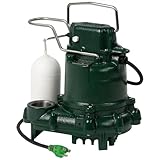
The first time my basement flooded, I stood there, staring at ankle-deep, murky water, feeling like a complete idiot. It wasn’t even a torrential downpour; just a steady, insistent rain for two days straight. My main sump pump, bless its little electric heart, had given up the ghost. And that’s when I started asking myself: are battery backup sump pumps worth it?
I’d always seen them advertised, these little lifeboats for your basement, but I figured, ‘My pump is fine, why bother?’ That day changed my tune. Suddenly, the cost seemed like a pittance compared to the potential damage.
Let’s cut to the chase: if you have a basement that’s even remotely susceptible to water, the answer is a resounding yes. But it’s not as simple as just buying one and forgetting about it. There are nuances, and trust me, I’ve learned them the hard way.
Why You Absolutely Need a Backup Pump (even If You Think You Don’t)
Look, I get it. Nobody wants to spend extra money on something that might never get used. I was that guy. My house is only 20 years old, the main pump is relatively new, and I live on a slight incline, so water should just… flow away, right? Wrong. Power outages happen, and they often happen when you need your pump the most – during a storm. That’s the number one reason a battery backup sump pump is worth it. It’s your insurance policy against the inevitable.
I remember one particularly nasty storm a couple of years back. The power flickered on and off for hours. My main pump struggled, kicking in and out. I was pacing like a caged animal, watching the rain lash against the windows, dreading the sound of water seeping in. Thankfully, the power held out just long enough that time. But it was a wake-up call. What if that power outage had lasted six hours instead of six minutes? My basement would have been a swimming pool.
Beyond power outages, main pumps fail. They’re mechanical devices. Motors burn out, impellers get clogged, float switches stick. I had a float switch seize up once, and the pump just sat there, humming away, while water rose around it. The damage wasn’t catastrophic that time, but it was a mess. A battery backup kicks in when the primary fails, regardless of the cause. It’s a simple concept, but incredibly effective. The common advice to just get a good quality primary pump is fine, but it misses the most obvious failure point: the grid.
Another thing people don’t always consider is how quickly water can rise. You’re not just dealing with rain; you’re dealing with groundwater, hydrostatic pressure, and whatever else is lurking underground. A steady, prolonged rainfall can saturate the soil, raising the water table. Your sump pit can fill up faster than you think, especially if your main pump isn’t up to the task or, again, the power is out. The battery backup provides that secondary layer of defense, making sure your basement stays dry even when the main system is compromised.
I’ve seen people try to get by with just a cheap, portable generator. That’s a whole other headache. You have to drag it out, hook it up, fuel it, and hope it runs when you need it. It’s clunky and inconvenient. A dedicated battery backup system is automatic. It monitors the water level and the primary pump’s status, and it’s always ready to go. That peace of mind is, in my book, well worth the upfront cost.
How These Things Actually Work (it’s Not Magic, but It Feels Like It)
So, how does a battery backup sump pump system actually function? It’s a two-part system, usually. You’ve got your primary sump pump, the one that’s always plugged into your house’s AC power. Then, you have the backup. Typically, this backup is either a second pump that sits alongside your main one, or it’s a mechanism that takes over when the primary fails. The ‘brain’ of the operation is usually a control unit that monitors the water level in the sump pit and the status of the primary pump.
When the water level in the pit reaches a certain point, the control unit signals the primary pump to turn on. If the primary pump is running, great. The backup waits. But if the water level continues to rise despite the primary pump running (meaning it’s not keeping up or it’s malfunctioning), or if the primary pump doesn’t turn on when it should, the control unit switches over to the backup pump. This backup pump runs on DC power, supplied by a deep-cycle marine battery. These batteries are designed for sustained discharge, unlike your car battery, which is built for short bursts of power. (See Also: Are Pumpkin Seed Husks Edible )
The setup can vary. Some systems are completely integrated, with the battery, charger, and control unit all in one neat package. Others are more modular, where you might buy a dedicated backup pump and a separate battery/charger system. The key is that the backup pump is wired to draw power from the battery system, not the house AC. When AC power is restored, the system typically reverts back to the primary pump, and the battery starts recharging. It’s a really clever, albeit sometimes overlooked, piece of home engineering.
I had a scare once with a float switch. The primary pump was running, but the float switch got tangled in some debris and stayed in the ‘down’ position.
The pump kept running, but it wasn’t effectively pumping water out because the float was telling it not to. The backup system, sensing that the water level wasn’t dropping as it should, kicked in. It saved me from a significant flood. The technicality of the failure was the float switch, but the solution was the intelligent backup system.
It’s not just about power outages; it’s about system redundancy. The entire setup usually costs a few hundred dollars, depending on the brand and features, which feels like a bargain when you consider the potential cost of water damage repairs – thousands, easily.
What to Look for: Don’t Just Grab the First One You See
Alright, so you’re convinced. You need a battery backup sump pump. Now what? This is where a lot of people stumble. They think all backup systems are created equal, and that’s just not true. You need to consider a few things before you hand over your cash. First, the pump itself. What’s its GPH (gallons per hour) rating? You want a backup pump that can move a decent amount of water, ideally close to or matching your primary pump’s capacity, especially if it’s going to be your sole line of defense during an extended outage.
Second, the battery. This is arguably the most important component. You need a deep-cycle marine battery. Don’t skimp here. A regular car battery will die on you quickly. These deep-cycle batteries are designed to provide consistent power over long periods. How long do you need it to run? That depends on your area’s typical power outage duration during storms and how quickly your sump pit fills. Manufacturers will often give you an estimated run time based on gallon-per-hour output and battery capacity. I’d always aim for something that can run for at least 12-24 hours at its rated capacity. And remember, you’ll need a place to store and maintain that battery, usually in a ventilated area away from living spaces.
Third, the control system. Look for smart controls. Does it have an alarm to alert you if the pump is running, if the battery is low, or if AC power is out? Does it offer remote monitoring capabilities? Some high-end systems can even send notifications to your phone. That kind of proactive alert system is invaluable. I personally experienced a situation where the battery was dying, but I didn’t know because the alarm wasn’t loud enough or wasn’t properly set. A loud, distinct audible alarm is a must for me now. You want to know immediately if something is wrong.
Finally, consider installation. Are you a DIYer? Some systems are simpler than others. Others require more complex wiring and plumbing. If you’re not comfortable working with electricity and water, factor in the cost of professional installation. It’s not a job you want to mess up. A properly installed system is reliable; a poorly installed one can be a ticking time bomb of its own. I learned this the hard way trying to save a few bucks on an early installation, and ended up paying more for a plumber to fix my botched job. Make sure the backup pump is also protected from debris that could clog it, just like your primary.
| Feature | My Take | What to Look For |
|---|---|---|
| Pump Capacity (GPH) | Needs to be solid | Match or exceed primary pump, at least 1500 GPH for most homes. |
| Battery Type | Deep Cycle is King | Marine deep-cycle battery (Group 24, 27, or 31 are common). |
| Battery Life/Runtime | More is always better | Manufacturer estimates should aim for 12-24 hours of sustained pumping. |
| Control Unit Features | Alerts are vital | Audible alarm, AC power loss indicator, battery status. |
| Installation Complexity | Depends on your skill | Consider professional help if you’re not comfortable with electrical/plumbing. |
| Warranty | Peace of mind | Check for at least 1-2 years on the pump and 1 year on the battery. |
Common Mistakes and How to Avoid Them
You’d think a battery backup sump pump would be straightforward, but there are definitely pitfalls. The most common mistake, and one I’ve seen friends make, is using the wrong type of battery. I touched on this, but it bears repeating: do not use a car battery. They are not designed for the sustained, deep discharge that a sump pump requires. You’ll be left high and dry, literally, when you need it most. Stick to marine deep-cycle batteries. They’re more expensive upfront, but they will save you money and headaches in the long run. (See Also: Are Pumpkin Seed Acid Or Alkaline )
Another mistake is neglecting the battery maintenance. These batteries aren’t ‘set it and forget it’ items. They need to be checked periodically. Is the water level (if it’s a flooded lead-acid battery) still adequate? Is the charger working? Is there any corrosion on the terminals? Many modern systems have maintenance-free batteries, but it’s still wise to inspect the connections and the charger unit occasionally. I usually do this once or twice a year, typically in the spring and fall, before the heavy rain seasons kick in.
People also underestimate how often their primary pump might fail without a power outage. I had a backup system where the primary pump simply died one Tuesday afternoon. The backup kicked in, no problem. But if I hadn’t had it, that would have been a bad Tuesday. So, relying solely on the ‘power outage’ scenario is a mistake. Pumps fail. Period. And when they fail, if your backup is ready, you’re golden. Thinking that your brand-new primary pump will last forever is just naive.
Then there’s the issue of the backup pump’s intake being too high. If your primary pump is removed for maintenance, or if it fails completely and debris gets into the pit, the backup pump needs to be able to draw water effectively. Make sure the intake is positioned correctly and that there are no obstructions. I once saw a system where the backup pump was installed so high that it couldn’t even clear water from the bottom inch of the pit – practically useless. The ideal setup has both pumps able to access water from the lowest point necessary. Getting the float switches set correctly for both pumps so they don’t fight each other is also key.
Real-World Use Cases and My Personal Anecdotes
Let’s talk about why this is so important in practice. I have a friend, bless his heart, who lives in a low-lying area. Every spring, it’s a gamble. He had a primary pump, but he thought a battery backup was overkill. Then, one March, a massive snowmelt combined with heavy rain overwhelmed his system. The power went out for 18 hours. His basement became a shallow lake. The smell of mildew and the cost of replacing ruined furniture and flooring were a brutal lesson. He installed a top-tier battery backup system the very next week. Now, he sleeps soundly during storms.
Another time, during a hurricane, the power was out for three days. My own battery backup sump pump system was a lifesaver. The primary pump was running fine when the power went out, but the battery kicked in smoothly. It kept the pit clear for the entire duration. The battery charge indicator showed it was working hard, but it never quit. When the power finally came back on, the system switched back to AC, and the battery started recharging. That experience solidified my belief that are battery backup sump pumps worth it. The peace of mind alone was immense.
I also had a weird situation where a pipe burst in my laundry room, which is in the basement. Water was spraying everywhere. My primary sump pump was struggling to keep up with the deluge from the burst pipe and the natural groundwater. The battery backup kicked in, and it made a noticeable difference. It prevented the water from reaching my finished basement walls. While the primary pump was doing the heavy lifting, the backup provided that extra capacity when it was critically needed. It wasn’t just a backup for failure; it was an augmentation for extreme events.
The one time I truly felt like a fool was when I was doing some minor plumbing work in the basement and accidentally knocked the main pump’s power cord loose. I didn’t realize it for about an hour, and the water level had risen considerably. My backup pump had taken over, and thankfully, it kept things under control until I found the problem. It was a stark reminder that human error is also a factor, and a good backup system accounts for that too. It’s not just about nature; it’s about life happening.
Is It Worth the Money? My Final Verdict
So, after years of dealing with basements, pumps, and the occasional unwelcome water feature, are battery backup sump pumps worth it? My answer is a definitive, unqualified YES. The cost of a good system, typically ranging from $300 to $800 depending on the brand and features, is a pittance compared to the potential cost of flood damage. We’re talking thousands, even tens of thousands, of dollars to repair structural damage, replace ruined belongings, and remediate mold. The financial argument alone is compelling.
But it’s more than just money. It’s about the intangible: peace of mind. Knowing that your home is protected, even when the power goes out or your primary pump decides to take an early retirement, is invaluable. I’ve seen people’s lives turned upside down by basement floods – not just financially, but emotionally. The stress, the uncertainty, the disruption. A battery backup sump pump system mitigates a significant portion of that risk. (See Also: Are Organic Pumpkin Seeds From China Bad )
The technology is proven, reliable, and relatively simple. The main components – the pump, the battery, and the control unit – are designed for longevity and performance. While there’s always a chance of failure with any mechanical system, redundancy is the name of the game here. You’re adding a important layer of protection that your standard sump pump setup simply doesn’t have.
If you have a basement, crawl space, or any area prone to water intrusion, investing in a battery backup sump pump is one of the smartest, most practical home improvement decisions you can make. It’s not a luxury; for many, it’s a necessity. Don’t wait for the water to come to you to find out if they are battery backup sump pumps worth it. Act now and save yourself a lot of trouble down the line.
What Is the Lifespan of a Battery Backup Sump Pump?
The lifespan of a battery backup sump pump system can vary, but generally, the pump itself can last 5-10 years with proper maintenance, similar to a primary sump pump. The battery, however, has a shorter lifespan, typically 3-5 years for a deep-cycle marine battery, depending on usage and maintenance. It’s important to check the battery’s health annually and be prepared for replacement.
How Often Should I Test My Battery Backup Sump Pump?
You should test your battery backup sump pump system at least twice a year, ideally in the spring and fall before the heavy rain seasons begin. This involves making sure the battery is fully charged and then manually triggering the pump to operate. Listen for any unusual noises, check the water level reduction, and verify that the alarms function correctly if your system has them.
Can I Use a Generator Instead of a Battery Backup Sump Pump?
While a generator can power your primary sump pump during an outage, it’s not a direct substitute for a battery backup system. Generators require manual setup, fuel, and maintenance, and they may not be available or operational when needed. A battery backup system operates automatically and silently, providing continuous protection without user intervention, making it far more reliable for sump pump duty.
What Is the Difference Between a Primary and a Backup Sump Pump?
The primary sump pump runs on standard AC household power and is the main device used to remove water. A backup sump pump runs on DC power from a battery system and is designed to activate only when the primary pump fails or when the water level rises too quickly for the primary to keep up, typically due to a power outage or a malfunction of the primary pump.
How Much Does a Battery Backup Sump Pump System Typically Cost?
The cost for a battery backup sump pump system can range significantly, typically from $300 to $800 for a complete kit including a pump, battery, charger, and control unit. More advanced systems with higher capacity pumps or smart monitoring features can cost upwards of $1000. Professional installation can add an additional $200 to $500 to the total cost.
Final Thoughts
So, after all that, are battery backup sump pumps worth it? My take is that for anyone with a basement, the answer is a loud and clear yes. The peace of mind they offer, especially during storms when the power is most likely to go out, is worth its weight in gold.
Don’t be like I was initially, thinking it’s an unnecessary expense. It’s an investment in protecting your home and your sanity. Think about the cost of dealing with a flood versus the cost of a reliable backup system. It’s a no-brainer.
My advice? Don’t wait for the water to rise. Get a good quality backup system installed now. And remember to check on that battery and connections every now and then – a little maintenance goes a long way in making sure your basement stays dry when you need it most.