I remember the first time I landed in a new country, my phone was at 3%, and the hotel room had sockets that looked like they belonged on another planet. Panic. Pure, unadulterated panic. I’d assumed, stupidly, that everything would be the same. This is why I’m cutting straight to the chase: are Belize power outlets same as us? If you’re heading to Belize from the United States or Canada, you’re in luck, mostly. The electrical system there is largely compatible with what you’re used to.
It’s not a perfect 1:1 match, mind you, and a little bit of prep work saves you a whole lot of hassle and potentially fried electronics. We’re talking about voltage and plug types here, the two big players in whether your charger will spark or just… charge. So, let’s get into the nitty-gritty of Belizean power and make sure you don’t end up like me, desperately hunting for a charger in a duty-free shop.
Belizean Plugs: The Two-Pronged Truth
Okay, let’s get down to brass tacks about the physical plugs. When you ask are Belize power outlets same as us, the immediate answer for the type of plug is a resounding ‘yes, mostly’. Belize uses Type A and Type B plugs, which are the same types used in the United States and Canada. Type A has two flat parallel pins, and Type B has those two flat pins plus a round grounding pin. This is fantastic news because, in many cases, your standard US or Canadian electronics will plug right in without needing any adapter whatsoever.
I learned this the hard way, kind of. On a trip to a smaller island off the coast of Belize a few years back, I packed a universal adapter, convinced I’d need it everywhere. Turns out, the guesthouse had brand-new outlets that were identical to my US ones. I felt like a bit of a fool lugging that heavy adapter around. The real kicker? A few months later, I stayed in a more rustic lodge deeper inland, and guess what? Type A plugs were everywhere. It made charging my camera, phone, and even my laptop a breeze. It’s a huge relief when you’re trying to keep all your gadgets juiced up for photos and staying connected.
However, and this is a big ‘however’, don’t get complacent. While the shape is the same, the age and condition of the outlets can vary wildly. I’ve encountered outlets that felt loose, others that were clearly worn out, and some that looked like they hadn’t been updated since the 1970s. This is where a good quality adapter can still be useful, not for the plug shape, but for a more secure fit or if you want to be extra cautious about grounding.
The main takeaway here is that for most travelers from North America, the plug itself isn’t the primary concern. You won’t need those bulky, pin-swapping adapters that are key for places like Europe or Australia. This simplifies your packing list considerably. You can focus on bringing your chargers and devices, knowing they’ll physically fit into the wall sockets. But don’t pack away your entire adapter kit just yet; there’s another important factor to consider: voltage.
Voltage Differences: Where Things Get Tricky
Now, let’s talk about the invisible force: voltage. This is where the ‘mostly’ in my earlier answer really comes into play, and it’s the part that can fry your electronics if you’re not careful. The United States and Canada primarily use 120V (volts), while Belize operates on 220-240V. This is a significant difference. Imagine trying to power a device designed for a gentle stream with a firehose; that’s basically what plugging a 120V-only device into a 240V outlet can do.
My first close call with voltage happened in a small village guesthouse. I plugged in my hair dryer, which I’d bought years ago and never thought to check. It made a weird buzzing noise, then a puff of smoke, and that was the end of that. It was a stupid mistake, born from the assumption that since the plugs looked the same, everything else would be too. The smell of burnt plastic lingered for days, a constant reminder of my carelessness. I ended up having to buy a cheap, local hair dryer that felt like it was going to blow apart every time I used it.
This is why you must check your devices. Most modern electronics, especially those made for international travel like smartphone chargers, laptop power bricks, and camera battery chargers, are dual-voltage. They’ll say something like ‘INPUT: 100-240V, 50/60Hz’ on the label. If your device has this, great! You only need a plug adapter (which, as we discussed, you likely won’t need for Belize if you’re from North America, but a universal one still covers all bases). If your device only says ‘INPUT: 120V’ or ‘INPUT: 110-120V’, then plugging it into a Belizean outlet without a voltage converter will likely destroy it. (See Also: Are American Outlets Ac Or Dc )
The common advice is to buy a voltage converter. These devices step down the higher voltage to a lower one. However, for many travelers, this isn’t the most practical solution. Converters can be bulky, heavy, and expensive, especially for high-wattage items like hair dryers or curling irons. Plus, they often don’t work well with electronics that have sensitive circuitry or heating elements. For everyday travel, your best bet is to bring dual-voltage versions of your key electronics or rely on devices that are already designed for global use. Think about it: do you really need your $200 hair dryer from home, or can you make do with a hotel’s provided one or a cheaper travel version?
Checking Your Device’s Voltage Compatibility
Here’s a quick checklist to make this easier:
- Find the power adapter or the label on your electronic device.
- Look for the ‘INPUT’ section.
- If it says ‘100-240V’ or similar (e.g., ‘100-277V’), your device is dual-voltage and safe to use in Belize with the correct plug type (which is usually the same as US/Canada).
- If it only lists a voltage around ‘110V’ or ‘120V’, you need a voltage converter for that specific device if you plan to use it in Belize.
What to Pack: The Smart Traveler’s Approach
So, what does all this mean for your packing list? Forget the bulky, all-in-one universal adapters unless you’re doing a multi-country trip that includes places with vastly different plug standards. For Belize, if you’re coming from the US or Canada, you probably don’t need a plug adapter at all. However, I always throw a small, slim travel adapter with Type A/B plugs into my bag just in case. It’s barely bigger than a deck of cards and has saved me more than once when an outlet was a bit wonky or I was in a less tourist-developed area.
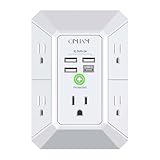
The real big deal isn’t an adapter; it’s a power strip with surge protection. Why? Because hotel rooms, Airbnbs, and even some guesthouses often have a limited number of outlets. If you’re traveling with a phone, camera, tablet, and maybe a portable charger, you can quickly run out of juice spots. A power strip with multiple outlets lets you plug in several devices at once. Make sure it’s a travel-sized one, not the giant one you use at your desk.
Importantly, pack dual-voltage versions of any high-heat hair appliances you absolutely cannot live without. I used to be one of those people who had to have my specific flat iron. After a smoke-filled incident (see earlier anecdote), I learned my lesson. Now, I either buy a dual-voltage travel version (which is often cheaper than a full-size one anyway) or I embrace the slightly frizzy look for a week. Your electronics will thank you.
Consider a portable power bank. These are lifesavers, especially when you’re out exploring all day and can’t get back to your hotel to charge. A good power bank can charge your phone multiple times, making sure you never miss that perfect sunset photo opportunity due to a dead battery. They are universally compatible, of course, just requiring a USB cable.
Here’s a simple table to help you visualize what you might need, or not need:
| Item | Belize (US/Canada Traveler) | Verdict |
|---|---|---|
| Plug Adapter (Type A/B) | Likely NOT needed for shape | Optional (for loose outlets or peace of mind) |
| Voltage Converter | Needed ONLY for 120V-only electronics | Avoid if possible; use dual-voltage devices instead |
| Dual-Voltage Electronics | Highly Recommended (phone chargers, laptops, cameras) | Key for peace of mind and device safety |
| Power Strip (Multi-outlet travel size) | Very Useful | Highly Recommended for convenience |
| Portable Power Bank | Very Useful | Highly Recommended for on-the-go charging |
Common Mistakes and How to Avoid Them
The most common mistake, hands down, is assuming that because the plugs look the same, the voltage is also the same. This is a quick way to turn a new gadget into a very expensive paperweight. I’ve seen it happen to too many people, and the look of disappointment on their faces is something you want to avoid. It’s a simple oversight, but one with costly consequences. (See Also: Are All Power Outlets Ac )
Another error is overpacking adapters. Travelers often buy a giant, heavy universal adapter for every country they visit. For Belize, specifically coming from the US or Canada, this is usually overkill for the plug shape. You’re paying for functionality you won’t use, and lugging unnecessary weight through airports. Stick to what’s relevant for the region. If you are traveling to other countries, then a universal one makes sense, but for Belize alone, it’s not the priority.
Then there’s the issue of not checking device labels. People get excited about their trip and just grab their chargers and go. They don’t take the two seconds to look at the tiny print on the power brick. This is where that smoke-puffing hair dryer incident came from. Always, always, always check if your devices are dual-voltage. It takes less than a minute and can save you a lot of heartache and money.
Finally, relying solely on hotel power. Many hotels, especially smaller or older ones, don’t have an abundance of outlets. If you’re a heavy tech user, you’ll find yourself constantly swapping devices, which is a hassle. Bringing a small power strip or even just a multi-USB wall adapter can significantly improve your charging experience. It’s a small item that makes a big difference in your daily convenience.
Don’t be the person who has to buy a subpar replacement item at inflated tourist prices because their original device was fried or they couldn’t charge anything. A little planning goes a long way, and understanding the basics of voltage and plug types is part of that planning.
The ‘everyone Says X’ Contrarian View
Everyone says you need a voltage converter. I disagree, and here’s why: for the vast majority of modern travelers, it’s a red herring. Most of the devices we carry now – smartphones, tablets, laptops, camera chargers – are dual-voltage. They are designed for the global market.
The few items that aren’t are typically high-wattage, single-purpose appliances like basic hair dryers or straighteners that aren’t ‘smart’ enough to handle different voltages. Instead of buying a clunky, potentially unreliable converter for those few items, it’s far more practical and often cheaper in the long run to buy a dual-voltage travel version of the appliance or simply go without for your vacation. Converters can also be tricky; some don’t handle continuous high loads well, and for sensitive electronics, they can sometimes cause issues. It’s better to choose devices that are already built for the job.
Real-World Use and Practical Tips
When you’re actually in Belize, you’ll notice that while many places, especially newer hotels and tourist-oriented establishments in areas like Ambergris Caye or Placencia, will have outlets that look and function exactly like US outlets, this isn’t universal. Smaller villages, older buildings, or more remote eco-lodges might have older fixtures. They will still typically use Type A or Type B plugs, but the sockets might feel a bit looser, or the plastic might be brittle.
This is where a simple, good-quality plug adapter can be a lifesaver. It’s not about changing the pins, but about making sure a snug fit. I once stayed in a place where the outlet was so worn, my phone charger kept falling out. A cheap adapter I had simply made the connection more solid. It’s like giving your plug a little shim to hold it in place. Don’t buy the absolute cheapest adapter you can find; invest a few dollars in one that feels solid and has properly molded pins. (See Also: Are Arc Trip Outlets Required In Hillsborough County )
Another practical tip: look for hotels that explicitly mention power outlet types or voltage if you’re really concerned. Some booking sites have this information. If not, don’t hesitate to email the hotel or guesthouse directly. A quick message asking, ‘Do you use standard US Type A/B outlets and 120V or 220V power?’ can save you a lot of guessing.
When in doubt, err on the side of caution. If you have a device that you’re unsure about, and it’s not dual-voltage, leave it at home. The stress and potential damage aren’t worth it. Focus on the essentials: your phone, camera, and maybe a laptop. If you need a specific hair tool, buy a travel-sized dual-voltage one specifically for trips. These are readily available online and at travel stores. I paid about $40 for a decent dual-voltage travel hair dryer a few years ago, and it’s been worth its weight in gold for avoiding the smoke-and-mirrors routine.
Finally, befriending your accommodation host can be beneficial. If you’re staying in a smaller, family-run place, they are usually happy to help if you have a charging issue or need to borrow something. They’ve seen it all before and can often point you to the right solution, whether it’s a spare outlet in their own room or a loaner device.
Faq: Your Top Questions Answered
Do I Need a Voltage Converter for Belize?
You only need a voltage converter for Belize if you are bringing electronics that are not dual-voltage (i.e., they only work on 110-120V). Most modern electronics like phone and laptop chargers are dual-voltage (100-240V) and will work fine without a converter. It’s best to check the label on your devices; if it says ‘100-240V’, you’re good to go. For items that only list 110-120V, consider buying a dual-voltage travel version instead of a converter.
Can I Use My Us Appliances in Belize?
You can use your US appliances in Belize if they are dual-voltage (marked as 100-240V) and use Type A or Type B plugs. Most common electronics like phone chargers, camera chargers, and laptop power bricks are dual-voltage. However, appliances like basic hair dryers or curling irons might only be 110-120V and could be damaged or destroyed if plugged into Belize’s 220-240V outlets without a voltage converter.
What Is the Voltage in Belize?
The standard voltage in Belize is 220-240V, operating at 60Hz. This is significantly higher than the 110-120V used in the United States and Canada. Therefore, it’s important to make sure your electronics are compatible with the higher voltage to prevent damage.
Are Belizean Outlets the Same as Us Outlets?
Belize primarily uses Type A and Type B electrical outlets, which are the same types used in the United States and Canada. Type A has two flat parallel pins, and Type B has these two pins plus a round grounding pin. This means that most US and Canadian plugs will physically fit into Belizean outlets. However, the voltage is different (220-240V in Belize vs. 110-120V in the US/Canada).
Should I Bring a Power Strip to Belize?
Yes, bringing a travel-sized power strip with multiple outlets is highly recommended for Belize. Many hotel rooms and accommodations have a limited number of outlets, and a power strip allows you to charge multiple devices simultaneously. Make sure it’s a compact model suitable for travel.
Final Verdict
So, to wrap it up, are Belize power outlets same as us? For the plug shape, yes, largely. For the voltage, absolutely not. This is the important distinction to remember. While you probably won’t need a plug adapter if you’re coming from North America, you absolutely must verify that your electronics can handle the 220-240V current in Belize. Bringing dual-voltage devices or leaving non-compatible appliances behind is your best bet.
Don’t let the voltage difference stress you out. A few minutes of checking your device labels and packing a small power strip will make your trip infinitely smoother. You’ll be able to keep your phone charged for photos and navigation, and your other gadgets will be safe and sound. This simple preparation makes sure you can focus on enjoying the stunning scenery and vibrant culture of Belize, rather than worrying about whether your electronics will survive the night.