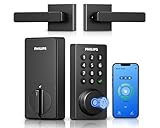
I remember staring at my front door, fumbling for keys that were inevitably buried under a mountain of junk mail and receipts in my bag. Then, the smart lock craze hit. Fingerprint scanners, keypads, apps… it all sounded like science fiction made real. But as a car guy, I know fancy tech isn’t always better. Sometimes, it’s just a more expensive way to break down. So, I started digging, especially about the simple stuff: are biometric door locks safe from cards? The short answer is yes, but it’s not quite as simple as just saying ‘no’. Let’s cut through the marketing fluff.
The real question isn’t just about cards, but about what makes these fancy locks work and what their actual vulnerabilities are. I’ve tinkered with enough automotive electronics to know that if a human can design it, a human can probably find a way around it. And I’ve definitely wasted good money on car gadgets that promised the world and delivered a blinking error message.
So, are biometric door locks safe from cards? For the most part, the way they operate makes them immune to a simple swipe or tap from a credit card. That’s a good start, but it’s far from the whole story.
How Those Fingerprint Scanners Actually Work
Alright, let’s get down to brass tacks on how these biometric door locks function, and why a credit card isn’t going to magically open your door like some kind of spy movie. It’s not magic; it’s optics and algorithms. Most modern fingerprint locks use either capacitive or optical sensors. Capacitive sensors are the most common and are basically a grid of tiny capacitors.
When you place your finger on the scanner, the ridges and valleys of your fingerprint change the electrical field of these capacitors. The scanner measures these changes and creates a digital map of your fingerprint. Think of it like a super-high-resolution photograph, but instead of light, it’s measuring electrical capacitance. Optical scanners, on the other hand, use light to take a picture of your fingerprint and then analyze the patterns.
Either way, it’s creating a unique digital signature, not some magnetic stripe that a card has.
This digital signature is then compared against a stored template of your authorized fingerprints. If there’s a match within a certain tolerance – and it’s usually a pretty tight tolerance – the lock disengages.
This is why you have to register your fingerprint in the first place; the lock needs something to compare your live scan against. It’s a far cry from a magnetic stripe on a credit card, which stores static data like your account number and expiration date.
Those stripes are read by a magnetic head, a completely different technology. RFID or NFC cards, like some access fobs or payment cards, communicate wirelessly, but they still transmit a specific, programmed code. Biometric locks don’t ‘read’ a magnetic stripe or a programmed chip; they analyze the physical unique characteristics of your finger.
This fundamental difference is why a standard credit card or even a typical RFID fob is useless against a properly functioning biometric lock.
I’ve seen some pretty basic electronic locks that could be tricked with a strong enough magnetic pulse, but we’re talking about specialized equipment and very old tech. Modern biometric locks are designed to resist such crude interference. The sensors are shielded, and the processing is done digitally. The security lies in the uniqueness and complexity of your fingerprint, not in a simple data transmission method that a card uses. It’s like asking if a security guard armed with facial recognition can be fooled by someone holding up a driver’s license – the systems are just not designed to interact that way. The underlying principle of identification is entirely different.
What About Card Skimmers and Rfid Cloning?
Now, let’s talk about the more sophisticated ways people try to bypass electronic locks, and how they relate to cards. You hear a lot about RFID cloning and card skimmers in the news, especially concerning credit cards and some older access systems.
A card skimmer is usually a device attached to a legitimate card reader (like at an ATM or gas pump) that secretly copies the information from your card’s magnetic stripe or chip. RFID cloning is similar but applies to contactless cards or fobs.
A thief with a portable RFID reader can get close enough to your card (or fob) to capture the data it transmits wirelessly. This data can then be copied to a blank card or a cloned fob, potentially giving them access. (See Also: Are Sesame Seeds Kosher For Passoveris Pollock Kosher )
This is where the confusion might start. Because biometric locks are electronic, people sometimes lump them in with other electronic security systems that are vulnerable to these kinds of attacks. However, as we discussed, biometric locks don’t use magnetic stripes or standard RFID chips for their primary authentication. They use your fingerprint. So, a device designed to skim a magnetic stripe is completely irrelevant. Similarly, an RFID cloner can’t copy a fingerprint. Your fingerprint isn’t transmitted wirelessly in a way that can be intercepted and replayed by a cloner. The process of capturing and verifying a fingerprint is an in-person interaction with the sensor itself.
I personally had a scare with an old apartment building’s key fob system. I saw a guy hanging around the lobby entrance for a bit too long, holding what looked like a little antenna. Turns out, he was trying to clone fobs from a distance.
I got lucky, but it made me realize how vulnerable those systems are. That experience made me a lot more interested in the security of my own home, and it’s why I’m so keen on understanding the differences. For biometric locks, the attack vector isn’t about intercepting data from a card; it’s about tricking the fingerprint sensor itself or exploiting flaws in the underlying software or hardware. This is a whole different ballgame than what a card skimmer or RFID cloner is designed to do.
Can a Card Trigger a Biometric Lock?
No, a standard credit card or debit card cannot directly trigger a biometric door lock. Biometric locks authenticate using unique biological characteristics, most commonly fingerprints. Cards, whether magnetic stripe, chip, or even contactless (NFC/RFID), transmit stored data like account numbers or access codes. These are fundamentally different technologies and data types than what a biometric sensor reads and verifies. A card simply doesn’t possess the physical features required to interact with a fingerprint scanner.
The Real Vulnerabilities: Beyond Cards
So, if cards aren’t the primary threat, what are? This is where it gets interesting, and frankly, a bit more concerning than just worrying about someone waving a piece of plastic at your door.
Biometric locks, like all technology, aren’t foolproof. The vulnerabilities lie in the underlying hardware, the software, and the manufacturing process.
One common concern is ‘spoofing’ the fingerprint sensor. This means creating a fake fingerprint that the sensor can be tricked into recognizing as real. Early or cheaper sensors might be more susceptible to this. People have made ‘fake’ fingerprints using materials like gelatin or latex, lifted from surfaces where the user has left a print.
It takes effort and a decent print to make this work, but it’s a known potential attack vector. It’s like trying to pick a lock with a paperclip versus a professionally made skeleton key – one is harder, but not impossible.
Another angle is exploiting the software. If the lock’s operating system has bugs or backdoors, a hacker could potentially gain access remotely or by physically connecting to the device. This is a concern for any smart device connected to a network, including your smart lock.
Weak Wi-Fi passwords on your home network can be an entry point. Then there’s the physical bypass. Some locks might have a hidden override keyhole. If a thief knows where to look, they might still be able to use a traditional key.
Battery failure is also a practical issue; if the battery dies, you might be locked out, or a thief might exploit a weak emergency power supply method. I learned this the hard way when my car key fob died in a downpour, and I had to call a tow truck. Annoying, and potentially a security risk if someone exploits an emergency power scenario.
I’ve heard stories of hackers who can bypass some smart locks by exploiting Bluetooth vulnerabilities if the lock uses it for phone app control. They might not need your fingerprint or a card; they just need to exploit the communication channel. It’s why keeping firmware updated is important, though frankly, I’ve found that firmware updates for some smart devices are rarer than hen’s teeth, and sometimes they introduce new problems. It’s a constant cat-and-mouse game.
| Vulnerability Type | Description | Likelihood of Card Exploitation | My Verdict |
|---|---|---|---|
| Fingerprint Spoofing | Creating a fake fingerprint to fool the sensor. | Very Low | Possible with effort and the right materials. Better sensors are harder to fool. |
| Software Exploitation | Hacking into the lock’s operating system or app. | None | A significant risk for any connected device. Depends on manufacturer’s security. |
| Physical Bypass | Using an override key or exploiting mechanical weaknesses. | None | Always a possibility if the lock has a manual override. |
| Network Intrusion | Accessing the lock via a compromised home network. | None | High risk if your home Wi-Fi is not secure. |
| Brute Force (PIN) | Guessing a keypad PIN code. | None | High if PIN is simple or reused. |
| RFID/NFC Cloning | Copying data from a contactless access card/fob. | None | Irrelevant to the biometric function itself, but could bypass other security layers if present. |
Choosing the Right Biometric Lock: What to Look For
Okay, so cards aren’t the worry, but we’ve established there are other things to consider. When you’re looking at buying a biometric door lock, especially if you’re coming from a background of trusting tried-and-true mechanical locks or even basic electronic ones, you need to be discerning. First off, sensor quality matters. Don’t go for the cheapest option. Higher-end locks use more advanced capacitive sensors that are harder to spoof. Look for brands that have a good reputation for security and electronics, not just for looking sleek. I’ve seen some car stereos that looked amazing but had the user interface of a toaster oven – beauty without brains. (See Also: Are Sliding Door Locks Common )
Check the encryption standards if it connects to an app or Wi-Fi. Most reputable manufacturers will use strong encryption (like AES-256) for data transmission. If they’re vague about it, that’s a red flag. Also, consider the backup entry methods. Does it have a hidden keyhole for a traditional deadbolt? Is there a battery terminal outside to hook up a 9V battery if the internal one dies? While you’re aiming for keyless entry, having a reliable fallback is key. I learned this lesson the hard way when a power surge fried the control module on my garage door opener, and I had to manually crank the thing open. Not ideal when you’re in a hurry.
Read reviews, and not just the glowing five-star ones. Look for comments about reliability, customer support, and any reported security issues. If multiple people mention the same problem, it’s probably real. A good biometric lock should also have features like temporary access codes for guests, activity logs (so you can see who entered and when), and auto-lock capabilities.
These aren’t strictly security features but add to the convenience and peace of mind. My personal preference leans towards locks that offer multiple authentication methods in one unit – fingerprint, PIN code, and app control, and ideally, a physical backup. That redundancy is what gives me confidence.
It’s like having a good set of tools for a car repair; you want options and quality.
Common Mistakes People Make with Biometric Locks
The biggest mistake people make is assuming that because it’s ‘biometric’ and ‘smart,’ it’s automatically impenetrable. They become complacent. They might set a super simple PIN code if it has one, or they might not secure their home Wi-Fi network properly, thinking the lock is a magical fortress.
Another mistake is not understanding the different types of biometric sensors. Not all fingerprint scanners are created equal. A cheap optical scanner might be easier to fool than a high-end capacitive one.
Also, some users don’t register their fingerprints properly, leading to frequent false rejections, which then makes them frustrated and might lead them to bypass security steps. I’ve seen this with car ignition systems where the immobilizer was too sensitive, and the owner just kept trying until it eventually worked, potentially logging a weak signal. It’s about proper setup and understanding the tech.
Real-World Use: Are They Practical?
Let’s be honest, the idea of walking up to your door and just having it open with your fingerprint is pretty cool. In practice, for me, it’s been a mixed bag, but mostly positive once I got past the initial setup and found a decent unit. The convenience is undeniable. Coming home with arms full of groceries, no more digging for keys. My kids, who are always losing or forgetting their keys, love it. They can get in without me having to rush home. It’s like having an extra layer of ‘mom’s got your back’ built into the door.
The speed varies. Some locks are near-instantaneous, while others require you to hold your finger there for a second or two. I’ve found that the angle and pressure of your finger can matter, especially if your hands are wet or dirty.
I remember one particularly rainy day trying to get into my car; my hands were slick, and the remote entry just wouldn’t register. I had to wipe them off thoroughly.
It’s similar with some biometric locks – a slightly smudged print might require a second try. This is where a good quality sensor shines. I’ve got one on my shed door that’s a bit finicky in damp weather, but the one on my main house door is pretty bulletproof, even with slightly damp fingers. It’s a difference you can feel.
The battery life is another practical consideration. Most high-quality locks will last anywhere from six months to over a year on a set of batteries, depending on usage. You’ll typically get low-battery warnings, but it’s still something to keep in mind. Smart alerts via the app are great for this.
They’ll tell you the battery is low before it actually becomes a problem. I’ve found that the activity log feature is surprisingly useful too. I can see when the kids get home from school, or if someone else has accessed the house. It’s a level of detail you just don’t get with a traditional key. (See Also: Are The Rams Locked Into The 6th Seed )
For me, the convenience and the detailed oversight outweigh the minor quirks, provided you choose a solid, well-reviewed product.
Practical Tips for Biometric Lock Owners
If you’re thinking about going the biometric route, or already have one, here are a few things I’ve learned that will save you headaches. Firstly, and I can’t stress this enough: secure your Wi-Fi network. Use a strong, unique password for your router and enable WPA3 encryption if your router supports it. Most smart locks connect via Wi-Fi or Bluetooth, and a weak network is an open invitation. Secondly, keep the firmware updated. Manufacturers release updates to patch security vulnerabilities. It’s annoying, I know, but it’s important for maintaining security. Make sure you’re signed up for notifications from the manufacturer.
Third, register multiple fingerprints for each authorized user. Don’t just register one print. Register a couple of different angles or even different fingers. This drastically reduces the chance of false rejections. If one finger is dirty, wet, or cut, another one might work perfectly. Fourth, use strong, unique PIN codes if your lock has a keypad. Don’t use birthdays, anniversaries, or sequential numbers like ‘1234’. Mix letters and numbers if possible, or use a random sequence. Consider using a password manager to generate and store a strong PIN for your lock.
Fifth, test your backup entry methods regularly. Whether it’s an override key or an external battery terminal, make sure you know how to use it and that it works. Imagine being locked out in the rain with a dead battery and realizing your backup plan didn’t work.
I’ve seen it happen. Finally, be mindful of where your fingerprint is registered. Don’t leave your finger on the sensor longer than needed to open.
This sounds obvious, but in a hurry, people can sometimes linger, and that might be exploited by very sophisticated methods, although this is highly unlikely for most users. Think of it like not leaving your car running unattended with the doors opened, even if you’re just popping into the corner store.
The Faq Section
Are Biometric Door Locks Safe From Cards?
Yes, biometric door locks are generally safe from standard credit or debit cards. Biometric locks authenticate using unique physical characteristics like fingerprints, which are read by specialized sensors. Cards, on the other hand, contain magnetic stripes or chips that store data like account numbers or access codes. These technologies are fundamentally different and incompatible, meaning a card cannot directly interact with or trigger a biometric lock’s authentication system.
Can a Card Be Used to Clone a Fingerprint?
No, a credit card or any other type of card cannot be used to clone a fingerprint. Cloning a fingerprint involves capturing the unique patterns of ridges and valleys on a finger, often using specialized materials or high-resolution imaging techniques. Cards do not contain any biological information and transmit data in a completely different format, making them incapable of being used for fingerprint cloning.
What Is the Weakest Point of a Biometric Lock?
The weakest points of a biometric lock are typically not related to cards but rather to the underlying software, the quality of the fingerprint sensor, and the security of the associated network connection. Potential vulnerabilities include sophisticated fingerprint spoofing (creating a fake print), software exploits, weak Wi-Fi security, or physical bypasses if the lock has a manual override. The reliability of the sensor itself can also be a factor, leading to false rejections or, in rare cases, false acceptances.
Are Biometric Locks More Secure Than Traditional Locks?
Biometric locks can be more secure than traditional locks, but it depends heavily on the quality of the biometric lock and the traditional lock it’s compared against. High-quality biometric locks offer convenient, keyless entry and can be harder to pick than many mechanical locks. However, they introduce potential electronic vulnerabilities like software hacking or sensor spoofing that traditional locks don’t have. For maximum security, a high-quality biometric lock combined with a solid deadbolt is often recommended.
Final Thoughts
So, to circle back to the initial question: are biometric door locks safe from cards? For the vast majority of users and for the intended function of biometric authentication, the answer is a resounding yes. The technology used to read a fingerprint is entirely different from what reads a magnetic stripe or an RFID chip. Your credit card is about as useful against a fingerprint scanner as a rubber chicken is against a laser grid.
However, that doesn’t mean they’re invincible. The real threats come from more sophisticated digital attacks or physical tampering with the device itself, and sometimes, from simply not securing your home network. It’s about understanding that every piece of technology has its potential weaknesses, and biometric locks are no different. They shift the security focus from physical lock-picking to digital and sensor-based vulnerabilities.
If you’re considering one, do your homework. Choose a reputable brand, understand its features, and, importantly, take the time to secure your home network and keep the device’s software updated. The convenience is great, but it’s only worth it if the security is also there. And remember, no lock is 100% impenetrable; it’s about making it difficult enough to deter casual or even determined attackers.