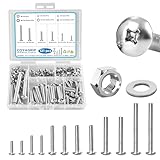
I remember staring at a pile of hardware at the auto parts store, trying to figure out which bolts wouldn’t just snap or strip the second I put a wrench on them. It’s a confusing mess out there. Folks toss around terms like ‘grade 5’ and ‘grade 8’ like they’re obvious, but if you’re not in the know, it’s pure guesswork. The truth is, understanding if bolts are high carbon steel isn’t just a technicality; it’s the difference between a repair that lasts and one that becomes a recurring headache. Seriously, I’ve paid for that lesson more than once with busted knuckles and parts that needed redoing.
So, are bolts high carbon steel? It’s a question that gets to the heart of what makes a fastener strong and reliable. It’s not a simple yes or no, and the devil is in the details of metallurgy and manufacturing. Let’s cut through the jargon and get to what actually matters when you’re picking out bolts for your car, bike, or anything that needs to stay put.
So, Are Bolts High Carbon Steel? Let’s Get Real.
Look, when people ask if bolts are high carbon steel, they’re usually wondering about strength. They’ve seen bolts bend, break, or rust into oblivion, and they want to know what’s going to hold up. The short answer is: some are, and some aren’t.
It’s like asking if cars are red. Well, some are, but you need to know which red car you’re talking about.
Bolts are made from a whole range of steels, and ‘high carbon steel’ is just one category. Generally, when we talk about fasteners that need to be tough – like for automotive applications, heavy machinery, or structural stuff – we’re often looking at medium or high carbon steels. Low carbon steel (or mild steel) is softer, more ductile, and easier to work with, making it good for things like sheet metal screws or bolts that don’t bear a lot of load.
But for anything where shear strength, tensile strength, and resistance to deformation are key, you’re heading into carbon steel territory.
What makes steel ‘high carbon’ is, well, the carbon content. Typically, anything above 0.60% carbon is considered high carbon steel. We’re talking about steels that can be heat-treated – hardened and tempered – to achieve significant toughness and strength. This heat treatment process is what opens the potential of these steels.
Without it, even a high-carbon steel bolt might not perform much better than a mild steel one. The common advice you’ll hear is to always go for the highest grade you can find, but that’s not always the best approach. Overkill can be a problem, and sometimes, a bolt that’s too brittle can snap under shock loads where a slightly softer, more ductile bolt might just bend and save the day. I learned this the hard way when a super-hard, high-carbon bolt I used on a suspension component actually fractured under a sharp jolt, whereas the OEM bolt, likely a medium carbon steel, would have probably just deformed slightly.
The metallurgy behind this is fascinating, though often overkill for the average garage mechanic. We’re talking about iron and carbon atoms arranging themselves in crystal structures. When you heat steel and then quench it rapidly (like in oil or water), you can create a very hard but brittle structure called martensite. Tempering – reheating it to a lower temperature – reduces this brittleness, giving you a balance of hardness and toughness.
The specific carbon content, along with other alloying elements (though for basic bolts, carbon is the main player), dictates how the steel responds to heat treatment. So, when you see a bolt labeled ‘Grade 8.8’ or ‘SAE Grade 5’, those numbers are telling you something about its mechanical properties, which are directly influenced by its carbon content and heat treatment. Understanding this is key to knowing why some bolts feel substantial and others feel like they’ll surrender to a moderate torque wrench.
Decoding Bolt Markings: What the Numbers (and Letters) Actually Mean
This is where things get practical. You’re at the store, or you’re looking at a parts diagram, and you see markings on the bolt head.
What do they mean? For standard metric bolts, you’ll typically see a property class designation, like 8.8, 9.8, 10.9, or 12.9. For inch-based (SAE) fasteners, it’s different: Grade 2, Grade 5, and Grade 8 are the most common. These aren’t just random numbers; they’re standardized codes that tell you the minimum tensile strength and yield strength of the bolt.
And yes, these properties are heavily dependent on the steel composition, specifically its carbon content, and how it’s been heat-treated. A higher number or grade generally means a stronger bolt, but it also often means it’s more brittle.
Let’s break it down a bit:
| System | Grade/Class | Approx. Tensile Strength (psi) | Approx. Yield Strength (psi) | Typical Material | Opinion/Use Case |
|---|---|---|---|---|---|
| SAE (Inch) | Grade 2 | 57,000 | 36,000 | Low Carbon Steel | General purpose, low-stress applications. Okay for holding trim or non-important components. |
| SAE (Inch) | Grade 5 | 85,000 | 55,000 | Medium Carbon Steel (Heat Treated) | Common in automotive. A good balance for most everyday tasks. |
| SAE (Inch) | Grade 8 | 150,000 | 130,000 | Medium/High Carbon Steel (Heat Treated) | High strength. Used for important suspension and engine components. Can be brittle under impact. |
| Metric | 8.8 | 116,000 | 70,000 | Medium Carbon Steel (Heat Treated) | General purpose, good strength. Equivalent to SAE Grade 5. |
| Metric | 10.9 | 150,000 | 105,000 | Medium/High Carbon Steel (Heat Treated) | High strength. Similar to SAE Grade 8, but often with better toughness. |
| Metric | 12.9 | 200,000 | 174,000 | High Carbon Steel (Heat Treated, often alloyed) | Very high strength. For extreme applications. Very brittle, use with caution. |
The ‘8.8’ in metric classification means the minimum tensile strength is 8 x 100 N/mm² (800 MPa, or about 116,000 psi) and the yield strength is at least 0.8 times that (640 MPa, or about 92,800 psi – though specs can vary slightly by standard). For SAE Grade 5, the ‘5’ indicates a minimum tensile strength of 5 x 10,000 psi = 50,000 psi, but the actual standard is 85,000 psi. Grade 8 is 8 x 10,000 psi = 80,000 psi, but again, the standard is higher at 150,000 psi. Confusing, right? (See Also: Can I Buy A Full Auto Bolt Carrier )
Just remember the higher the number, the stronger the steel, and the more important its composition and heat treatment are. Most bolts you’ll buy from a reputable hardware store or auto parts supplier will clearly state their grade or class. If there are no markings, assume it’s the lowest grade and avoid using it for anything important.
Seriously, I’ve seen cheap, unmarked bolts shear off like butter when torqued correctly. Save yourself the trouble.
The Carbon Content Question: Why It Matters (and When It Doesn’t)
So, are bolts high carbon steel? Let’s drill down. For the really high-strength bolts – like SAE Grade 8 or Metric Class 10.9 and 12.9 – you are almost certainly dealing with medium to high carbon steels. The carbon content in these bolts is usually in the range of 0.30% to 0.60% for medium carbon, and above 0.60% for high carbon. This carbon is what allows the steel to be hardened effectively through heat treatment. Without sufficient carbon, the steel simply won’t achieve the necessary hardness and strength required for these high-performance grades. Think of carbon as the key ingredient that lets you ‘lock’ the steel’s structure into a super-strong state.
However, and this is a big ‘however’, it’s not just about the carbon percentage. The manufacturing process, including the specific alloying elements present (even in small amounts), the cooling rate during quenching, and the tempering temperature, all play massive roles. A bolt made from a carefully controlled high-carbon alloy steel, properly heat-treated, will perform dramatically better than a bolt with a similar carbon percentage that was manufactured poorly or heat-treated incorrectly. I once bought a set of ‘high-strength’ bolts for a motorcycle project from an off-brand.
They looked the part, had markings suggesting high strength, but they felt… off. When I torqued them down, one started to deform noticeably at a torque spec that should have been well within its limits.
It turned out they were likely made from inconsistent steel or poorly heat-treated. They were practically decorative.
Low carbon steel, often called mild steel, has a carbon content typically below 0.30%. These bolts are easier to form, weld, and are generally more ductile – meaning they can stretch a lot before breaking.
This makes them less prone to sudden fracture, but they simply can’t achieve the high tensile and yield strengths of their high-carbon cousins. They are perfectly fine for many applications, like holding a bracket for a non-structural component or securing interior trim. If you’re building a birdhouse, mild steel bolts are probably fine.
For anything safety-important, under significant load, or subjected to vibration and stress, you need to be looking at medium or high carbon steels that have been appropriately heat-treated. The key takeaway is that ‘high carbon steel’ is a prerequisite for some of the strongest bolts, but it’s not the only factor.
Proper manufacturing and heat treatment are equally, if not more, important.
Common Mistakes People Make with Bolts (and How to Avoid Them)
I’ve seen people abuse fasteners for years. The most common mistake? Assuming all bolts are created equal. You grab a handful from the junk drawer or the cheapest pack you can find and slap them into place.
This is a recipe for disaster, especially on anything automotive or structural. Another massive blunder is overtightening. Just because a bolt can be tightened a lot doesn’t mean it should be. For high-strength, high-carbon bolts, especially those that are more brittle, overtightening can lead to stripping the threads, snapping the bolt head off, or even creating stress risers that cause failure later.
Always use a torque wrench and consult the repair manual for the correct torque specifications. Seriously, it’s not that hard.
I bought a decent torque wrench for about $60 a few years back, and it’s saved me untold grief and potential damage. It’s one of those tools that just makes sense. (See Also: Are Mercruiser 5 7 Engines Four Bolt Mains )
Then there’s the opposite problem: undertightening. A loose bolt is just as bad as a broken one, if not worse, because it allows movement, vibration, and uneven stress distribution. This can lead to premature wear on other components, fatigue failure of the bolt itself, or the bolt simply backing out and getting lost. You’ll hear people say, “just tighten it till it feels snug, then give it another quarter turn.”
That’s fine for wood screws, but for important applications? No way. Get the specs. Another mistake is using the wrong type of bolt for the environment.
If you’re working on something exposed to the elements – like outdoor furniture, a trailer hitch, or even exhaust components – standard steel bolts will rust to oblivion. You need to look for corrosion-resistant coatings (like zinc plating, black oxide, or even stainless steel) or consider stainless steel bolts themselves, though stainless steel typically has lower tensile strength than hardened carbon steel grades, so it’s a trade-off.
Finally, people often mix and match grades. They’ll replace a Grade 8 bolt with a Grade 5 or a Class 10.9 with an 8.8 without realizing the implications. While this might seem like an acceptable substitution to some, it’s a compromise on safety and integrity. For important connections, always aim to replace a bolt with one of the same or higher grade.
If the original was a high-carbon steel hardened bolt, replacing it with a low-grade, soft bolt is asking for trouble. It’s tempting to grab what’s available, but the cost of a bolt is minuscule compared to the cost of a failure. I learned this when I cheaped out on some brake caliper bolts for a project bike. They looked fine, but after a few months of riding, one started to back out.
Thankfully, I caught it before anything serious happened, but it was a stark reminder that some components are just not worth the savings.
Real-World Applications: Where High Carbon Steel Bolts Shine
So, where do you actually find these tough, high-carbon steel bolts being used effectively? Everywhere safety and strength are most important.
In the automotive world, suspension components, steering linkages, engine mounts, and wheel hubs often rely on high-strength bolts (SAE Grade 8 or Metric Class 10.9/12.9). These bolts are subjected to constant vibration, significant shock loads, and high tensile forces. They need to hold important parts together under extreme conditions, and that’s where the strength derived from high carbon content and proper heat treatment really pays off.
Think about the forces acting on your car’s wheels or the connection points of your suspension. If those bolts fail, the consequences are catastrophic. The higher carbon content allows them to withstand the stress without yielding or breaking.
Construction and infrastructure are another huge area. Bridges, skyscrapers, heavy machinery – anything that needs to bear immense weight and withstand external forces uses high-strength bolts. These aren’t just run-of-the-mill fasteners; they are engineered products made from carefully selected steel alloys, often with controlled carbon content and precise heat treatments. The strength-to-weight ratio is important here, and high-carbon steels deliver that. You’re looking at bolts that can hold together massive structural elements, resisting the immense gravitational and dynamic loads they encounter daily. The sheer scale of these applications underscores the importance of reliable, strong fasteners.
Bicycles, especially performance bikes, also use high-strength bolts. Cranksets, brake calipers, and frame components often use titanium or high-strength steel bolts (which are often high-carbon steel) to save weight while maintaining structural integrity. While titanium is lighter, high-quality steel bolts can offer incredible strength and are generally more affordable. I’ve seen high-end road bikes with tiny, incredibly strong bolts holding vital components together. It’s a testament to how far metallurgy has come. Even in things like power tools or specialized industrial equipment, where components are subjected to high torques and impacts, you’ll find these solid fasteners. The consistent performance and reliability of heat-treated high-carbon steel make it the go-to for applications where failure is not an option.
Practical Tips for Buying and Using Bolts Like a Pro
First off, don’t be afraid to ask questions or do a little digging. If you’re buying bolts for a important repair, try to find out the original bolt grade.
If the part number is available, look it up online or in a service manual. If you can’t find the original grade, err on the side of caution and go for a higher grade (e.g., if unsure, use Grade 8 or Class 10.9). However, be mindful of the material.
For applications that experience shock loads or sudden impacts, a bolt that’s too hard and brittle can actually be a liability. Sometimes, a slightly lower grade with better ductility is preferable. This is where experience and understanding the specific application come into play. (See Also: Can Am Merverick X3 Max Xrs Wheel Bolt Pattern )
Always buy from reputable suppliers. While you might save a few bucks on generic bolts from a discount store, the quality control can be questionable. Look for brands known for their fastener quality. Brands like ARP (for high-performance automotive), McMaster-Carr (for a vast selection and quality), or even well-regarded hardware store brands are generally a safer bet. When in doubt, buy from a specialty fastener supplier. They usually have knowledgeable staff who can help you find exactly what you need. I’ve had great experiences with local industrial supply stores for tough-to-find hardware.
When you get your bolts, inspect them. Look for any signs of damage, corrosion, or manufacturing defects. Make sure the threads are clean and undamaged. Before installing, clean the threads on both the bolt and the receiving hole.
Use a thread chaser if necessary to clean out any debris or old threadlocker. For important applications, using a small amount of appropriate threadlocker (like Loctite Blue for medium-duty or Red for high-duty) is a good idea. It prevents vibration from loosening the bolt and can help seal the threads.
And for the love of all that is good, use a torque wrench. Seriously. It’s the single best tool you can have for making sure fasteners are properly secured without being overtightened or undertightened. Learn the torque specs for your application, and stick to them.
It’s not about brute force; it’s about controlled clamping force.
Frequently Asked Questions About Bolts
Are All Bolts Made of Steel?
No, not all bolts are made of steel. While steel is the most common material for fasteners due to its strength and affordability, bolts can also be made from other materials like stainless steel (which is an alloy of steel with chromium and nickel), brass, bronze, aluminum, and even titanium. The choice of material depends heavily on the intended application, considering factors like strength requirements, corrosion resistance, weight, and cost.
What Is the Difference Between High Carbon Steel and Low Carbon Steel Bolts?
The primary difference lies in their carbon content, which significantly affects their properties. Low carbon steel (mild steel) has less than 0.30% carbon and is softer, more ductile, and easier to form. High carbon steel has more than 0.60% carbon and can be heat-treated to become very hard and strong, but also more brittle. This makes high carbon steel ideal for bolts requiring high tensile strength, while low carbon steel is suitable for less demanding applications.
Can You Use Stainless Steel Bolts Instead of Regular Steel Bolts?
Yes, you can, but you need to be aware of the trade-offs. Stainless steel bolts offer superior corrosion resistance, making them excellent for outdoor or marine environments. However, they generally have lower tensile strength and yield strength compared to hardened carbon steel bolts of the same size. If you’re replacing a high-strength carbon steel bolt with stainless steel, you might need to use a larger diameter or a higher grade of stainless steel to achieve comparable strength, or accept a reduction in load-bearing capacity.
Is It Safe to Reuse Bolts?
It depends on the bolt and the application. For non-important fasteners in low-stress situations, reusing bolts might be acceptable. However, for important components, especially in automotive, aerospace, or structural applications, it is generally recommended to replace bolts. Bolts can undergo fatigue, microscopic stretching, or thread damage that isn’t visible but can compromise their integrity. Reusing them, particularly hardened, high-carbon steel bolts, can be risky and lead to premature failure.
Are Bolts High Carbon Steel? Let’s Wrap This Up
So, to circle back to the initial question: are bolts high carbon steel? The answer, as you’ve probably gathered, is that some are, and some aren’t. High-strength bolts, the ones you want for important applications like automotive repairs or structural work, are often made from medium or high carbon steels.
These steels are chosen specifically because their carbon content allows them to be heat-treated to achieve the high tensile and yield strengths we rely on. However, simply being high carbon steel isn’t enough; the quality of the manufacturing, the specific alloy composition, and the precision of the heat treatment are just as vital.
You can have two bolts with the same carbon percentage, but one will be vastly superior due to better processing.
My advice? Don’t just grab the cheapest thing on the shelf. Understand the grade markings, consider the application, and buy from a supplier you trust. For anything that matters, using the right bolt – the right material, the right grade, and torqued correctly – isn’t just good practice; it’s key for safety and reliability. It’s the kind of detail that separates a job done right from one that will have you scratching your head later.
Conclusion
When you’re looking at a fastener, especially for anything that needs to hold up under stress, remember that the ‘are bolts high carbon steel’ question is really about what makes them strong. It’s the carbon content, combined with precise heat treatment, that gives you those solid, reliable bolts you need. Don’t get caught out by cheap imitations or generic hardware; invest a little time and a few extra dollars to get the right part for the job.
Next time you’re at the hardware store or ordering parts online, take a moment to check those markings. Understand what Grade 5, Grade 8, or Class 10.9 actually means for your project. It’s the difference between peace of mind and a potential headache down the road. So, choose wisely, torque correctly, and get back to whatever it is you’re building or fixing with confidence.