I remember the first time I saw a beautifully crafted drawer with box joints, all perfectly dovetailed and flush. I thought, ‘Man, that’s the stuff of furniture gods.’ Then I saw the price tag on the finished piece and figured I’d stick to screws and glue for a while.
But then came the DIY itch, and with it, the burning question for anyone looking to step up their woodworking game without breaking the bank: are box joints with plywood ok? For a long time, the answer I got was a resounding ‘no,’ and frankly, that’s mostly crap.
I’ve wrestled with countless sheets of birch, maple, and even the cheap stuff, and I’ve learned a thing or two about when and how to make plywood box joints work. Let’s get real about it.
Why Everyone Says Plywood Box Joints Are a Bad Idea (and Why They’re Often Wrong)
Let’s cut to the chase. The common wisdom you’ll hear from old-school woodworkers, and sometimes even from the slicker online DIY channels, is that plywood and box joints just don’t mix. They’ll tell you the layers will tear out, the glue won’t hold, and your meticulously cut fingers will be a flaky mess. And yeah, if you just grab the cheapest, junkiest plywood you can find and hack at it with a dull blade, they might be right. You’ll end up with something that looks like a bird exploded in a sawdust factory.
The reality is, plywood is a fantastic material for many projects, especially cabinets, drawers, and utility furniture where stability and resistance to warping are key. And box joints, or finger joints as they’re also known, are a super strong and visually appealing joint. The problem isn’t the materials; it’s usually the execution and the type of plywood you’re using. Think of it like trying to make a gourmet meal with instant noodles and a microwave – you can do it, but don’t expect Michelin stars.
The main culprit behind the ‘bad idea’ narrative is often voiding within the plywood. Cheaper plywood can have significant air pockets between the plies. When you cut a box joint into this, especially with a router bit or a dado stack, those pockets are prime real estate for tear-out. The thin veneer layers on the outside just can’t support the cut when there’s nothing behind them. So, the first and most important rule if you’re even considering this is to choose your plywood wisely. High-quality Baltic birch plywood, for instance, has very few voids and densely packed plies. It’s significantly more expensive than your standard cabinet-grade ply, but it behaves more like solid wood and is much more forgiving.
Another factor is the cutting tool. A sharp blade on a table saw or a precisely set router bit is a must. A dull blade will chew and tear, regardless of the material. I learned this the hard way on a project where I was too cheap to buy a new dado stack insert. My first few attempts looked like a beaver had taken a bite out of the plywood edges. It wasn’t pretty, and it certainly wasn’t strong. After I finally invested in a good quality, sharp dado stack, the cuts were clean, and the joints fit snugly. It made all the difference.
What to Look for in Plywood for Strong Box Joints
Alright, so we’ve established that not all plywood is created equal, and this is especially true when you’re thinking about cutting intricate joints like box joints into it. If you’re going to make this work, you need to be selective. Forget that cheap construction-grade plywood you might use for subflooring. It’s riddled with voids, has thin, weak face veneers, and is designed for structural integrity, not fine joinery. You’re setting yourself up for frustration and a weak final product.
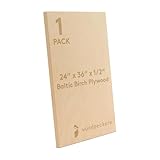
The absolute best-case scenario for plywood box joints is Baltic birch plywood. Seriously, if you can afford it, this is your golden ticket. It’s made from birch veneers throughout, has a high ply count (meaning lots of thin layers), and importantly, very few voids. The plies are glued together with waterproof adhesives, and the entire panel is dense and stable. When you cut into Baltic birch, the edges are crisp, and the layers hold together like they’re glued at the molecular level. I’ve made drawer boxes out of 1/2-inch Baltic birch using box joints, and they are rock solid. They look fantastic too, with the alternating layers of light and dark birch creating a nice visual effect.
If Baltic birch is out of your budget or availability, your next best bet is high-quality cabinet-grade plywood. Look for products that explicitly state ‘void-free’ or have a high ply count (typically 9 or more plies for 3/4-inch material). Maple or oak veneer plywood can also be good options, as their face veneers are usually thicker and more durable than those on utility-grade plywood. However, even with these, you might encounter some voids in the core layers, so a sharp blade and careful routing are still most important. (See Also: Can A 4x8 Plywood Fit In A Honda Pilot )
One of the things I always do before committing to cutting joints is to examine the edge of the plywood sheet. Hold it up to the light. Can you see big dark shadows or gaps? Those are voids. If you see them, I’d strongly advise against using that particular sheet for box joints. You’re much better off using a material where you can see solid wood layers all the way through the edge. Think of it as inspecting the foundation of a house before you build on it. A weak foundation means a shaky structure, no matter how fancy your joinery is.
Here’s a quick rundown of what I look for, and you should too:
| Plywood Type | Void Factor | Edge Quality | Suitability for Box Joints | Verdict |
|---|---|---|---|---|
| Baltic Birch | Very Low | Dense, Crisp | Excellent | The Gold Standard |
| High-Grade Cabinet (Maple/Oak Veneer) | Low to Moderate | Good, but check edges | Good | A Solid Choice if Void-Free |
| Standard Construction Grade | High | Rough, Gappy | Poor | Avoid for Joinery |
| Cheap Utility Grade | Very High | Very Rough, Many Voids | Terrible | Do Not Even Think About It |
Common Mistakes When Making Plywood Box Joints (and How to Avoid Them)
I’ve made enough of these mistakes to write a book, so you don’t have to. The biggest, most soul-crushing mistake I see (and have made) is trying to force plywood into a joint where it’s not suited, or not preparing the tools and material properly. It’s like trying to staple a pillow shut – it might hold for a bit, but it’s not going to last.
One common error is using the wrong tools or dull blades. As I mentioned, a sharp blade on your table saw or router is a must. If your blade is dull, it’s going to rip and tear those delicate veneer layers, creating fuzzy edges that won’t mate cleanly. This leads to weak joints and an unprofessional look. My first set of drawer boxes with plywood looked like they’d been gnawed by mice because my dado blade was past its prime. It was infuriating. Spending $20 on a new blade or sharpening your existing ones will save you hours of sanding and a whole lot of regret.
Another pitfall is inconsistent cutting. Plywood, especially the lower grades, can have slight variations in thickness or density. If your jig isn’t perfectly set up or if you’re freehanding, you’ll end up with fingers that are slightly different sizes. This means gaps when you assemble the joint. For box joints, precision is key. Use a good quality jig for your router or table saw, and measure twice, cut once. Don’t rely on eyeballing it.
People also often neglect to properly glue and clamp these joints. Just like with solid wood, you need good glue coverage on both surfaces of each finger. And you need adequate clamping pressure to hold everything tight while the glue cures. A common mistake is over-tightening the clamps, which can squeeze out too much glue and distort the joint. On the other hand, under-clamping means the joint won’t be held tightly enough for a strong bond. I like to use a combination of ratchet straps and bar clamps for drawer boxes made from plywood, making sure even pressure across the entire joint.
Finally, and this is a big one I see in online tutorials sometimes, people don’t account for the fact that plywood expands and contracts differently than solid wood, albeit less so. The glue layers do a lot to stabilize it, but if you’re making very large panels or structures subjected to extreme humidity changes, you might want to consider alternative joinery or reinforce your box joints with screws, especially in important areas. For typical drawer boxes or cabinet carcasses, though, well-executed, glued, and clamped box joints in good quality plywood are usually plenty strong on their own.
Here’s a quick checklist to avoid those common headaches:
- Tool Sharpness: Always use sharp blades and bits.
- Jig Precision: Invest in or build a reliable jig for consistent finger width and spacing.
- Material Selection: Prioritize void-free plywood like Baltic birch.
- Glue Application: Make sure even glue coverage on all mating surfaces.
- Clamping Strategy: Apply firm, even pressure without overtightening.
- Test Cuts: Always make test cuts on scrap material to dial in your setup.
Real-World Use: Where Plywood Box Joints Shine (and Where to Be Wary)
So, when does it actually make sense to use box joints with plywood? I’ve found they excel in situations where aesthetics meet practicality, and cost is a factor, but you still want a strong, good-looking joint. The most common place I use them is for drawer boxes. Forget those flimsy staple-together drawers or basic butt joints with screws. Box joints, even with plywood, give drawers a much more premium feel and significantly increase their strength and longevity. They can handle the repeated slamming and weight they often endure. (See Also: Can Bondo Be Applied To Plywood )
Cabinet carcasses are another prime candidate. Think about kitchen cabinets, storage units, or utility shelving. When you use plywood box joints for the main box construction, you’re creating a rigid, warp-resistant structure that will last for years. The visible edge of the joint can even be a design feature if you use nicely finished plywood like birch. I built a set of built-in bookshelves for my garage using 3/4-inch cabinet-grade maple ply and box joints, and they’ve held up perfectly to the weight of tools and materials, with zero sagging.
Furniture frames, especially for modern or minimalist designs, can also benefit. If you’re building a simple storage credenza, a coffee table base, or even the frame for an upholstered piece, plywood box joints offer a good balance of strength and material cost. They’re faster to cut than traditional dovetails, and when done well, they look every bit as professional on the inside or as a design element on the outside.
Where should you be wary? I’d personally avoid using plywood box joints for highly visible, load-bearing structural elements in fine furniture that will be subjected to extreme stress or constant flexing. For example, I wouldn’t use them for the main structural joints of a high-end dining table that needs to support a heavy top and endure years of dinner parties. Solid wood, with traditional joinery like mortise and tenon or sturdy half-laps, is generally a safer bet there. Similarly, if you’re building something that will be constantly exposed to wide swings in humidity – think outdoor furniture in a damp climate – while plywood is more stable than solid wood in some ways, the glue lines in the joints can eventually be compromised if not adequately protected.
I also tend to steer clear of them for very small, intricate projects where the thickness of the plywood might overwhelm the scale of the joint. If you’re working with 1/4-inch plywood for tiny boxes or decorative elements, the fingers of a box joint can become disproportionately large and might not look right. In those cases, smaller, more delicate joints or even rabbets might be more appropriate.
The Contrarian Take: Why Over-Engineering Is Often Worse
Now, here’s where I might ruffle some feathers. Everyone says, ‘Oh, you can’t use plywood for box joints, you need solid wood, and you need to reinforce it with screws or dowels.’ And yes, technically, for certain applications, that’s true. But for the vast majority of what most people build – drawers, cabinets, shop furniture, storage units – the idea that you must use solid wood or add extra hardware is often overkill and adds unnecessary cost and complexity.
I fundamentally disagree with the notion that plywood box joints are inherently weak for typical use cases. When you use good quality plywood, like Baltic birch or void-free cabinet grade, and you cut your joints cleanly with sharp tools, and you glue them up properly with adequate clamping, they are incredibly strong. The layered structure of plywood, with the alternating grain direction of the plies, actually makes it very resistant to racking and shear forces when joined properly. It’s not just the glue; it’s the mechanical interlock of all those fingers.
My personal philosophy is to use the right material for the job, but not to over-engineer out of fear or dogma. I’ve seen countless pieces of furniture made with perfectly adequate plywood box joints that have lasted for decades. The added cost of solid wood, the extra time to mill it, and the often unnecessary reinforcement with screws or dowels just add expense and complexity without a proportional increase in functional strength for most practical applications. For instance, I built a set of kitchen cabinets years ago using 3/4-inch maple plywood with box joints for all the cabinet boxes.
They’ve been loaded with dishes, pots, and pans, subjected to daily use, and they are as solid as the day I built them. No screws, no dowels, just good glue and good joints.
The argument often goes that plywood will delaminate or the glue will fail over time, especially with moisture. While that’s a possibility with very low-quality plywood and poor gluing practices, modern waterproof adhesives and the inherent stability of good plywood make this far less of a concern than many people believe, especially for indoor applications. If you’re building a boat or a canoe, sure, stick to marine-grade plywood and specialized epoxies. But for a dresser or a bookshelf? Relax. Good plywood, cut well and glued well, is perfectly fine for box joints and offers a fantastic blend of strength, stability, and cost-effectiveness. (See Also: Can Cat Plywood Be Used For Exterior Siding )
Practical Tips for Cutting Plywood Box Joints
Cutting box joints into plywood might seem daunting, but with the right approach, it’s entirely manageable. The key is precision and understanding the material. Here’s what I’ve learned through trial and error that actually works:
- Use a Router Table and a Jig: While you can cut box joints on a table saw with a dado stack, I personally find a router table with a dedicated box joint jig to be more forgiving and easier to control for plywood. The jig makes sure consistent finger width and spacing, which is important for a good fit. Make sure your jig is solid and slides smoothly.
- Set Your Depth of Cut Correctly: The depth of your box joint fingers should typically be about 1/3 to 1/2 the thickness of your plywood. Too shallow, and the joint won’t be strong. Too deep, and you risk weakening the adjacent fingers or even cutting through the opposite face if your plywood has voids. For 1/2-inch plywood, a 1/4-inch to 3/8-inch depth is usually good.
- Grain Direction Matters: When cutting, make sure the plies are oriented correctly so that the fingers you’re cutting are supported by as many layers as possible. For most drawer construction, this means the fingers will run along the length of the piece.
- Test, Test, Test: Before cutting into your project material, always make test cuts on scrap pieces of the exact same plywood you’re using. This allows you to dial in your jig settings, confirm your depth of cut, and make sure the fingers fit together snugly without being too tight or too loose. You want a fit that requires a gentle tap with a rubber mallet, not brute force, and certainly no visible gaps.
- Glue and Clamp Smart: Use a good quality wood glue (PVA glue is fine for most indoor applications). Apply a thin, even layer to both mating surfaces of each finger. Don’t go overboard, as excessive squeeze-out can be messy. For clamping, use bar clamps or pipe clamps across the width of the joint and consider using a band clamp or ratchet straps around the entire assembly for even pressure. Place scrap wood or cauls between the clamps and the plywood to prevent marring.
- Consider a Chamfer or Roundover: For a cleaner look and to reduce the chance of splintering on the exposed edges of the plywood fingers, you can lightly chamfer or round over the edges of the fingers before assembly. This is especially helpful with lower-grade plywood. A very slight roundover with a router bit can make the joints look more finished.
Frequently Asked Questions About Plywood Box Joints
Can You Glue Plywood Box Joints?
Absolutely. Plywood glues up just like solid wood. In fact, the layered construction often provides more surface area for the glue to adhere to, potentially making for a very strong bond, provided you use a quality wood glue and clamp the joints properly while the glue cures.
Are Plywood Box Joints Strong Enough for Drawers?
Yes, for most standard drawer applications, plywood box joints are more than strong enough. When made with good quality plywood and properly glued and clamped, they offer excellent durability and resistance to racking, which is ideal for the stresses drawers endure.
What’s the Best Plywood to Use for Box Joints?
Baltic birch plywood is the top choice for box joints because it has a high ply count and very few voids, leading to clean cuts and strong joints. High-quality cabinet-grade plywood with void-free core layers is also a good option.
How Deep Should Box Joint Fingers Be in Plywood?
A good rule of thumb is to make the depth of the fingers about one-third to one-half the thickness of the plywood. For 1/2-inch plywood, a depth of 1/4 to 3/8 inch is typical. Avoid cutting too deep, as it can weaken the adjacent fingers or lead to tear-out.
Can I Use Screws with Plywood Box Joints?
While not always necessary if the joints are well-executed, you can add screws for extra reinforcement, especially in high-stress applications or if you’re concerned about the longevity of the glue bond over time. Predrill pilot holes carefully to avoid splitting the plywood.
Final Verdict
So, are box joints with plywood ok? My honest answer, after years of wrestling with them, is a resounding yes, with caveats. The biggest caveat is that you absolutely must use good quality plywood and sharp tools. Don’t expect miracles from cheap construction-grade stuff; it’s a recipe for frustration.
For drawers, cabinets, and a whole host of shop projects, they offer a fantastic combination of strength, visual appeal, and cost-effectiveness that often gets overlooked because of outdated dogma. You get a strong, interlocking joint that looks professional without the extreme skill or material cost of traditional dovetails.
If you’re looking to step up the quality of your DIY projects without jumping to expensive hardwoods and complex joinery, give plywood box joints a serious look. Just remember to pick your material wisely, sharpen your tools, and take your time with the setup. You might be surprised at how good they can look and how strong they can be.