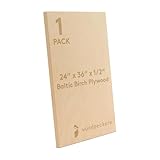
The last time I bought new kitchen cabinets, I swear the salesperson used the word ‘plywood’ like it was a dirty secret. They kept pushing ‘solid wood’ this and ‘hardwood’ that, making me feel like I was settling for less if I even considered anything else. Honestly, it felt like a scam. So, let’s cut through the marketing fluff: are cabinets made out of plywood, and is that even a bad thing?
I’ve spent way too much time and money over the years wrestling with furniture and cabinetry, trying to figure out what’s actually built to last and what’s just designed to look pretty for a couple of years. Plywood is a huge part of that conversation, and frankly, the advice out there is often confusing, if not downright misleading.
Forget the fancy jargon for a minute. We need to talk about what’s really going on behind those cabinet doors. Is plywood a compromise, or is it sometimes the smarter, more durable choice? Let’s get real about it.
Plywood’s Not Just Some Cheap Filler, You Know
Okay, let’s get this straight right off the bat: are cabinets made out of plywood? Yes, a lot of them are, and for good reason.
The term ‘plywood’ itself has gotten a bad rap over the years, often conjuring images of flimsy, cheap furniture that warps after a rainstorm. But that’s not the whole story, not by a long shot. High-quality plywood, especially the stuff used in decent cabinetry, is a surprisingly solid material. It’s basically layers and layers of thin wood veneer, glued together with the grain running in alternating directions.
This cross-graining is the secret sauce. It makes the material far more stable and less prone to expanding, contracting, or splitting than a single piece of solid wood. Think of it like a composite material, engineered for strength and stability. I learned this the hard way when I tried to build a custom bookshelf out of solid pine.
It looked nice initially, but within a year, I was seeing noticeable bowing in the longer shelves. My next attempt used high-grade birch plywood for the shelves, and they held up perfectly.
That’s when I started to really respect what plywood can do.
When you’re looking at cabinets, the type of plywood matters. You’ll see terms like ‘furniture grade,’ ‘cabinet grade,’ or specific wood species like ‘birch plywood’ or ‘maple plywood.’ These aren’t just random labels. Furniture grade means the veneers are smoother, with fewer knots or imperfections, so the finish looks better. Cabinet grade is specifically designed for the structural integrity and finish required for cabinetry. Don’t shy away from plywood just because it’s not ‘solid wood.’ Sometimes, a well-constructed plywood cabinet box will outlast a solid wood one made with cheaper joinery or less stable lumber. The key is how it’s manufactured and assembled.
I remember a friend who was so insistent on ‘all solid wood’ for his kitchen remodel. He ended up with beautiful maple drawer fronts and doors, but the cabinet boxes were made from a particle board composite that started to sag under the weight of his heavy dishes after about five years. Meanwhile, my own cabinets, which have plywood boxes and solid wood drawer fronts, have been going strong for a decade with no signs of weakness. It really hammered home the point that the entire construction, not just the visible parts, is what determines longevity. Plywood is often the unsung hero in those situations, providing a stable and strong foundation. (See Also: Can A 4x8 Plywood Fit In A Honda Pilot )
Solid Wood vs. Plywood: The Real Deal on Durability
So, is solid wood always better? Not necessarily. This is where I think a lot of people get it wrong. Everyone raves about solid wood, and yeah, it can be fantastic. It’s beautiful, you can sand it down and refinish it endlessly, and it has a certain natural appeal. However, solid wood has a mind of its own. It moves. It expands and contracts with changes in humidity and temperature. This is why you see solid wood doors that might warp or crack over time, or joints that can open up. I’ve seen gorgeous antique solid wood dressers where the drawers no longer slide smoothly because the wood has shifted.
Plywood, on the other hand, is significantly more stable. Because of those alternating grain layers, it resists warping and splitting much better. This is a huge advantage for cabinet boxes, which are basically big boxes holding up heavy shelves and contents. A solid wood box is much more susceptible to seasonal movement, which can stress joints and lead to problems down the line.
For the main structural components of cabinets – the sides, tops, bottoms, and shelves – plywood is often the superior choice for long-term stability and durability. The ‘solid wood’ you often hear about for cabinets usually refers to the doors and drawer fronts, where appearance and the ability to be shaped are more important than extreme structural stability.
Let’s look at a quick comparison, because I find tables helpful for cutting through the noise:
| Feature | Solid Wood | Plywood (Cabinet Grade) | My Verdict |
|---|---|---|---|
| Stability (Warping/Cracking) | Prone to movement, can warp/crack | Highly stable, resists movement | Plywood wins for box stability |
| Strength | Strong, but can split along grain | Very strong due to layered construction | Both strong, plywood often more uniform |
| Cost | Generally more expensive | Can be more cost-effective for large panels | Plywood often offers better value for structural parts |
| Appearance | Natural, unique grain patterns | Can have visible veneer lines; appearance depends on veneer type | Solid wood for visible beauty, plywood for hidden strength |
| Repairability | Easier to sand and refinish | More difficult to repair deep damage without re-veneering | Solid wood is easier for surface touch-ups |
My take? For the main carcass of your cabinets – the parts that form the box and hold the shelves – I’d lean towards high-quality plywood every single time. It’s the workhorse that keeps everything square and strong for years. For the doors and drawer fronts, where you see and touch, solid wood or even MDF with a veneer can be great, depending on your budget and desired look. It’s about using the right material for the right job.
What to Look for: Not All Plywood Is Created Equal
So, you’re convinced that plywood might be okay, maybe even good, for your cabinets. Great! Now, how do you know if you’re getting the good stuff or the cheap stuff that’s going to fall apart? This is where you need to get a little bit picky. When people complain about plywood cabinets, it’s usually because they’ve ended up with low-grade plywood. The first thing to look for is the number of plies. More plies generally mean a stronger, more stable panel. A decent cabinet-grade plywood will have at least 7 plies, and often 9 or even more, for a standard 3/4-inch thick panel. Cheaper stuff might have only 3 or 5, and that’s where you’ll see issues.
Next, check the veneer quality. For cabinet boxes, you want to see smooth, consistent veneers. Look at the edges of the plywood panels. Are there big gaps? Are there lots of knots showing through? This indicates lower grade plywood. You’ll often see plywood described by its grade, like ‘AA,’ ‘BB,’ ‘CC.’ ‘AA’ is the highest quality face veneer, meaning it’s smooth and free of defects. For cabinet construction, you’re typically looking for at least a ‘B’ grade for the face veneer, and ideally ‘BB’ or better. The back veneer (the side that won’t be seen) can be a lower grade, like ‘C’ or ‘D,’ and that’s perfectly fine.
Another thing to pay attention to is the type of glue used. For cabinets, you want to see formaldehyde-free glues, especially if you’re concerned about indoor air quality. CARB II compliant is a good standard to look for. This is a bit more technical, but it’s important for health and environmental reasons. Lastly, consider the wood species of the face veneer. Birch and maple are very popular for cabinet-grade plywood because they are hard, durable, and have a fine, consistent grain that takes finishes beautifully. Oak and cherry plywoods are also available and offer different aesthetic qualities.
I once made the mistake of buying a ‘bargain’ set of shelves that were advertised as plywood. When they arrived, they were made of some super-lightweight, low-ply count wood with a thin, almost papery veneer. I assembled them, put a few books on them, and within a week, they were visibly sagging. It taught me a valuable lesson: never assume ‘plywood’ means quality. Always ask about the ply count, look at the edges, and if possible, feel the weight and rigidity of the panel. A good cabinet-grade plywood feels dense and solid. (See Also: Can Bondo Be Applied To Plywood )
Common Mistakes and What to Avoid
Okay, let’s talk about the screw-ups. The biggest mistake I see people make, and one I’ve been guilty of, is assuming all cabinets of the same material are created equal. Just because a cabinet box is described as ‘plywood’ doesn’t automatically mean it’s good. As I mentioned, there’s a huge difference between cheap, low-ply construction lumber plywood and high-quality cabinet-grade plywood. If the price seems too good to be true, it probably is. You’ll end up paying for it later in sagging shelves, drawers that don’t close right, or even visible cracking over time.
Another mistake is focusing only on the doors. People get mesmerized by the beautiful solid wood doors, but then the cabinet boxes are made from something far less durable. You need to consider the entire construction. Ask about the thickness of the plywood used for the boxes and shelves. 1/2-inch plywood for shelves is often a minimum for decent support, but 3/4-inch is much better for longer spans or heavier items. And don’t forget about the drawer construction. Are the drawer sides and bottoms made of solid wood, or are they thin plywood or even particle board? Poorly constructed drawers are often the first point of failure in a kitchen or bathroom cabinet set.
I also see a lot of people falling for the ‘all solid wood’ pitch without understanding the implications. While solid wood doors are great, having the entire cabinet box made of solid wood can be a double-edged sword. If it’s not properly constructed and acclimated, you can run into issues with expansion and contraction, leading to warped doors or cabinets that don’t sit flush anymore.
It’s a material that requires more care and can be more temperamental in varying humidity conditions. For structural components, like the cabinet carcass, plywood offers that consistent, stable performance that’s hard to beat. When you hear ‘solid wood cabinets,’ it’s worth asking what that actually means.
Are the boxes solid wood too, or is it just the doors and drawer fronts?
People Also Ask: Plywood Cabinets
Is Plywood Good for Kitchen Cabinets?
Yes, high-quality plywood is actually an excellent material for kitchen cabinets, especially for the cabinet boxes and shelves. Its layered construction makes it very stable, resistant to warping and cracking, and strong enough to hold heavy items. Unlike solid wood, it doesn’t expand and contract as much with changes in humidity, which helps maintain the cabinet’s integrity over time. Look for cabinet-grade plywood with a good number of plies (at least 7-9 for 3/4-inch thickness) and smooth veneers.
Can Plywood Cabinets Last 20 Years?
Absolutely, high-quality plywood cabinets can easily last 20 years or more, often outperforming cabinets made with lower-quality materials or less stable solid wood. The key is the quality of the plywood itself and the overall construction. Properly assembled cabinets using cabinet-grade plywood, with good joinery and finishing, will maintain their structural integrity and appearance for decades. Regular cleaning and avoiding excessive moisture are also important factors in longevity.
Is Plywood Cheaper Than Solid Wood for Cabinets?
Generally, yes, high-quality plywood can be more cost-effective than solid wood for the structural components of cabinets. While premium veneers on plywood can be expensive, the overall cost of manufacturing large, stable panels from plywood is often lower than using solid wood for the same purpose. Solid wood is typically more expensive, especially for hardwoods like maple or cherry, and its tendency to move can also lead to higher manufacturing or repair costs. However, for very simple, smaller cabinet boxes, the cost difference might be less pronounced.
How Do You Make Plywood Cabinets Look Like Solid Wood?
You can achieve a solid wood look on plywood cabinets in a few ways. The most common method is to use a high-quality plywood with a fine, attractive veneer (like birch or maple) and then paint or stain it. For a more convincing solid wood appearance, you can use wood filler to fill any visible veneer lines or seams, then sand and apply a stain that mimics the grain of a particular hardwood. Some people also add decorative trim or beadboard to the cabinet faces for added detail, which can further mask the plywood construction. For doors and drawer fronts, you can opt for solid wood inserts or full solid wood construction. (See Also: Can Cat Plywood Be Used For Exterior Siding )
Real-World Use: My Experience and Tips
I’ve had a few different cabinet situations over the years. My first apartment had the builder-grade stuff – I’m pretty sure the boxes were particle board and the doors were some cheap laminate. They looked… fine, for about three years. Then the particle board started to swell under the sink, and the laminate started peeling off the doors. Lesson learned: never go with the absolute cheapest option if you want anything to last.
My current kitchen has cabinets where the boxes are a decent quality birch plywood, and the doors and drawer fronts are solid maple. This, in my opinion, is a fantastic compromise. The plywood boxes are rock-solid. I’ve loaded those shelves up with heavy ceramic dishes, and there’s been zero sag. The maple doors look beautiful and have held up perfectly. This setup cost more than the particle board disaster, but it was significantly less than if the entire cabinet, including the boxes, had been solid maple. It’s been about eight years, and they still look and function like new. That’s the kind of longevity I’m looking for.
Here are a few practical tips if you’re in the market for new cabinets or even thinking about a refresh:
- Ask specific questions. Don’t just ask “Are these wood cabinets?” Ask what the boxes are made of, what the shelves are made of, and what the doors and drawer fronts are made of. Inquire about the grade of plywood and the number of plies.
- Inspect the construction. If you can see a display model, open and close the drawers and doors. Do they feel sturdy? Do they glide smoothly? Look at the joints where the panels meet. Are they tight and well-fitted?
- Consider your environment. If you live in a place with very high humidity or extreme temperature fluctuations, the stability of plywood for cabinet boxes is even more of an advantage.
- Don’t be afraid of painted plywood. A well-prepped and painted plywood cabinet box can look just as good as a painted solid wood box, and it will be more stable.
- Prioritize for value. For hidden structural elements, opt for quality plywood. For visible, touchable surfaces, invest in solid wood or high-quality veneers if your budget allows. It’s about smart material selection.
One contrarian opinion for you: I think sometimes people overemphasize the ‘grain’ of solid wood for cabinet boxes. While a beautiful grain is great for furniture, for the internal structure of cabinets, I want stability and uniform strength. The slight variations in solid wood grain, while natural, can sometimes be a weak point if not managed perfectly. Plywood’s cross-directional plies offer a more isotropic strength, meaning it’s strong in multiple directions, which is precisely what a cabinet box needs.
The Final Word on Plywood and Cabinets
So, to circle back to our original question: are cabinets made out of plywood? Unequivocally, yes. And that’s a good thing. When you understand how plywood is constructed and what grades are used in quality cabinetry, you realize it’s not a cheap substitute, but often a superior material for specific applications within a cabinet. The stability and durability it offers for cabinet boxes and shelves are incredibly valuable for long-term performance.
My own experiences have taught me that the marketing of ‘solid wood’ can sometimes be a bit of a smokescreen, hiding less durable constructions in other parts of the cabinet. It’s the combination of materials – quality plywood for the structure and attractive, durable wood for the visible parts – that often makes for the best, most long-lasting cabinets. Don’t let outdated notions about plywood make you shy away from a perfectly good, and often better, option.
The key takeaway is to look beyond just the label. Investigate the construction, ask the right questions, and understand what makes a cabinet truly durable. Plywood, in its proper form, is a cornerstone of good cabinet construction. It’s time we gave it the credit it deserves.
Conclusion
So, there you have it. Are cabinets made out of plywood? Yes, and in many cases, that’s a really smart design choice. It’s not some cheap shortcut; it’s a material engineered for stability and strength, making it ideal for the structural parts of your cabinets. My advice? Don’t dismiss plywood out of hand. Dig into the specifics of the construction, ask your salesperson about ply count and grade, and trust your gut on what feels solid.
Ultimately, whether you choose plywood, solid wood, or a combination, the quality of the craftsmanship and the grade of the materials are what will determine how well your cabinets stand the test of time. It’s about using the right material for the job, and for many cabinet components, plywood is a champion.
Next time you’re shopping for cabinets, go in armed with this knowledge. You’ll be able to make a much more informed decision that saves you money and headaches down the road.