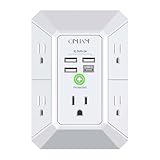
I remember the first time I packed for a trip to the States. I had my trusty laptop, my phone charger, my hair dryer – the whole nine yards. Then I plugged them in and… nothing. Zero. Nada. I stood there, staring at the blank wall socket, a wave of pure frustration washing over me. It hit me then: are Canadian outlets the same as American? It’s a question that sounds simple, but the answer can save you a lot of hassle and a few trips to the electronics store.
For years, I just assumed they were identical. Why wouldn’t they be? We share a border, we watch the same TV shows, we complain about the same hockey teams. But as my travel experiences (and a few embarrassing moments) have taught me, assumptions can be costly. This isn’t about some obscure technicality; it’s about whether your gadgets will actually work when you need them.
The Shocking Truth: Plugged in, but Not Powering Up
So, let’s cut to the chase: are Canadian outlets the same as American? For the most part, yes, they absolutely are. Both countries predominantly use Type A and Type B plugs and receptacles. This means if you’re traveling from the US to Canada or vice-versa with most common household electronics – think your phone charger, laptop, or even a standard lamp – you’re generally in the clear. The physical shape of the plug and the socket are designed to be compatible. It’s a huge convenience, honestly. I’ve lost count of the times I’ve just grabbed a charger from my US house and plugged it into my Canadian friend’s wall without a second thought, and it just worked.
However, and this is where things get a little prickly, ‘mostly’ is the operative word. While the physical fit is usually identical, there are subtle differences in voltage and frequency that can, in rare cases, cause issues, especially with older or less sophisticated electronics. Canada operates on 120 volts and 60 Hertz, while the US also uses 120 volts and 60 Hertz. So, in terms of raw power delivery, they’re identical.
This is a key reason why most modern electronics are dual-voltage and don’t require a voltage converter. They’re designed to handle slight fluctuations and are built to work across North America without a hitch. This is a stark contrast to, say, traveling to Europe, where you’ll definitely need a converter for your hair dryer or straightener because their voltage is much higher, around 230 volts.
My own little wake-up call came a few years back when I bought a really old, rather basic electric kettle for my workshop. It was a cheap thing, not a fancy modern appliance.
I brought it up to my cabin in Canada, plugged it in, and it just… hummed. It got warm, but it wouldn’t boil water.
I spent a good hour troubleshooting, thinking I’d broken it, before realizing that sometimes, with very old or very simple appliances that aren’t designed for universal use, even a minor difference in how the electricity is supplied can be enough to make them struggle or not work at all. It wasn’t a plug issue; it was a ‘this thing is only designed for precise US power delivery’ issue.
It taught me to check the fine print on appliances that aren’t explicitly labelled ‘dual voltage’ or designed for travel.
Common Misconceptions and When It Matters
A lot of the confusion around this topic stems from people mixing up plug types with voltage requirements. The physical plug itself is the most obvious part, and as we’ve established, Type A and Type B are the standard in both countries. But the ‘same’ conversation often gets tangled with whether your device will actually function safely and effectively. For the vast majority of modern electronics, the answer is a resounding yes, thanks to dual-voltage power adapters. You can see this typically printed on the adapter itself, often saying something like ‘Input: 100-240V, 50/60Hz’. This means it can handle the power standards of pretty much anywhere in the world.
Where you might run into trouble is with devices that are strictly designed for a specific voltage. Think of some older hair dryers, some types of power tools that are built with very specific motor windings, or even certain types of medical equipment that might have been manufactured before dual-voltage became so ubiquitous. If a device only states ‘120V’ on its label and doesn’t mention a broader range, plugging it into a 230V outlet (like in Europe) would fry it instantly. Conversely, plugging a 230V appliance into a 120V outlet (like in Canada or the US) would likely result in it not working at all, or running extremely weakly. Thankfully, this isn’t usually a concern for US-to-Canada or Canada-to-US travel because the voltages are the same.
The real issue, if any, is more likely to be about the quality or consistency of the power. While both countries adhere to the 120V/60Hz standard, local grid variations or the age of the building’s wiring could, in theory, lead to slightly different power delivery. This is rarely an issue for modern electronics, which have built-in regulators and surge protectors.
But for sensitive equipment, it’s something to be aware of. I once heard a story from an audio engineer who swore his vintage amplifier sounded subtly different when he moved it from his studio in Toronto to his summer home in rural Ontario, even though both were technically 120V. He attributed it to variations in the local power grid.
While I’m skeptical it was the outlet itself, it highlights that power can vary, even within the same country. (See Also: Are American Outlets Ac Or Dc )
Understanding the Plugs: Type a and Type B Explained
Let’s get down to the nitty-gritty of what you’re actually looking at when you see an outlet or a plug. In both Canada and the United States, the standard electrical outlets are designed to accept what are known as Type A and Type B plugs. This is why, for the most part, your electronics will just work when you cross the border.
A Type A plug is the simpler of the two. It has two flat, parallel pins. These pins are ungrounded. You’ll find these on many smaller appliances, phone chargers, and basic electronics where a ground connection isn’t considered key. Think of your standard two-prong phone charger brick – that’s a Type A plug.
A Type B plug is the more common one for devices that require a ground connection for safety. It also has two flat, parallel pins, but it adds a third, round or U-shaped pin. This third pin is the ground connection, which is designed to provide a safety path for electricity in case of a fault, preventing electric shock. Most larger appliances, computers, and anything that draws more power or has a metal casing will have a Type B plug. Many devices will actually have a plug that can accept either a Type A socket (by ignoring the ground pin) or a Type B socket (by using all three pins).
The receptacles (the sockets on the wall) in both countries are also designed to accommodate these. The slots for the flat pins are the same size and spacing. The hole for the ground pin on a Type B receptacle is also consistent between the two countries.
This physical compatibility is the primary reason why, when you ask ‘are Canadian outlets the same as American?’, the immediate answer is almost always ‘yes’. You can take a plug from a US device and insert it into a Canadian wall socket, and it will fit.
You can take a plug from a Canadian device and insert it into a US wall socket, and it will fit. It’s a beautiful, simple standardization that makes North American electrical systems feel very unified for the average user.
I had a moment of mild panic once when I was trying to plug in a rather clunky old power adapter for a piece of audio gear. The plug seemed a bit… loose. I wiggled it, and sure enough, it wasn’t making solid contact.
My first thought was, ‘Oh no, wrong plug type!’ But then I looked closely. It was a standard Type B plug. The issue wasn’t the socket or the plug type, but rather the wear and tear on both.
The pins on the adapter were slightly bent, and the socket itself felt a bit worn. This is a common problem with older outlets and plugs – they don’t maintain that snug, secure connection. It’s not an international incompatibility; it’s just good old-fashioned wear and tear that can happen anywhere. So, while the design is the same, the condition can vary, leading to connection issues that are often misinterpreted as a fundamental difference between countries.
| Plug Type | Pins | Grounding | Common Use | North American Compatibility | My Verdict |
|---|---|---|---|---|---|
| Type A | 2 flat, parallel | No | Chargers, lamps, small appliances | Fits in US & Canada | Basic, but works for low-power items. |
| Type B | 2 flat parallel + 1 round/U-shaped | Yes | Computers, power tools, larger appliances | Fits in US & Canada | The standard for safety and most devices. |
Voltage, Frequency, and the ‘is It Safe?’ Question
Okay, so the plugs fit. But what about the power itself? This is where the ‘are Canadian outlets the same as American?’ question gets a little more technical, though for most people, the practical takeaway is still reassuringly simple. Both Canada and the United States operate on a standard electrical grid of 120 volts (V) and 60 Hertz (Hz). This is a fundamental similarity that means, in terms of the electrical ‘pressure’ (voltage) and the ‘speed’ of the current (frequency), the power supplied to your wall socket is virtually identical.
This uniformity is a massive advantage for anyone traveling between the two countries with electronics. Unlike traveling to Europe, Asia, or Australia, where voltage can be significantly higher (e.g., 230V or 240V), you typically don’t need a voltage converter when going from the US to Canada or vice-versa. Your typical laptop charger, smartphone charger, or even a modern hair dryer is designed to handle this 120V standard.
Most electronics sold today are manufactured as ‘dual voltage’ or ‘universal voltage’, meaning they can accept a range of input voltages, usually from 100V to 240V. You’ll often see this printed on the power adapter brick itself: ‘Input: 100-240V ~ 50/60Hz’. This little label is your best friend; it means your device is good to go almost anywhere in the world, plug adapter notwithstanding.
So, when does it become a concern? It’s primarily with older, simpler, or specialized appliances. For example, a very old, basic electric heater or a cheap, non-automatic hair dryer might be designed only for 120V. If you were to plug such a device into a 230V outlet, it would overheat and likely burn out very quickly. Conversely, if you had a device designed only for 230V (which is rare in North America but common elsewhere) and plugged it into a 120V outlet, it would likely just not turn on, or it would perform very poorly. But again, for US-to-Canada travel, this specific voltage mismatch is not an issue. (See Also: Are All Power Outlets Ac )
The frequency (60Hz) is also the same. Frequency affects how motors run. For most electronics, the difference between 50Hz and 60Hz isn’t a deal-breaker, especially with modern power supplies.
However, for some older appliances with simple AC motors, running on the ‘wrong’ frequency could lead to them running slightly faster or slower, or overheating. For example, a 50Hz electric clock might run fast on a 60Hz system.
But this is very niche. I once owned a vintage record player that was advertised as 50Hz, and I was a bit worried about using it in the US. Turns out, it had a switch to select 50/60Hz, which was a lifesaver.
Most modern appliances, however, are built to handle both without issue or are designed for the local standard.
The ‘common advice is wrong’ moment for me was hearing people say you never need to worry about voltage when going between the US and Canada. While 99% of the time it’s true, I’ve seen friends struggle with older appliances that were just picky. It’s not about the plug fitting; it’s about the appliance’s internal components being sensitive to subtle power differences or simply not being designed for anything other than the exact specification they were built for. Always check the label if you’re unsure, especially with anything that isn’t a modern, mass-produced consumer electronic.
While the basic answer to ‘are Canadian outlets the same as American?’ is a comfortable ‘yes’, there are still nuances and potential pitfalls to be aware of, especially if you’re dealing with anything beyond your typical phone charger. It’s not about the plug not fitting; it’s about making sure your devices function safely and as intended.
The most significant thing to look for on any electronic device or its power adapter is the input voltage range. As mentioned, modern devices usually list ‘100-240V’ and ’50/60Hz’. If you see this, you’re golden for international travel, including between Canada and the US. If you only see ‘120V’ or ‘110-120V’, then that device is specifically designed for North American power. This isn’t a problem when traveling within North America, but it’s important to know if you were ever to consider taking it elsewhere.
A common mistake people make is assuming all appliances are dual-voltage. This is largely true for consumer electronics like laptops, tablets, and phones, but it’s not universally true for everything. Older appliances, some specialized tools, or even certain kitchen gadgets might be built with components that are sensitive to voltage differences or simply aren’t designed to operate outside the specific range they were manufactured for. My own experience with that old electric kettle is a perfect example. It was a simple resistance-heating element device, and while it plugged in, it just didn’t get hot enough to boil water effectively on what I suspect was a slightly different power delivery characteristic, even though it was technically the same voltage.
Another pitfall to consider is the quality of the electrical outlets themselves. While the standard is the same, the physical condition of outlets can vary wildly.
A worn-out outlet in Canada can be just as problematic as a worn-out outlet in the US. Loose connections, bent pins, or cracked casings can lead to intermittent power, devices not charging, or even potential safety hazards. I once stayed in a hotel in a less-than-modern part of Buffalo, NY, and one of the outlets felt so loose, I was genuinely worried about plugging my laptop into it. It wasn’t a ‘US vs.
Canada’ problem; it was a ‘this outlet is old and possibly dangerous’ problem. It’s always a good idea to give plugs a gentle wiggle when you first insert them to make sure a firm connection.
For those bringing sensitive equipment, like specialized photography gear, medical devices, or high-end audio equipment, it’s worth doing a bit more research. Sometimes, the ‘quality’ of the power can matter. While both countries are 120V/60Hz, the way power is generated and distributed can have subtle differences. For most people, this is absolutely irrelevant. But if you’re a professional who relies on absolute consistency, you might look into power conditioners or surge protectors designed for specific regions, though again, for US-Canada travel, this is rarely a primary concern.
Practical Tips for Smooth Power Across Borders
Now that we’ve established that, yes, Canadian and American outlets are largely the same, let’s talk about making sure your electronics play nice. It’s all about being prepared and making smart choices, rather than relying on blind luck. My own past fumbles have taught me that a little foresight goes a long way, saving both money and frustration. (See Also: Are Arc Trip Outlets Required In Hillsborough County )
First and foremost, the golden rule: check your device’s power adapter. Look for that ‘Input: 100-240V ~ 50/60Hz’ label. If your device has this, you don’t need a voltage converter. You might, however, need a plug adapter if you were traveling to a continent with different plug types (like the UK or Australia), but for US-to-Canada or Canada-to-US, the plug itself will fit. So, for your smartphone, laptop, tablet, and most modern camera chargers, you’re usually set just by plugging them in.
For devices that don’t have the universal voltage rating, or for older appliances, pay close attention to the stated voltage. If it explicitly says ‘120V only’, understand that it’s designed for the North American standard. This is perfectly fine for travel between Canada and the US. However, if you’re unsure, or if the device seems particularly old or specialized, it’s always safer to err on the side of caution. My old kettle incident taught me that ‘works’ and ‘works well‘ are not always the same thing. If a device is significantly underperforming or getting unusually warm, unplug it and investigate.
A small, inexpensive multi-port USB charger can be a lifesaver. Instead of carrying multiple bulky wall adapters for your phone, watch, and earbuds, one good USB charger can power them all. These are almost always dual-voltage. This simplifies your packing and reduces the number of things that could potentially go wrong. I swear by these now; they are incredibly convenient and take up minimal space in my bag.
If you’re traveling with appliances that are not dual-voltage and you absolutely need them (though I’d question the necessity for most things), you’ll need a voltage converter. Be sure to buy one that matches the wattage of your appliance. This is less about US-to-Canada compatibility and more about making sure you don’t bring an appliance meant for one voltage system into a region with a vastly different one. For typical US-Canada travel, this is extremely rare, but worth mentioning for completeness.
Lastly, always carry a small, reliable surge protector, especially if you’re bringing expensive electronics like a laptop. While electrical grids are generally stable, power surges can happen anywhere. A surge protector adds an extra layer of protection. Most modern surge protectors are also dual-voltage, but always check the specs. It’s a cheap insurance policy against unexpected electrical events, no matter which side of the border you’re on.
People Also Ask
Are Canadian and Us Electrical Outlets the Same?
Yes, Canadian and US electrical outlets are, for the most part, the same. Both countries primarily use Type A and Type B plugs and receptacles. This means that plugs from devices designed for use in the US will physically fit into outlets in Canada, and vice versa. This physical compatibility is the most common reason people assume they are identical.
What Voltage Do Canada and the Us Use?
Canada and the United States both operate on a standard electrical grid of 120 volts (V) and 60 Hertz (Hz). This electrical standard is identical, which is why most modern electronics designed for North America can be used interchangeably in both countries without the need for a voltage converter.
Can I Use My Us Appliances in Canada?
Yes, you can generally use your US appliances in Canada without issue. This is because both countries use the same plug types (Type A and Type B) and the same voltage (120V) and frequency (60Hz). Modern electronics with dual-voltage capabilities (100-240V) are designed for this interchangeability.
Do I Need a Voltage Converter for Canada From the Us?
No, you generally do not need a voltage converter when traveling from the US to Canada, or vice versa. Since both countries use 120V, your electronics will receive the correct voltage. Always double-check the input voltage range on your device’s power adapter; if it states 100-240V, it’s universally compatible.
What Are the Differences Between Canadian and American Outlets?
The primary difference is that while both use Type A and Type B plugs, there can be slight variations in the physical construction or manufacturing standards of the outlets themselves, though they are designed to be compatible. Beyond plug types, the voltage and frequency are identical (120V/60Hz), so there are no significant electrical differences that would prevent most devices from working.
Conclusion
So, to wrap this up: are Canadian outlets the same as American? For all intents and purposes, yes. The plug types are compatible, and the voltage and frequency are identical. You can pack your phone charger, your laptop, and most other modern gadgets without a second thought when crossing the border. It’s one less thing to stress about when traveling, and frankly, a huge convenience we often take for granted.
However, as my old kettle and a few other minor gripes have taught me, it’s always good practice to glance at the input voltage on your devices, especially if they’re older or not typical consumer electronics. This minor check can prevent unexpected issues or devices not performing optimally. It’s about being a little savvy, not paranoid.
The biggest takeaway? Trust that your modern electronics are built for this kind of interchangeability. The electrical grid similarities between Canada and the US are a fantastic thing. Just make sure your plugs aren’t worn out, and you’ll likely have a smooth power experience on either side of the border.