You know that feeling? The lights flicker, an appliance dies, and your first thought is, ‘Great, another thing to fix.’ I’ve been there, staring at my fuse box, wondering if these little plastic boxes are designed to fail just to keep electricians in business. The honest truth? They’re not foolproof, and understanding how ‘are circuit breakers susceptible’ to problems is key to not getting fried, literally or figuratively.
I’ve spent more money than I care to admit on gadgets and gizmos that promised the moon and delivered dust. When it comes to electrical stuff, that waste of money can sometimes come with a side of danger. You need to know what’s really going on inside that metal box on your wall.
Why Your Breaker Might Be Acting Up (it’s Not Always the Appliance)
Let’s cut to the chase: circuit breakers are mechanical devices. They have moving parts, contacts that make and break connections, and a bimetallic strip or solenoid that trips the mechanism. Like any mechanical part subjected to constant use and electrical stress, they can wear out. It’s not a conspiracy; it’s physics and engineering. The common advice you’ll hear is to just replace a breaker if it trips too often, and yeah, that’s often the fix. But sometimes, it’s not the breaker itself that’s the primary culprit, but rather the system it’s protecting.
I remember a few years back, my kitchen outlets kept tripping. My first instinct was to blame the toaster oven – it’s a power hog, right? I replaced the oven. Still tripping.
Then I figured, ‘Okay, the breaker must be shot.’ I bought a new breaker, a fancy Square D QO model (cost me about $18 back then, plus the trip to the hardware store). Flipped the switch, seemed fine for about a week. Then, zap.
Tripped again. Frustrated, I called an electrician. Turns out, one of the outlets in the wall had a loose wire connection.
The breaker was doing its job, trying to protect me from a fire hazard caused by that shoddy wiring. The lesson? A breaker tripping isn’t always an admission of its own failure; sometimes, it’s a cry for help from your wiring.
The environment plays a role too. Overly damp or dusty areas can lead to corrosion on the breaker’s contacts. Extreme temperatures can affect the bimetallic strip’s sensitivity. I’ve seen breakers in unheated garages that were frankly sluggish in the cold and overly sensitive in the summer heat. It’s not a huge factor for most people with indoor panels, but it’s worth considering if your panel is in a less-than-ideal spot. We’re talking about things like faulty wiring, overloaded circuits, and even short circuits. These aren’t minor hiccups; they are the real reasons your breaker might be throwing a tantrum.
The Overrated ‘solution’ and What to Actually Look For
Here’s where I get a little opinionated. Everyone online, and even some electricians, will tell you to just swap out an old breaker. ‘It’s cheap insurance,’ they say. And sometimes, it is. But often, it’s like putting a new muffler on a car with a cracked engine block. You’re treating a symptom, not the disease. The real question isn’t just ‘are circuit breakers susceptible,’ but ‘what makes them seem susceptible?’
My contrarian take? Don’t just blindly replace breakers. Understand why it’s tripping. If a breaker trips once, it’s usually because you plugged in too much stuff.
Annoying, but normal. If it trips repeatedly for the same load, then you start looking at the breaker. But before you go buying a shiny new one, check the obvious stuff first: Is the appliance you’re using drawing more power than the circuit is rated for?
(Pro tip: Check the wattage on the appliance and do the math: Watts / Volts = Amps. Compare that to your breaker’s rating.) Is there a frayed cord on that lamp? Is that extension cord overloaded? (See Also: Can I Run 12 2 With A 20 Amp Breaker )
These are the things most people skip because they’re too eager to blame the breaker.
What you should be looking for are signs of wear and tear, but not just on the breaker itself. Look at the wiring leading into the panel.
Are there any scorch marks around the breaker terminals? Does the breaker feel loose when you push it on? Does it have a satisfying ‘snap’ when you flip it, or does it feel mushy and uncertain?
A healthy breaker has a firm action. When I’m inspecting panels (and yes, I poke around in my own and friends’ panels), I’m looking for clean terminals, tight connections, and breakers that seat firmly.
If you see any discoloration or signs of melting around the terminals, that’s a big red flag. That’s not just a breaker problem; that’s a potential fire hazard.
Another thing people overlook: the amperage rating. Make sure the breaker matches the wire gauge. You can’t put a 20-amp breaker on 14-gauge wire; that’s a recipe for disaster. The wire will overheat and melt before the breaker trips. This is a common mistake made by DIYers who just grab whatever breaker looks similar. Always, always verify the wire gauge and make sure it’s appropriate for the breaker’s amperage. Your local electrical codes (like the National Electrical Code in the US) have tables for this, and they’re not just suggestions; they’re for your safety.
The Real-World Hassle: When Breakers Cause More Trouble
It’s not just about a breaker failing to trip. Sometimes, they fail to stay tripped, or they trip erratically. I had a classic case a few years ago with a 20-amp breaker for my workshop. It would trip randomly, sometimes with nothing plugged in, other times with just a single LED light on. This was infuriating. I’d lose hours of work, only to find the breaker reset itself later. It wasn’t a case of ‘are circuit breakers susceptible’ to overload; it was a case of a faulty mechanism.
I spent about $50 on two new breakers, thinking that would solve it. Nope. Still tripping. I was convinced the entire panel was a ticking time bomb.
I ended up calling a licensed electrician who, after about an hour of testing, found that the issue wasn’t the breaker at all, but a faulty outlet deeper in the circuit. There was a loose connection in a junction box hidden behind a shelf.
The intermittent short caused by that loose wire was confusing the breaker, making it trip randomly. The electrician charged me $150 for the call-out and fix. So, that $50 in new breakers was a complete waste.
That’s the kind of mess you get into when you don’t diagnose properly. It’s frustrating, it’s costly, and it wastes your time and energy. (See Also: Can I Join Two Circuit Breakers Together )
Here’s a breakdown of common frustrations:
| Problem | Why It Happens | Verdict |
|---|---|---|
| Breaker Trips Too Easily | Circuit overload, appliance fault, short circuit, loose wiring, faulty breaker | Often a wiring/load issue, sometimes faulty breaker. Diagnose first. |
| Breaker Won’t Reset | Internal mechanical failure, severe overload/short that damaged it, other panel issues | Usually requires replacement. Get it checked by a pro if unsure. |
| Breaker Trips Randomly | Intermittent short, loose connections, loose breaker in panel, temperature effects, faulty breaker | High likelihood of wiring fault. Don’t assume it’s just the breaker. |
| Breaker Gets Hot | Loose connection, high resistance, sustained high load, faulty breaker | FIRE HAZARD. Shut off power and call an electrician immediately. |
The heat issue is particularly concerning. If a breaker feels warm to the touch when it shouldn’t be (i.e., it hasn’t tripped and the circuit isn’t under heavy, sustained load), that’s a sign of high resistance somewhere, usually at a connection point. This is where fires start. It’s not about if circuit breakers are susceptible; it’s about the entire system being susceptible to failure when components aren’t maintained or installed correctly.
Common Mistakes That Make You Think Breakers Are Bad
People make assumptions. That’s the biggest mistake. They see a breaker trip and immediately think, ‘The breaker’s broken.’ It’s a mental shortcut, but it’s often wrong. For instance, you buy a new, high-powered appliance – a microwave, a space heater, a power tool – and plug it into a circuit that’s already loaded with other things. When the breaker trips, the easiest thing to blame is the breaker, not the fact that you just asked a 15-amp circuit to do the job of a 30-amp one.
Another common blunder is reusing old or damaged breakers. If you’re replacing a breaker because you know it’s faulty (e.g., it was scorched), don’t just shove any old breaker you have lying around into its spot.
Use the correct type and amperage. Mismatched breakers are a huge safety risk. I saw a friend who had a 15-amp breaker trip on a circuit that had 12-gauge wire.
He found an old 20-amp breaker from a scrapped panel and put it in. The problem?
The wiring for that circuit was only rated for 15 amps. The breaker would now never trip under overload, meaning the wires would overheat and potentially start a fire before the breaker ever knew what was happening. It took me an hour of talking him through it to make him understand why that was a terrible idea. His reasoning?
‘It was just a spare.’ That thinking is precisely why ‘are circuit breakers susceptible’ to being part of a larger problem.
People also tend to ignore the age of their electrical panel and breakers. While a breaker can last decades, they aren’t immortal. The internal components degrade. Contacts can pit and corrode, reducing conductivity and increasing resistance. The tripping mechanism can become less reliable. If your panel is 40 or 50 years old, the breakers within it are likely original. While they might seem to be working fine, their reliability and safety margins might be significantly reduced compared to new ones. It’s not always about a dramatic failure; it can be a slow degradation of performance. Think of it like an old car battery – it might still start the engine, but it’s not as reliable as it once was.
DIY vs. Pro: When to Call in the Cavalry
This is a big one. I’m all for DIY, saving money, and learning new things. I’ve fixed leaky faucets, replaced light fixtures, and even rewired a few small outlets. But when it comes to the main electrical panel, and especially replacing breakers, you need to be brutally honest with yourself about your skill level and comfort with risk. The stakes are just too high.
If you’re just replacing a single breaker that you’ve definitely diagnosed as faulty (and you’ve turned off the main breaker for the entire house first – this is a must!), and you have the exact same model and amperage, you might be okay. But even then, there are nuances. (See Also: Can 12v Circuit Breakers Handle Higher Voltage )
You need to make sure the new breaker is seated correctly, that the connections are clean and tight. I’ve seen DIY jobs where the breaker wasn’t fully seated, leading to arcing and overheating – a fire waiting to happen. My first attempt at changing a breaker went okay, but the second time, I swore I heard a faint buzzing sound after I re-energized.
I immediately shut the main off and double-checked everything. It turned out one of the bus bar connections was slightly loose. I tightened it, and the buzzing stopped.
That was a real wake-up call.
If you’re experiencing repeated tripping, random tripping, breakers that feel loose, or any signs of heat or discoloration, call a professional. Seriously.
The cost of an electrician is significantly less than the cost of a house fire or severe electrical shock. They have the tools, the knowledge, and the experience to properly diagnose the issue.
They can test individual breakers, check wiring integrity, and make sure your panel is up to code. They can also tell you if your panel itself is outdated or has known issues, like certain older Federal Pacific Electric or Zinsco panels, which have documented problems and are considered fire hazards. This is where you stop asking ‘are circuit breakers susceptible’ and start asking ‘is my entire electrical system safe?’
Practical Tips for a Safer Electrical Setup
So, what can you actually do to keep things running smoothly and safely without breaking the bank? It’s about being proactive and informed. First off, get to know your panel. It’s not some mystical black box. Take a picture of the breaker layout with your phone. Label each breaker clearly. If you have a smart panel or a modern breaker system, explore its features. Some newer breakers have built-in diagnostics or can communicate with smart home systems, giving you early warnings.
Regular visual inspections are your friend. Every few months, when you’re paying the electric bill, walk over to your panel. Open it up. Look for anything out of the ordinary: dust buildup, corrosion, loose wires, scorch marks. Feel the breakers (carefully!). Do any feel unusually warm? Are they all seated firmly? This simple check can catch issues before they become dangerous. I make it a habit to do this after a major storm or a power surge, just in case.
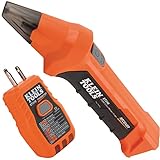
Pay attention to your appliances. If a circuit starts tripping more often after you add a new appliance, that’s your first clue. Don’t ignore it. Try running the new appliance on a different circuit to see if the problem follows. Understanding the load on each circuit is important. Consider investing in a simple plug-in circuit tester or an inexpensive clamp meter if you’re feeling adventurous and want to measure current draw. For most people, however, simply being aware of what’s plugged into what and not overloading circuits is the biggest step.
Finally, if you’re renovating or planning any major electrical work, always consult with a qualified electrician. Don’t wing it. Small changes can have big ripple effects in an electrical system. It’s better to spend a bit upfront for expert advice than to deal with costly, dangerous problems down the line. Remember, the goal isn’t just to keep the lights on, but to do it safely. And that’s a goal worth investing a little time and attention in.
Final Verdict
So, to circle back to the big question: are circuit breakers susceptible? Yes, they are. They’re mechanical and electrical devices that can wear out, get damaged, or be affected by their environment or installation. However, it’s important to remember that a tripping breaker is often a symptom of a larger issue in your home’s electrical system, not necessarily a sign of the breaker’s own imminent failure.
Don’t fall into the trap of thinking that simply replacing a breaker is always the fix. Take the time to understand why it’s tripping. Check your wiring, your loads, and the overall health of your electrical system. If you’re ever in doubt, or if you see any concerning signs like heat or discoloration, don’t hesitate to call a professional electrician. It’s the safest and often the most cost-effective approach in the long run.
The next time your lights flicker or a breaker pops, take a breath. Assess the situation calmly. Knowing the basics about breaker function and common failure points is your best defense against unnecessary hassle and potential danger. It’s about being smart and safe in your own home.