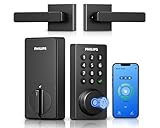
I remember the first time I almost got locked out of my own house. Fumbling with a traditional key in the dark, rain pouring down, I thought, ‘There has to be a better way.’ That’s when I started looking into those fancy code door locks. But then the nagging question popped into my head: are code door locks safe? It’s easy to get swept up in the convenience, but security is the main job of a lock, right? I’ve spent years tinkering with gadgets, and let me tell you, not all tech is created equal, especially when it comes to keeping your home secure.
We’ve all seen the slick ads promising ultimate peace of mind with a simple keypad. But does that translate to actual safety? I’ve bought my fair share of overhyped tech that ended up being more hassle than it was worth. So, before you ditch your old deadbolt, let’s get real about whether code door locks are truly safe.
The Real Mechanics: How Do Code Door Locks Actually Work?
Forget magic. Code door locks, whether they’re the old-school mechanical push-button types or the newer electronic smart locks, operate on pretty straightforward principles. The mechanical ones are mechanical. Period. You punch in a sequence of buttons, and if it’s the right sequence, internal tumblers or levers align, allowing the bolt to retract. No batteries, no Wi-Fi, just gears and springs. They’re about as complex as a combination padlock, just built into a door lock. I had one of these on a shed for years. It was reliable enough for garden tools, but I wouldn’t trust it with my vintage comic book collection.
Electronic smart locks are where things get interesting, and where the ‘are code door locks safe’ question gets more layered. They use a keypad (or sometimes a smartphone app, fingerprint scanner, or even voice command) to send a signal to a motor or solenoid inside the lock mechanism.
This motor then physically moves the bolt. The ‘code’ part is stored digitally, often in encrypted memory. When you enter the correct sequence, the lock verifies it against the stored code.
If it matches, the motor engages. If it doesn’t, nothing happens. The sophistication here is that you can usually program multiple codes – one for yourself, one for a trusted friend, one for the dog walker.
You can often set schedules for these codes, like disabling the dog walker’s code after they’ve finished their job.
The security of these electronic locks hinges on a few things: the strength of the physical lock itself (how easy is it to physically break or pick?), the security of the keypad (can someone see your code being pressed?), and the security of the underlying electronics and communication. For instance, early smart locks that relied solely on Bluetooth could sometimes be exploited by someone within close range. Newer ones often use Wi-Fi or Z-Wave, which, when properly configured, offer better security, but also introduce the potential for network-based attacks.
It’s a trade-off between convenience and a different kind of vulnerability. I once accidentally left my smart lock app open on my phone and had a mild panic attack thinking someone could have accessed my door from miles away. Turned out it was password-protected, but it highlighted how interconnected these things are.
The Big Fears: What Actually Makes Code Locks Vulnerable?
Okay, let’s cut to the chase. The biggest fear people have, and rightly so, is that someone will just guess the code or find a way to bypass it. With mechanical push-button locks, it’s actually quite simple for a determined person.
If the buttons are worn down, you can often see which ones are used most frequently – a tell-tale sign of the code. Some older models even have a limited number of button combinations, making brute-force guessing (trying every possibility) surprisingly feasible, especially if the lock doesn’t have any lockout mechanism after too many failed attempts. I saw a video once where a guy just sprayed some sort of dust on the buttons and could immediately see the most-pressed digits.
Not exactly Fort Knox.
For smart locks, the vulnerabilities are a bit more high-tech, but also more common than you might think. Wi-Fi connected devices, including smart locks, are basically small computers. Like any computer, they can be susceptible to hacking. This isn’t usually someone standing on your porch with a laptop trying to hack your specific lock (though it’s not impossible). More often, it involves exploiting weaknesses in your home Wi-Fi network or using pre-existing vulnerabilities in the lock’s firmware that haven’t been patched. Manufacturers are supposed to send out security updates, but people rarely update their smart locks as diligently as they update their phones, leaving them exposed.
Another concern is the physical override. Most smart locks still have a traditional keyhole as a backup. If that key is easy to pick or bump (a common lock-picking technique), then the fancy code is a bit of a moot point. You want a lock with a high-security cylinder if you’re relying on the key as a backup. (See Also: Are Sesame Seeds Kosher For Passoveris Pollock Kosher )
Also, consider the battery. If the battery dies on an electronic lock, you’re locked out – or worse, if it dies in the ‘opened’ state, your door is unsecured.
Most have low-battery warnings, but if you miss them, it’s a problem. I learned this the hard way.
My smart lock’s battery died on a Tuesday morning. No warning, just a dead keypad. Thankfully, I had my old key handy, but it was a stressful ten minutes. This is why I always keep a physical key hidden somewhere, or with a neighbor.
My Mistake: The ‘too Many Codes’ Fiasco
So, here’s a story that taught me a valuable lesson. I got a new smart lock that promised I could create unlimited temporary codes. I was thrilled! I gave one to my sister, my parents, the cleaning lady, the landscaper, a friend who needed to water my plants while I was away, and even a temporary one to a contractor who was doing some minor repairs. I felt like a security genius, managing everything from my phone. Then, about three months in, I had a contractor I didn’t know well coming to fix a leaky faucet. I’d given him a code. He finished the work, and I tried to disable his code through the app.
Except, I couldn’t find it. I’d created so many codes for so many people over the months that I’d lost track. Was it ‘Contractor1’, ‘Fixer’, ‘PlumberGuy’, or just ‘JobSite’? The app just showed a long, jumbled list.
Panicked, I started disabling codes one by one, hoping I wouldn’t accidentally lock out someone who actually needed access. It took me nearly twenty minutes of frantic tapping to finally find the right one and disable it. That’s when I realized that while ‘unlimited codes’ sounds great, it can become a serious management headache.
If you’re not diligent about tracking and deleting codes regularly, you could be leaving your door vulnerable to someone whose access you intended to revoke months ago. It’s a prime example of how convenience can breed complacency, and complacency is the enemy of security. I now have a strict policy: codes are for people who have ongoing, regular access, and anyone else gets a physical key or is supervised.
What to Look for: Building a Smarter, Safer Lock
When you’re looking at buying a code door lock, especially a smart one, you need to think like a burglar, a hacker, and a forgetful person all at once. First off, the physical build quality.
Does it feel solid? Does the keypad feel cheap and flimsy?
Look for locks made from sturdy materials like brass or hardened steel. The deadbolt itself is also important. A strong, thick deadbolt with a good throw (how far it extends into the doorframe) is a must.
Some locks have anti-pick and anti-bump features built into their cylinders, which is a big plus, especially if they still have a key override. This is something manufacturers often don’t highlight enough: the physical security of the bolt and cylinder is the first line of defense.
For smart locks, encryption is your best friend. Look for locks that use strong encryption protocols (like AES-128 or AES-256) for communication between the lock, your phone, and your Wi-Fi network. Check if the manufacturer provides regular firmware updates – and more importantly, if they make it easy for you to install them. A lock that can’t be updated is a ticking time bomb.
I’d rather have a lock that needs occasional updates than one that’s stuck with an old, potentially insecure operating system. Also, consider how it connects. Wi-Fi is convenient but can be a target. Z-Wave or Zigbee locks, which talk to a separate hub, can sometimes offer a more isolated and secure network. (See Also: Are Sliding Door Locks Common )
Battery backup is also a must. Some have a physical battery terminal on the outside you can connect a 9V battery to if the main power dies, which is a smart little trick.
A feature I now insist on is audit trails. Knowing who entered and when is invaluable. If there’s a security incident, you can trace it back.
Plus, it helps me remember if I actually locked the door after the dog walker left. I also look for a good lockout feature.
If someone tries to enter the wrong code too many times (say, five times), the lock should temporarily disable the keypad or even send an alert to your phone. This deters brute-force attacks. Finally, consider the user interface. Is it intuitive to add, delete, and manage codes?
My ‘too many codes’ incident taught me that a clunky interface can lead to serious security oversights. A simple, clean app or interface is often better than a feature-packed one that confuses you.
| Feature | My Verdict | Why It Matters |
|---|---|---|
| Solid Build Material | Must-Have | Physical strength is most important. Cheap metal is an invitation to a crowbar. |
| High-Security Cylinder (Key Override) | Highly Recommended | The physical lock still needs to be solid against picking/bumping. |
| Strong Encryption (AES) | Must-Have | Protects against wireless hacking and data interception. |
| Regular Firmware Updates | Must-Have | Keeps the lock protected against newly discovered vulnerabilities. |
| Temporary/Scheduled Codes | Very Useful | Great for guests, contractors, but requires careful management. |
| Audit Trail | Highly Recommended | Provides accountability and peace of mind. |
| Auto-Lockout Feature | Must-Have | Deters brute-force attempts on the keypad. |
| Battery Backup/Emergency Power | Must-Have | Makes sure you don’t get locked out or leave the door unsecured when the battery dies. |
Common Mistakes and Why ‘everyone’ Is Wrong (sometimes)
The biggest mistake I see people make is thinking that just because it’s electronic, it’s automatically more secure than a traditional deadbolt. It’s not. It’s just differently secure, with its own set of potential weaknesses. Many people also fall for the marketing hype of ‘smart’ and ‘connected’ without understanding what that connectivity actually entails from a security standpoint. They install a Wi-Fi lock, connect it to their network, and then never think about securing their Wi-Fi network itself. If your Wi-Fi is easily hackable, your smart lock is too. This is a common point of failure I see among friends who embrace smart home tech without understanding the underlying network security.
Another common pitfall is relying solely on the code. As I mentioned, if the physical lock is weak or the key override is easy to bypass, the code is largely irrelevant. A lot of people upgrade to a smart lock but keep their original, flimsy deadbolt that came with the door.
That’s like putting racing tires on a bicycle – pointless. The entire system needs to be secure. Furthermore, people often don’t consider the ‘human element’. They share codes too liberally, forget to delete old ones, or display their codes carelessly.
I’ve seen people have the code written down on a notepad stuck to their fridge, visible through a window. That’s not a code; it’s an invitation.
The common advice is often to just get a smart lock for convenience, but that advice misses the important security considerations that come with it.
Here’s a contrarian take: I think sometimes, for a very basic, low-risk scenario, a really good quality mechanical push-button lock can be safer than a cheap, poorly implemented smart lock. If you don’t need remote access, notifications, or integration with other smart devices, a mechanical lock with a strong build and a complex, non-obvious code (like one using the side buttons, not just the numbers in sequence) can be incredibly reliable and has zero electronic vulnerabilities. It won’t be hacked remotely, its battery won’t die, and it doesn’t rely on your Wi-Fi.
My elderly neighbor has one on her garden shed, and it’s been completely problem-free for over a decade. She knows the code, and that’s all she needs.
It’s a reminder that sometimes, simpler is indeed better when security is the primary concern. (See Also: Are The Rams Locked Into The 6th Seed )
Practical Tips for Keeping Your Code Lock Secure
So, you’ve decided to go with a code door lock, or you already have one. How do you make sure it’s actually keeping you safe? First, choose wisely. As we’ve discussed, invest in a reputable brand known for good security practices. Look for the features I mentioned: solid construction, strong encryption, regular updates, audit trails, and lockout mechanisms. Don’t just buy the cheapest one you find online.
Second, secure your network. If you have a smart lock, make sure your home Wi-Fi is secure. Use a strong, unique password for your Wi-Fi network, enable WPA2 or WPA3 encryption, and consider setting up a separate guest network for all your smart home devices. This isolates them from your main computers and sensitive data. Change the default router password immediately after setting it up.
Third, manage your codes meticulously. This is where most people slip up. Create complex codes that are hard to guess – avoid birthdays, anniversaries, or simple sequences like 1234. Use a mix of numbers and, if your lock supports it, letters or symbols. Never write your code down where it can be easily found. If you give a code to someone, make a note of it and set a reminder to delete it when it’s no longer needed. For temporary access, like for a contractor, create a code that only works during specific hours and delete it immediately after they’re done. I use a spreadsheet to track who has what code and when it expires or was deleted.
Fourth, test the physical security. If your lock has a key override, make sure the cylinder is a high-security one. If it’s a standard cylinder, consider upgrading it.
Regularly check that the deadbolt engages properly and that the strike plate on the doorframe is robustly installed. A weak doorframe can undermine even the strongest lock. Finally, stay updated.
Keep the firmware on your smart lock updated. Manufacturers release patches to fix security vulnerabilities. Ignoring these updates is like leaving your front door opened in a bad neighborhood.
Check for updates regularly, or set your lock to update automatically if it has that option. These aren’t complicated steps, but they require consistent attention. It’s the ‘set it and forget it’ mentality that makes tech insecure.
How Do Code Door Locks Compare to Traditional Keys?
Traditional keys are susceptible to being lost, stolen, or copied. Traditional locks can also be picked or bumped, though high-security cylinders make this difficult. Code door locks, especially smart ones, offer different security profiles. Mechanical code locks can be vulnerable to worn buttons or simple guessing. Smart locks add layers of digital security but introduce potential vulnerabilities like hacking, Wi-Fi network breaches, or firmware exploits. Convenience is a major advantage of code locks, allowing multiple users and temporary access, but this requires diligent management to maintain security.
Can Code Door Locks Be Hacked?
Yes, code door locks can be hacked, though the likelihood and method depend heavily on the type of lock. Mechanical code locks are vulnerable to physical methods like worn buttons revealing common digits or brute-force guessing. Smart locks, being electronic devices connected to networks, can be vulnerable to remote hacking if their firmware or the home Wi-Fi network has security flaws. Exploiting unpatched vulnerabilities or intercepting unencrypted communication are potential avenues for attackers. However, reputable smart lock manufacturers employ strong encryption and release regular security updates to mitigate these risks.
What Are the Battery Life Expectations for Smart Locks?
Battery life for smart locks can vary significantly depending on the brand, model, usage patterns, and battery type. Generally, you can expect most smart locks to last anywhere from 6 months to over a year on a set of standard AA or AAA batteries. Factors that reduce battery life include frequent use of the keypad, frequent remote access via Wi-Fi or Bluetooth, extreme temperatures, and the number of users and access logs generated. Most smart locks provide low-battery warnings well in advance, giving you ample time to replace them, and many also have an emergency power option, like a 9V battery terminal on the exterior, for immediate access if the main batteries die unexpectedly.
Verdict
So, are code door locks safe? The short answer is: they can be, but it’s not automatic. They offer a different kind of security than a traditional key, with its own set of pros and cons. The convenience of not fumbling for keys, managing guest access easily, and knowing who came and went is undeniably appealing. But that convenience comes with responsibilities. You have to be proactive about security – securing your network, managing codes vigilantly, and keeping your lock updated.
If you’re looking for a simple, no-fuss security upgrade, a high-quality mechanical push-button lock might be all you need. If you crave the connected features of a smart lock, do your homework. Invest in a reputable brand, understand its security features, and commit to actively maintaining it. I’ve learned that the best security is a combination of good hardware, smart technology, and your own vigilance. For me, the peace of mind that comes from a well-maintained smart lock outweighs the occasional tech headaches, but it’s definitely not a ‘set it and forget it’ solution. You’re trading one set of security concerns for another, and you need to be prepared for that.
Ultimately, the safety of your code door lock depends on you. Are code door locks safe enough for your home? That’s a question only you can answer after weighing the risks and benefits for your specific situation and your willingness to stay on top of the security requirements.