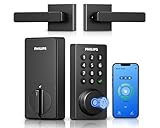
I remember staring at my front door, keys in hand, fumbling with the lock after a long day. Then I thought, what if I didn’t need keys at all? That’s when the idea of a combination lock for my front door started to simmer. But are combination locks safe for front doors? It’s a question I’ve wrestled with, and frankly, the answer isn’t a simple yes or no. There’s a lot more to it than just picking a cool number sequence.
For years, I’ve been tinkering with my home security, trying to find that sweet spot between convenience and actual protection. I’ve bought gizmos that promised the moon and delivered dust, and I’ve learned the hard way what’s worth your hard-earned cash. So, let’s cut to the chase about these keyless wonders.
Why You Might Be Thinking About Keyless Entry
Look, nobody enjoys juggling keys. Especially when your hands are full of groceries, a screaming toddler, or both. The allure of a combination lock for your front door is strong. Imagine just punching in a code and walking in.
No more digging through your bag or pockets, no more worrying about losing your keys (a personal nightmare of mine after a particularly embarrassing incident involving a dropped set down a storm drain). The promise of instant access, especially for family members or trusted friends who might need to get in when you’re not around, is incredibly appealing. It feels modern, simplified, and frankly, a bit cool.
Plus, the idea of ditching those traditional deadbolts and their finicky cylinders can sound like a step up in convenience. You can even change the code if you need to grant temporary access, which is way easier than rekeying a traditional lock.
It’s the kind of upgrade that seems like a no-brainer for a lot of people seeking that extra bit of ease in their daily lives. The psychological aspect is interesting too; it’s about feeling in control and having a system that feels more sophisticated than old-fashioned keys.
I’ve had friends rave about their new smart locks, talking about how they can grant temporary access to dog walkers or let kids in after school without them needing their own set of keys. It sounds like a dream, right?
That smooth entry. For me, it was the sheer frustration of dealing with multiple keys for different doors, and the constant nagging thought of ‘did I lock the back door?’
that pushed me towards looking at alternatives. The idea that I could manage access for my home with a few taps on a keypad or even my phone, and that I wouldn’t be stranded outside if I forgot my keys, was a huge draw. It’s about simplifying life, and that’s a big selling point.
The core functionality of these locks is simple: a mechanical or electronic keypad replaces the keyhole. You enter a sequence of numbers, and if it’s correct, the bolt retracts.
Electronic versions often offer more features, like temporary codes, audit trails (who entered and when), and remote access via an app. Mechanical ones are simpler, relying on tumblers and dials that align when the correct combination is entered. The beauty is in the simplicity of the concept – a secret number opens your door.
This has been around for ages in different forms, from safes to lockers, but bringing it to the front door is a more recent trend, driven by the demand for convenience and the rise of smart home technology.
The Nitty-Gritty: How Do They Actually Work?
Let’s talk about the guts of it. For mechanical combination locks, it’s all about tumblers. Imagine tiny wheels inside the lock, each with notches. When you turn the dial to your secret number, you’re aligning those notches.
Once all the tumblers are in their correct positions, they allow the bolt to retract. It’s a purely mechanical process, relying on precise engineering. No batteries, no Wi-Fi needed.
These are the types you often see on lockers or older safes. They can be solid, but they often have a limited number of possible combinations, and the physical act of turning a dial can be slow. I’ve wrestled with some of these on old gym lockers that took a good five minutes and a lot of grunting to open. Not exactly ideal for a quick exit. (See Also: Are There Different Size Holes For Installing Door Locks )
Electronic combination locks are a different beast. They have a keypad where you punch in your code. Behind the keypad, a motor or solenoid actually moves the bolt. These rely on power, usually from batteries.
Many modern electronic locks are also ‘smart’ locks, meaning they connect to your home Wi-Fi or Bluetooth. This allows for app control, granting remote access, setting temporary codes, and even getting notifications when someone enters. The number of possible combinations is astronomically higher with electronic locks, making them theoretically much harder to guess. My first smart lock, a relatively basic electronic one, was a revelation.
The satisfying click as the bolt retracted, and not having to fish for keys, felt like living in the future. However, I also learned that batteries die, and Wi-Fi can drop, which brings us to their vulnerabilities.
There’s also a hybrid approach where you have a keypad, but it still uses a traditional key as a backup. This offers a compromise, giving you the keyless convenience but with a fallback if the electronics fail or you forget the code. The common denominator is the attempt to replace the physical key with a code or electronic signal. Understanding these different mechanisms is key to understanding their strengths and weaknesses when it comes to security.
My First Electronic Lock Fiasco
I bought an electronic lock a few years back, thinking it would simplify my life. It was a mid-range model, costing me about $150. The installation was straightforward enough, and for the first month, it was glorious. No keys!
Then, one chilly Tuesday morning, I went to leave for work. I entered my code.
Nothing. I tried again, slower this time. Still nothing.
Panic started to set in. I tried a few more times, and suddenly, the lock beeped angrily and refused to accept any input. Dead.
The batteries were dead. Luckily, the model had a hidden keyhole, and I had my spare set in my car. But that moment of being locked out of my own house, in the cold, with work waiting, was a stark reminder that convenience can come with its own set of problems. It taught me to always have a backup plan, and to never, ever rely solely on the battery power of an electronic lock without a physical override.
What to Look for: Beyond the Shiny Buttons
When you’re eyeing up combination locks for your front door, don’t just look at the number of digits you can enter. That’s a starting point, but it’s not the whole story. You need to think about the build quality. Is it solid metal, or does it feel like flimsy plastic that a determined shove could break? For a front door, you want something that feels substantial, something that looks like it can withstand a bit of wear and tear, and ideally, a bit of unwelcome attention. Look for locks made from hardened steel or zinc alloy. These materials offer better resistance to brute force attacks.
Another massive factor is the type of bolt mechanism. Is it a simple spring latch, or a deadbolt? For a front door, a deadbolt is a must. A simple spring latch can be easily bypassed with a credit card. Deadbolts extend deeper into the door frame, making them much harder to force open. The quality of the deadbolt itself matters. Does it feel solid? Is the throw (how far it extends) sufficient? I’ve seen some cheap locks where the deadbolt barely moves, offering minimal security. You want a substantial throw, at least an inch, to make sure it’s properly engaged in the strike plate on the door frame.
For electronic locks, battery life is a biggie. Most will give you a low battery warning, but how often do you check that warning?
Some have rechargeable batteries, which can be a lifesaver, while others use standard AA or 9V batteries. Also, consider the number of possible combinations. While a 4-digit code has 10,000 combinations, which sounds like a lot, it’s still not as many as a 6-digit code (1 million combinations) or a purely electronic lock with a much larger digital sequence.
The interface matters too. Is it intuitive? Can you easily enter the code in the dark or with gloves on? I’ve tried some keypads that are so small and flush you can barely feel the buttons, which is incredibly frustrating when you’re in a hurry or your fingers are cold. (See Also: Are Sesame Seeds Kosher For Passoveris Pollock Kosher )
The ‘smart’ Factor: Convenience vs. Risk
Many modern combination locks are ‘smart.’ This means they connect to your phone via Bluetooth or Wi-Fi. This opens up a world of features: remote locking/opening, temporary codes for guests, activity logs, and integration with other smart home devices. The convenience here is undeniable.
I can let a friend in if I’m running late, or check if I locked the door from my office. However, connectivity also means vulnerability. A poorly secured smart lock can be hacked. This isn’t just about someone guessing your code; it’s about exploiting weaknesses in the software or the Wi-Fi network it’s connected to.
Some smart locks have had well-documented security flaws. It’s like leaving your front door wide open to anyone with the right technical know-how.
This is a significant concern for anyone prioritizing security. It’s a trade-off between ultimate convenience and potential digital intrusion.
Are Combination Locks Safe for Front Doors? The Real-World Verdict
So, to directly answer: are combination locks safe for front doors? It’s a mixed bag, and it heavily depends on the type of lock and how it’s implemented. A cheap, poorly made mechanical combination lock with a few dozen combinations is likely less safe than a solid deadbolt that requires a physical key. On the other hand, a high-quality, electronic smart lock from a reputable brand, with solid encryption and regular software updates, can be very secure. The key is understanding that ‘combination lock’ is a broad category. Think of it like asking if ‘cars are safe.’ A go-kart and a tank are both cars, but their safety profiles are wildly different.
The biggest vulnerability for most combination locks, especially electronic ones, isn’t brute force on the lock itself but rather weaknesses in the installation or human error. If the door or frame is weak, a strong lock won’t matter.
If you have a weak code (like 1-2-3-4) or share it too freely, you’re inviting trouble. For mechanical locks, the number of possible combinations can be a limiting factor, especially on older or simpler models. A skilled individual could potentially cycle through all the combinations in a reasonable amount of time, especially if the lock has a worn mechanism that makes it easy to feel the tumblers fall into place.
This is why higher-end mechanical combination locks have many more dial positions or more complex internal mechanisms.
I once had a neighbor whose electronic lock was bypassed not by hacking, but because they had a sticker with a QR code that, when scanned, revealed their Wi-Fi password, which then led them to the smart lock’s control panel. Seriously. It was a mind-bogglingly simple oversight that rendered their expensive lock useless. This is the kind of thing that keeps me up at night more than a hacker trying to guess my PIN. It’s the human element, the overlooked details, that often provide the easiest entry points. So, while the lock technology itself might be sound, the overall security is only as strong as its weakest link, which is often the user or the installation.
My personal philosophy is this: if you’re going keyless, invest in a quality smart lock from a company with a good track record for security. Make sure it has a physical key override and that you change the default Wi-Fi password and any admin credentials immediately. And for goodness sake, choose a strong, random code. Don’t use your birthday or your anniversary. I’ve seen it all, and it’s terrifyingly common.
Common Mistakes People Make
People often underestimate the importance of the installation. A great lock installed on a flimsy door or a weak frame is practically useless. The strike plate, the metal reinforcement on the door frame where the bolt enters, is a important component often overlooked. If it’s not securely fastened with long screws into the wall studs, a kick can rip the entire door frame apart, lock or no lock. I learned this the hard way after a particularly strong gust of wind slammed my shed door shut, and the flimsy strike plate on my old shed lock buckled. It was a cheap lock, but the frame was the real weak point.
Another common error is choosing a lock with too few combinations. For mechanical locks, this means a low number of dial wheels. For electronic locks, it might mean a short digit sequence or one that’s too easy to guess.
Think about your own habits – do you use your birthday, your anniversary, or a simple pattern like 1-2-3-4? These are the first codes a determined individual would try.
Furthermore, many people don’t understand the risks associated with sharing their codes. Giving your permanent code to everyone who might need access is a recipe for disaster. (See Also: Are Sliding Door Locks Common )
Temporary codes, which many smart locks offer, are a much safer solution. Finally, not performing regular maintenance or firmware updates on smart locks leaves them vulnerable to known exploits. It’s like driving a car without changing the oil; eventually, something will break.
| Lock Type | Pros | Cons | My Verdict |
|---|---|---|---|
| Mechanical Combination Lock | No batteries required, simple to understand, can be solid if high quality. | Limited combinations on basic models, can be slow to operate, vulnerable to picking on very old/basic designs. | Okay for sheds or internal doors, but not ideal for primary front door security unless it’s a very high-end, multi-dial model. |
| Electronic Keypad Lock (Non-Smart) | No keys needed, easy to change codes, often more combinations than mechanical. | Requires batteries, no remote access or advanced features, can be less secure if keypad is exposed to elements. | A decent step up in convenience from mechanical if you don’t need smart features. Good for garages or secondary doors. |
| Smart Combination Lock | Ultimate convenience, remote access, temporary codes, activity logs. | Relies on power (batteries), potential for hacking/digital vulnerabilities, requires a stable Wi-Fi connection, more expensive. | Potentially very safe if from a reputable brand with strong security, but requires diligence with updates and strong passwords. My preferred choice for front doors, but with caution. |
Practical Tips for Using Combination Locks Securely
First off, choose wisely. For your front door, I strongly lean towards a high-quality smart lock from a reputable manufacturer like Schlage, Yale, or Kwikset. These companies have been in the lock business for a long time and generally have better security protocols. Look for locks that meet ANSI/BHMA Grade 1 or Grade 2 standards for residential use. Grade 1 is the highest level of security.
Secondly, installation is most important. If you’re not comfortable doing it yourself, pay a locksmith. Seriously. A well-installed lock on a solid door with a reinforced frame is a world apart from a DIY job on a hollow-core door. Make sure the strike plate is secured with 3-inch screws that go deep into the frame and the wall studs. This is a cheap fix that dramatically increases resistance to forced entry. I paid about $100 for a locksmith to install my current smart lock, and it was the best money I spent on home security.
Thirdly, code management is important. For smart locks, use a strong, random code. Avoid obvious sequences, birthdays, or street numbers. If your lock allows, use temporary codes for visitors and delete them afterward. For mechanical locks, change the code periodically, especially if you’ve had contractors or guests who might have known it. Don’t be that person who uses 1-2-3-4-5-6. It’s the digital equivalent of leaving your keys under the mat. I like to use a random string of numbers that I’ve written down and memorized, and I check it in my phone’s secure notes app if I forget. It takes a moment, but it’s safer.
Fourth, be aware of your environment. For mechanical locks, keep the dials clean and free of debris. For electronic locks, make sure the keypad isn’t too exposed to the elements, which can cause wear and tear or malfunction. If you have a smart lock, always keep the firmware updated. Manufacturers release updates to patch security vulnerabilities. It’s like patching your computer’s operating system. Don’t ignore those update notifications!
Fake Doorbell Cameras and Other Distractions
One tactic I’ve seen and heard about is the use of fake doorbell cameras or other visual distractions near the lock. The idea is to make someone think the area is more heavily monitored than it is, hoping they’ll move on. While this might deter some opportunistic, low-level thieves, a determined intruder will see through it. These are more of a psychological deterrent than a physical one. They can create a false sense of security. Don’t rely on a fake camera to protect your home. If you want cameras, get real ones and integrate them with your smart lock system if possible, so you get alerts when the lock is used.
How Many Combinations Does a Typical Combination Lock Have?
A standard four-digit mechanical combination lock has 10,000 possible combinations (10 x 10 x 10 x 10). However, many older or cheaper models might have fewer functional combinations due to worn mechanisms. Electronic locks can have significantly more combinations, often with a much longer digit sequence or more complex entry methods, making them theoretically harder to guess.
Can a Combination Lock Be Easily Picked?
Basic mechanical combination locks can be picked or “cracked” by skilled individuals, especially older or lower-quality ones. They can often feel the tumblers align as they manipulate the dials. High-end mechanical combination locks and electronic locks are much more resistant to picking. For electronic locks, the vulnerability is more often in the software or the physical keypad itself being forced.
What Is the Difference Between a Mechanical and Electronic Combination Lock?
A mechanical combination lock operates purely on physical tumblers and dials. It requires no power and is operated by turning a dial to a specific sequence. An electronic combination lock uses a keypad to enter a code, and a motor or solenoid operates the bolt. These require batteries for power and can often integrate with smart home systems.
Are Smart Locks with Keypads Safe From Hacking?
Smart locks with keypads are as safe from hacking as any other connected device. Reputable brands invest heavily in encryption and security protocols, but vulnerabilities can still exist. Regular firmware updates are key to patch known exploits. The biggest risks often come from weak Wi-Fi passwords, weak user-chosen PINs, or unsecured networks rather than direct hacking of the lock’s core security.
What Are the Best Brands for Combination Locks for Front Doors?
Some of the most trusted brands for combination locks, particularly smart locks, include Schlage, Yale, Kwikset, and August. These brands generally offer good build quality, reliable performance, and a focus on security features, though it’s always wise to research specific models for their latest security ratings and features.
Final Verdict
So, are combination locks safe for front doors? My honest take is that they can be, but you absolutely cannot treat them as a ‘set it and forget it’ solution. The convenience is undeniable, but it comes with responsibility. Investing in a quality smart lock from a reputable brand, making sure it’s installed correctly by someone who knows what they’re doing, and being meticulous about your code management are a must steps.
Don’t be seduced by the cheapest option; that’s usually a false economy. A poorly chosen or installed combination lock can actually make your home less secure than a solid, traditional deadbolt. It’s about making an informed choice and understanding that the technology is only one part of the security puzzle. The other parts are you, your door, your frame, and your habits.
If you’re considering a keyless entry system for your front door, I’d say go for it, but do your homework. Look for those ANSI/BHMA Grade 1 ratings and be prepared to maintain your lock and your security practices. It’s a trade-off, and for many, the convenience is worth the extra vigilance required to make sure are combination locks safe for front doors.