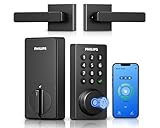
I remember the first time my smart lock randomly decided to ‘update’ itself at 3 AM. My dog, bless his anxious heart, went ballistic. I stumbled downstairs, half-asleep, fumbling for my phone to see what on earth was going on, half-expecting to find a burglar trying to mime-code his way into my house. That little incident, thankfully harmless, got me thinking hard about a question many of us face: are digital front door locks safe? It’s not just about fancy keyless entry; it’s about trusting a piece of tech with the most fundamental safety of your home.
We’re bombarded with images of sleek, modern homes where doors open with a whisper of a command. But what’s the reality behind that convenience? Is it truly secure, or are we trading physical peace of mind for digital convenience, potentially opening ourselves up to new kinds of risks?
The ‘how It Works’ and Why It’s Not Always Simple
Look, at its core, a digital front door lock, or ‘smart lock’ as most people call them, replaces your traditional mechanical key with something electronic. This usually involves a keypad for PIN entry, a smartphone app that connects via Bluetooth or Wi-Fi, and sometimes fingerprint scanners or voice activation. The idea is that you can grant access remotely, track who comes and goes, and ditch the bulky keyring.
The ‘brains’ of these locks are the microprocessors and communication modules. When you enter a code, use your app, or scan your print, the lock’s internal computer verifies your credential. If it matches what’s stored (securely, ideally), a motor engages to retract or extend the deadbolt. It sounds straightforward, and for the most part, it is. However, the ‘how it works’ is also where the potential vulnerabilities lie. Think about your Wi-Fi network. If that’s not secure, then any device connected to it, including your smart lock, is inherently at risk.
My first foray into this was with a brand that promised the moon. It had all the bells and whistles: geofencing entry (opens as you approach), guest codes, activity logs. Sounded great. Except the app was clunky, the Bluetooth connection was spotty – sometimes I’d be standing at my door, phone in hand, for a full minute before it registered. And the ‘activity log’? More often than not, it just said ‘Door Locked’ or ‘Door Opened’ without any real specificity. It felt like paying a premium for something that was more of a novelty than a reliable security measure. I learned pretty quickly that fancy features don’t automatically equal solid security.
One common misconception is that because it’s electronic, it’s inherently more secure than a physical key. That’s not always the case. A well-made physical deadbolt is pretty darn hard to pick or bump without specialized tools and knowledge. Digital locks introduce a whole new set of potential failure points: software bugs, Wi-Fi hacks, battery failures, and even simple user error. The simplicity that makes them convenient can also be their Achilles’ heel if not implemented with security as the absolute top priority.
The Real Risks: Beyond the ‘hacker in the Hoodie’
When people ask me if digital front door locks are safe, their minds often jump to some Hollywood-esque scenario of a masked villain hacking into your system from miles away. While that’s possible, it’s far from the most common threat. The real risks are often more mundane, and frankly, more likely.
Let’s talk about brute-force attacks. Some older or cheaper digital locks might have a limited number of incorrect PIN attempts before locking up. But if a lock simply requires a code, and that code is weak (like ‘1234’ or your birthday), a determined individual could theoretically try combinations. More sophisticated attacks involve exploiting the communication protocols. If the lock uses unencrypted Bluetooth or Wi-Fi signals, a nearby attacker with the right equipment could potentially intercept or even spoof commands. I’ve read reports of people being able to capture the handshake between a phone and a lock to then replicate it. That’s not exactly breaking and entering with a crowbar, but it’s still a bypass.
Then there’s the issue of physical tampering. While many smart locks are built to be solid, they still have external components that can be damaged or, in extreme cases, bypassed. Think about how easy it is to smash a car window; smart locks aren’t quite that vulnerable, but you get the idea. A determined attacker might not need to hack the code; they might just try to physically disable or remove the unit. This is less about the ‘digital’ part and more about the ‘lock’ part, but it’s a risk nonetheless.
My own experience with a faulty battery backup illustrates another common pitfall. I was away for a long weekend, and the main batteries died. The lock had a small backup battery terminal for a 9V. Great idea, right? Except I hadn’t remembered to pack a 9V. So, while I was hundreds of miles away, my door was effectively unpickable from the outside because the motor wouldn’t engage, but I couldn’t get in either. Thankfully, my neighbor had a spare key, but it highlighted how important reliable power is, and how a digital failure can strand you just as effectively as a mechanical one could.
The biggest cybersecurity threat for most people, though, isn’t a sophisticated hack. It’s often the weak link in the chain: your home Wi-Fi. If your router password is ‘password123’ and it’s default, anyone on the block could potentially access your network and, by extension, any devices connected to it, including your smart lock. This is a fundamental home security issue that predates smart locks, but they make it more relevant. (See Also: Are There Different Size Holes For Installing Door Locks )
What to Look for: The ‘doesn’t Suck’ Checklist
So, if you’re eyeing up a digital front door lock, what should you actually be looking for to avoid ending up with a glorified paperweight or a security risk? Forget the marketing fluff and focus on the nuts and bolts. First and foremost, encryption. Does the communication between the lock, your phone, and your Wi-Fi network use strong encryption protocols? Look for things like WPA2/WPA3 for Wi-Fi and AES encryption for Bluetooth. If the manufacturer is vague about this, that’s a giant red flag.
Next, consider the physical build. Is it made of durable materials? Does it feel solid? You don’t want something that looks like it could be pried off with a stiff breeze. Check reviews specifically mentioning tamper resistance or build quality. The physical aspect still matters immensely.
User authentication methods are also key. Multiple layers are better. Keypad entry is fine, but ideally, it should be paired with a solid mobile app that uses multi-factor authentication (like a separate PIN or biometric on your phone to access the lock controls). Fingerprint scanners are great when they work well, but I’ve had more than my fair share of ‘failed scan’ moments, so I wouldn’t rely on that as the only method. Guest access is a convenience, but make sure you can set time limits and revoke access easily. A system that requires you to re-pair your phone every time someone needs to house-sit is a pain in the backside.
Here’s a quick comparison table I put together based on my own frustrations and what I’ve learned:
| Feature | Why It Matters | My Verdict |
|---|---|---|
| Encryption (Wi-Fi/Bluetooth) | Prevents remote snooping or control. | A must. If they don’t mention it, walk away. |
| Physical Tamper Resistance | Deters physical break-in attempts. | Needs to feel sturdy. Metal construction is a plus. |
| Battery Life & Backup | Makes sure it works when you need it. | Long life is good, but a reliable 9V backup terminal is key. |
| Mobile App Security & Features | Control, tracking, and ease of use. | Needs to be intuitive, secure (MFA is a bonus), and offer granular control over access. |
| Installation Complexity | DIY-friendly? Professional install needed? | Most are easy, but a clear manual or good video guide saves headaches. |
| Brand Reputation & Support | Reliability and help when things go wrong. | Stick with known brands that have a history of updates and customer service. |
I also learned the hard way that some ‘smart’ locks are basically just motorized deadbolts controlled by an app. They don’t offer much in the way of advanced security features beyond that. True digital front door locks often integrate with broader smart home security systems, which can offer more complete protection, like alerts if the lock is forced or tampered with.
Common Mistakes and How to Avoid Them
The biggest mistake I see people make, and one I’ve been guilty of, is buying based purely on aesthetics or a fancy feature list. You see that sleek, minimalist lock and think it’ll look perfect on your door. But if its underlying security is weak, it’s just a pretty security risk. This ties into what I said about encryption and build quality – those are the real workhorses, not how many different colors the LED indicator light can glow.
Another common blunder is neglecting your home network security. Your smart lock is only as secure as the network it’s connected to. If your Wi-Fi password is still ‘admin’ or your default router credentials, you’re basically leaving the digital door wide open. You need to secure your router with a strong, unique password, enable WPA2 or WPA3 encryption, and consider changing the default SSID (network name) too. Some high-end smart locks even offer their own dedicated Wi-Fi bridge or hub which can add an extra layer of isolation from your main network.
Over-reliance on a single entry method is another trap. What happens if your phone battery dies, or you lose your phone? If your only way in is via the app, you’re in trouble. Always make sure there’s a reliable backup, like a physical key override or a well-hidden keypad with a strong PIN. I learned this when my phone decided to perform a factory reset itself while I was out. Thankfully, I had the keypad as a fallback, but it was a heart-stopping moment.
People also tend to forget about firmware updates. Just like your phone or computer, smart locks receive software updates to patch security vulnerabilities and improve performance. If you’re not enabling automatic updates or manually checking for them, you’re leaving yourself exposed to known exploits. I used to ignore those update notifications, thinking ‘if it ain’t broke, don’t fix it.’ That’s a terrible mindset for anything connected to the internet. A vulnerability found today could be exploited tomorrow.
Finally, there’s the ‘set it and forget it’ mentality. Digital locks often have features like temporary guest access or activity logs. If you’re not regularly reviewing these logs or revoking old guest codes, you might be unknowingly giving someone lingering access. I make it a habit to clear out old guest codes after a week or two, even if they were just for a friend watering my plants. It takes two seconds and adds a layer of diligence. (See Also: Are Sesame Seeds Kosher For Passoveris Pollock Kosher )
Real-World Use: When They Shine and When They Don’t
I’ve had digital front door locks on my house for the better part of five years now, across a couple of different brands and models, trying to find something I genuinely trust. When they work, they are genuinely convenient. Letting a dog walker in while I’m at work, granting access to a repair person when I’m stuck in traffic, or just not having to dig for keys in the pouring rain – these are the moments where the technology feels like a win.
The ability to see who opened the door and when is also surprisingly useful. It’s not just for security; it’s for peace of mind. If my kids say they got home from school, a quick check of the app confirms it. That’s a subtle but significant benefit for families. Some advanced systems even integrate with smart home hubs, allowing for conditional automation. For example, your lights could turn on automatically when the lock disengages between sunset and sunrise. That’s pretty neat.
However, I’ve also experienced the flip side. The aforementioned dead battery incident was a low point. Another time, a software glitch meant the auto-lock feature stopped working for about two hours, leaving my front door opened after I’d left for the day. I only found out because my partner happened to be coming home early and noticed. That was a genuine ‘oh crap’ moment. The app was showing the door as locked, but the deadbolt was still retracted. The physical mechanism hadn’t engaged.
For people who aren’t tech-savvy, or who live in areas with spotty internet or power outages, a digital lock might be more of a headache than a help. If the Wi-Fi goes down, or the power flickers, and your lock relies heavily on those connections, you could be locked out. This is why a physical key override is absolutely most important. You need a fallback that doesn’t rely on electricity or an internet connection. I also found that some of the fingerprint scanners were incredibly sensitive to moisture or dirt on your fingers, making them unreliable in bad weather.
The initial cost can also be a factor. Good, secure digital locks aren’t cheap. You’re looking at spending anywhere from $150 to $300, sometimes more, for a unit that offers decent security and features. Cheaper models often cut corners on build quality, encryption, or app support, making them less safe. So, while they can be safe, they require careful selection and ongoing diligence.
Practical Tips for Peace of Mind
If you’ve decided to go the digital route, or you already have a smart lock and want to make sure it’s as secure as possible, here are some practical tips that have helped me sleep better at night. First, always, always, always make sure you have a physical key backup. Don’t just keep it inside the house where you can’t get to it. Give a copy to a trusted neighbor, friend, or family member who lives nearby. This is your lifeline if the tech fails or you misplace your phone.
Second, manage your passwords like your life depends on it, because your home security might. Use strong, unique passwords for your Wi-Fi network, your smart lock app account, and any associated online accounts. A password manager can be a lifesaver here. Enable two-factor authentication (2FA) on your smart lock app account whenever possible. It’s an extra step, but it adds a significant layer of protection against account takeovers.
Third, keep your firmware updated. Seriously, I can’t stress this enough. Check the manufacturer’s app or website regularly for updates and install them promptly. Many modern locks offer automatic updates, which is the easiest way to stay protected. If yours doesn’t, set a reminder for yourself to check monthly.
Fourth, be mindful of who you grant access to. If you’re letting a contractor in for a few hours, set a temporary code with a specific end time. Don’t create permanent guest codes for people who no longer need access. Regularly review your list of authorized users and delete anyone who shouldn’t have access anymore. It’s a simple habit that prevents potential vulnerabilities down the line.
Finally, understand your lock’s limitations and your home’s environment. If you live in an area prone to frequent power outages, consider a lock that is less reliant on constant connectivity or has a very solid battery system. If you’re in a place with extreme weather, make sure the lock is rated for those conditions. Don’t let the convenience of a digital front door lock lull you into a false sense of security. It’s a tool, and like any tool, it needs to be used correctly and maintained properly to be effective. (See Also: Are Sliding Door Locks Common )
FAQ: Are digital front door locks safe?
Can Digital Locks Be Hacked?
Yes, digital locks can be hacked, though the methods and likelihood vary greatly depending on the model’s security implementation. Common vulnerabilities include weak encryption in communication protocols, insecure mobile apps, or exploitation of network vulnerabilities if the lock is connected to an unsecured Wi-Fi network. While sophisticated remote hacking is less common for average users, local attacks or exploiting known software flaws are possibilities.
Are Battery-Powered Smart Locks Safe?
Battery-powered smart locks are generally safe, provided they have solid security features like strong encryption and secure authentication. The primary concern with batteries is reliability; if they die unexpectedly, you could be locked out. Therefore, it’s important to choose locks with long battery life, reliable battery level indicators, and a dependable physical key override or emergency power backup option.
What Is the Biggest Security Risk with Smart Locks?
The biggest security risk for most users is often not the lock itself, but the security of the home’s Wi-Fi network and the user’s own digital hygiene. A weak Wi-Fi password or compromised router can allow unauthorized access to connected devices, including smart locks. Additionally, using weak PINs, sharing access credentials insecurely, or failing to update firmware can create significant vulnerabilities.
Can Someone Bypass a Digital Lock Without Hacking?
Yes, physical tampering or bypassing is a potential risk, though less common than digital vulnerabilities. While most smart locks are built with sturdy materials, determined attackers could attempt to physically disable or remove the unit, or in some rare cases, exploit mechanical weaknesses. However, solid smart locks often incorporate tamper detection alarms to alert you to such attempts.
Is a Digital Lock Safer Than a Traditional Lock?
It’s not a simple ‘yes’ or ‘no.’ A well-installed, high-quality digital lock with strong encryption and secure protocols can be as safe as, or even safer than, a basic traditional lock, especially with features like activity logging and remote access control. However, a poorly designed or insecure digital lock can be far less safe than a solid mechanical deadbolt. The safety depends heavily on the specific product’s implementation and your home network security.
Verdict
So, are digital front door locks safe? The short answer is: they can be, but it’s not an automatic given. They offer convenience and modern features, but that convenience comes with a responsibility to understand their potential vulnerabilities. My own journey from initial enthusiasm to cautious reliance has taught me that the sleek design is less important than the underlying security protocols and the robustness of the physical build.
Don’t be fooled by marketing jargon. Do your homework, prioritize encryption and build quality, and for heaven’s sake, secure your home Wi-Fi. Treat your digital lock not as a magical fortress, but as a sophisticated tool that requires proper setup, regular maintenance, and ongoing vigilance. If you do that, a digital front door lock can genuinely enhance your home security and daily life.
Ultimately, the decision to go digital is yours, but make it an informed one. And always, always have a backup plan.