I remember standing outside my own front door, keys dangling uselessly in my hand. Rain was starting to spit, and I’d locked myself out. For a solid five minutes, I stared at the deadbolt, half-convinced I could just will it open. It got me thinking: are door locks easy to pick? The internet tells you one thing, but real-world experience, especially when you’re in a bind, tells a different story.
For years, I’ve fiddled with locks – some out of necessity, some out of pure curiosity. I’ve bought tools that promised the moon and delivered dust. I’ve also learned a few things that go against the grain of what you might read in a forum.
This isn’t about breaking into places; it’s about understanding what’s actually stopping someone, or what isn’t.
What ‘picking’ a Lock Actually Means
Let’s cut the crap. When people talk about picking locks, they usually picture a slick movie scene with a guy hunched over a padlock, twirling a hairpin. That’s mostly Hollywood nonsense. Real lock picking, whether it’s for legitimate purposes like locksmithing or, yes, illicit ones, is about manipulating the internal mechanisms of a lock to bypass the key. Most common door locks, like deadbolts and doorknobs, rely on a system of pins and springs.
Inside the cylinder of the lock, there are usually two sets of pins: the key pins and the driver pins. When you insert the correct key, its unique cuts lift each pin to a specific height. This height is important because it aligns the gap between the key pin and the driver pin precisely with the shear line – the point where the cylinder rotates within the housing. When all the pins are aligned at the shear line, the cylinder can turn, and the lock opens.
Picking a lock involves using specialized tools, primarily a tension wrench and a pick. The tension wrench applies a slight rotational pressure to the cylinder, just as you would with a key. This slight pressure is key; too much and the pins bind too tightly, too little and they won’t set. The pick is then used to individually lift each pin stack (key pin and driver pin together) to the shear line. As you set each pin at the shear line, the tension wrench holds it there, preventing it from falling back down. Once all the pins are set, the cylinder rotates, and the lock is open.
It sounds straightforward, but the reality is far more nuanced. The dexterity, feel, and patience required are significant. It’s not about brute force; it’s about subtle feedback. The quality of the lock itself plays a massive role. Cheap, poorly manufactured locks with sloppy tolerances are far easier to pick than high-security locks with precisely machined parts, security pins (like spools or mushrooms that make them feel like they’ve set when they haven’t), or even complex mechanisms like dimple locks or electronic systems.
I once spent a frustrating hour trying to pick a very old, cheap padlock that came with a shed. It had visible play in the cylinder and felt gritty. You’d think that would make it easy, right? Wrong. The pins were so poorly fitted that they’d bind unevenly, and the feedback was almost non-existent. It was like trying to feel individual grains of sand in a sandstorm. Eventually, I gave up and found the key, which was the ultimate humiliation. That experience taught me that not all locks are created equal, and sometimes, complexity isn’t the enemy; inconsistency is.
Common Lock Types and Their Vulnerabilities
When we talk about ‘door locks’ in a home context, we’re generally referring to a few main types: the knob lock, the deadbolt, and sometimes a mortise lock. Understanding their basic construction is key to understanding their pickability. The knob lock, often found on interior doors or older exterior doors, is usually the simplest. It has a spring latch and a lock cylinder, often with just 4 or 5 pins. These are generally considered the easiest to pick, or more commonly, to bypass.
Deadbolts are a step up. They have a much longer bolt that extends deeper into the door frame, offering more security. The common deadbolt also uses a pin tumbler mechanism, typically with 5 or 6 pins. While still susceptible to picking with the right tools and skill, they are more resistant than knob locks due to their stronger bolt throw and, often, better internal tolerances. High-security deadbolts can have additional features like reinforced housings, hardened steel bolts, and more sophisticated pin configurations, making them significantly harder to pick.
Mortise locks are often found on older, more premium doors or commercial buildings. They are built into a pocket in the door itself, not just mounted on the surface. These can be very solid, often featuring multiple locking points and complex internal mechanisms. While still based on pin tumblers, their construction can make accessing the cylinder for picking more challenging. (See Also: Are Sesame Seeds Kosher For Passoveris Pollock Kosher )
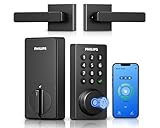
Then there are other types, like wafer locks, which are simpler and less secure, often found on cabinets or desks. They use flat wafers instead of pins and are generally very easy to bypass. Finally, you have electronic locks, which range from simple keypad entry to biometric scanners. These operate on entirely different principles and aren’t ‘picked’ in the traditional sense, though they have their own vulnerabilities like signal jamming, bypassing the electronics, or simply finding a physical override if one exists.
My first real DIY lock-picking kit came with a variety of practice locks, including a clear acrylic one so you could see the pins. It was fascinating. But then I tried it on a cheap bedroom door knob lock I’d removed from a spare room. It took me less than 30 seconds.
The pins felt loose, and there was so much wiggle room that setting them was almost accidental. It was a stark contrast to the deliberate, careful work needed on the practice lock.
That taught me that the ‘ease’ of picking is entirely dependent on the lock’s quality and design. The common advice you read – that ‘all locks can be picked’ – is technically true in a theoretical sense, but practically, the time and skill required for a good lock make it a non-issue for casual thieves.
| Lock Type | Typical Pin Count | Pickability Verdict | Real-World Security |
|---|---|---|---|
| Knob Lock (Residential) | 4-5 | Easy | Low to Moderate |
| Standard Deadbolt | 5-6 | Moderate | Moderate to High |
| High-Security Deadbolt | 6+ (often with security pins) | Difficult | High |
| Mortise Lock | Varies (can be complex) | Difficult (access can be tricky) | High |
| Wafer Lock | N/A (uses wafers) | Very Easy | Very Low |
The Skill vs. The Tool: What Actually Matters
This is where a lot of the online noise gets it wrong. People see a YouTube video of someone picking a lock in seconds and think, ‘Wow, all locks are easy!’ They don’t realize the hours, days, and years of practice that went into developing that skill. The tools themselves – the tension wrenches and picks – are relatively simple pieces of metal. They’re just use and manipulation tools. The real ‘magic’ is in the hands and the brain of the person using them.
Think of it like playing a musical instrument. Anyone can pick up a guitar, but that doesn’t mean they can play a concerto. The guitar is just wood and strings. It’s the musician’s understanding of notes, rhythm, and technique that produces the music. Similarly, a lock pick is just a tool. The ‘picker’ needs to understand how a lock works, how the pins feel, how to interpret the subtle clicks and vibrations, and how to apply the right amount of tension at the right time. It’s a tactile skill that relies heavily on feel and auditory cues (the tiny clicks of pins setting).
I remember buying my first proper lock-picking set. It cost me around $45. I was so excited. I spent an entire weekend trying to pick a simple Yale padlock. I watched countless videos, read articles, and got incredibly frustrated. I could feel something happening, but I couldn’t tell if it was a pin setting or just me fumbling. It wasn’t until I started actively listening for the minuscule clicks and paying attention to the slight give in the tension wrench that I started to get anywhere. Even then, it took me close to an hour to open that single padlock. My initial thought was, “This is way harder than it looks.”
The contrarian opinion? I actually think the focus on ‘picking’ is overblown for most common home security scenarios. For a determined burglar with professional tools and skills, yes, a standard deadbolt might be picked. But more often than not, they’re looking for quicker, easier methods. They’ll kick the door in, smash a window, or exploit vulnerabilities in the door frame or hinges, which are often weaker points than the lock itself. The average opportunistic thief isn’t carrying a lock-picking set and has no idea how to use it effectively. They want speed and minimal noise. A lock-picking attempt, especially on a decent deadbolt, takes time and concentration. It’s noisy work with all those tiny movements.
Practical Security: What Actually Stops People
If you’re not a professional locksmith or a hobbyist trying to get into your own house, the question of whether door locks are easy to pick is less about the pickability of the lock itself and more about the overall security of your door and frame. The most expensive, high-security lock in the world won’t do much good if the door is flimsy, the hinges are exposed, or the strike plate (the metal piece on the door frame that the bolt goes into) is secured with short, weak screws.
This is a point that many people miss. I’ve seen doors with flimsy hollow cores that a solid kick could shatter, yet they boast a formidable-looking deadbolt. Conversely, I’ve seen solid wood doors with surprisingly basic deadbolts that would be much harder to force open than the flimsy door. The most common way a house gets broken into isn’t by picking the lock; it’s by forcing entry. This means prying the door open, breaking the frame, or smashing glass. (See Also: Are Sliding Door Locks Common )
So, what actually makes a door secure against forced entry? First, a solid door. Solid core wood or metal doors are far superior to hollow core.
Second, strong hinges. If the hinges are on the outside, they’re a major vulnerability. Hinges should be on the inside, and the hinge pins should be secured with long screws that go deep into the wall stud, not just the door frame.
Third, a solid strike plate. This is the metal plate on the door frame where the deadbolt or latch engages. It should be made of thick steel and, importantly, secured with at least three-inch screws that reach into the framing studs behind the door frame.
Many residential strike plates come with tiny, half-inch screws that offer almost no resistance. Upgrading these is one of the single best and cheapest security improvements you can make.
Beyond the door itself, consider the deadbolt. Look for deadbolts that are ANSI Grade 1 certified, which signifies the highest level of security. These locks have undergone rigorous testing for strength, durability, and resistance to forced entry. They often feature hardened steel bolts, anti-drill features, and more complex pin tumblers or even interlocking mechanisms. Brands like Schlage and Kwikset offer various grades, so always check the packaging.
I learned this the hard way when a rental property I was staying in had a notoriously stiff deadbolt that was a nightmare to lock and open. It felt secure, but one day, in a moment of frustration, I leaned hard on the door while trying to engage the bolt, and the door frame around the strike plate actually cracked. The bolt itself was fine, but the cheap wood of the frame gave way. It was a wake-up call that a strong lock needs a strong frame to connect to. I spent the next day reinforcing the frame with longer screws and a metal security plate, which made a world of difference.
When Lock Picking Becomes a Real Threat
While opportunistic thieves often go for easier routes, there are scenarios where lock picking is a genuine concern, particularly for law enforcement, security professionals, and, unfortunately, skilled burglars. For a dedicated burglar, a standard residential deadbolt might take a few minutes to pick, which is often more time than they want to spend. However, skilled individuals can pick many common locks surprisingly quickly, especially if they are familiar with the specific model. The key is practice and familiarity.
A burglar who specializes in lock picking will have spent hundreds, if not thousands, of hours practicing on various lock types. They will know the subtle nuances of different brands and models, what security features to look out for, and how to bypass them.
Some locks are intentionally designed with features to resist picking. These are often referred to as ‘high-security’ locks. They might incorporate special pins (like spool, serrated, or mushroom pins) that create false set feedback, making the picker think a pin is set when it’s not. They can also feature tighter tolerances, requiring more precision, or even sidebars or complex mechanisms that add extra layers of security. However, even these locks are not impervious. The lock-picking community, much like the cybersecurity community, is constantly evolving. New techniques are developed, and vulnerabilities are discovered. It’s a cat-and-mouse game.
For the average homeowner, the concern isn’t usually a professional lock picker targeting their door. Instead, it’s about understanding the baseline security of their locks and making smart choices. If you’re worried about lock picking specifically, look for locks that are rated for higher security, like ANSI Grade 1, and consider brands known for their solid construction and anti-picking features. Even a basic deadbolt, when properly installed with a reinforced strike plate and long screws, is a significant deterrent. The reality is that most break-ins are crimes of opportunity, and a slightly harder-to-pick lock is often enough to make a thief move on to an easier target. (See Also: Are The Rams Locked Into The 6th Seed )
My Personal Take: Overrated Security, Underestimated Simplicity
Look, I’ve seen enough cheap padlocks fall apart and basic door knobs give way to a firm shove to know that the world of locks isn’t always as secure as we like to believe. Are door locks easy to pick? For the average person with a YouTube tutorial and a $20 kit? No, not really. It takes genuine skill and practice. But for someone determined and skilled? Yes, many common locks are surprisingly vulnerable.
The real takeaway for me, after years of tinkering and, frankly, a few embarrassing lockout situations, is that we often overemphasize the lock itself and underemphasize the surrounding security. A fancy $200 deadbolt on a hollow door with a weak frame and short strike plate screws is a joke. A solid wooden door with a decent, well-installed deadbolt and a properly reinforced frame is a much tougher nut to crack, even if the lock itself isn’t the absolute top-tier.
I wasted money on a few ‘smart locks’ a while back, thinking they were the future. One of them, a popular electronic model, had a physical key override. I managed to pick that override cylinder in under a minute with my basic kit. The smart features were neat, but the underlying mechanical lock was a joke. It taught me a valuable lesson: never assume complexity equals security. Often, the simplest, most solid mechanical solutions, when installed correctly, are the most reliable. I went back to a good old-fashioned Schlage deadbolt, making sure the strike plate screws went all the way into the studs. That feels more secure to me than any app-controlled lock I’ve tried.
The common advice about ‘all locks being pickable’ is true in a vacuum, but it misses the point for most people. It’s like saying all cars can be stolen. Yes, but some are a hell of a lot harder and riskier to steal than others. For home security, focus on the door, the frame, and the installation of a reputable lock, rather than just the lock’s inherent pickability. Most burglars are looking for the path of least resistance, and that’s rarely a well-installed deadbolt on a solid door.
Frequently Asked Questions About Lock Picking
Can a Beginner Pick a Lock?
A complete beginner can learn to pick very simple locks, like basic padlocks or cheap interior door knobs, with practice and instruction. However, picking common residential deadbolts in a reasonable amount of time requires significant dedication, dexterity, and understanding of lock mechanisms. It’s not something most people can do casually after watching a few videos.
How Long Does It Take to Pick a Typical Door Lock?
For a skilled individual familiar with the lock, picking a standard residential deadbolt can take anywhere from a few seconds to a few minutes. For an amateur or someone encountering an unfamiliar lock, it could take much longer, or they might not be able to pick it at all. The time is highly variable based on skill, tools, and the specific lock’s design and security features.
Are Smart Locks Pickable?
Smart locks are not picked in the traditional sense of manipulating pins. Their vulnerabilities lie in their electronics, software, or any physical key override mechanisms. Some smart locks have physical keyways that can be picked, while others might be susceptible to hacking, signal jamming, or bypassing their electronic systems, depending on the model and its specific design.
What Is the Easiest Type of Lock to Pick?
Generally, the easiest locks to pick are simple wafer locks and very low-quality pin tumbler locks with loose tolerances and few pins. Cheap padlocks and basic interior door knob locks also fall into this category. High-security locks with specialized pins and tighter manufacturing tolerances are significantly more difficult to pick.
Final Verdict
So, are door locks easy to pick? The short answer is: it depends. It depends on the lock, it depends on the picker’s skill, and it depends on how much time they have and how much noise they’re willing to make. For the average homeowner, a well-installed, reputable deadbolt is a formidable barrier against casual attempts.
Don’t get too hung up on the theoretical pickability of every lock. Focus on the fundamentals of physical security: a solid door, strong hinges, and a solid strike plate secured with long screws. Those simple steps often provide more security than obsessing over the latest high-security lock technology.
If you’re curious about lock picking as a hobby, get a practice kit and some clear locks. It’s a fascinating puzzle. But for peace of mind at home, invest in good installation as much as good hardware. That’s the real secret.