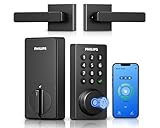
I remember staring at a pile of doorknobs in the hardware store, feeling like I’d landed on an alien planet. Each one looked slightly different, and I just wanted a simple replacement for my wobbly bedroom door. The big question gnawing at me was: are door locks standard size? I ended up buying the wrong thing, naturally. It’s a common headache, and the simple answer isn’t as simple as you’d think.
This isn’t about fancy smart locks or antique brass monstrosities. This is about the everyday, deadbolt-and-knob stuff that keeps your house from being too open-plan. Let’s cut through the confusion.
The Truth About Door Lock Dimensions
So, are door locks standard size? The short answer is: mostly, for the parts that actually matter for installation. But ‘mostly’ can be a real pain in the backside if you don’t know what to look for. Most interior passage and privacy locks, the ones on your bedroom and bathroom doors, generally stick to a few common standards for their internal guts.
The important measurements are usually the backset – that’s the distance from the edge of the door to the center of the hole for the doorknob or deadbolt – and the borehole diameter, the hole in the face of the door for the latch or bolt. For interior doors, a 2 3/8-inch backset is super common, with 2 3/4 inches being the other big player. Most residential doors are drilled for one of these, and many locks come with adjustable latches that can accommodate both.
You’ll also see standard borehole sizes, typically 1 1/2 inches or 2 1/8 inches in diameter. If your door already has holes drilled in it, these are the measurements you’ll be matching.
Where things get fuzzy is the exterior trim. The rose (the decorative plate behind the knob or lever), the length of the lever, and the overall aesthetic can vary wildly. A fancy, oversized rose on one lock might cover up the paint or wood finish that a smaller, more standard one wouldn’t. This is where you can run into trouble.
I once bought a sleek, modern lever lock online that looked great in the pictures. When it arrived, the decorative plate was so small it left a ring of faded paint around the borehole. It looked ridiculous.
I had to go back to the store and find a lock with a larger rose to cover the damage. It felt like a silly mistake, but it’s one that happens because people focus on the knob itself and not the surrounding hardware.
Exterior doors with deadbolts are a bit more standardized because security is the main game. The backset for deadbolts is also commonly 2 3/8 inches or 2 3/4 inches. However, the thickness of the door matters, and the length of the bolt itself needs to be appropriate. Most deadbolts are designed to fit doors between 1 3/8 inches and 1 3/4 inches thick, and the bolt throw (how far it extends) is usually around 1 inch.
If you have a really thick or unusually thin door, you might need a special kit or a specific type of lock. Don’t assume your grandad’s solid oak door made in 1950 uses the same specs as a hollow-core interior door from a tract home built last year. Things change, but the core mechanics for fit often stay the same.
What to Actually Measure Before You Buy
Okay, so you’ve realized that ‘standard’ can be a bit of a minefield. Before you even think about picking out a shiny new lock, you need to do a little detective work on your existing door.
This is a must if you want to avoid a trip back to the store and a potentially damaged door. The first and most important measurement is the backset. You’ll need a tape measure for this. Open the door and measure from the edge of the door to the center of the hole where the doorknob spindle or deadbolt shaft goes through.
As I mentioned, it’s almost always going to be either 2 3/8 inches or 2 3/4 inches. Most modern locks will have an adjustable latch that can handle both, but it’s best to confirm this. (See Also: Are There Different Size Holes For Installing Door Locks )
If you’re buying a new door and haven’t drilled holes yet, you’ll need to decide on a backset before you order or drill. The 2 3/4-inch backset is generally considered more secure for exterior doors because it allows for a longer bolt throw and positions the lock mechanism further from the edge, making it harder to pry open.
Next up is the borehole diameter. This is the large hole drilled through the face of the door for the knob or deadbolt mechanism. You can measure this with your tape measure, or if you have an old lock assembly, you can sometimes just hold it up to a ruler.
Standard diameters are typically 1 1/2 inches or 2 1/8 inches. Again, many adjustable latches can handle slight variations, but it’s good to know. The smaller hole, usually on the edge of the door for the latch or bolt itself, is typically 1 inch in diameter.
This is also a pretty standard size, so unless you have a really old or unusual door, this one is less likely to cause problems.
Don’t forget door thickness. Most residential doors fall between 1 3/8 inches and 1 3/4 inches. Locks are usually designed to fit this range, often with longer screws and adjustable components.
If your door is significantly thicker – say, an old solid wood door that’s 2 inches or more – you’ll need to check the lock’s specifications carefully. You might need an extended bolt assembly or a specific lock designed for thicker doors. I once helped a friend install a lock on a massive antique oak door that was nearly 2.5 inches thick.
We had to special order a kit, and it added a good chunk to the cost and the installation time. It was a pain, but the lock fit perfectly once we had the right parts.
Measure Your Existing Door Lock
- Open the door.
- Using a tape measure, find the center of the large hole on the door’s face (where the knob/lever/deadbolt assembly goes).
- Measure from the edge of the door to that center point. This is your backset (likely 2 3/8″ or 2 3/4″).
- Measure the diameter of that large hole. This is your borehole diameter (likely 1 1/2″ or 2 1/8″).
- Measure the thickness of the door.
Common Mistakes and What to Avoid
The biggest mistake people make, myself included, is assuming all locks are interchangeable. They look similar, they have knobs or levers, but the internal workings and mounting points can be subtly different. This is especially true when moving between different types of locks – like replacing a standard passage knob with a deadbolt, or trying to fit a smart lock into a pre-drilled hole that wasn’t designed for it. Smart locks, in particular, often have different spindle sizes and require specific borehole diameters and backsets. You can’t just pull out an old Kwikset knob and expect a Schlage smart lock to slide right in without modifications, even if the backset is the same.
Another pitfall is ignoring the aesthetic. You might get a lock that fits perfectly dimensionally, but the escutcheon plate (the decorative metal plate behind the handle) is too small, leaving unsightly gaps where the old one was. This is particularly true if you’re replacing a lock on an older home where the original hardware might have had larger, more ornate plates.
Conversely, a very large plate on a modern, minimalist door can look just as out of place. Always consider the existing door hardware and the overall style of your home.
Sometimes, you might need to choose a lock with a slightly larger or smaller rose to perfectly cover the area where the old lock was mounted, or be prepared to do some minor wood filling and repainting.
People also frequently overlook the handing of levers. While most knobs are symmetrical and can be installed on either side of the door, levers are often designed to be ‘handed’ – meaning they have a specific up or down orientation. If you buy a lever lock and try to install it on the wrong side of the door, the lever might hang down awkwardly or not operate correctly. Many modern levers are reversible, but it’s worth checking the product description or the installation manual before you buy. I once installed a lever that ended up looking like it was perpetually drooping because I didn’t check its handing. It drove me nuts until I swapped it out for a reversible model. (See Also: Are Sesame Seeds Kosher For Passoveris Pollock Kosher )
Finally, don’t just grab the cheapest option without doing your homework. While many locks might use standard dimensions for their internal fit, the quality of materials and the longevity of the mechanism vary hugely. A flimsy lock might operate fine for a few months, but it could become stiff, loose, or even break under regular use. Investing a little more in a reputable brand known for quality construction, even if it’s not the most expensive option, will save you hassle and money in the long run. Think about how often you use that door and how much you rely on the lock for security.
A Look at Different Lock Types and Sizes
When we talk about ‘door locks,’ it’s easy to lump them all together, but they come in various forms, and their ‘standard’ sizes can differ. The most common residential lock is the knob lock, which includes passage knobs (for interior doors without a lock), privacy knobs (for bathrooms and bedrooms, with a push-button or twist lock), and keyed entry knobs (which have a keyhole on the outside). For these, as we’ve discussed, the important measurements like backset and borehole diameter are generally standardized. The internal mechanism, the part that slides into the door edge, is usually designed to fit those common hole sizes.
Then you have lever locks. These operate on a similar principle to knob locks, using a spindle to turn the latch mechanism, but they offer an easier grip, especially for children, the elderly, or those with mobility issues. The physical dimensions of the lever itself, the length, the curve, and the escutcheon plate size can vary significantly between brands and styles. However, the underlying borehole and backset requirements are usually consistent with standard knob locks. So, while a lever might look different and require a different hole pattern on the door’s face for mounting the decorative plate, the core mechanism that fits into the door’s edge should align with those same 2 3/8-inch or 2 3/4-inch backsets and the standard borehole sizes.
Deadbolts are a different beast, focused purely on security. They have a bolt that extends deeper into the door frame than a standard latch. For exterior doors, the backset (again, 2 3/8″ or 2 3/4″) and the borehole diameter are standard. The main variation you’ll find is in the bolt throw length and the ability to accommodate different door thicknesses. Most single-cylinder deadbolts (keyhole on one side, thumb-turn on the other) and double-cylinder deadbolts (keyhole on both sides) will fit standard doors. Some heavy-duty or specialized deadbolts might have different requirements, but for the vast majority of homeowners, the standard sizes will apply.
Finally, there are smart locks. This is where ‘standard’ gets even more complicated.
While many smart locks are designed to fit into existing standard door preps – meaning they’ll accommodate the typical backsets and borehole diameters – the physical size and shape of the smart lock unit itself, especially the exterior keypad or fingerprint scanner, can be much larger than a traditional lock. They also have internal electronic components that might require slightly different mounting.
Always, always check the specific measurements and installation requirements for any smart lock you consider. Some are plug-and-play, while others might require you to drill new holes or enlarge existing ones. My first smart lock install took me nearly three hours because the template provided was for a slightly different borehole size than what was actually drilled in my door.
Lock Type vs. Standard Dimensions
| Lock Type | Primary ‘Standard’ Measurements | Variations to Watch For | Opinion/Verdict |
|---|---|---|---|
| Passage/Privacy Knob | Backset (2 3/8″ or 2 3/4″), Borehole (1 1/2″ or 2 1/8″) | Rose/Escutcheon Plate Size, Knob Shape | Generally interchangeable for interior doors if measurements match. Aesthetics are key. |
| Lever Lock | Backset (2 3/8″ or 2 3/4″), Borehole (1 1/2″ or 2 1/8″) | Lever Design, Escutcheon Plate Size, Handing | Mechanism fits standard prep, but lever style and plate size impact look and fit. Check handing. |
| Deadbolt | Backset (2 3/8″ or 2 3/4″), Borehole (1 1/2″ or 2 1/8″) | Bolt Throw Length, Door Thickness Compatibility | Very standardized for exterior doors. Make sure compatibility with door thickness. |
| Smart Lock | Backset (often compatible, 2 3/8″ or 2 3/4″), Borehole (often compatible, 1 1/2″ or 2 1/8″) | Exterior Unit Size, Spindle Size, Internal Electronics, Battery Compartment | Designed to fit existing holes, but physical size and specific internal needs vary wildly. Measure carefully! |
Why Standardization Matters (and Doesn’t)
The reason for standardization in door locks, particularly for the internal mechanisms, boils down to efficiency and practicality. Manufacturers can produce parts in massive quantities, which drives down costs for consumers. When you go to the hardware store, you’re not faced with hundreds of unique hole sizes and backset requirements that would make choosing a replacement impossible.
The industry settled on a few key dimensions for interior and exterior doors decades ago, and these have largely stuck. This is why, for the most part, if your door has standard holes, you can walk into almost any store and find a lock that will fit the basic mechanical function.
It’s a win for DIYers and contractors alike, simplifying the process of renovation and repair.
However, where standardization doesn’t fully apply is in the world of aesthetics and specific use cases. The decorative elements – the finish, the shape of the knob or lever, the size and style of the escutcheon plate – are where manufacturers differentiate themselves. This is good for choice, allowing you to match your home’s style, but it’s also where confusion arises. A lock might fit perfectly mechanically, but the trim pieces are so different that it looks wrong or requires extra work to make it look presentable. This is particularly true when trying to match existing hardware in an older home, where original manufacturers might have used larger or uniquely shaped plates that are no longer common.
For exterior doors, standardization is even more important because security is most important. The common backsets and bolt throws are designed to meet basic security needs and resist common forced entry techniques. When you move to specialized locks, like high-security deadbolts or commercial-grade hardware, you’ll find different standards might apply, often dictated by specific security ratings or building codes. For the average homeowner, though, sticking to the common residential standards for backset and borehole is usually the safest bet for compatibility. (See Also: Are Sliding Door Locks Common )
I’ve seen this firsthand when replacing locks in my parents’ old house. They had these beautiful, heavy brass knobs with large, ornate plates that were probably custom-made at the time. When one broke, finding a direct replacement was impossible. We had to choose a lock with a standard backset and borehole, but we also had to find one with a large enough escutcheon plate to cover the original holes. It involved a lot of measuring and comparing online catalogs. Eventually, we found a close match, but it took a considerable amount of effort. It hammered home that while the core mechanics are standardized, the exterior can be a whole different story.
Practical Tips for Lock Installation and Replacement
When you’re ready to tackle that lock replacement, start with the right tools. You’ll need a Phillips head screwdriver, possibly a flathead, and your trusty tape measure. For deadbolts, you might need a chisel if the strike plate (the metal piece on the door frame) needs adjustment or if you’re installing a new one and the door frame isn’t prepped. If you’re installing a new lock where no lock existed before, you’ll need a door lock installation kit, which usually includes hole saws of the correct diameters for the borehole and the latch. These kits make a potentially messy job much cleaner and more accurate.
Always read the installation instructions before you start. Seriously. Even if you’re experienced, manufacturers sometimes have specific steps or tips for their particular product. Pay attention to details like the orientation of the latch mechanism or the order in which to tighten screws. For levers, double-check the handing if applicable. If a lock comes with an adjustable backset latch, make sure it’s set to the correct measurement for your door before you install it. A common mistake is installing it on the wrong setting and then having to take the whole thing apart again to adjust it. I learned that the hard way; it’s much easier to set it right the first time.
When installing exterior locks, especially deadbolts, aligning the bolt with the strike plate on the door frame is important. If it’s even slightly off, the bolt won’t extend fully, or it will bind, making the lock hard to operate and potentially weakening its security. Sometimes, you might need to slightly enlarge the hole in the strike plate or adjust its position on the frame. A little bit of filing or shaving the wood can make a huge difference in how smoothly the lock operates. It’s better to spend a few extra minutes on alignment than to have a lock that’s difficult to use every day.
If you’re replacing a lock and the new one doesn’t perfectly cover the old holes or paint marks, don’t despair. You can often buy larger decorative plates, sometimes called ‘architectural trim plates’ or ‘door roses,’ that can be installed over the existing holes before mounting the new lock. These are available in various finishes and styles and can save you from having to do any wood filling or repainting, especially if you’re in a rental or just want a quick fix. It’s a great way to bridge the gap between what was and what is, making an old door look fresh with a new lock without a ton of cosmetic work.
Are All Deadbolts the Same Size?
No, not all deadbolts are the exact same size, but the important installation dimensions are highly standardized for residential use. The backset (distance from door edge to center of hole) is typically 2 3/8 inches or 2 3/4 inches, and the borehole diameter (large hole on door face) is usually 1 1/2 inches or 2 1/8 inches. Key variations to watch for are the bolt throw length and compatibility with different door thicknesses, especially if your door is thicker than 1 3/4 inches.
What Is a Standard Door Lock Backset?
A standard door lock backset is the measurement from the edge of the door to the center of the hole drilled for the lock mechanism. For most residential interior and exterior doors, this measurement is either 2 3/8 inches or 2 3/4 inches. Many modern locks come with an adjustable latch that can accommodate both, making replacement easier.
Can I Replace My Doorknob with a Lever Lock?
Yes, you can generally replace a doorknob with a lever lock, provided the new lever lock fits the existing door preparation. Most lever locks are designed to fit the same standard backsets (2 3/8″ or 2 3/4″) and borehole diameters (1 1/2″ or 2 1/8″) as knob locks. You’ll want to check the physical dimensions of the lever and its escutcheon plate to make sure it covers the existing holes adequately.
Do Smart Locks Require Special Door Preparation?
Many smart locks are designed to fit standard door preparations, meaning they will work with the common backsets and borehole sizes. However, the physical size of the smart lock unit can be larger, and some models may have slightly different requirements for the spindle or internal mounting. Always check the specific template and measurements provided by the smart lock manufacturer to confirm compatibility with your door.
Conclusion
So, to circle back to the burning question: are door locks standard size? Yes, for the most part, the core mechanical bits that actually go into the door are. The backset and borehole are usually consistent enough that you can find a replacement without needing to drill entirely new holes. But don’t let that fool you into thinking it’s always a simple swap. The decorative parts, the thickness of your door, and the specific design of a smart lock can all throw a wrench in the works.
My advice? Measure twice, buy once. Grab that tape measure and check your backset and borehole before you even look at a lock online or in the store. And if you’re replacing an old lock, take a good look at the size of the decorative plate to avoid any unsightly gaps. It’s a small bit of prep that can save you a whole lot of headache.
Next time you’re at the hardware store, you’ll know exactly what numbers to look for, and you won’t end up with a pile of mismatched knobs.