I remember the first time I stared into a breaker panel, a chaotic jumble of switches that looked like a mad scientist’s control board. I needed to swap out an old breaker for a new one, a task I thought would be simple. But then I saw them – these big, chunky ones that took up two slots. ‘Are double pole circuit breakers double?’ I muttered, feeling that familiar wave of uncertainty. It’s easy to get lost in the jargon, and frankly, a lot of what’s out there just adds to the confusion.
I’ve been wrestling with electrical projects around my place for years, breaking things, fixing them (mostly), and learning the hard way what actually works and what’s just fancy marketing. This whole double-pole breaker thing felt like another one of those moments where I just wanted a straight answer without a bunch of technical mumbo jumbo.
So, let’s cut to the chase. If you’re standing there with a panel full of switches and wondering what the deal is with these beefier breakers, you’re in the right place. I’ll tell you what I’ve figured out, from one homeowner to another.
What’s the Real Deal with Double Pole Breakers?
Look, the simplest way to answer ‘are double pole circuit breakers double?’ is yes, they are ‘double’ in the sense that they control two separate circuits simultaneously from a single unit. They’re physically wider than single-pole breakers, occupying two adjacent slots in your electrical panel. This isn’t just for show; it’s how they function. Each side of the breaker is wired to a different ‘hot’ leg of your electrical service, but they are mechanically linked. This means when you flip one side off, the other side flips off too. Conversely, if one side trips due to an overload or fault, the entire breaker disconnects both circuits.
Why do we even need these beasts? They’re primarily used for appliances or systems that require a 240-volt connection. Think about your electric dryer, your oven, your central air conditioner, or even that fancy electric car charger you might be thinking about. These things draw a lot more power than your standard lights or outlets, which are usually on 120-volt circuits handled by single-pole breakers. Running a 240-volt appliance means you need to interrupt both of the 120-volt ‘hot’ wires coming into that appliance. A double-pole breaker does exactly that in one neat package.
I remember installing a new electric water heater a few years back. The old one was gas, and switching to electric meant a whole new circuit.
The electrician just said, ‘You need a 240-volt circuit, so we’ll use a double-pole breaker.’ I nodded, trying to look like I knew what was going on, but inside, my brain was doing somersaults. It turns out, it’s really just about providing enough power safely.
It’s not rocket science, but it definitely requires understanding the basics of how your home’s electricity is distributed. You’ve got two ‘hot’ wires coming into your house, usually labeled L1 and L2, and a neutral. Single-pole breakers tap into one hot wire and the neutral.
Double-pole breakers tap into both hot wires, L1 and L2, to create that higher voltage. Simple, when you break it down.
When Do You Actually Need One?
You’re not going to find double-pole breakers protecting your bedside lamp. Their job is specifically for higher-demand equipment. If you’re looking at an appliance that has a plug with three or four prongs, and one of those prongs is wider or shaped differently, or if the plug itself looks unusually large, there’s a good chance it’s a 240-volt appliance and will need a double-pole breaker. This is a pretty reliable visual cue for a DIYer who’s not trying to memorize wiring diagrams.
My own foray into this was installing a portable electric car charger. It came with a special plug, a NEMA 6-50, which screams ‘240 volts’ louder than a fire alarm. My existing panel only had single-pole breakers for my general circuits. (See Also: Can I Run 12 2 With A 20 Amp Breaker )
I had to shut off the main power (lesson learned: always do that!), pull out a couple of single-pole breakers, and install a new double-pole 50-amp breaker. It was a bit intimidating, seeing how it connected to both sides of the busbar in the panel, but the wiring instructions were clear.
The key takeaway here is that if your appliance specifications list 240V or 208V (common in some commercial settings or with certain types of HVAC), you’re going to need a double-pole breaker.
Another common application is for electric ranges and ovens. Most modern electric stoves and ovens are 240-volt appliances. They have heating elements that require a significant amount of power, far more than a standard 120-volt circuit can safely deliver. So, when you see those big ovens and ranges, assume they’re running off a double-pole breaker. Even some larger air conditioning units, especially central air systems for a whole house, will require a 240-volt feed and thus a double-pole breaker. It’s all about matching the breaker’s capacity and voltage rating to the appliance’s needs. Don’t guess on this; check the appliance’s manual or the label on the unit itself.
Contrarian Take: Are They Overrated for Simple Homeowners?
Okay, here’s where I might ruffle some feathers. Everyone talks about these double-pole breakers like they’re the ultimate solution for everything big and powerful. But honestly? For the average homeowner who isn’t installing an industrial kiln or a massive welding setup, they’re often just… there. Most of the things you’d plug in for everyday convenience—your TV, your fridge, your microwave, your power tools—are perfectly happy on standard 120-volt circuits. My kitchen remodel a few years back added a fancy new induction cooktop, which is a 240V appliance, and yes, it needed a double-pole breaker. But that’s the exception, not the rule, in my experience.
The common advice is always to upgrade your panel if you’re adding a big appliance. And sure, if you’re out of space, you might need a new panel. But the breaker itself? It’s just a switch. The real complexity comes with running the heavier gauge wire needed for those 240V circuits. I’ve seen DIYers get so hung up on the ‘double-pole’ aspect that they forget the wire gauge is just as, if not more, important for safety. A 240V circuit at 30 amps needs thicker wire than a 120V circuit at 30 amps (even though that’s rarely done). It’s the amperage and the voltage that dictate wire size and breaker size, not just that it’s a double-pole.
My contrarian opinion is this: don’t let the ‘double-pole’ label intimidate you. It’s a tool for a specific job. The job is providing 240 volts. The breaker is just the safety mechanism for that job. If you’re not installing major appliances like dryers, ovens, or HVAC, you probably won’t touch them. And if you are, focus on the voltage and amperage requirements specified by the appliance manufacturer. That’s the real directive. The double-pole aspect is just how the breaker achieves the voltage requirement by connecting to both ‘hot’ legs of your service. It’s not some mystical power-doubling device; it’s simply a way to safely deliver that higher voltage.
The Anatomy of a Double Pole Breaker
Let’s get a bit more technical, but I promise to keep it real. A double-pole circuit breaker has two internal mechanisms, one for each pole (or hot wire), but they are tied together by a handle mechanism. This means when you pull the handle down, it physically breaks the connection to both hot wires. If there’s an overload on either circuit (or both), the internal mechanism for that specific circuit trips, and the handle will move to a ‘tripped’ position, or sometimes all the way off, indicating that a fault has occurred. You then have to manually reset it by pushing the handle all the way to the ‘off’ position and then back to ‘on’.
The key parts to understand are the terminals. On the back, you’ll see two large screw terminals where you connect the two hot wires.
These screws are usually larger than those on a single-pole breaker. Inside the panel, the breaker’s lugs (the part that connects to the breaker) will sit across two adjacent bus bars.
Your electrical panel has two sets of bus bars, each carrying one of the 120-volt hot legs (L1 and L2). A double-pole breaker bridges these two bus bars, effectively connecting its internal contacts to both legs of the power supply. This is how it creates the 240-volt circuit. For a neutral wire, if one is needed for a 240V appliance (some are, some aren’t), it’s typically connected directly to the appliance and not to the breaker itself, or it might connect to a separate neutral bus bar in the panel if the appliance requires it. (See Also: Can I Join Two Circuit Breakers Together )
When you’re buying one, you’ll see ratings like ’20A,’ ’30A,’ ’50A,’ etc., which refers to the amperage. You also need to make sure it’s compatible with your electrical panel brand. Most breakers are designed to fit specific panel brands (like Square D, GE, Siemens, Cutler-Hammer).
They aren’t universally interchangeable. Trying to force a breaker from one brand into another brand’s panel is a recipe for disaster, a fire hazard, and will likely void any UL listing or warranty. I learned this the hard way trying to save a few bucks by buying a breaker that looked similar.
It didn’t fit right, and I quickly realized I needed the correct brand. It cost me an extra $30 and a lot of headaches.
Common Mistakes and How to Avoid Them
The biggest mistake I see, and one I almost made myself, is assuming all breakers are the same. As I just mentioned, brand compatibility is huge. You absolutely have to match the breaker brand to your panel brand. Trying to use a GE breaker in a Square D panel is like trying to put a Ford engine in a Toyota – it just won’t work, and it’s dangerous. Always check the label on your panel to see what brand it is, and then buy breakers of that same brand. It’s not a suggestion; it’s a safety requirement.
Another common blunder is using the wrong amperage. Appliances have specific power needs. Your electric dryer might need a 30-amp circuit, but your oven might need a 40-amp or 50-amp circuit. If you install a breaker with too low an amperage rating, it will constantly trip, making the appliance useless. If you install one with too high an amperage rating, you’re bypassing the safety feature. The wire connecting to the breaker could overheat and start a fire before the breaker ever trips. Always, always, always consult the appliance’s manual or the label on the appliance itself for the required breaker size. Don’t guess. Don’t eyeball it. Check the specs.
Here’s a table summarizing some common 240V appliances and their typical breaker requirements. Remember, these are typical and you should always verify with the appliance’s documentation. My own dryer, for instance, is rated for 30A, but my dad’s newer, fancier model needs a 40A breaker.
| Appliance | Typical Voltage | Typical Breaker Size (Amps) | My Verdict |
|---|---|---|---|
| Electric Dryer | 240V | 30A | Standard for most, but check newer models. |
| Electric Range/Oven | 240V | 40A-50A | These are power hungry beasts. |
| Central Air Conditioner | 240V | 20A-60A (depends on unit size) | Big units need big breakers. |
| Electric Water Heater | 240V | 20A-30A | Simpler than others, but still needs juice. |
| Electric Vehicle Charger | 240V | 30A-60A (depends on charger speed) | The future is electric, so learn this one. |
One more thing: when you’re wiring the appliance, make sure you’re using the correct gauge wire for the amperage and the distance. Too thin a wire for the amperage is a fire hazard. Too thin a wire for the distance will cause voltage drop, meaning your appliance won’t get full power and might not work correctly. It’s all interconnected, and a double-pole breaker is just one piece of that puzzle.
Practical Tips for Dealing with Them
If you’re going to be working with double-pole breakers, or really any electrical work, the absolute number one tip is: turn off the power. I can’t stress this enough.
Locate the main breaker for your entire house and flip it off. If you’re only working on a specific circuit, you can often just flip off the individual breaker, but for a double-pole, it’s best to kill everything at the main.
I learned this the hard way when I was replacing a single-pole breaker and forgot to turn off the main. I got a jolt that wasn’t just a little zap; it was a full-body experience that left my hair standing on end for an hour and my pride thoroughly bruised. It’s a lesson you don’t forget. (See Also: Can 12v Circuit Breakers Handle Higher Voltage )
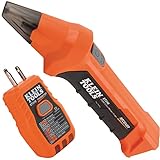
Once the power is off, double-check it with a non-contact voltage tester. Touch the tester to the wires you’ll be working on. If it lights up or beeps, the power is still on, and you need to go back and find the main breaker. Seriously, don’t skip this step. I’ve seen people get seriously injured because they assumed the power was off.
When installing a double-pole breaker, pay close attention to how it snaps into the panel. It should seat firmly and evenly across both bus bars. You might need to wiggle it a bit. Make sure the handle operates smoothly through its on, off, and tripped positions before you connect any wires. Once you’ve connected the two hot wires to the breaker terminals, make sure the screws are tight. Loose connections create heat, which is a major fire risk. I like to give them a good tug with my screwdriver to make sure they’re secure. Remember, the breaker is designed to protect the wire and your home, but it can only do its job if it’s installed correctly and tightly connected.
Finally, if you’re unsure about any step, just stop. Call a qualified electrician. It’s not worth risking your safety, your home, or a hefty repair bill because you tried to save a few bucks or were too proud to ask for help. I’ve had electricians in my home more times than I care to admit, and it’s always money well spent when it comes to electrical work.
People Also Ask:
What Happens If I Use a Double Pole Breaker for a Single Pole Circuit?
Using a double-pole breaker for a single-pole circuit is generally not recommended and can be a waste of a slot in your panel. While it might technically work in some basic scenarios by only connecting one hot wire, it defeats the purpose of the double-pole design and its linked switching mechanism. You’re basically using a more expensive, larger breaker for a job that a single-pole breaker is designed for. More importantly, if the breaker is designed to trip both poles when one faults, and you only have one circuit connected, you might experience unexpected shutdowns if one pole has a minor fault that doesn’t affect your single circuit but causes the breaker to trip.
Can I Use a 20 Amp Double Pole Breaker for a 30 Amp Appliance?
No, absolutely not. You must match the breaker’s amperage rating to the appliance’s requirements or the rating of the wire, whichever is lower and specified by the appliance manufacturer. Using a 20-amp breaker for a 30-amp appliance is undersized; it will trip constantly, rendering the appliance unusable. In fact, it’s a serious safety hazard. The breaker’s job is to protect the wire from overheating. If the wire is rated for 30 amps, but you install a 20-amp breaker, you’re basically allowing the appliance to draw more current than the wire can safely handle. This can lead to the wire overheating, melting its insulation, and potentially causing a fire long before the 20-amp breaker trips.
What Is the Difference Between a Single Pole and a Double Pole Breaker?
The main difference lies in what they control and how they connect to your electrical system. A single-pole breaker is designed for 120-volt circuits and controls a single hot wire. It occupies one slot in your electrical panel. A double-pole breaker is designed for 240-volt circuits and controls two hot wires simultaneously. It occupies two adjacent slots in your electrical panel and has a handle that is physically linked, so flipping one side off also flips the other off, and if either side trips, the entire breaker disconnects both circuits.
Are Double Pole Circuit Breakers Double the Current?
No, double pole circuit breakers are not double the current in the way you might think. They are designed to handle a specific amperage rating (e.g., 20A, 30A, 50A) for a 240-volt circuit.
While they draw power from two separate 120-volt hot legs, the breaker’s amperage rating refers to the maximum current that each pole can safely handle. So, a 30-amp double-pole breaker can handle 30 amps on the L1 leg and 30 amps on the L2 leg.
The total power delivered is higher due to the higher voltage (240V vs 120V), but the current rating on the breaker itself is not doubled. It means 30 amps at 240 volts, which is a lot more power than 30 amps at 120 volts.
Final Verdict
So, to circle back to the original question: are double pole circuit breakers double? Yes, they’re double in how they operate – controlling two circuits at once and requiring two slots. They are key for safely powering your high-demand 240-volt appliances like dryers, ovens, and air conditioners. It’s not about doubling the current capacity in a simple mathematical sense, but about delivering the necessary higher voltage safely and effectively.
Don’t let them intimidate you, but also don’t underestimate their importance or the need for proper installation. Always match the breaker brand to your panel, verify the amperage and voltage requirements for your appliance, and for goodness sake, turn off the power and test it before you touch anything. It’s the difference between a successful DIY project and a trip to the emergency room.
If you’re in doubt, call in a pro. It’s the smartest move you can make when dealing with the guts of your home’s electrical system. Knowing this stuff can save you money and headaches, but knowing when to step back is just as important.