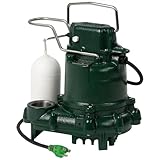
You’re standing in your basement, eyeing that damp patch on the floor, and the panic starts to set in. Water in the basement is the worst. It’s a homeowner’s nightmare, and suddenly, your thoughts turn to sump pumps. Specifically, you’re wondering: are Drummond sump pumps any good? I’ve been down this road, staring at a flooded basement and trying to figure out which piece of equipment won’t leave me high and dry (pun intended) when it counts.
It’s easy to get lost in spec sheets and marketing jargon. But when your house is on the line, you need real-world answers, not just pretty pictures and promises. I’ve seen my fair share of overhyped gadgets and genuinely reliable workhorses. So, let’s cut through the noise and talk about Drummond sump pumps like we’re neighbors swapping advice over the fence.
Drummond Sump Pumps: Beyond the Blue Box
Look, you’ve probably seen Drummond pumps at the big box stores. They’re often the budget-friendly option, sitting there next to pricier brands. My first instinct, like yours might be, was skepticism. ‘Can a pump that cheap actually do the job?’ I remember grabbing one a few years back for a rental property that had a persistent leaky foundation. I figured if it failed, no big deal, it was cheap insurance. Well, that pump actually surprised me. It ran for nearly three years straight through a couple of pretty wet spring seasons without a hiccup. It wasn’t silent, mind you – it had a bit of a rattle when it kicked on – but it moved water, and that’s what matters.
The thing with sump pumps is, they’re not usually glamorous. They sit in a hole in your basement, doing a job that’s only noticed when it stops working. Drummond positions itself as a reliable, no-frills option. They tend to focus on submersible cast-iron or thermoplastic models, which are pretty standard for home use. Their offerings generally fall into a few categories: basic utility pumps, more solid submersible pumps for frequent use, and even some battery-backup systems. You’re not going to find fancy digital displays or Wi-Fi connectivity on most of their units. What you get is a motor, an impeller, and a housing designed to push water out of your basement.
I’ve seen people bash these pumps online, saying they’re ‘disposable’ or ‘not for serious floods.’ And honestly, for a catastrophic, multi-day deluge where you’re pumping out feet of water, maybe a heavy-duty commercial unit is what you need. But for the average basement seepage, storm drain overflow, or a leaky pipe situation that needs constant, steady pumping, I’ve found Drummond to be more than capable. It’s about matching the pump to the job. Thinking a $70 pump will handle a reservoir breach is unrealistic, but expecting it to keep your basement dry during a heavy rain? That’s a fair expectation, and in my experience, Drummond often delivers.
What to Actually Look for (and What’s Hype)
When you’re wading through the options, it’s easy to get distracted by flow rates (gallons per hour, GPH) and head height (how high it can pump water vertically). These are important, but let’s be blunt: for most residential basements, the numbers advertised on the box are often overkill, or at least, the maximum potential. A pump rated for 3,500 GPH might only achieve that under ideal conditions with minimal vertical lift. What you really want to know is how much water it moves consistently when it’s actually installed and doing its job.
I made a mistake years ago, buying a pump solely based on its GPH rating. It was supposed to be a beast. But the intake was oddly shaped, and the discharge pipe connection was restrictive. In my actual setup, it barely performed better than a smaller, cheaper pump I’d had before. Lesson learned: look at the overall design, not just the headline numbers. A good, clean intake screen that won’t clog easily and a standard discharge pipe fitting (usually 1-1/4″ or 1-1/2″ NPT) are more practical indicators of usability.
Material matters, too. Cast iron is heavy-duty and durable, good for longevity and heat dissipation, but it can rust if the coating is compromised. Thermoplastic (often reinforced polypropylene or ABS) is lighter, corrosion-resistant, and generally more affordable. For a Drummond pump, you’ll see both. I’ve had good luck with their cast-iron models for durability, but their thermoplastic ones have also held up surprisingly well in humid environments where rust is a concern. Don’t fall for the ‘premium’ material hype if it means a significantly higher price for a marginal gain in your specific situation. Reliability comes from solid construction and proper installation, not just fancy materials.
Here’s a little table I put together based on my own observations: (See Also: Are Pumpkin Seed Husks Edible )
| Feature | What it Means for You | Drummond Score (1-5) | Verdict |
|---|---|---|---|
| Cast Iron Housing | Durable, heavy, good heat dissipation. Can rust if damaged. | 4/5 | Good for longevity, but make sure it’s coated well. |
| Thermoplastic Housing | Lightweight, rust-proof, often cheaper. Can be more brittle. | 3/5 | A solid choice for humid basements or budget-conscious buyers. |
| Submersible Design | Sits in water, quieter, self-cooling. Needs a pit. | 5/5 | The standard and generally best way to go for consistent operation. |
| Float Switch Type | Mechanical vs. Vertical vs. Vertical Tethered. Affects activation height and potential jamming. | 3/5 | Drummond’s mechanical/vertical switches are usually fine, but check for freedom of movement. |
| Horsepower (HP) | Determines pumping power. More isn’t always better if the pump isn’t designed well. | 3/5 | Standard 1/4 HP or 1/3 HP are usually adequate for typical homes. |
The ‘Drummond Score’ is my own totally unscientific rating, but it reflects my hands-on feel. They often score well on practical, necessary features but don’t typically lead in bells and whistles.
Common Sump Pump Mistakes (and How Drummond Fits In)
The biggest mistake I see people make with any sump pump, Drummond or otherwise, is improper installation. It’s not just about dropping it in a hole. First off, you need a proper sump pit – a deep, wide basin that collects water and gives the pump room to operate. If your pit is too small, the pump can suck in debris or get air-locked, especially if it’s a submersible type. Drummond pumps are designed for standard pits, so if you’ve got a makeshift hole dug out with a shovel, you’re asking for trouble regardless of the brand.
Another huge error is the discharge line. Where does that water go? It absolutely needs to be routed away from your foundation – and I mean away. A common mistake is just letting it spill out a few feet from the house. During heavy rain, this water just seeps back into the ground and can end up right back at your foundation walls, defeating the whole purpose. I once saw a neighbor’s pump discharging right next to their house, and during a downpour, their basement still flooded because the water was pooling right there. They were convinced their pump was bad; it wasn’t. It was the discharge setup.
Then there’s the power source. A lot of people just plug their sump pump into a regular outlet. Fine, but what happens when the power goes out during a storm? That’s precisely when you need the pump the most! This is where a battery backup system comes in. Drummond does offer some battery backup options, and I’d highly recommend looking into one if your area is prone to power outages during bad weather. Relying solely on a corded pump in a flood-prone zone is like buying a fire extinguisher and then hoping the power stays on during a fire. It’s a gamble you don’t want to take.
Finally, there’s maintenance. People install it and forget it. You need to periodically check the pit for debris, make sure the float switch is moving freely, and test the pump by pouring a bucket of water into the pit. I’ve had to pull out clumps of leaves, a stray sock (don’t ask), and even a small toy car from sump pits over the years. These things can jam a float switch or clog an intake. Drummond pumps, like any other, require this basic upkeep to function reliably. Neglect is the silent killer of any mechanical device.
What About Using a Utility Pump as a Sump Pump?
Generally, it’s not ideal. Utility pumps are designed for intermittent use, like draining a clogged sink or a flooded patio. They often lack the automatic float switch needed for continuous basement water management and can overheat if run for extended periods. While a Drummond utility pump might work in a pinch for a one-off situation, a dedicated sump pump is built for the demanding, often continuous, job of keeping a basement dry.
Real-World Performance: My Drummond Experience
I’ve personally owned a couple of Drummond sump pumps over the years, and my experience has been overwhelmingly positive for their price point. The first one I bought was a basic 1/4 HP submersible unit. It was installed in the basement of a house I was renting. The previous tenant had clearly had issues, as there was a small, but functional, sump pit already in place. For about two years, this pump handled typical rainwater intrusion and occasional groundwater seepage without complaint. It wasn’t whisper quiet, but it wasn’t offensively loud either – a noticeable hum and a splash when it kicked on and off. It just did its job, day in and day out.
The second Drummond pump I invested in was a slightly more solid 1/3 HP model, also submersible, for a property I owned that had a history of minor flooding after heavy storms. This one was installed in a more professionally dug sump pit. (See Also: Are Pumpkin Seed Acid Or Alkaline )
Again, it performed admirably. The biggest surprise came during a particularly nasty hurricane season a few years back.
We had sustained heavy rain for three days straight, and the water table rose significantly. My main sump pump (a different, more expensive brand) was working overtime, but the Drummond pump, acting as a secondary or backup in a separate pit, kept pace. It was pumping out water steadily, preventing any significant accumulation. I was genuinely impressed.
It didn’t falter, didn’t overheat, and just kept chugging along.
My contrarian take? Everyone seems to be chasing the ‘smart’ sump pumps with apps and alerts. While those can be nice, they’re also another point of failure. If the Wi-Fi goes down, or the app has a glitch, you’re back to square one. For me, a reliable mechanical float switch and a pump that’s built tough enough to just work are more valuable. Drummonds are simple. They don’t have complicated electronics to go wrong. This simplicity, in my book, is a huge advantage when you’re talking about a device that needs to perform under duress, often in a damp, dusty environment.
The only real downside I’ve encountered is that their cast-iron models can be a bit heavy, making them slightly more awkward to maneuver into a tight pit for installation or removal. Also, some of the plastic components, like the impeller housing on older models, could feel a bit less substantial than those on higher-end pumps. But for the price difference – often hundreds of dollars less – the trade-off is usually well worth it for the average homeowner. You get a workhorse that’s reliable when you need it most, without breaking the bank.
Are Drummond Sump Pumps Any Good? Practical Tips
So, you’re thinking about a Drummond pump. Good. Now, let’s talk about making sure it serves you well. First, match the pump to your need. For typical basement seepage or minor flooding, a 1/4 HP or 1/3 HP submersible unit from Drummond is usually more than enough. If you have a very large basement or expect significant water flow, consider stepping up to their 1/2 HP models, but again, check the reviews and your specific pit dimensions. Don’t oversize unless you truly need to; an oversized pump can cycle too frequently, wearing out the motor prematurely.
Second, installation is key, as I’ve hammered home. Make sure you have a proper sump pit. If you don’t, consider digging one or getting a pre-fabricated sump liner. The pit should be at least 18 inches in diameter and 24 inches deep for most residential pumps. Make sure the float switch has ample room to move without hitting the pit walls or the pump itself. Position the pump so it sits level. A tilted pump can lead to uneven wear and tear on the motor and impeller.
Third, think about power. If your area experiences frequent power outages during storms, absolutely invest in a battery backup sump pump system. Drummond offers these, and they are a lifesaver. The backup system typically includes a secondary pump or a battery that kicks in when the main power fails. Some systems even have their own secondary pump, so you have two pumps working for you when it rains hard. It’s cheap insurance against a flooded basement when you can’t afford for the pump to stop working. (See Also: Are Organic Pumpkin Seeds From China Bad )
Fourth, don’t forget the discharge line. Use solid PVC pipe, not flexible corrugated hose, for the main discharge. Flexible hose can kink or get crushed, restricting water flow. Make sure the discharge pipe has a check valve installed. This prevents water from flowing back into the pit after the pump shuts off, which saves energy and reduces wear on the pump. Route the discharge pipe at least 20 feet away from your foundation, ideally to a storm sewer or a downhill area where water won’t pool near your house.
Finally, perform regular maintenance. This isn’t a set-it-and-forget-it appliance. Once or twice a year, pull out any debris from the pit. Test the pump by pouring a few gallons of water into the pit and watching it cycle on and off. Check the float switch for freedom of movement. Listen for any unusual noises. Taking these simple steps will significantly extend the life of your Drummond pump, or any sump pump for that matter, and give you peace of mind that it’ll be ready when you need it most.
How Long Do Drummond Sump Pumps Typically Last?
With proper installation, regular maintenance, and for typical home use, you can expect a Drummond sump pump to last anywhere from 5 to 10 years. Some users report longer lifespans, especially with their cast-iron models and good maintenance practices. However, factors like the frequency of operation, water quality (sediment can wear down parts), and power interruptions can shorten this lifespan. It’s always wise to test your pump periodically and be aware of its age.
Can a Drummond Sump Pump Handle Sewage?
No, Drummond sump pumps, like most standard residential sump pumps, are designed for clear or lightly soiled water (groundwater, rainwater). They are not sewage pumps. Sewage pumps are specifically designed with larger impellers and solids-handling capabilities to deal with waste water and debris found in sewage. Using a standard sump pump for sewage will likely clog it, damage the motor, and lead to failure.
What Is the Best Way to Install a Drummond Sump Pump?
The best installation involves a properly sized and dug sump pit (at least 18 inches diameter, 24 inches deep) that allows the pump’s float switch to operate freely. The pump should be placed on a stable, level surface at the bottom of the pit. Connect a solid PVC discharge pipe with a check valve to prevent backflow. Make sure the discharge is routed at least 20 feet away from your foundation. Always connect to a dedicated, grounded electrical outlet, and strongly consider a battery backup system for power outage protection.
Verdict
So, to circle back to the big question: are Drummond sump pumps any good? My honest answer, based on years of using them in various situations, is yes, they are good for their intended purpose and price point. They’re not fancy, they don’t have a ton of bells and whistles, but they’re reliable workhorses that get the job done without costing a fortune. You won’t be the talk of the neighborhood with a Drummond pump, but you will have a dry basement when it counts.
Don’t overspend on a pump you don’t need, and don’t cheap out so much that you end up with a flooded basement. Drummond hits that sweet spot for many homeowners. Just remember that no matter how good the pump is, proper installation and a little bit of maintenance are a must if you want it to last.
If you’re dealing with a persistent water problem and want a dependable solution that won’t empty your wallet, a Drummond sump pump is definitely worth considering. Just make sure you pair it with a solid installation plan and, ideally, a battery backup.