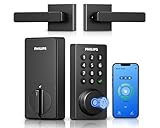
I remember the first time I got an electronic door lock. It felt like living in the future, ditching keys and just tapping a code. For a while, it was great. No more digging through my bag for keys when my arms were full of groceries. Then, a few months in, my neighbor’s house got hit. Not a forced entry, mind you. They’d somehow bypassed their fancy smart lock. That got me thinking: are electronic door locks secure, really? It’s not as simple as yes or no, and I’ve learned a lot since that scare.
We’ve all seen the ads, promising ultimate convenience and security. But as someone who’s fiddled with more than my fair share of these gadgets, I’ve seen what works and what’s just a glorified paperweight. The common wisdom often skips over the messy details, the real-world vulnerabilities that manufacturers don’t exactly shout about.
The Actual Risks: What the Marketing Doesn’t Tell You
Look, the idea of a smart lock is seductive. No more fumbling for keys in the dark, no more worrying if you left them inside. You punch in a code, or tap your phone, and voilà – you’re in. It’s the kind of convenience that makes you feel like you’re living in the 21st century. But let’s be blunt: convenience can sometimes come with a hidden cost, and that cost can be your security. When I started researching the nitty-gritty of how these things work, and more importantly, how they can fail, I was genuinely surprised.
The biggest misconception is that because it’s electronic, it’s automatically more secure than a traditional deadbolt. That’s just not true. A good old-fashioned deadbolt, properly installed, has been keeping doors shut for decades. Electronic locks introduce new layers of potential failure points. Think about it: Wi-Fi vulnerabilities, Bluetooth hacking, firmware glitches, or even just a dead battery at the worst possible moment. I had one lock where the battery died unexpectedly, and I was locked out of my own house for a good twenty minutes while I scrambled to find the backup key. It was more than just annoying; it made me question the whole premise.
One common scare tactic is the idea of someone ‘hacking’ your Wi-Fi and walking right in. While it’s theoretically possible for a sophisticated attacker to try and intercept signals or exploit network weaknesses, the average burglar isn’t going to be scanning your home network with a laptop. They’re usually looking for the path of least resistance. That often means picking a traditional lock, kicking in a door, or finding an unsecured window. However, that doesn’t mean there aren’t electronic vulnerabilities. For instance, some older or cheaper Bluetooth locks have been shown to be susceptible to ‘replay attacks’ where a signal can be captured and replayed to open the door. It’s not common, but it’s a real possibility with certain models.
Then there’s the physical aspect. Even the most advanced electronic lock can be defeated if the physical door and frame aren’t sturdy.
A determined person can still pry open a door or break the frame, regardless of what’s happening with the lock mechanism itself. So, while we focus on the tech, we shouldn’t forget the basics of home security.
A solid door, a good frame, and a well-installed deadbolt are still foundational. The electronic part is just an added layer, and sometimes, a layer that adds complexity and potential failure points rather than just pure strength. My neighbor’s incident?
Turns out, their lock had a known firmware bug that a clever thief exploited. Not through Wi-Fi, but by using a specific tool designed to exploit that particular vulnerability.
It wasn’t the Hollywood hacking scene, but something far more practical and terrifying. (See Also: Are There Different Size Holes For Installing Door Locks )
What to Look for (and What to Avoid Like the Plague)
So, if you’re not scared off entirely, and you’re still thinking about going electronic, what should you actually be looking for? This is where it gets murky. The market is flooded with options, from the ‘smartest’ looking ones that connect to everything you own, to simpler digital deadbolts that just use a keypad. My advice? Start simple and prioritize reliability over fancy features you’ll never use.
First off, consider the connectivity. Do you really need your door lock to talk to your smart fridge? Probably not. Wi-Fi and Bluetooth are the common methods. Wi-Fi locks offer remote access – you can lock/open from anywhere via an app. This sounds great, until you realize it’s another device constantly broadcasting on your network, another potential entry point if your network isn’t secured properly. Bluetooth locks are generally more secure in that they don’t rely on your home Wi-Fi, but their range is limited, meaning you typically need to be within shouting distance to use the app.
I’ve found that the most reliable electronic locks are often the ones that don’t try to do too much. A solid digital keypad with a backup physical key override is often the sweet spot. Brands that have been around for a while, and have a good track record with traditional security hardware, tend to be more trustworthy. Don’t just go for the shiny new gadget; do a bit of digging. Look for reviews that talk about battery life, responsiveness, and actual security incidents, not just how easily it integrates with Alexa.
Here’s a quick rundown of what I’ve found useful:
| Feature | My Take | Verdict |
|---|---|---|
| Keypad Entry | Key. Easy to use for yourself and guests. Look for backlit keys. | Must-have |
| Smartphone App Control | Convenient for remote access, but adds complexity and potential Wi-Fi risks. | Nice to have, if well-implemented |
| Fingerprint Scanner | Fast and convenient, but can be finicky in wet or dirty conditions. Accuracy varies wildly. | Optional |
| Physical Key Override | A must. Absolutely vital for battery failure or electronic malfunction. | Mandatory |
| HomeKit/Google Home/Alexa Integration | Adds convenience but also potential security layers you might not need. | Optional, consider your smart home setup |
| Auto-Lock Feature | Great for peace of mind, but make sure it has a manual override. | Very useful |
I once bought a lock that boasted a dozen different ways to open it – fingerprint, NFC card, voice command, app, key. It was overkill. The fingerprint scanner rarely worked on the first try, and the voice command was a joke. It felt like a tech demo, not a security device. When it came down to it, the simple keypad and the physical key were the only things I truly relied on. That’s why I stress simplicity. A complex system is a complex system to secure.
The ‘hacking’ Myth vs. Real-World Vulnerabilities
Let’s talk about the scary stuff. Everyone hears ‘hacking’ and pictures a shadowy figure typing furiously on a keyboard, their screen glowing with lines of code. While that’s the stuff of movies, the reality of how electronic locks can be compromised is often much less dramatic, and frankly, more insidious. It’s rarely about brute-forcing a complex encryption algorithm in real-time; it’s about exploiting simpler weaknesses.
One of the most talked-about vulnerabilities is the replay attack. Imagine someone uses a device to capture the wireless signal your lock makes when you open it with your phone or a fob. Later, they can ‘replay’ that captured signal to trick your lock into opening. This is more common with older or cheaper Bluetooth systems. Newer, well-designed systems use rolling codes or other countermeasures, but it’s a definite concern for some devices on the market. I personally witnessed a demo of this at a security expo, and it was unnervingly simple to pull off with the right equipment.
Another area where things can go wrong is the firmware. Software is written by humans, and humans make mistakes. A poorly written firmware update can introduce security holes. Manufacturers are supposed to patch these, but it takes time, and not all companies are equally diligent. This is why sticking with reputable brands that have a history of providing consistent software support is so important. You don’t want a lock that’s basically running on outdated, vulnerable software.
Then there’s the ‘man-in-the-middle’ attack, which can happen over Wi-Fi. If your lock’s communication with its server isn’t properly encrypted, someone on your network could potentially intercept or even alter the data. This is why securing your home Wi-Fi network with a strong password and up-to-date encryption (like WPA3 if your router supports it) is absolutely most important if you have Wi-Fi enabled smart locks. It’s not just about keeping hackers out of your internet; it’s about protecting the devices connected to it. (See Also: Are Sesame Seeds Kosher For Passoveris Pollock Kosher )
I’ve also heard of instances where people have been tricked into revealing their codes. This isn’t a ‘hack’ in the technical sense, but a social engineering tactic. Someone might pretend to be a technician, or a delivery person, and convince you to enter your code to ‘test’ something. Always be wary of anyone asking for your access codes, no matter how official they seem. My rule of thumb: if it feels even slightly off, it probably is. The physical security of the lock itself, while important, is only one piece of the puzzle. The digital side, and how you interact with it, matters just as much.
My Own Blunders and Lessons Learned
Okay, let’s get real. I’m not immune to making dumb mistakes. The biggest one? Believing the hype about ‘the most advanced lock ever.’ About two years ago, I splurged on a lock that had every feature imaginable: fingerprint, facial recognition (yes, really), voice control, you name it. It cost me a small fortune, close to $300, and I was convinced it was the pinnacle of home security. It was sleek, modern, and looked amazing on my door.
The problem was, it was a nightmare to use. The fingerprint scanner was about as reliable as a chocolate teapot in a heatwave. It would work maybe one out of five times. The facial recognition was even worse; it kept thinking my cat was me. The app was buggy, and the battery drained faster than a leaky faucet. I spent more time troubleshooting and trying to get into my own house than I ever did with my old key.
Then came the incident. I was out of town, and my sister was housesitting. She called me in a panic. The app had logged her out, and the fingerprint scanner wouldn’t recognize her (or anyone else). The lock was completely unresponsive. She was stuck outside in the pouring rain for over an hour until I could log into the app remotely (after fiddling with my own phone settings for twenty minutes because the app was being flaky) and grant her access. That was the moment I realized how much I’d overcomplicated things. I’d traded a simple, reliable key for a gadget that caused more stress than it ever relieved.
My lesson was brutal but clear: simpler is often better. A digital keypad and a physical key backup are all most people actually need. All those extra bells and whistles? They’re often just more things that can go wrong, more ways for the system to fail you when you least expect it. I ended up replacing that fancy lock with a good old-fashioned digital deadbolt from a company known for reliability. It cost me under $150, and I haven’t had a single problem since. It’s not as flashy, but it does its job, and it does it consistently. That experience taught me to be deeply skeptical of overly complex tech, especially when it comes to security.
When Does It Make Sense? The Practical Application
So, after all that, are electronic door locks secure? Yes, they can be, but it’s a much more nuanced answer than you’d get from a marketing brochure. They’re not inherently more secure than a high-quality mechanical deadbolt, and they introduce new potential failure points. However, for certain situations and for people who understand and mitigate the risks, they offer undeniable benefits.
The biggest win is convenience, especially for busy households. Think about families with kids who always forget their keys, or if you frequently have guests, cleaners, or dog walkers coming and going. Being able to grant temporary access codes remotely or on a schedule is incredibly useful. I’ve used this feature myself when friends needed to pop in to water my plants while I was away. It beats leaving a key under the mat any day.
Another scenario where they shine is in rental properties or short-term vacation rentals. Property managers can issue unique codes to each guest, which automatically expire after their stay. This eliminates the need to physically hand over keys and worry about them being returned. It simplifies operations significantly. For a rental property owner, the peace of mind knowing that every guest has a unique, time-limited access code is a major selling point. It also drastically cuts down on the costs associated with lost keys or re-keying locks between tenants.
For individuals who are tech-savvy and prioritize security, a well-chosen electronic lock can be a great addition. This means understanding the risks associated with your specific model, making sure your home network is secure, and always having a reliable backup plan. It’s about making informed choices. For example, if you opt for a Wi-Fi connected lock, making sure your router is running the latest firmware and using a strong, unique password for your Wi-Fi network is a basic but important step. Similarly, if a lock offers Bluetooth, checking its specific security protocols (like AES encryption) is a good idea. (See Also: Are Sliding Door Locks Common )
However, if you’re someone who just wants a lock that will reliably keep the door shut and you don’t want to think about firmware updates, network security, or app permissions, then sticking with a solid mechanical deadbolt might be the better choice. The key is to match the technology to your needs and your technical comfort level. Don’t buy a smart lock just because it’s smart; buy it because it solves a real problem for you, and you understand how to keep it secure. The security of your home should never be compromised by a gadget that’s more complicated than it needs to be.
Frequently Asked Questions About Electronic Door Locks
Can Electronic Door Locks Be Hacked?
Yes, electronic door locks can be hacked, but it’s not as simple as Hollywood makes it seem. Most vulnerabilities exploit weaknesses in wireless communication (like Bluetooth or Wi-Fi), outdated firmware, or even social engineering tactics used to trick users into revealing codes. Sophisticated hacking is rare for the average user, but simpler exploits are a real concern for certain models.
Are Keyless Entry Systems Secure?
Keyless entry systems can be secure, but their security level varies greatly by model and manufacturer. Simple digital keypads are generally quite secure if paired with a strong PIN and a physical key backup. More complex systems involving Bluetooth or Wi-Fi connectivity introduce additional potential vulnerabilities that need to be considered and mitigated through proper setup and maintenance.
What Is the Biggest Security Risk with Smart Locks?
The biggest security risk with smart locks often lies in their connectivity and software. This includes vulnerabilities in the wireless protocols they use (like Bluetooth or Wi-Fi), the security of your home network, potential bugs in the lock’s firmware, and the reliance on a mobile app. A dead battery at a important moment is also a significant, though less technical, risk.
Should I Still Use a Physical Key with an Electronic Lock?
Absolutely. Having a physical key override is a must for any electronic door lock. This makes sure you can still get into your home if the battery dies, the electronics malfunction, or the lock is temporarily disabled for any reason. It’s a fundamental safety net that every electronic lock should have.
Final Verdict
So, to circle back to the big question: are electronic door locks secure? The honest answer is: it depends. They aren’t a magic bullet, and they introduce new ways for things to go wrong if you’re not careful. For me, the sweet spot is a reliable digital keypad with a physical key backup. Anything beyond that needs serious consideration regarding your specific needs and your ability to manage the associated risks.
My own experience taught me to be wary of over-engineered gadgets. The fancy features are often just more points of failure. If you’re looking for convenience and understand the digital security implications, a smart lock can be a great upgrade. If you just want a door that stays locked, a top-notch mechanical deadbolt is still a formidable and often simpler solution.
Before you buy, do your homework on the specific model, understand how it communicates, and always, always test that backup key. Because at the end of the day, your home’s security is too important to gamble on untested tech or marketing hype. Think about what you truly need, not just what looks cool.