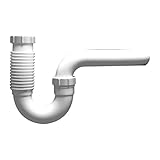
I stared at the tangle of white plastic under the sink, a mess of accordion-like tubing that looked like it belonged in a science lab, not my kitchen. This was my first foray into the world of flexible P-traps, and let me tell you, I was skeptical. My plumber friend had scoffed when I mentioned them. ‘Junk,’ he’d said. But I’d seen the online ads, the promise of easy installation and quick fixes. So, are flexible P-traps good? The short answer is: it depends, and you need to know exactly what you’re getting into.
I’ve wrestled with plumbing more times than I care to admit, usually at the worst possible moments. Leaks sprung on a Friday night, clogged drains when guests are arriving. I’ve bought fancy gadgets that promised miracles and ended up gathering dust. So, when the topic of flexible P-traps came up, I approached it with a healthy dose of ‘show me, don’t tell me.’ This isn’t about fancy marketing; it’s about what actually stops that sewer smell and keeps your pipes from backing up.
Why I Even Considered These Wiggly Things
Look, nobody wakes up in the morning thinking, ‘I can’t wait to install a P-trap!’ But when your existing one cracks, or when you’re trying to connect a new sink in a tight spot where a rigid pipe just won’t bend to your will, you start looking for solutions. That’s where the flexible P-trap shines. Or at least, that’s what they want you to believe.
My first encounter with a failing P-trap happened about three years ago. It was a standard PVC one under my bathroom sink, and one morning, I noticed a faint, persistent odor. A quick peek revealed a hairline crack, weeping water. Replacing it with another rigid one in that tight space was a nightmare.
I had to do some serious maneuvering, and honestly, I was worried I’d cross-threaded something or put too much stress on the connections. That’s when I first saw those ads for flexible P-traps, looking like a dream come true for awkward plumbing jobs.
They promised to bend, twist, and compress to fit almost any situation. Sounded too good to be true, right? I was on the fence, but the memory of that wrestling match with the rigid pipe stuck with me.
The main selling point is obviously the flexibility. Unlike rigid PVC or metal pipes that need precise angles and cuts, these corrugated tubes can be twisted and shaped.
This is a massive advantage in older homes or in spaces where access is limited, like under a pedestal sink or in a vanity with a lot of internal bracing. You can practically snake it into place. I remember one particularly frustrating job trying to install a new dishwasher drain hose.
The old setup had a rigid trap that just wouldn’t align properly with the new hose’s entry point without me hacking up the cabinet. A flexible trap would have been a lifesaver then, allowing me to bridge the gap with minimal fuss. It’s the plumber’s shortcut, and sometimes, a homeowner’s best friend when you’re not a professional but need a functional fix.
The common advice you’ll find online is that they are great for DIYers and tight spaces. And yeah, on paper, that’s true. They are usually made of a pliable plastic, often polypropylene, which allows them to bend. They come with slip-joint nuts, just like their rigid cousins, making them theoretically easy to connect to your existing drain pipes and your sink’s tailpiece. The ease of installation is the headline, and for many, that’s enough to make them a compelling option. They can save you time and the headache of trying to cut and fit rigid pipes perfectly, which, let’s be honest, is a skill many of us don’t possess in abundance.
How They Actually Work (and Where They Get Tricky)
At its core, a P-trap, flexible or rigid, does the same job: it holds a small amount of water, creating a seal that prevents sewer gases from coming up your drain and stinking up your house. The ‘P’ shape is what allows that water to sit there. Flexible traps achieve this shape by being bent into that characteristic curve. The material is usually a corrugated plastic, which allows it to be manipulated into the necessary bend without kinking completely.
The key here is the accordion-like structure. When you bend it, it compresses on one side and stretches on the other, holding its shape fairly well once you’ve got it in place. Think of it like bending a sturdy drinking straw – it can take a curve, but you don’t want to fold it flat.
The biggest issue I’ve seen, and what most people complain about, is the potential for clogs. Because the inside of these flexible traps isn’t perfectly smooth like a rigid PVC pipe, the corrugations can catch hair, grease, and other gunk more easily.
This is especially true if you don’t install it with a smooth, consistent curve. A sharp bend or a kink in the tubing creates a prime spot for debris to lodge. I learned this the hard way. (See Also: Are Omega Watch Straps Real Alligator )
I had a flexible trap under my kitchen sink after a minor plumbing emergency. It worked fine for about six months, and then BAM!
Slow drain. I pulled it apart, and it looked like a hairball convention in there. It took a good twenty minutes of poking and prodding with a wire hanger to clear it out.
The rigid trap I replaced it with? Never had that specific issue again, though I did have to cut it and fit it perfectly.
Another point of contention is durability and longevity. Rigid PVC traps are pretty much bomb-proof.
They don’t degrade much over time, and barring physical damage, they last for decades. Flexible traps, made of plastic that’s designed to be pliable, can become brittle over time, especially if they are exposed to heat or UV light (though they are usually installed under a sink, so UV is less of an issue). I haven’t had one fail spectacularly from age yet, but I’ve heard stories.
The accordion folds can also become weak points. And while they’re designed to be flexible, repeatedly bending and flexing them, or forcing them into a shape they’re not comfortable with, can stress the material. It’s a trade-off: ease of installation versus potentially shorter lifespan and more frequent cleaning.
What to Look for (and What to Absolutely Avoid)
If you’re going to use a flexible P-trap, don’t just grab the cheapest one you see. First off, look at the material. Most are polypropylene, which is generally fine. But check the thickness and the quality of the corrugations. A thinner, flimsier plastic with very deep, sharp folds is more likely to kink, clog, and potentially crack. You want something that feels reasonably substantial, with smooth, consistent corrugations. I’ve found that the ones with a slightly wider corrugation pattern, and a more rounded profile, tend to be a bit more forgiving when it comes to debris flow. They also seem a little more solid when you’re bending them into shape.
When you’re buying, make sure you get the right size. P-traps connect to the tailpiece coming down from your sink and to the drain pipe in the wall.
Most standard sinks have a 1-1/2 inch tailpiece, and the wall drain is usually 1-1/2 or 2 inches. Flexible traps typically come in standard sizes, often with adapters or slip-joint nuts that can accommodate slight variations. Always double-check the diameter of your pipes and compare it to the trap’s specifications. Trying to force a trap that’s too small or too big onto your pipes is a recipe for leaks.
I once bought a flexible trap kit that claimed to fit everything, but the nuts just wouldn’t seal properly on my old, slightly worn drain pipe. Ended up having to run to the hardware store for a different set of slip nuts, which was a pain.
The absolute worst thing you can do is overtighten the slip nuts. These plastic traps rely on a good seal, but if you crank down on those nuts with all your might, you can crack the plastic nut or even stress the pipe it’s connecting to, leading to leaks.
Hand-tighten first, then give it just a quarter or half turn with pliers if needed. You don’t need to go nuts.
Also, avoid extreme bends. While they are flexible, a tight 90-degree bend will create a water trap, but it’s also a clog waiting to happen. (See Also: Are Traditional Mouse Traps Humane )
Aim for the gentlest curve that still holds water effectively. If you find yourself really wrestling it into a tight spot, it might be a sign that a rigid trap, or a different approach, is needed.
| Feature | Verdict | Why |
|---|---|---|
| Ease of Installation | ⭐ ⭐ ⭐ ⭐ | Great for tight spots and DIYers who aren’t plumbers. Can save significant time. |
| Clog Resistance | ⭐ ⭐ | Corrugations can catch debris, leading to more frequent clogs than smooth rigid traps. |
| Durability/Lifespan | ⭐ ⭐ ⭐ | Generally less durable than rigid PVC. Can become brittle over time; folds can be weak points. |
| Leak Potential | ⭐ ⭐ ⭐ ⭐ | Can be prone to leaks if not installed correctly or if nuts are overtightened, but generally reliable with proper installation. |
| Odor Seal | ⭐ ⭐ ⭐ ⭐ ⭐ | Performs the core function as well as rigid traps, provided they hold water and aren’t damaged. |
My Real-World Experience: The Good, the Bad, and the Smelly
Let’s talk about the time I actually had to use one out of necessity. It was a rental property, and the existing P-trap under the kitchen sink had sprung a leak, a bad one. The sink was directly above a built-in cabinet with very little clearance. A rigid trap would have meant removing half the cabinet or trying to cut the pipe in a space where I could barely wield a hacksaw.
I grabbed a flexible P-trap kit from the hardware store. The installation itself was, dare I say,… easy? I bent it into place, connected the nuts, and for the first week, I felt like a plumbing genius.
No leaks, no smells. I’d successfully dodged a major repair bill and a massive headache.
But then came the clogs. About three months later, the kitchen sink started draining slower than molasses. I’d plunge it, and it would clear for a day, then back to sluggish. I eventually had to disconnect the flexible trap and give it a good cleaning.
It was disgusting. All sorts of food particles and hair had gotten caught in those little grooves.
It took a good scrub with a brush and some drain cleaner to get it flowing freely again. This is where my opinion really solidified: for a kitchen sink, especially one that gets a lot of grease or food scraps, a flexible trap is a maintenance headache you might not want.
For a bathroom sink, where it’s mostly just soap scum and hair, it’s much more manageable.
The smell factor is important too. When they work, they work perfectly, just like a rigid trap.
The water seal is effective. The problem arises when they stop working effectively. A slight leak, or a clog that affects the water level in the trap, and suddenly you’ve got that dreaded sewer gas smell creeping back. I’ve heard of people using them in laundry rooms or basements where they aren’t used constantly, and they’re fine.
But in a high-traffic area like a kitchen, the increased likelihood of clogs means a higher chance of that seal being compromised. I’ve since replaced that kitchen sink trap with a rigid PVC one, and while the installation was a bit more work, the peace of mind knowing it’s less likely to clog or degrade is worth it to me.
Common Mistakes and How to Avoid Them
One of the biggest mistakes I see people make, and I’ve been guilty of it myself, is assuming ‘flexible’ means ‘infinitely bendable.’ These traps have limits. If you try to bend them too sharply, you’ll create kinks.
A kink restricts water flow and creates a perfect little nook for debris to get stuck, which is precisely what you’re trying to avoid. When installing, try to create a gentle, sweeping curve rather than a tight, angular bend. (See Also: Are Sticky Mouse Traps Humane )
Imagine you’re guiding a garden hose – you want it to snake, not to be forced into a sharp corner. If you have to force it, it’s probably not the right setup for that particular spot, and you risk damaging the trap or creating a future problem.
Another common pitfall is related to the connections. The slip-joint nuts are convenient, but they’re also a frequent source of leaks if not installed properly.
Always make sure the plastic washer (often a tapered one) is seated correctly. It should be facing the direction that will create the seal. If it’s backwards or crooked, you’ll get a drip. And as I mentioned before, don’t overtighten.
Hand-tight is a good starting point. Then, use pliers for a small, final turn.
If you feel like you’re using excessive force, stop. You’re probably going to break something.
I’ve learned that a little bit of plumber’s tape on the threads of the tailpiece, before you slide the nut on, can sometimes help create a better seal, especially if your pipes are a bit worn. It’s a cheap insurance policy against drips.
Lastly, people often forget about maintenance. Because they’re prone to clogging, especially in kitchens, you can’t just install it and forget it. Regularly, maybe every few months, give the trap a visual inspection. If you notice the drain slowing down, don’t wait for it to become a complete blockage. It’s much easier to deal with a slow drain than a fully clogged one. A quick disconnect and flush can save you a lot of hassle. Some people use a bit of baking soda and vinegar followed by hot water as a preventative measure. It’s not a perfect solution, but it helps break down some of the gunk that accumulates. The key is proactive checks, not reactive panic.
People Also Ask
Can a Flexible P Trap Leak?
Yes, a flexible P-trap can leak, just like a rigid one. Leaks can occur at the slip-joint connections if the nuts aren’t tightened properly or if the sealing washer is damaged or installed incorrectly. The material itself can also develop small cracks or holes over time, though this is less common than connection issues. Regular inspection and proper installation are key to preventing leaks.
Are Flexible P Traps Safe?
Flexible P-traps are generally safe and function as intended by creating a water seal to prevent sewer gases from entering your home. However, their corrugated design can make them more prone to clogging with hair and debris compared to smooth rigid traps, which could potentially compromise the water seal if a significant clog occurs. Making sure a proper, unclogged installation is important for maintaining their safety function.
How Long Do Flexible P Traps Last?
The lifespan of a flexible P-trap can vary, but they typically don’t last as long as rigid PVC traps. While rigid traps can last for decades, flexible traps might need replacement every 5 to 10 years, depending on usage, water quality, and exposure to cleaning chemicals. The plastic material can degrade over time, becoming brittle, and the corrugated sections can become weak points.
Do Flexible P Traps Cause Clogs?
Flexible P-traps can contribute to clogs more readily than smooth, rigid traps. The internal corrugations provide surfaces for hair, grease, and other debris to catch and accumulate. This is particularly true in kitchen sinks where grease and food particles are common. While they don’t inherently ’cause’ clogs, they offer more places for clogs to start and get stuck.
What Is the Best Alternative to a Flexible P Trap?
The most common and often preferred alternative to a flexible P-trap is a rigid PVC P-trap. These are made of smooth, hard plastic and are less prone to catching debris. While they require more precise cutting and fitting, they are generally more durable, easier to clean, and less likely to develop clogs. Metal P-traps are also an option for a more premium and durable installation.
Final Verdict
So, are flexible P-traps good? My honest answer is that they’re a tool, and like any tool, they’re good for specific jobs and not so good for others. They can be a lifesaver when you’re in a tight spot and need to get a drain functional quickly without major renovations. I’ve definitely saved myself some headaches and potential damage in awkward installations thanks to them.
However, they come with a trade-off in terms of maintenance and potential for clogs, especially in kitchens. If you’re looking for a set-it-and-forget-it solution for a high-use drain, a rigid PVC trap is likely a better bet. But for those times when flexibility is the only way to connect things without a major plumbing overhaul, a flexible P-trap can absolutely do the job, provided you install it carefully and are prepared for a bit more cleaning down the line.
Ultimately, whether flexible P-traps are good for your situation depends on your priorities: speed and ease versus long-term clog resistance and minimal fuss. For me, it’s a calculated risk I’m willing to take in certain scenarios, but not my go-to for every plumbing job.