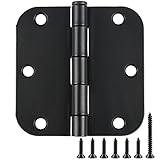
I remember the first time I tried to hang a kitchen cabinet door myself. Armed with a drill, some screws, and a YouTube video that made it look ridiculously simple, I ended up with a door that sagged like a sad, deflated balloon. It wasn’t just crooked; it felt like it was actively fighting gravity. I’d bought the cheapest hinges I could find, thinking, ‘How complicated can a hinge be?’ Turns out, very. This whole experience got me wondering: are hinges wheeels? Not literally, of course, but in function, in their ability to make things move smoothly and predictably.
The short answer is no, hinges aren’t wheels. But the idea of smooth, controlled motion is exactly what good hinges are supposed to provide. It’s about pivots, angles, and load-bearing capacity, not rolling. Yet, so many people get it wrong, ending up with cabinets that don’t just look bad, they function badly too.
Why Some Hinges Just Don’t Cut It
Look, we all like to save a buck. I’ve been there, staring at a wall of hardware options, with the budget-friendly ones practically screaming my name. My first foray into DIY cabinetry involved a set of what I can only describe as glorified paper clips masquerading as hinges.
They cost me about $15 for a pack of 10, and honestly, they were the most expensive mistake I made on that entire project. The doors never sat right. They’d stick, they’d creak, and after about six months, one actually just… snapped. Not a dramatic break, but a pathetic little ‘twang’ followed by a door hanging precariously from one screw.
That’s when I learned that when it comes to hinges, ‘cheap’ is almost always ‘expensive’ in disguise. You’re not just buying a piece of metal; you’re buying a promise of smooth operation, and some promises are just hollow.
People often assume hinges are simple mechanical devices with little variation. They see two metal plates and a pivot point and think, ‘What’s the big deal?’
The big deal is the engineering behind that pivot. It’s about how much weight the hinge can support, how smoothly it can swing without binding, and how much adjustment you have when things inevitably aren’t perfectly plumb or level. Those cheap hinges I bought had zero adjustability. Once they were screwed in, that was it.
If the door was a millimeter off, too bad. Good hinges, on the other hand, have those little screws that let you nudge the door in or out, up or down, and sideways. It’s like having fine-tuning control for your cabinet doors, which, believe me, you absolutely need.
I’ve seen people try to get away with using the wrong type of hinge for the job, too. For instance, using overlay hinges on inset doors, or vice-versa. It’s like trying to put a square peg in a round hole, but with more frustration and potentially damaged cabinetry. The hinge needs to be designed for the specific way the door will sit relative to the cabinet frame. Get that wrong, and no amount of fiddling with those adjustment screws will save you. (See Also: Are Spring Loaded Door Hinges Better )
Understanding the Anatomy of a Good Hinge
So, if cheap, flimsy hinges are a recipe for disaster, what makes a good one? It boils down to material, construction, and the type of mechanism. For most home applications, especially kitchen cabinets, you’re looking at hinges made from steel, often with a nickel-plated or stainless steel finish for durability and corrosion resistance. Avoid anything that feels lightweight or flimsy; if it bends easily in your hand, it’s not going to hold up a cabinet door for long. The pivot point, where the two leaves of the hinge connect and rotate, is also important. It should be smooth, with no grinding or excessive play. This is where the magic of smooth operation happens.
Then there are the different types of hinges, and this is where most people get lost. You have your basic butt hinges, which are simple and common, but often lack adjustment. For cabinets, you’re usually looking at European-style concealed hinges, often called ‘Euro’ hinges or ‘blumotion hinges’ (though Blum is a brand, the term is often used generically). These are fantastic because they are almost entirely hidden when the door is closed, giving a clean, modern look. They also typically offer excellent adjustability.
Here’s a quick rundown of common cabinet hinge types:
| Hinge Type | Description | Pros | Cons | My Verdict |
|---|---|---|---|---|
| Concealed (Euro) Hinges | Hidden behind the door, mount into a cup drilled into the door. | Clean look, excellent adjustability (3-way), soft-close options, durable. | Requires precise drilling into the door, can be more expensive initially. | The gold standard for most cabinet applications. Worth the initial effort. |
| Surface-Mount Hinges | Mount directly to the face of the cabinet frame and door. Often decorative. | Easy to install, no complex drilling required, can add decorative flair. | Visible when the door is closed, less adjustability, can be less durable than concealed. | Good for utility cabinets or when a specific rustic look is desired. Not for a sleek kitchen. |
| Wrap-Around Hinges | Wrap around the edge of the door and cabinet face. | Simple to install, relatively strong. | Visible, limited adjustability, not the most aesthetically pleasing for modern cabinets. | Functional, but better options exist for most residential uses. |
When I was redoing my garage cabinets, I initially thought about just slapping on some cheap surface-mount ones to get them functional quickly. But I remembered the kitchen cabinet disaster and decided to invest in some decent concealed hinges. The difference in how the doors felt and operated was night and day. They closed with a satisfying, solid ‘thump’ instead of a clatter, and they lined up perfectly without me having to shim anything.
The Art of Installation: Where Things Go Wrong
Even with the best hinges money can buy, you can still mess things up during installation. This is the part that trips most people up, myself included.
The most common mistake? Not measuring accurately.
I’m talking about the placement of the hinge cup on the door and the corresponding mounting plate on the cabinet frame. For concealed hinges, the cup needs to be drilled to a specific depth and distance from the edge.
If that’s even a millimeter off, the door won’t hang correctly, and you might not be able to adjust it enough to fix it. I learned this the hard way when I over-drilled a cup on one of my bathroom vanity doors. I ended up with a gap that I just couldn’t close without the door rubbing against the frame. I had to buy a new door and start over. (See Also: A Box Without Hinges Key )
Another common pitfall is assuming all cabinet frames and doors are perfectly square and plumb. They rarely are, especially in older homes or with DIY cabinet boxes. This is precisely why good hinges have adjustment screws. Most concealed hinges offer three-way adjustment: up/down, left/right, and in/out.
You need to understand what each screw does. Typically, one screw moves the door horizontally (left/right), another moves it vertically (up/down), and a third moves it in or out, controlling how flush the door sits against the cabinet face. Learning to identify and use these is key to getting that professional, factory-finished look. Don’t be afraid to turn them, but do it one small adjustment at a time.
Make a turn, close the door, see the effect, and then decide your next move.
Some people also overtighten screws, stripping the particle board or even the wood, which means the hinge won’t be secure. Or, they don’t pre-drill pilot holes, leading to wood splitting. It’s a delicate balance of firm but not overly aggressive. And for goodness sake, use the right drill bit for the job, especially when drilling those hinge cup holes. Using a bit that’s too large will ruin the door; too small and you won’t get the hinge seated properly.
Real-World Use Cases and When Hinges Are Tested
Think about the doors you use every day: kitchen cabinets, closet doors, pantry doors, bathroom vanities. These see constant use. A kitchen cabinet door might be opened and closed dozens of times a day. That’s a lot of stress on a hinge. If a hinge isn’t up to the task, you’ll know it. You’ll hear squeaks, you’ll see sagging, and eventually, you’ll get a door that just doesn’t close properly or even falls off. This is where investing in quality hinges really pays off. They are designed to withstand repeated motion and maintain their alignment over time.
Beyond the typical residential kitchen, hinges are absolutely important in commercial settings too. Think about restaurant kitchens, retail displays, or even high-traffic public restrooms. In these places, durability and reliability are most important. A broken cabinet door in a busy restaurant can be a safety hazard and a major inconvenience. The same goes for a display case in a retail store; if the door doesn’t open smoothly or seal properly, it can damage the merchandise or compromise security. I’ve even seen specialized hinges used in industrial applications – think heavy-duty equipment enclosures or access panels on machinery – where they need to handle significant weight and operate in harsh environments.
One area where people often underestimate hinge requirements is with heavier doors. Think about solid wood pantry doors or large appliance cabinet fronts designed to match your cabinetry. These are considerably heavier than standard cabinet doors. Using standard, light-duty hinges on them is a recipe for sag and premature failure.
You need hinges specifically rated for the weight of the door. Many manufacturers will provide weight ratings for their hinges, and it’s wise to pay attention to that spec. I once helped a friend install a massive oak pantry door, and we used heavy-duty European hinges. They were beefier, had larger mounting screws, and the mechanism felt much more substantial. (See Also: Are Integrated Washing Machine Door Hinges Standard )
That door swings like a dream, even after years of use, because we didn’t skimp on the hinges.
Tips for Making Your Hinges Work for You
Here are a few practical tips that have saved me a lot of headaches:
- Buy Quality, Even if it Costs More Upfront: As I’ve said, it’s almost always cheaper in the long run. Factor in the cost of your time and frustration if you have to replace cheap hinges or fix botched installations. For a typical kitchen, you might spend an extra $100-$200 on good hinges, but it’s worth every penny for the results.
- Understand Your Door Overlay and Type: Before you even start shopping, figure out if your doors are inset (sit inside the cabinet frame) or overlay (sit on top of the frame), and how much overlay you need (e.g., full overlay, half overlay). This dictates the type of hinge you need. Misunderstanding this is a guaranteed path to trouble.
- Get a Hinge Jig (Seriously): For concealed hinges, a hinge jig can be a lifesaver. It’s a tool that helps you accurately mark and drill the cup holes in the door. It takes the guesswork out of precise placement and depth. I resisted buying one for a while, thinking I could freehand it. Big mistake. A good jig cost me about $40 and saved me hours of agonizing over imperfect holes.
- Don’t Be Afraid to Adjust: Those little screws are your friends. If a door isn’t hanging perfectly, take a moment to identify which screw controls which adjustment. Make small turns, test, and repeat. Patience here pays off immensely.
- Consider Soft-Close: If your budget allows, get hinges with a built-in soft-close mechanism. It’s a small luxury that prevents doors from slamming shut, protecting both the doors and your sanity. They are a bit more expensive, but the quiet, gentle closing is something you’ll appreciate every single day.
People Also Ask (paa) Section
Can I Use Any Hinge on Any Cabinet Door?
No, you absolutely cannot. Cabinet doors come in different styles (inset, overlay), and hinges are designed to work with specific configurations. Using the wrong type of hinge will result in doors that don’t close properly, have unsightly gaps, or won’t function at all. You need to match the hinge type to your cabinet’s construction and the desired door placement for a successful installation and smooth operation.
How Do I Know If My Cabinet Hinges Are Bad?
Bad cabinet hinges typically manifest in several ways. You might notice doors sagging, not closing flush, or sticking when you try to open or close them. Squeaking or grinding noises are also a common sign of wear or lack of lubrication. In more severe cases, you might see visible damage like bent hinge leaves or screws that are no longer holding securely. If your cabinet doors feel loose or require excessive force to operate, it’s a strong indicator that the hinges need attention.
What Is the Difference Between Overlay and Inset Hinges?
The difference lies in how the cabinet door sits in relation to the cabinet frame. Overlay hinges are used when the door sits on top of the cabinet frame, covering part or all of it. Inset hinges are used when the door is designed to sit flush within the cabinet frame. The hinge mechanism and mounting plates are designed differently for each to make sure the door closes correctly and aligns with the cabinet box.
Are Blum Hinges Worth the Extra Cost?
For most people doing significant cabinet work, yes, Blum hinges are generally worth the extra cost. They are known for their superior quality, durability, and excellent adjustability, making installation and fine-tuning much easier. While they are more expensive than generic options, their smooth operation, longevity, and the precise fit they allow often justify the investment, especially for high-use areas like kitchens.
Verdict
So, to circle back to the initial question: are hinges wheeels? No, they don’t roll, but they sure as heck are supposed to provide smooth, controlled movement. The difference between a cabinet door that swings effortlessly and one that drags, squeaks, and sags is almost always down to the hinges and how they’re installed. Don’t be like me on my first attempt and cheap out. Get the right type of hinge for your door and cabinet style, and take your time with the installation. You’ll save yourself a world of frustration and end up with cabinets that look and feel professional.
My biggest takeaway after years of wrestling with various bits of hardware is that hinges are not an area to skimp. They are the unsung heroes of cabinet functionality. If you’re embarking on a cabinet project, whether it’s a full kitchen remodel or just replacing a single door, invest in decent hinges. Your future self, who won’t have to deal with sagging doors or misaligned fronts, will thank you. It’s a small component that makes a massive difference in the overall user experience.
What kind of cabinet doors are you planning to install or fix next? And have you ever had a hinge disaster that taught you a valuable, albeit painful, lesson?