Look, I’ve been around the block with doors. Built a few, fixed a lot more. And the question that pops up more often than you’d think is whether you absolutely need those fancy inset continuous hinges for hollow metal doors. Most people just assume ‘yes’ because they’re often specified, but is that always the case? I remember a job where the budget got slashed last minute, and we had to get creative with some standard hinges. It wasn’t pretty, but it worked. Let’s cut through the noise and figure out if these things are truly mandatory or just another way for manufacturers to upsell you.
The truth is, the answer isn’t a simple yes or no. It depends on what you’re trying to achieve, the specific door, and honestly, how much you value aesthetics versus pure function. For a long time, I just followed the spec sheets, assuming the engineers knew best. But after seeing how things actually hold up in the real world, my perspective has definitely shifted.
Why the Continuous Hinge Debate Even Happens
Alright, let’s get down to brass tacks. When you’re looking at hollow metal doors, especially for commercial or high-traffic areas, there’s a lot of consideration that goes into them. These aren’t your flimsy interior bedroom doors. They need to withstand abuse, provide security, and often, they need to look decent doing it. The continuous hinge, also known as a piano hinge, is a popular choice because it spans the entire height of the door. This distributes the load across the frame and the door edge evenly, which sounds like a no-brainer for durability. It’s designed to prevent sagging, reduce stress on individual pivot points, and offer a smoother swing. That’s the sales pitch, anyway.
But here’s where my experience kicks in. I’ve seen plenty of hollow metal doors that don’t have continuous hinges and function perfectly fine. Think about older buildings, or even some residential applications where a heavy-duty standard hinge might be sufficient.
The key difference often lies in the frequency of use and the weight of the door. A hollow metal door, while technically hollow, can still be quite substantial. The skin might be thin, but the internal framing and the sheer size can add up.
If you’re talking about a door that gets slammed a hundred times a day, or one that’s unusually wide, then yeah, a continuous hinge starts to look like a smart investment. For lighter, less frequently used doors, you might be overspending.
The ‘inset’ part is also a big deal. An inset continuous hinge sits flush within the door and frame edge, meaning it doesn’t protrude. This is mostly an aesthetic choice, giving a cleaner, more simplified look.
It also means there’s less for someone to grab onto or potentially damage. But functionally, a surface-mounted continuous hinge will do the same job of distributing weight, just with a different visual profile.
My first encounter with the necessity of an inset continuous hinge wasn’t about function, but about a client who was absolutely adamant about the clean lines. We had a massive custom hollow metal door for a gallery, and anything less than perfectly flush was a deal-breaker.
That’s when I realized that sometimes, ‘required’ is dictated by taste, not just engineering.
So, are they required? Not always. But there are definitely scenarios where they are highly, highly recommended, and others where you can probably get away with something else. It’s about understanding the trade-offs. The common advice often leans towards ‘always use them for hollow metal,’ but I’ve learned that ‘always’ is a dangerous word in construction and renovation.
When Continuous Hinges Make Real Sense
Let’s talk about the situations where I’d absolutely push for a continuous hinge on a hollow metal door, and why. First off, high-traffic environments. Think about the main entrance to a busy office building, a hospital corridor, or a school. (See Also: Are Spring Loaded Door Hinges Better )
These doors get opened and closed thousands of times a week. A standard butt hinge, even a heavy-duty one, will eventually start to sag under that kind of constant stress. You’ll notice the door dragging on the floor, the latch not catching properly, or the frame itself starting to distort.
A continuous hinge, by spreading that load along the entire vertical seam, dramatically reduces the wear and tear on any single point. It’s like comparing carrying a heavy load on your shoulders versus distributing it across your back and hips. The latter is just way more stable and less prone to failure.
Another big factor is door width and weight. While hollow metal doors are lighter than solid wood or steel doors, they can still be quite large. If you have an extra-wide hollow metal door – say, over 36 inches – you’re putting a lot of use on the hinges.
The same goes for doors that have added features like window lites or heavy hardware. In these cases, a standard hinge might struggle to keep the door plumb and true. I had a project where we installed a standard heavy-duty hinge on a 40-inch wide hollow metal door with a small window.
Within six months, the door was visibly dipping on the pull side. We ended up having to replace the hinges with a full-height continuous one, and it solved the problem overnight. It was a $500 mistake that taught me a valuable lesson about door dimensions and hinge capacity.
Security is also a point. Continuous hinges, especially the mortised (inset) kind, make it much harder to pry the door open. Because the pin runs the full length, there are no individual knuckles to attack. If the hinge is properly secured with through-bolts or tamper-proof screws, it becomes a very strong deterrent. For exterior doors, or doors leading to sensitive areas, this can be a significant advantage. The continuous nature also helps maintain a tighter seal between the door and the frame, which can improve fire ratings and prevent drafts.
Finally, let’s not forget aesthetics and accessibility. For a clean, modern look, an inset continuous hinge is hard to beat. It creates a nearly smooth transition. Furthermore, in accessibility-focused environments (ADA compliance), smooth operation and consistent swing are most important. A sagging or binding door is a barrier. A continuous hinge can help make sure a predictable, easy-to-operate door for everyone.
The Case Against Mandating Continuous Hinges
Now for the contrarian take. Everyone and their uncle will tell you that for hollow metal doors, continuous hinges are a must. I disagree, and here’s why: cost and complexity. Let’s be blunt – continuous hinges are significantly more expensive than standard butt hinges. For a simple, single-leaf hollow metal door that isn’t subjected to extreme use or specific aesthetic demands, the added cost of a continuous hinge might be completely unjustified. I’ve walked into countless small workshops, storage rooms, or utility closets with standard hollow metal doors that have been swinging perfectly fine on heavy-duty, but standard, three-knuckle hinges for decades. The secret? Proper installation and a door that isn’t a behemoth.
Installation is also more involved. While a standard hinge just needs mortises in the door and frame, a continuous hinge requires a precise, full-length channel. If the tolerances are off, or if the installer isn’t experienced, you can end up with a hinge that binds, looks terrible, or doesn’t perform as intended. I once had a contractor install a surface-mounted continuous hinge on a hollow metal door, and they didn’t account for the door closer. The hinge was constantly fighting the closer, making the door incredibly hard to open and causing undue wear. We had to remove it, chisel out a proper mortise, and reinstall it correctly. That particular screw-up cost us an extra day and about $300 in labor.
The ‘hollow’ part of hollow metal is also a bit misleading. While the door isn’t solid, the internal structure matters. Many hollow metal doors have reinforcing channels or channels designed to accept specific hardware. If the door’s internal structure is solid enough to support standard heavy-duty hinges without issue, and the door itself isn’t excessively wide or heavy, then the argument for a continuous hinge weakens considerably. It’s about matching the hinge to the door’s actual load-bearing needs, not just its material type.
Think about this: if you’re installing a standard, solid-core wood door in a residential setting, you’re likely using standard butt hinges, and they work beautifully. A hollow metal door, while different, isn’t necessarily so dramatically different in its basic load requirements that it always needs a continuous hinge. It’s often about application. For a utility closet door in a well-maintained office building, where it’s opened maybe twice a day, a quality standard hinge is perfectly adequate. You’re not saving wear and tear that’s going to be noticeable over the life of the building. (See Also: A Box Without Hinges Key )
When Standard Hinges Can Cut It
So, when can you safely skip the continuous hinge on a hollow metal door? The primary scenario is light to moderate use. If the door is an interior door that doesn’t experience heavy foot traffic – think office private offices, storage rooms that aren’t accessed constantly, or utility closets that aren’t in a high-traffic corridor – standard heavy-duty hinges are often sufficient. You’ll want to opt for commercial-grade, ball-bearing or oil-impregnated sleeve bearings for smoother operation and longer life, but you don’t necessarily need the full-length coverage.
Door size and weight are also key. For standard-sized hollow metal doors (generally up to 30-36 inches wide and a typical height), three or four well-placed standard hinges are usually more than capable of supporting the weight and preventing sag, provided they are installed correctly and the door has adequate internal reinforcement to accept the hinge mortises without compromising structural integrity. I’ve seen many older hollow metal doors in commercial buildings still functioning perfectly on three standard hinges. The key is the quality of the hinge and the precision of the installation.
Another consideration is budget. Continuous hinges are undeniably more expensive. If you’re working on a tight budget and the door doesn’t meet the high-demand criteria for a continuous hinge, opting for high-quality standard hinges can save you a significant amount of money without sacrificing acceptable performance for the application. The cost difference can be substantial, sometimes running hundreds of dollars per door.
Finally, sometimes the hardware is already specified or the door is designed for it. If a door frame or door is prepped for standard hinges, retrofitting for a continuous hinge can be a messy and costly affair, involving significant modification to the frame and door. In such cases, if standard hinges are deemed adequate for the use, sticking with them makes practical and financial sense. It’s about looking at the whole picture – the door, the frame, the expected use, and the budget – rather than just defaulting to the most solid option.
What to Look for in Hinges for Hollow Metal Doors
Whether you go with continuous or standard, there are a few things you absolutely must look for. For standard hinges on hollow metal doors, don’t skimp. You want heavy-duty, commercial-grade hinges. Look for features like ball bearings (BB) or oil-impregnated sleeves. These reduce friction and wear, meaning the hinge will operate more smoothly for longer, and it can handle more weight and stress. The material is also important; stainless steel or high-quality steel with a proper coating (like zinc plating) will resist rust and corrosion, especially if the door is in a potentially humid environment.
The number of screws and their quality matter. Commercial hinges will typically have more screw holes than residential ones. Make sure the screws provided are also of good quality and appropriate length to bite well into the door and frame material. If you’re dealing with a particularly thick gauge of hollow metal, you might even consider through-bolting the hinges for maximum security and load distribution, although this is usually overkill for most applications.
For continuous hinges, the same principles apply regarding material and finish. The ‘inset’ versus ‘surface mount’ is a choice driven by aesthetics and clearance. Inset (mortised) hinges offer a cleaner look and are generally preferred for high-end applications or where a flush appearance is important. Surface-mounted hinges are easier to install as they don’t require extensive mortising, but they do protrude from the door edge. When specifying inset hinges, pay close attention to the required clearances and the depth of the mortise. Manufacturers will have precise specifications for this.
One thing I learned the hard way with continuous hinges is the importance of the pin. Some have a fixed pin, while others have a removable pin. For security, a non-removable pin (NRP) is usually better, as it makes it harder to disengage the door from the frame if the hinges are attacked. Also, check the load rating if the manufacturer provides one. While not always explicitly stated for continuous hinges, understanding the hinge’s construction and the gauge of metal used can give you a good idea of its strength.
Here’s a quick rundown of what to consider for both types:
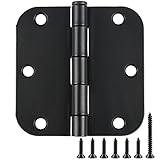
| Hinge Type | Key Features to Look For | My Verdict |
|---|---|---|
| Standard (Butt) Hinges | Heavy-duty, Commercial grade, Ball-bearing or Oil-impregnated, Stainless Steel/Plated Steel, Multiple screw holes, NRP option | Good for light to moderate use, standard-sized doors. Cost-effective if application allows. |
| Continuous Hinges | Full-length coverage, Inset (mortised) or Surface mount, Non-Removable Pin (NRP) option, Stainless Steel/Plated Steel, Correct mortise depth/clearance (for inset) | Excellent for high-traffic, wide/heavy doors, and security. Inset is aesthetically superior. |
Common Mistakes and How to Avoid Them
The biggest mistake I see people make, and one I’ve certainly made myself, is assuming that ‘hollow metal’ automatically means ‘needs continuous hinge.’ As we’ve discussed, this just isn’t true for every scenario. Over-specifying can lead to unnecessary costs. Conversely, under-specifying is even worse. Installing cheap, light-duty hinges on a substantial hollow metal door is a recipe for disaster. You’ll be replacing them sooner than you think, and potentially causing damage to the door and frame in the process. Always assess the door’s weight, size, and the expected traffic. Don’t just grab the cheapest option or the most expensive one without thinking.
Improper installation is another huge culprit. Even the best hinges will fail if they’re not installed correctly. This means making sure the mortises are the right depth and size, that the door and frame are plumb and square, and that all screws are fully tightened. For continuous hinges, getting the full-length alignment perfect is important. A slight misalignment can put uneven stress on the hinge, leading to premature wear or binding. I’ve seen hinges installed with gaps visible between the hinge barrel and the door edge, which is just sloppy and a functional failure waiting to happen. Always follow the manufacturer’s installation guidelines meticulously. If you’re not comfortable, hire someone who is. (See Also: Are Integrated Washing Machine Door Hinges Standard )
Another common pitfall is ignoring the environment. Hollow metal doors are often used in areas that might be exposed to moisture or corrosive elements. Using standard steel hinges without adequate plating or choosing stainless steel hinges in a corrosive environment are mistakes. Rust and corrosion will quickly degrade the hinge, leading to squeaking, binding, and eventual failure. For any exterior application, or interiors like car washes, swimming pool areas, or industrial kitchens, stainless steel is usually the only sensible choice, and even then, specific grades might be better than others.
Finally, don’t forget about the other hardware. The hinge needs to work in harmony with the rest of the door system, especially door closers and panic bars. A door closer, for instance, exerts significant force. If the hinges aren’t rated to handle that force, or if the door closer is misadjusted, it can put undue stress on the hinges, leading to premature failure. Always consider the total load and forces acting on the door assembly, not just the door and frame in isolation.
People Also Ask:
Can You Put Any Hinge on a Hollow Metal Door?
Technically, you can try to put almost any hinge on a hollow metal door, but it’s not recommended. The door and frame are designed with specific load capacities and hardware mounting points in mind. Using standard residential hinges on a heavy-duty commercial hollow metal door will likely lead to sagging, binding, and premature failure. It’s best to use commercial-grade hinges appropriate for the door’s size, weight, and expected usage.
What Is the Best Hinge for a Hollow Metal Door?
The ‘best’ hinge depends entirely on the application. For high-traffic, wide, or heavy hollow metal doors, a full-height continuous hinge (preferably inset) is often considered superior for its durability and even load distribution. For standard-sized, lighter-duty interior hollow metal doors, heavy-duty commercial butt hinges with ball bearings or oil-impregnated sleeves are excellent and more cost-effective options.
Are Continuous Hinges More Secure?
Yes, continuous hinges can offer enhanced security. Because they span the entire height of the door, they eliminate the individual pivot points of standard hinges that could be targeted. If equipped with non-removable pins (NRP), they make it much more difficult to remove the hinge pin and disengage the door from the frame, providing a stronger deterrent against forced entry.
How Many Hinges Does a Hollow Metal Door Need?
For standard-sized hollow metal doors (up to about 36 inches wide), three heavy-duty butt hinges are typically sufficient. For wider or heavier doors, or those experiencing very high traffic, four or more standard hinges might be needed, or a full-height continuous hinge becomes the preferred solution. The manufacturer’s specifications for the door and frame, along with the type of hinge, will dictate the exact number required.
The Verdict on Inset Continuous Hinges for Hollow Metal Doors
So, after all this, do you need inset continuous hinges for hollow metal doors? The short answer is: not always, but often, it’s a really good idea. My firsthand experience has shown me that while standard, heavy-duty hinges can work in many less demanding situations, the benefits of continuous hinges – especially inset ones – in terms of longevity, performance, and aesthetics for high-use hollow metal doors are undeniable. They distribute stress evenly, reduce wear, offer better security, and provide that clean, flush look that many people desire.
I’ve learned that cutting corners on hinges for hollow metal doors, especially in commercial or high-traffic settings, is a false economy. The upfront cost of a good continuous hinge is often offset by reduced maintenance, fewer repairs, and a longer lifespan for the door assembly. However, for very light-duty interior applications where budget is extremely tight and the door isn’t subjected to much abuse, a quality standard hinge might be perfectly acceptable. It really comes down to a careful assessment of the specific door, its environment, and its intended use.
When in doubt, especially for anything other than a basic interior closet door, I’d lean towards specifying a continuous hinge. The peace of mind and the long-term performance benefits are usually worth the extra investment. And for those who prioritize that sleek, modern look or need that extra layer of security, the inset continuous hinge is, in my opinion, the gold standard for many hollow metal door applications. It’s not just about fulfilling a requirement; it’s about making sure the door functions reliably and looks good for years to come.
Verdict
Ultimately, whether you absolutely need inset continuous hinges for your hollow metal doors boils down to a practical assessment of the situation. They aren’t a magical solution for every single door, but for demanding applications – think high-traffic commercial spaces, wide doors, or anywhere security and aesthetics are most important – they are a superb choice. I’ve personally seen how much better they hold up compared to standard hinges under pressure, and the clean look is a definite bonus.
Don’t just blindly follow what everyone else says. Consider the weight of the door, how often it’ll be used, and the environment it’s in. If it’s a light-duty interior door in a low-traffic area, you might be able to get away with heavy-duty standard hinges and save some cash. But for anything more, especially exterior doors or those in busy hallways, my money is on the continuous hinge to prevent headaches down the line. Investing in the right hinge upfront for your hollow metal doors usually pays off in the long run.
So, before you spec out that next project, take a good, honest look at the door and its intended life. Are inset continuous hinges required for hollow metal doors? For many, they’re not strictly required by code, but they often represent the smartest, most durable, and best-looking solution available.