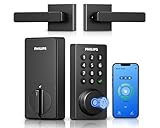
I remember the first time my buddy installed one of those fancy keyless locks on his front door. He was all puffed up, showing off the smartphone app, the keypad codes, the whole nine yards. I just stood there, picturing a determined hacker with a laptop and a bad attitude. It got me thinking: are keyless door locks safer than the good old-fashioned deadbolt I’ve trusted for years?
For a while now, the buzz has been all about convenience. Ditch the keys, punch in a code, and you’re in. But as someone who’s fumbled with enough over-promised gadgets to wallpaper a small house, I’m always looking past the shiny marketing to what actually works and, more importantly, what keeps the bad guys out.
So, let’s cut to the chase. Do these electronic gizmos actually beef up your home security, or are they just a more expensive way to get burgled? I’ve spent a decent chunk of change and time figuring this out, and I’m not going to sugarcoat it.
The Siren Song of Convenience: Why We’re Ditching Keys
Look, I get it. Fumbling for keys in the dark with groceries in hand is the worst. Or worse, realizing you left your keys inside after you’ve locked the door. Or even more embarrassing, having your kid lose their only set of house keys for the zillionth time.
The promise of keyless entry, with its keypad codes and smartphone apps, sounds like a straight-up miracle. My own experience with this started about five years ago.
My wife kept forgetting her keys, and I was tired of playing doorman. So, I bought a fairly well-known brand, paid around $220, and installed it myself. The initial setup was a bit fiddly, took me about an hour and a half, but once it was working, it felt like living in the future.
No more jiggling the lock on a windy night. No more asking the neighbor to let the dog walker in. I could grant temporary access to a friend helping with a garden project, all from my phone. The ability to see a log of who entered and when was pretty neat, too. It felt like a significant upgrade in daily life. The sheer novelty wore off after a couple of weeks, but the convenience stuck. I started recommending them to anyone who’d listen, convinced this was the next big thing in home security. It was sleek, modern, and frankly, made our old brass deadbolt look like something from a museum.
Many of these systems offer multiple ways to get in. You’ve got your standard PIN code entry, which is the most common. Then there’s usually an app-based entry via Bluetooth or Wi-Fi, where you can literally be yards away and the door opens as you approach. Some higher-end models even offer fingerprint scanning, which feels straight out of a spy movie. The appeal is undeniable: a solid piece of tech that promises to simplify your life while, ostensibly, keeping your home secure. We’re talking about a shift from a mechanical barrier to a digital one, and that’s a big leap for many homeowners.
When I first started looking into these, the common advice was all about how much easier life would be. And it is, in many ways. But I’d be lying if I said I didn’t have my doubts creeping in. Every time I got an alert on my phone that the door was opened remotely, a tiny voice in my head wondered if it was me, or someone else.
Under the Hood: How Do These Things Actually Work?
So, what’s really going on inside that fancy metal box on your door? It’s not magic, though sometimes it feels like it. Most keyless locks operate on a few core principles. The most common is the keypad, where you punch in a sequence of numbers – your secret PIN. When you enter the correct code, an internal mechanism, usually a motor or solenoid, retracts the deadbolt or latch, allowing you to open the door. This is pretty straightforward, similar to how an electronic lock on a hotel room works, but with a user-defined code instead of a magnetic stripe.
Then you have the app-controlled locks. These use Bluetooth or Wi-Fi to communicate with your smartphone. Bluetooth is for when you’re close by. Your phone and the lock establish a secure connection, and when you ‘tap’ the open button in the app (or sometimes it’s automatic as you approach, called geofencing), it sends a signal to the lock to disengage. Wi-Fi locks, on the other hand, connect to your home network. This means you can control them from anywhere in the world, as long as both your phone and the lock have internet access. This is where the real convenience kicks in, allowing you to let a delivery person in or check if you remembered to lock up after leaving. (See Also: Are Sesame Seeds Kosher For Passoveris Pollock Kosher )
Fingerprint scanners are a bit more advanced. They use optical or capacitive sensors to read the unique ridges and valleys of your fingerprint. When you place your finger on the scanner, it captures an image, converts it into a digital template, and compares it against the stored templates of authorized users. If it’s a match, the lock disengages. I tried one of these on a secondary door, and while it was cool, it occasionally misread my fingerprint, especially if my hands were damp. It took about 5-6 tries on a humid day once, which was frustrating when you just want to get inside.
The underlying security relies on encryption. When you send a command via an app, or when the lock communicates with your home network, the data is scrambled to prevent eavesdropping. Different manufacturers use different encryption standards, and this is a big part of where the security can vary. It’s like a secret code only your phone and the lock understand. If that code is weak, or if someone finds a way to break it, then you’ve got a problem. It’s a constant race between lock makers and those trying to find vulnerabilities.
The Big Question: Are Keyless Door Locks Safer? The Real-World Verdict
This is the million-dollar question, isn’t it? Are keyless door locks safer? My honest answer, after years of using them and hearing from others, is: it depends, and often, they are NOT inherently safer than a good, solid deadbolt. Let’s break it down. The convenience factor is huge, I’ll give them that. But when it comes to raw security against a determined intruder, the traditional mechanical lock, if it’s a quality deadbolt, has fewer points of digital failure.
The main vulnerability with keyless locks isn’t usually brute force on the lock itself, but rather the digital side. Hackers can target the Wi-Fi or Bluetooth signals, try to exploit software bugs in the app or the lock’s firmware, or even use sophisticated radio frequency (RF) jamming devices to disrupt communication. I’ve heard stories, and seen some demonstrations, where RF jammers, relatively inexpensive devices, can block signals from smart locks, preventing them from locking or opening.
This isn’t something your old deadbolt is susceptible to. I personally experienced a scare where my app-controlled lock wouldn’t respond for about 10 minutes. I was outside my house, getting ready to go for a run, and it just wouldn’t connect. I was convinced someone was messing with it, but it turned out to be a temporary Wi-Fi glitch in my neighborhood.
Still, the feeling of being locked out due to tech failure is unnerving.
Another point often overlooked is the battery. These things need power. If the battery dies, and you haven’t got a physical key backup (which many don’t, or the backup is hidden and hard to get to), you’re stuck. I’ve seen people using 9-volt batteries held up to the terminals to get enough juice to enter a code. It works, but it’s not exactly a confidence-inspiring solution. A mechanical lock works until the metal degrades, which is a much, much longer lifespan.
However, there are nuances. A poorly installed or low-quality mechanical lock can be just as insecure, if not more so, than a well-made keyless lock. A flimsy deadbolt can be jimmied open relatively easily. The keyless advantage is that many are built with sturdy materials, and their security often lies in the complexity of their digital defenses. For the average burglar who’s looking for an easy smash-and-grab, a complicated electronic lock might be a deterrent simply because it’s unfamiliar territory. They might move on to a simpler target. But for someone specifically targeting your home, or someone with technical skills, the digital vulnerabilities are often easier to exploit than physically breaking a solid deadbolt.
Keyless Lock Vulnerabilities vs. Traditional Locks
| Vulnerability Type | Keyless Locks | Traditional Mechanical Locks | My Verdict |
|---|---|---|---|
| Physical Tampering (Picking, Bumping) | Generally High resistance if well-built, but software exploits are the focus. | Can be vulnerable to skilled lock pickers/bumpers, but a quality deadbolt is tough. | Tie (depends heavily on quality of lock) |
| Electronic Hacking (Wi-Fi/Bluetooth, RF Jamming) | HIGHLY VULNERABLE – This is the primary attack vector. | Not Applicable | Keyless Loses Badly |
| Software Exploits (Firmware, App Bugs) | VULNERABLE – Requires ongoing security updates. | Not Applicable | Keyless Loses Badly |
| Power Failure | VULNERABLE – Requires batteries/backup power. | Not Applicable | Keyless Loses Badly |
| Ease of Use / Convenience | HIGH – No keys needed. | LOW – Requires physical key. | Keyless Wins Hands Down |
| Remote Access / Monitoring | HIGH – Can monitor and control from anywhere. | LOW – No remote capabilities. | Keyless Wins Hands Down |
What to Look for If You’re Going Keyless
If, after all this, you’re still set on ditching your keys, you need to be smart about it. Don’t just grab the cheapest thing you see. Firstly, prioritize brands that are known for security and have a good reputation.
Look for detailed information on their encryption protocols. The better ones will mention AES-128 or AES-256 encryption, which is a strong standard. I’ve found that brands that regularly release firmware updates are usually more invested in long-term security. Make sure the lock you choose offers a physical key backup, and make sure that backup key is stored somewhere secure and accessible, like a lockbox outside or with a trusted neighbor. (See Also: Are Sliding Door Locks Common )
My first lock didn’t have a good key backup, and that was a major oversight I corrected with the next purchase.
Consider the connectivity options. If you don’t need to control your lock from miles away, a Bluetooth-only lock might be sufficient and potentially more secure than a Wi-Fi-connected one, as it reduces the attack surface. If you do go for Wi-Fi, make sure your home network is secured with a strong password and that you’re using a reputable router. Some smart locks integrate with home security systems, which can add an extra layer of protection, but make sure the integration itself is secure.
Installation is another factor. While many are designed for DIY, a professional installation can sometimes identify potential issues or make sure the lock is fitted perfectly, reducing physical weaknesses. Read reviews, not just for how easy they are to use, but specifically for any mention of security concerns or hacking attempts. People often share their real-world experiences with vulnerabilities online. Pay attention to the battery life and the type of battery used; some are rechargeable, which is more convenient and eco-friendly than constantly buying disposable batteries.
Here’s a contrarian opinion: Everyone says you must have Wi-Fi for remote access. I disagree. For most people, remote access is a ‘nice-to-have’ rather than a ‘must-have’ security feature. If your primary concern is security and you want to avoid the inherent risks of internet-connected devices, a solid Bluetooth lock with a good physical key backup is often the smarter, safer choice. You still get the keyless convenience when you’re home, and you significantly reduce the risk of remote hacking. I’ve been living with a Bluetooth-only lock for the past year on my garage entry door, and I haven’t missed the Wi-Fi capability at all.
Real-World Use: The Good, the Bad, and the Battery
Living with keyless locks for several years has given me a pretty good sense of their day-to-day reality. On the plus side, the convenience is addictive. Walking up to the door and having it open with a simple tap on my phone, or entering my code without having to dig through my pockets, is genuinely a quality-of-life improvement. I can grant access to my parents when they visit without having to coordinate key handoffs. The activity log is also surprisingly useful; it tells me when the kids get home from school, or if a repair person has been by. It feels like having a watchful eye on your front door, which can be reassuring.
The bad? Well, the battery thing is a constant low-level anxiety.
I’ve had the low-battery warning chime at me for weeks before I finally changed them, which is probably not ideal. One time, I completely forgot, and the lock died on me in freezing weather. Luckily, I had the physical key hidden in my car, but it was a stark reminder that technology can fail. I now make it a habit to check the battery percentage in the app weekly.
I also experienced a weird glitch once where the auto-open feature (geofencing) engaged while I was in my yard, and the door opened itself. That freaked me out, and I immediately disabled that feature. It’s one thing to forget your keys; it’s another for your door to just decide to open itself.
Another less obvious issue is the reliance on your phone. If your phone dies, is lost, or stolen, you’re back to square one unless you have that physical key. This happened to a friend of mine; his phone died on his way home, and he had to wait for his wife to get back from work to get into his own house.
He ended up buying a small, weather-proof lockbox to store a spare physical key outside, which felt like defeating the purpose of going keyless in the first place, but he said it gave him peace of mind. The learning curve for family members can also be a minor hurdle. My elderly parents initially struggled with remembering the codes and the sequence of operations, requiring a few patient tutorials. (See Also: Are The Rams Locked Into The 6th Seed )
The sheer variety of locks means that user experiences can vary wildly. Some are incredibly reliable and intuitive, while others feel clunky, slow, and prone to errors. This is why researching specific models and brands is so important. My overall impression is that for the average home, a high-quality mechanical deadbolt offers a more predictable and less hackable security solution. Keyless locks offer significant convenience and smart home integration, but you are trading some level of inherent security for those benefits. It’s a trade-off, and you need to decide if the convenience is worth the increased digital risk.
People Also Ask: Your Keyless Lock Questions Answered
Can Keyless Door Locks Be Hacked?
Yes, keyless door locks can be hacked. The primary vulnerabilities lie in their wireless communication (Wi-Fi, Bluetooth) and software. Hackers can exploit weaknesses in encryption, jam signals, or target bugs in the lock’s firmware or associated smartphone app. More sophisticated attacks can involve intercepting signals or even physically manipulating the lock’s electronics if access is gained.
Are Smart Locks Less Secure Than Traditional Locks?
Generally, smart locks introduce more potential security vulnerabilities than traditional mechanical locks. While a good quality deadbolt relies on physical strength and intricate tumblers, smart locks add layers of digital complexity that can be exploited through hacking or software failures. However, a poorly made traditional lock can be less secure than a well-designed smart lock.
Can a Keyless Door Lock Be Picked?
Keyless door locks, in the sense of having no physical keyhole for picking, cannot be ‘picked’ in the traditional way. However, they can be compromised through other means, such as electronic hacking, signal jamming, or exploiting software vulnerabilities. If the smart lock also has a physical key override, that keyhole can potentially be picked like any other.
Do Keyless Locks Have a Backup Key?
Most reputable keyless door locks are designed with a physical key backup to make sure access in case of battery failure or electronic malfunction. However, it’s important to verify this feature when purchasing, as some models may rely solely on battery power or require a separate, often expensive, backup power source.
Common Mistakes When Buying or Using Keyless Locks
One of the biggest mistakes I see people make is buying a keyless lock based solely on its looks or its price. Just because a lock is expensive or sleek doesn’t mean it’s secure. You need to do your homework. Look into the brand’s security track record, check for regular firmware updates, and understand their encryption standards. I bought a supposedly high-end lock once that looked fantastic but turned out to have very infrequent software updates, leaving it vulnerable to known exploits for months. That was a costly lesson.
Another common error is neglecting the physical key backup. Either the lock doesn’t have one, or the owner doesn’t store it properly. I heard from a neighbor who had their smart lock battery die while they were on vacation, and their backup key was inside the house. They had to wait three agonizing days for a locksmith. Always make sure you have a reliable, accessible backup key. For me, that means a secure lockbox disguised as landscaping rock, or with a very trusted neighbor.
Underestimating the importance of a secure home Wi-Fi network is also a significant blunder for Wi-Fi enabled locks. If your Wi-Fi password is weak or your router is outdated, you’re basically leaving the digital door wide open. Change default passwords immediately, enable WPA2 or WPA3 encryption, and keep your router’s firmware updated. Finally, many people fail to educate all members of the household on proper operation, including how to reset codes or what to do if the lock malfunctions. This can lead to frustration and, in worst-case scenarios, lockout situations.
Verdict
So, are keyless door locks safer? The short answer is: not inherently. They offer convenience and smart features that traditional locks can’t match, but they also introduce a new set of digital vulnerabilities that require careful consideration and ongoing maintenance. If your priority is maximum security against determined intruders and you prefer a simpler, more predictable system, a high-quality mechanical deadbolt might still be your best bet. However, if you’re willing to manage the risks, stay on top of updates, and secure your home network diligently, a well-chosen keyless lock can be a convenient addition to your home security setup.
Ultimately, the ‘safest’ lock is the one that is properly installed, maintained, and used within a layered security approach that includes good habits and awareness. Don’t let the convenience blind you to the potential risks. Think about what truly matters for your peace of mind and your home’s protection before you make the switch.
Have you ever had a security scare with a keyless lock, or is there a specific feature you can’t live without? Let me know your thoughts.