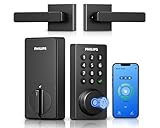
I remember the first time I swapped out my old deadbolt for a shiny new keypad lock. Felt like living in the future, honestly. No more fumbling for keys in the dark, no more worrying if I left them inside. Just punch in the code and boom, in you go. But as the months rolled by, a nagging thought started to creep in: are keypad door locks secure? It’s easy to get swept up in the convenience, but when it comes to your home’s safety, convenience can’t be the only factor.
I’ve seen plenty of gadgets promise the moon and deliver a pebble, especially when it comes to home security. So, I decided to really dig into whether these electronic gizmos are as tough as they look, or if they’re just a fancy way to invite trouble. Let’s get real about what keeps your door shut and your belongings safe.
So, Are Keypad Door Locks Secure? Let’s Break It Down
Look, nobody wants to hear their fancy new smart home gadget is actually a weak link. When I first got my keypad lock, I figured, ‘It’s got a battery, it needs a code, it’s gotta be tougher than a regular key, right?’ Wrong. Or at least, not entirely right.
The truth is, whether a keypad door lock is secure depends on a whole bunch of things you probably haven’t thought about. It’s not just about the brand name or how slick it looks. We’re talking about the tech inside, how you use it, and even the physical lock mechanism it’s attached to. The common advice you’ll find online often paints them with a broad brush, saying they’re ‘secure’ because of the codes, but that’s a dangerously oversimplified view.
My own experience with a cheap model showed me that a weak electronic interface can be just as bad as a flimsy metal key.
The core concept is simple: you’re replacing a physical key that only you (and anyone you give a copy to) can use, with a code that you program. This offers a few immediate benefits. You can change the code if you suspect someone knows it, you can give temporary codes to guests or contractors, and in many cases, these locks can integrate with smart home systems, allowing remote locking and opening.
This convenience is a massive draw. However, the complexity of electronics also introduces new potential failure points. Power issues, software glitches, and the possibility of electronic bypasses are all real concerns that a traditional deadbolt simply doesn’t have.
For instance, I once had a lock that just… died. No warning, no error code, just completely unresponsive.
I was locked out of my own house for two hours until I could find the override key, which was buried in a drawer somewhere. That was a wake-up call about relying too heavily on the ‘smart’ aspect.
The biggest misconception is that the keypad itself is the lock. It’s not. The keypad is the interface.
The actual security comes from the deadbolt mechanism it controls. If you have a cheap, flimsy deadbolt, adding a fancy keypad won’t magically make it Fort Knox. Conversely, a top-tier electronic lock controlling a heavy-duty, ANSI Grade 1 deadbolt is a different story entirely. The electronics are just one layer.
You also need to consider the physical strength of the bolt, the strike plate on the doorframe, and the overall integrity of the door and frame itself. Many people focus solely on the keypad and overlook the foundation, which is a huge mistake I almost made when I was shopping around. I was so dazzled by the app connectivity, I nearly paired it with a weak, old door. Thankfully, I caught myself.
What Actually Makes a Keypad Lock Worth Your Money
Alright, so we’ve established that not all keypad locks are created equal, and the keypad is just one piece of the puzzle. So, what should you actually be looking for if you want one that’s going to do its job and not leave you feeling vulnerable? First off, ignore the marketing jargon. Brands will shout about ‘military-grade encryption’ or ‘unbreakable security,’ but what matters more is the ANSI/BHMA grade.
This is a real, tangible standard for lock performance. You want to see Grade 1 for exterior doors.
Grade 1 means it’s built for heavy-duty use and offers the highest level of security. Grade 2 is acceptable for some interior doors, but for your main entry point, don’t mess around.
I learned this the hard way after buying a Grade 2 lock that felt a bit… wobbly after a year. It wasn’t a catastrophic failure, but it definitely wasn’t inspiring confidence.
Next, consider the power source and battery backup. Most keypad locks run on AA or 9V batteries. How long do they last? (See Also: Are There Different Size Holes For Installing Door Locks )
How does it alert you when the battery is low? Some have a physical key override, which is a must for me.
What happens if the electronics completely fail? Are you going to be stuck outside? Mine has a hidden keyhole, and I keep a dedicated key for it in my car. It’s not ideal, but it’s a backup.
I also look for models that have a low-battery indicator that gives you plenty of warning – not just the last hour before it dies. Some even have a backup power terminal where you can hook up a 9V battery from the outside if the internal batteries are dead.
That’s a smart feature that shows the manufacturer actually thought about real-world problems.
Connectivity and smart features are cool, but they shouldn’t be the primary selling point for security. If it connects to Wi-Fi or Bluetooth, what protocols does it use?
Is it encrypted? Can it be updated? Some manufacturers offer remote access through an app.
This is convenient, but it introduces another potential vector for attack if the app or the server it communicates with is compromised. I’ve seen reports of older smart locks being vulnerable to remote hacking, so I’m always cautious. For me, a physical keypad with a solid deadbolt is the main attraction.
If it has smart features, great, but I prioritize the local security first. The ability to create temporary codes for deliveries or guests is a huge win, but I’d rather have a slightly less ‘smart’ lock that’s fundamentally more secure. It’s a balancing act, and most people tip too far into the ‘smart’ and not far enough into the ‘secure’ column.
Keypad Lock Features: What to Look For
| Feature | Why It Matters | My Verdict |
|---|---|---|
| ANSI/BHMA Grade | Grade 1 is a must for exterior doors. Indicates physical durability and security. | Key. Don’t compromise here. |
| Battery Life & Alert | Long life, clear low-battery warnings. Prevents being locked out unexpectedly. | Important. A dead battery can be a major hassle. |
| Physical Key Override | Important backup for electronic failure or dead batteries. | A must. Always have a way in. |
| Tamper Alarms | Audible alert if someone tries to force it open. | Nice to have. Adds an extra layer of deterrence. |
| Connectivity & Encryption | If it has smart features, make sure strong, up-to-date encryption. | Optional but nice. Prioritize local security first. |
| Build Quality | Solid metal construction feels more solid than flimsy plastic. | Good to have. Durability matters. |
Common Mistakes People Make with Keypad Locks
I’ve seen friends and family members install these things and then proceed to make choices that completely undermine their supposed security. The most common mistake?
Using the default PIN code. Seriously, who does that? If the manufacturer ships it with 1-2-3-4 or 0-0-0-0, you can bet every hacker worth their salt knows that.
It’s like leaving your keys in the door. My cousin installed a new lock and, after showing off the keypad, admitted he hadn’t changed the factory code. I nearly fell over. I told him point-blank, ‘That thing is less secure than your old doorknob right now.’
He changed it immediately, thankfully. You have to treat that default code as a temporary placeholder, not a permanent solution.
Make your own code, and make it something a stranger wouldn’t guess – a mix of numbers, not your birthday or house number. Aim for at least six digits if the lock allows.
Another common blunder is neglecting the physical installation. People get excited about the electronics and then rush the physical mounting. If the deadbolt isn’t installed correctly, if the strike plate on the doorframe is loose or too small, or if the door itself has too much play, the most sophisticated electronic lock in the world is going to be vulnerable. I once helped a buddy install one, and the old strike plate was just screwed into the doorframe with short, weak screws.
A good kick would have popped the door open. We replaced it with a heavy-duty one and long lag screws that went deep into the stud. It made a world of difference.
Think of it like building a house: a fancy roof is useless if the foundation is crumbling. The same applies to your door lock. (See Also: Are Sesame Seeds Kosher For Passoveris Pollock Kosher )
The lock needs a solid anchor point, and that means a solid strike plate and proper door alignment.
Finally, people often forget about firmware updates for smart locks. If your lock connects to your home Wi-Fi or has Bluetooth, it likely has firmware that can be updated. These updates often patch security vulnerabilities that have been discovered.
Ignoring them is like leaving your car windows down when you go inside. Some people also get lazy with battery maintenance, waiting until the lock is already dead or dying to replace the batteries.
This can lead to being locked out or, worse, a lock that intermittently fails. I’ve learned to keep spare batteries handy and change them proactively, usually when the low-battery warning has been chirping for a week or so.
It’s a small effort that prevents a big headache down the line.
Real-World Use: My Experience and What I’ve Learned
After a few years of living with various keypad door locks – some great, some less so – I’ve got a pretty solid opinion on them. For starters, the convenience factor is undeniable. Being able to get into my house when my hands are full of groceries, or letting a dog walker in without having to coordinate meeting them at the door, is genuinely life-improving. I remember one rainy Tuesday evening, I was soaked, juggling my laptop bag and a takeout container. Punching in my code and stepping straight inside felt like a small victory. That’s the stuff you don’t appreciate until you’ve had it.
However, my initial enthusiasm was tempered by some harsh lessons. My first keypad lock was a budget model, and the keypad itself started to wear down relatively quickly.
The numbers got faint, and you could almost tell which ones were used most frequently by looking at the wear marks. That’s a security risk in itself. Then, there was the time the battery died completely without much warning.
I was stuck outside for what felt like an eternity, fumbling for that tiny override key. It made me realize that while the convenience is real, so is the potential for failure. I’ve since invested in models that have better build quality, clearer feedback on battery life, and more solid physical key overrides.
The difference in feel and reliability between a cheap plastic unit and a solid metal one is night and day. I paid about $180 for my current favorite, which is more than double what I spent on that first cheap one, but it’s been worth every penny in peace of mind and functionality. It’s not just about the keypad; it’s the whole mechanism and the electronic brain behind it.
I’ve also found that the ‘smart’ features, while appealing, are often where the real vulnerabilities lie for the average user. My current lock integrates with my home assistant, and I can lock it remotely. This is great for when I leave in a hurry and wonder if I actually locked the door.
But I’ve deliberately kept the remote locking/opening features within my own local network as much as possible. I’m not a cybersecurity expert, but I’ve read enough about IoT vulnerabilities to be wary of exposing too much to the wider internet. The ability to create temporary access codes for guests or service providers is, in my opinion, the most valuable ‘smart’ feature. It’s incredibly useful and, when managed properly, doesn’t compromise your main code.
Overall, I’ve come to see keypad locks as a fantastic upgrade over traditional locks, provided you choose wisely and understand their limitations and maintenance needs. Are keypad door locks secure? Yes, but only if you buy a good one, install it right, and use it intelligently.
The ‘hackability’ Question: Can They Be Bypassed?
This is probably the question on everyone’s mind: can someone just ‘hack’ my door open? The short answer is, it’s complicated, and depends on the lock. For older, simpler electronic locks, or those with poor encryption, yes, it’s possible. Think of brute-force attacks, where someone might try every possible code combination. Most modern locks have built-in countermeasures for this, like locking down after a certain number of incorrect attempts or having a very long code requirement. My current lock will disable the keypad for a few minutes if I punch in the wrong code too many times. That’s a good sign. It means the manufacturer has at least considered this basic attack vector.
Then there are more sophisticated electronic bypasses. Some older smart locks could be vulnerable to radio frequency (RF) jamming or replay attacks, where a signal could be captured and replayed to open the lock. This is less common with newer, well-designed products that use strong encryption and rolling codes. However, if you’re buying a super-cheap, no-name brand from an online marketplace, you might be taking a bigger risk than you realize.
The phrase ‘security through obscurity’ comes to mind – if a lock is so obscure that no one knows its potential weaknesses, it might seem safe, but that’s not real security. It’s just a lack of testing and exposure. I’ve personally never experienced or witnessed a high-tech electronic bypass, but I’ve heard enough stories to remain vigilant. That’s why I stick to reputable brands that have a track record and invest in security research. (See Also: Are Sliding Door Locks Common )
I’m not saying you need to spend a fortune, but cutting corners on a security device is a false economy.
Physical attacks are also a concern, just like with traditional locks. If someone can physically break the keypad mechanism, pry the lock open, or attack the deadbolt itself, the electronics are irrelevant. This is where the ANSI/BHMA grading is so important. A Grade 1 lock is designed to withstand significant physical force.
A cheap, flimsy keypad lock might be easy to smash open, rendering the code useless. So, while the ‘hacking’ question often focuses on the electronics, don’t forget the basic physical security. A strong deadbolt, a solid door, and a well-anchored strike plate are your first line of defense, regardless of how fancy the keypad is.
If a lock requires a physical key override, that keyhole itself can sometimes be a point of attack, but good manufacturers make these resistant to picking and bumping too. It’s a layered approach to security that you need to consider. My take is that for most homeowners, a quality keypad lock from a reputable brand, properly installed, is going to be more than secure enough for everyday use.
The actual risk of a sophisticated electronic bypass is relatively low compared to, say, someone finding your spare key under the mat.
People Also Ask
Are Keypad Door Locks Safe From Hackers?
Reputable keypad door locks with strong encryption and regular firmware updates are generally safe from most common hacking attempts. However, older or cheaper models with weak encryption or known vulnerabilities could be at risk. Always choose brands known for their security and keep your lock’s software up to date.
Can a Keypad Door Lock Be Picked?
Keypad door locks themselves are not ‘picked’ in the traditional sense, as they rely on electronic codes rather than physical tumblers. However, if the lock has a physical key override, that keyhole can be picked like any other traditional lock. High-quality locks will have pick-resistant key cylinders.
Are Electronic Door Locks More Secure Than Traditional Ones?
They can be, but it’s not a simple yes or no. Electronic locks offer advanced features like temporary codes and audit trails, which can enhance security. However, their electronic nature introduces potential vulnerabilities like battery failure or hacking if not properly secured. A well-made traditional deadbolt is still very secure, but lacks the convenience and advanced features of electronic locks.
Do Keypad Locks Have a Backup Battery?
Most keypad locks run on internal batteries and have a low-battery warning system. Many also feature a physical key override. Some models offer an external power terminal where you can connect a temporary power source, like a 9V battery, to open the door if the internal batteries are completely dead.
What Is the Weakest Part of a Keypad Door Lock?
The weakest part can vary. It could be the physical deadbolt mechanism if it’s low quality, the keypad itself if it’s easily tampered with or worn down, the battery life and failure protocol, or the electronic security of smart features and connectivity. A poorly installed lock, with a weak strike plate or frame, is also a major vulnerability.
Practical Tips for Keeping Your Keypad Lock Secure
Beyond buying a good lock and installing it correctly, there are a few practical habits that make a big difference. First, be vigilant about changing your master code. I recommend doing this at least once a year, or anytime you suspect someone might have seen it. If you have a lot of people using the lock – family, occasional guests, cleaners – consider creating and deleting temporary codes for them rather than sharing your main code.
This is a big deal for managing access. I have a friend who swears by this method; she says it gives her a much better sense of who has been in her house and when.
She even keeps a little log of who she gave temporary codes to and when they expired.
Second, pay attention to the battery indicator. Don’t wait for the dreaded ‘lock is dead’ scenario. Keep spare batteries on hand. For my main door lock, I use high-quality lithium-ion AA batteries. They tend to last longer and perform better in varying temperatures. Also, if you have a smart lock, keep its firmware updated. Those updates are often released specifically to patch security holes. It takes two minutes and can prevent a major headache. If the manufacturer has an app, enable notifications for firmware updates. It’s a small thing, but it’s part of treating your smart devices like the connected security tools they are.
Finally, periodically check the physical security of your door and frame. Make sure the deadbolt is extending fully into the strike plate, that the strike plate screws are still tight and ideally long enough to reach the studs in your wall. If you hear any creaking or see any looseness in the doorframe when you open or close the door, address it. A strong lock is only as good as the door it’s attached to. This might sound like overkill, but I’ve seen doors that were so warped, the deadbolt barely engaged. A little bit of preventative maintenance and awareness goes a long way in making sure your keypad door locks stay secure and functional for years to come.
Final Thoughts
So, are keypad door locks secure? My answer, after years of using them and seeing them in action, is a qualified ‘yes’. They offer a level of convenience and control that traditional locks can’t match, and when you choose a quality product, install it correctly, and maintain it properly, they are a very safe option for most homes. The key is to be informed, do your research, and not get blinded by the ‘smart’ features alone. Prioritize the physical security of the deadbolt and the door itself.
Don’t fall for the cheapest option, and always, always change that factory PIN code. Pay attention to battery life and firmware updates. If you do these things, you’ll likely find a keypad lock to be a fantastic upgrade. It’s about making smart choices for your home’s security, not just choosing the flashiest gadget.
Before you buy your next lock, I’d suggest looking up the ANSI/BHMA grade and checking reviews specifically for security vulnerabilities, not just ease of use. Then, once it’s installed, treat it like the security device it is. It’s not set-and-forget; it’s set-and-maintain.