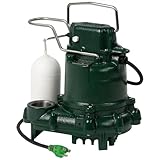
You’ve seen the water creeping up the basement wall, or maybe you’ve had that heart-stopping moment when the rain just won’t stop and you hear that ominous gurgle. Panic sets in. What you need is a reliable sump pump. But with so many options, how do you know which brand to trust? Specifically, are Little Giant sump pumps good? I’ve been elbow-deep in basements, wrestling with leaky pipes and inadequate pumps for longer than I care to admit, and I’ve got some straight talk for you.
Forget the glossy brochures for a minute. Let’s talk about what actually happens when the water rises and your pump needs to do its job, day in and day out. I’ve seen fancy, expensive units fail spectacularly, and I’ve had basic models chug along for years. So, when it comes to Little Giant, I’ve got opinions based on real-world grit, not just spec sheets.
The Little Giant Reputation: What’s the Story?
Little Giant. The name itself sounds sturdy, right? Like something built to last. For years, they’ve been a go-to brand, especially for those DIYers and homeowners who want a pump that’s generally considered reliable without breaking the bank.
They’ve carved out a niche in the submersible sump pump market, and you see their products in hardware stores and online everywhere. The common wisdom is that they offer a good balance of price and performance. Most of their submersible models are designed for typical residential basements, providing a important layer of defense against flooding. They’re not usually the cheapest option out there, but they aren’t the premium, high-end units either.
This middle-ground positioning is a big part of their appeal. People often buy them because they’ve heard from a neighbor or seen them recommended in forums as a solid, no-nonsense choice. They typically come with cast iron or thermoplastic bodies, depending on the model, and various horsepower ratings to suit different pit sizes and water volumes.
When I first got serious about basement waterproofing, I probably bought into the Little Giant hype pretty quickly. I figured, ‘It’s Little Giant, it’s gotta be good.’ I grabbed a mid-range model, maybe a 1/3 or 1/2 horsepower one, for my own basement that always seemed to get a little damp after heavy rains. Installation was straightforward enough, and for the first year or so, it did its job.
The motor wasn’t overly loud, and it kicked on and off without any fuss. I remember feeling pretty smug, thinking I’d made a smart, cost-effective decision.
This pump was doing exactly what I needed it to do – keeping my basement dry. The peace of mind was worth the initial outlay, or so I thought. It’s easy to feel confident when things are working perfectly, and Little Giant pumps, when they’re performing as intended, do inspire that confidence.
They feel substantial, not flimsy, and that’s a good start.
However, the narrative isn’t always that simple. Like any brand that produces a high volume of units, there are bound to be duds, and sometimes, the perceived reliability doesn’t hold up over the long haul, especially under harsh conditions. The market is flooded (pun intended) with options, and what works for one basement might not work for another. Understanding the Little Giant reputation means looking beyond the general praise and digging into the specifics of their offerings and what users are actually experiencing after a few years of duty.
What to Look for: Beyond the Brand Name
So, you’re looking at Little Giant, but which one? This is where things get tricky, and honestly, where a lot of people make mistakes. It’s not just about picking the most powerful one you can find. You need to match the pump to your specific situation.
First off, horsepower. Little Giant offers everything from 1/4 HP to 1 HP and beyond. For a typical residential basement that gets occasional water intrusion, a 1/3 HP or 1/2 HP submersible pump is usually sufficient. (See Also: Are Pumpkin Seed Husks Edible )
If you have a larger basement or experience more significant water issues, you might need to step up to a 3/4 HP or 1 HP model. Don’t oversize wildly, though.
An overpowered pump can short-cycle, meaning it turns on and off too frequently, which can shorten its lifespan. It’s like revving a car engine constantly; it’s not good for it.
Another key factor is the discharge size and head height. The discharge size (usually 1-1/4″ or 1-1/2″) needs to match your plumbing. Head height is the vertical distance the pump has to push water.
If your sump pit is deep, or your discharge pipe goes up a long way, you need a pump rated for that head height. Little Giant pumps will specify their maximum head rating.
Exceeding that will drastically reduce the pump’s efficiency and could lead to burnout. I learned this the hard way.
I had a basement with a particularly deep pit, and I grabbed a pump that was fine for average depth. It struggled, the motor got hot, and eventually, it just gave up.
It was a frustrating $150 lesson. Pay attention to those specs!
Material is also important. Many Little Giant submersible pumps use cast iron for the body, which is durable and helps with heat dissipation. Others use thermoplastic, which is lighter and more resistant to corrosion, but might not feel as solid.
For a submerged pump that’s going to sit in water potentially full of debris, cast iron often feels like the safer bet for longevity. Check the float switch type too. Vertical float switches are generally preferred for smaller pits as they have a smaller footprint and are less likely to get hung up on debris. Tethered floats need more space but can be effective if properly installed.
Some people complain about tethered floats getting stuck, which is a common failure point. I personally lean towards vertical float switches whenever possible because they offer a more consistent activation point.
Common Mistakes People Make (including Me)
Okay, confession time. One of the biggest mistakes I made early on was not properly testing the pump before I really needed it. I installed it, figured it was good to go, and then promptly forgot about it until the next downpour. When the water started rising, I flipped the breaker, and… nothing. The pump was dead. Turned out, a small piece of debris had gotten lodged in the impeller during installation, and I never did a basic test run to check the flow. The common advice is always to test, but who actually does it thoroughly? Most of us just want it installed and done. (See Also: Are Pumpkin Seed Acid Or Alkaline )
Another mistake is skimping on the discharge pipe installation. People often use flexible hose that can kink or get crushed, or they don’t slope the pipe correctly away from the foundation. This can cause water to back up into the pit. Little Giant pumps are generally designed to work with rigid PVC pipe, which is the way to go. You want a clean, unobstructed path for that water to get away from your house. I’ve seen folks try to get away with garden hoses or cheap plastic tubing, and it’s a recipe for disaster when the pressure is on. You’re fighting a losing battle if your discharge setup is subpar.
Then there’s the issue of backup power. Many people just assume their main power will always be on.
But what happens during a storm when the power goes out, and that’s precisely when you need your sump pump the most? This is a massive oversight. Little Giant makes pumps, but they don’t magically create electricity.
You need a battery backup system. I learned this the hard way during a major ice storm a few years back. The power went out, and within hours, my basement was a swimming pool. My little pump was useless without electricity.
I ended up installing a dedicated battery backup sump pump system, which is a separate unit that kicks in when the main power fails. It’s an investment, but it’s paid for itself in peace of mind and avoiding costly water damage.
Many people ask, ‘Do I really need a battery backup?’ Yes.
Yes, you do. It’s not a luxury; it’s a necessity for serious flood prevention.
Little Giant Sump Pump Performance: The Real Deal
Let’s talk about performance. Are Little Giant sump pumps good at what they do? For their price point, generally, yes. They are workhorses. Most of their cast iron submersible models, like the 5-MSP or the 10-GPM models, are designed to handle a decent amount of water. I’ve had a 5-MSP that ran for about 7 years straight before it finally gave out. That’s not bad, considering it was dealing with a constantly damp basement and a lot of running time. The motor is usually pretty quiet compared to some of the cheaper, flimsy plastic pumps you find. You can hear it running, sure, but it’s not an obnoxious racket that makes you jump every time it kicks on.
The efficiency is decent, too. They move a respectable amount of water per minute (GPM – gallons per minute). A common 1/3 HP model might push around 30-40 GPM at a 10-foot head. That’s usually enough for most residential needs. I remember one particularly nasty spring thaw where my old sump pit was filling up faster than I thought possible. The Little Giant I had at the time kept pace, cycling regularly and preventing any significant water buildup. It felt solid. The water level in the pit went down, the pump shut off, and the cycle repeated. It was doing exactly what it was designed to do, reliably.
However, and this is a big ‘however,’ longevity can be a coin toss. While I had one last 7 years, a neighbor of mine had a similar model that died after only 3 years. He was less diligent about maintenance, so that likely played a role.
But even with good care, I’ve seen reports of impellers cracking or float switches failing prematurely. The Achilles’ heel for many sump pumps, including Little Giant, is often the float switch. If that fails, the pump either runs constantly or doesn’t run at all, both bad scenarios. I’ve had to replace a float switch on a Little Giant once; it was a relatively simple fix, costing me about $40 for the part and an hour of my time. (See Also: Are Organic Pumpkin Seeds From China Bad )
But it’s a reminder that even ‘good’ pumps have components that can wear out.
Little Giant Sump Pump Comparison Table
| Model Series | Typical HP | Pros | Cons | My Verdict |
|---|---|---|---|---|
| 5-MSP (e.g., 505005) | 1/3 HP | Good general-purpose pump, reliable for moderate water, cast iron body. | Can struggle with very high head heights, float switch can be a weak point. | Solid workhorse for most homes. A safe bet if you’re not dealing with extreme conditions. |
| 10-GPM Series (e.g., 10-GPM) | 1/2 HP | Higher flow rate, better for larger sumps or faster water intrusion, durable. | Slightly noisier than smaller units, higher power draw. | Good step up if you need more muscle, but make sure your plumbing can handle it. |
| Professional Series (e.g., 2-HP Submersible) | 2 HP | Very powerful, designed for heavy-duty use, high head capability. | Overkill for most homes, expensive, requires dedicated circuit. | Only if you have a serious, persistent water problem and know what you’re doing. |
Practical Tips for Sump Pump Success
Alright, so you’ve got a Little Giant, or you’re thinking about getting one. What can you do to make sure it lasts and does its job? First, maintenance is key. Most people ignore their sump pump until it fails. That’s a terrible strategy. At least twice a year, preferably in the spring and fall, check your sump pit. Remove any debris that might have accumulated. Pour a bucket of water into the pit to manually activate the pump and make sure it turns on, pumps the water out, and shuts off properly. Listen for any weird noises. Check the discharge pipe for any blockages or leaks. This simple check can save you a massive headache and a flooded basement.
Second, don’t underestimate the importance of proper installation. Make sure the pump is sitting on a solid, level surface in the pit – ideally on a brick or a dedicated sump pump stand to keep it lifted and away from sediment. Make sure the float switch has plenty of room to move freely without hitting the pit walls or the pump itself. If you’re using a tethered float, make sure it’s set to activate at the right water level for your pump’s capacity and your pit’s depth. If you’re unsure, don’t be afraid to consult a plumber or a basement waterproofing professional. It’s cheaper to pay for a proper installation than to deal with the aftermath of a failed pump.
Third, consider a secondary backup system. I cannot stress this enough. A battery backup sump pump system is your insurance policy. Little Giant makes some, but there are other brands that specialize in these. Even a simple water-powered backup pump can be a lifesaver in certain situations, though they do use municipal water pressure. The peace of mind knowing that you’re protected during power outages or if your primary pump fails is invaluable. Think of it like having a spare tire for your car; you hope you never need it, but you’re damn glad it’s there when you do. The cost of a backup system is a fraction of the cost of water damage remediation.
People Also Ask: Your Sump Pump Questions Answered
Are Little Giant Sump Pumps Reliable?
Little Giant sump pumps are generally considered reliable for their price point, especially their cast iron submersible models. They are a popular choice for homeowners because they offer a good balance of performance and affordability. While individual experiences can vary, and like any product, some units may fail prematurely, many users report long service lives, often several years. Proper installation and regular maintenance are important factors in making sure their reliability and longevity.
What Is the Lifespan of a Little Giant Sump Pump?
The lifespan of a Little Giant sump pump can vary significantly depending on factors such as the model, frequency of use, water quality, and maintenance. On average, a well-maintained Little Giant sump pump can last anywhere from 5 to 10 years. Some users report them lasting even longer, while others experience failures sooner, particularly if the pump is overworked, improperly installed, or not regularly maintained. Regular checks and cleaning can help extend its operational life.
Are Little Giant Pumps Made in the USA?
While Little Giant is an American brand, the manufacturing of their sump pumps is not exclusively done in the USA. Like many manufacturers in the plumbing and pump industry, Little Giant sources components and assembles products in various locations globally to manage costs and supply chains. However, they are a division of Xylem Inc., a company headquartered in the United States, and the brand maintains a significant presence and market share in North America.
Which Is Better, Zoeller or Little Giant Sump Pumps?
Both Zoeller and Little Giant are reputable brands for sump pumps, but Zoeller is often considered the premium choice, particularly for heavy-duty applications. Zoeller pumps are frequently lauded for their exceptional durability, solid construction (often all cast iron), and longer lifespans, making them a favorite among professionals. Little Giant offers a strong value proposition, providing good performance and reliability at a more accessible price point, making them a popular choice for many homeowners. The ‘better’ pump depends on your specific needs, budget, and the severity of your water issues.
Final Verdict
So, are Little Giant sump pumps good? My honest take is that they are a solid, dependable choice for most homeowners looking for a capable sump pump without paying a premium for luxury features. They do the job, and they do it well for a decent amount of time if you treat them right. I’ve had them work tirelessly for me, and I’ve also seen friends have less stellar experiences, which is why I always emphasize installation and maintenance.
Don’t just slap one in the pit and forget about it. Check it, clean it, and consider a backup. If you do that, your Little Giant should serve you faithfully, keeping your basement dry for years to come. It’s not about the brand name alone; it’s about understanding the product, installing it correctly, and giving it the care it deserves. That’s the real secret to a dry basement, no matter what pump you choose.
If you’re in the market, I’d say a Little Giant is a safe bet, but always do your homework on the specific model and your own basement’s needs. And for heaven’s sake, get a battery backup.