I remember the first time I tried to paint a whole house myself. It was a fixer-upper, and the previous owners had clearly never heard of primer. Every inch of drywall was a patchwork of mismatched colors and stains. I figured rolling was the way to go, like I’d seen on TV. Turns out, for a big, empty space, that was a terrible idea. It took me ages, and the finish was… well, let’s just say ‘character-building’ is a polite way of putting it. It got me thinking hard about how professionals tackle a job like this, and importantly, whether new house interiors are more often sprayed or rolled for painting.
The quick answer, and the one that might surprise you if you’re picturing a painter meticulously working a roller over every wall, is that spraying is overwhelmingly the preferred method for new construction.
This isn’t just about speed; it’s about efficiency and the kind of finish you can achieve before all the furniture and fussy decor shows up.
The Spray Gun Advantage: Speed and Seamlessness
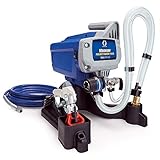
Look, nobody wants to spend months painting a brand-new house. The builders are on a schedule, and painters get paid by the job, so time is money. That’s why, for new construction, you’re almost always going to see sprayers. We’re talking about those big airless sprayers that can blast a wall of paint on in minutes.
I’ve used them myself on a few deck staining projects, and the speed is insane. You can cover an entire room, ceiling included, in a fraction of the time it would take with a roller. For a large, empty new build, where you don’t have to worry about masking off furniture or delicate flooring, it’s just the most efficient way to get paint on the walls. It lays down a really uniform, thin coat.
Think of it like a really fine mist that settles evenly. This is especially important on new drywall, which can be thirsty and absorb paint unevenly if you’re not careful. A spray gun, when used correctly, gives you that perfect, consistent finish that rollers can struggle to replicate without a ton of effort and multiple coats.
The thing with new houses is that you’ve got vast expanses of bare drywall, often with fresh mudding and taping that needs to be perfectly sealed and coated. Sprayers excel at this. They force the paint into all the little nooks and crannies of the drywall paper and the joint compound. It’s not just about speed; it’s about getting a finish that looks professional and consistent across huge surfaces.
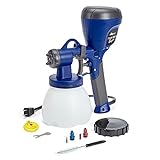
I’ve seen DIYers try to spray small areas, like a cabinet or a door, with a handheld sprayer, and that’s one thing. But for entire walls and ceilings in a new build? You need the power and volume of a professional airless sprayer.
It’s a tool that’s designed for scale. Imagine trying to roll the ceiling of a two-story foyer.
You’re on a ladder, awkwardly trying to get an even coat without drips, and it takes forever. A sprayer just blasts it on, and you can get it done in ten minutes flat. It’s a no-brainer for production builders.
One common mistake people make, even experienced DIYers, is thinking that just because it’s fast, it’s easy. Spraying requires a lot of prep. You have to cover EVERYTHING.
Seriously, plastic sheeting, tape, tarps – you’ll use more masking materials than paint, sometimes. Overspray is a real thing, and it gets everywhere. Dusts, furniture, light fixtures you forgot to remove – it all gets a fine coating of whatever color you’re applying. So while the spraying part is fast, the setup and cleanup can be just as time-consuming, if not more so.
But in the context of a new build, where the house is basically a giant empty box, the pros can set up efficiently, spray all the walls and ceilings, and then start the meticulous cleanup process. It’s a different beast than painting a lived-in room.
A Quick Comparison: Spray vs. Roll for New Builds
| Method | Pros (New Build Context) | Cons (New Build Context) | Verdict |
|---|---|---|---|
| Spraying | Incredible speed, uniform finish, covers texture well, efficient for large areas. | High prep time (masking), overspray risk, requires specialized equipment, potential for thin coats if not applied correctly. | Highly Recommended for New Construction |
| Rolling | Less overspray risk, easier for beginners, good for touch-ups and smaller areas, better control for thick coats. | Significantly slower for large areas, can leave roller marks or uneven texture, difficult for ceilings and high walls. | Generally Not Preferred for Entire New Interiors |
When Rolling Still Makes Sense (even in New Houses)
Now, before you think rolling is totally dead for new houses, let me tell you, that’s not quite the whole story. While the bulk of the walls and ceilings will almost certainly be sprayed, there are still places where a roller or even a brush shines. Think about trim work, doors, and any intricate architectural details. Sprayers can blast paint onto these areas, but you’ll get a much cleaner, more controlled line with a brush or a small foam roller. (See Also: Can Craft Foam Be Spray Painted )
I learned this the hard way when I tried to spray some baseboards once. I ended up with paint on the adjacent freshly painted wall and the carpet.
After that debacle, I went back to a good old-fashioned brush and a small roller for all my trim. It took longer, sure, but the crisp lines and professional look were worth it. For doors, especially if you want that smooth, factory-like finish without the mess of overspray on the frame, rolling or brushing is often the way to go.
Another scenario where rolling might be used, even in a new build, is if the homeowner specifically requests a certain texture or finish that’s harder to achieve with a spray. Some people like the slightly more textured look that a good quality roller can leave, or they might opt for a specific type of paint that’s better applied with a roller. However, this is rare in production building.
For most new homes, the goal is speed and a smooth, uniform appearance, which spraying delivers best. Also, consider areas that might have already been partially finished or are smaller, more contained spaces like closets. While builders often spray these too, there’s a case to be made for rolling them if the sprayer setup for a tiny closet is more hassle than it’s worth. But again, this is the exception, not the rule.
The vast majority of the large, open-plan living areas, bedrooms, and hallways in a new house will be sprayed.
I’ve also seen situations where a builder might spray the main walls and ceilings, and then a subcontractor comes in to do the trim and doors with brushes and rollers. This is a common division of labor. The spraying is done first because it’s the fastest way to get a base coat on everything. Then, the detail work, which requires more precision and less overspray, is handled by specialists. It’s a strategy that maximizes efficiency. So, while the question is ‘are more new house interiors sprayed or rolled for painting?’, the answer leans heavily towards spraying for the large surfaces, with rolling and brushing reserved for the more detailed elements.
The Nitty-Gritty of Spraying Techniques and Pitfalls
Let’s talk about the actual spraying process, because it’s not just point-and-shoot. If you’re watching a pro spray, you’ll notice a few things. First, they usually work in a consistent pattern, overlapping each pass by about 50%. This makes sure even coverage and avoids those tiger stripes of lighter or darker paint. They hold the gun a consistent distance from the wall – usually about 12-18 inches. Too close, and you get runs; too far, and you get a dusty, uneven coat. The speed of the gun’s movement is also key. Too fast, and you’re not laying down enough paint. Too slow, and you get drips and runs. It takes practice to get that rhythm down.
My own experience with a paint sprayer was a wake-up call. I was staining a deck, which is a bit more forgiving than painting walls, but I still made mistakes. I got impatient and didn’t clean my nozzle properly between passes, leading to clogs and an uneven spray pattern.
I also didn’t mask off the house siding well enough, and ended up with a fine mist of stain on it. The cleanup was a nightmare. For painting interiors, the stakes are even higher. You’re dealing with drywall dust, potential for mold if humidity isn’t controlled, and the need for a perfectly smooth finish.
A common pitfall for DIYers is using the wrong tip size. Too large a tip, and you’re laying down too much paint, leading to runs. Too small a tip, and you might not get enough coverage, or the paint might be too thick for the tip to atomize properly.
Another area where people mess up is the paint itself. Not all paints are created equal for spraying. You generally want a thinner, lower-viscosity paint.
Many paints require thinning to spray properly, and if you don’t do it correctly, or if the paint isn’t suitable for thinning, you can ruin the finish or damage your sprayer. For new construction, builders often use specific types of paints, usually a high-quality latex or acrylic, that are formulated to spray well and provide good durability. They might also use a primer specifically designed for new drywall.
Understanding the paint viscosity and the correct tip size for your sprayer and paint is absolutely important. It’s not just about buying the sprayer and a can of paint; there’s a bit of a science to it. Even pros can have issues if they’re not paying attention to the details. I once saw a crew struggling because they’d accidentally grabbed a batch of paint that was too thick, and they were getting terrible coverage and constant clogs. (See Also: Can Aluminum Be Spray Painted )
It’s a reminder that even with the best equipment, technique and attention to detail are everything.
The Roller’s Reign: Texture, Control, and DIY Friendliness
So, why would anyone ever pick up a roller for a new house interior when spraying is so dominant? Well, it comes down to control and texture. For a homeowner who wants a very specific, slightly imperfect, or textured finish, a roller is the go-to. Think of those beautiful limewash or Venetian plaster finishes; those are almost always applied with trowels and brushes, not sprayers.
Even with standard paint, a high-quality roller can create a subtle texture that some people prefer over the perfectly smooth, almost plastic-like finish that spraying can achieve. My cousin Sarah, for instance, hates the super-smooth look of sprayed walls. She says it feels sterile.
She insisted on rolling her entire living room, even though it was a huge space. It took her and her husband a solid weekend, but she loves the slightly uneven, hand-applied look. That’s where the roller still has its place.
From a DIY perspective, rolling is also far more approachable. You can rent a sprayer, but learning to use it effectively without making a mess or ruining your walls takes skill. A roller and tray, on the other hand, are intuitive.
You dip, you roll, you move. Sure, you can still mess it up – drips, lap marks, uneven coverage – but the learning curve is much gentler.
For a homeowner doing a small touch-up or painting a single room, rolling is the practical choice. It’s also less intimidating. The setup for spraying is a big commitment, especially if you’re not used to it.
For a new house, if the builder is doing the work, they’re not thinking about the DIYer’s comfort level; they’re thinking about efficiency. But if you’re a homeowner who bought a new build and wants to add your own personal touch by painting it yourself later, you’ll likely be reaching for a roller and brush.
There’s also the issue of paint thickness. Some paints, particularly certain specialty finishes or thicker paints, simply aren’t designed to be sprayed. They might clog the sprayer or not atomize properly, leading to a terrible finish.
In these cases, a roller is the only option. Additionally, if you’re painting in an existing home with furniture, you’ll almost always be rolling. The prep work to mask everything off for spraying would be overwhelming. So, while spraying dominates new construction for speed and uniform finish on large, empty surfaces, the roller remains king for texture, control, and DIY accessibility.
It’s about choosing the right tool for the job and the desired outcome. For the vast majority of wall and ceiling surfaces in a brand-new, unadorned house, spraying wins hands down.
The Case for Brushes: Precision and Detail Work
While we’re talking about painting tools for new houses, it’s impossible to ignore the humble paintbrush. Even in a house that’s predominantly sprayed, brushes are indispensable. They’re the precision instruments of the painting world. Think about the edges where the wall meets the ceiling – that’s called the “cut-in.” Sprayers can’t get into those tight corners. That’s where a good quality angled brush comes in. You run it along the edge, creating a clean, sharp line that a roller or sprayer can’t replicate. I’ve spent hours meticulously cutting in edges. It’s tedious work, but it’s what separates a amateur job from a professional one. A shaky hand or a sloppy brush stroke can ruin the look of an entire wall.
Beyond cut-ins, brushes are key for doors, windowsills, baseboards, and any other trim work. While some trim can be rolled with a small foam roller, intricate profiles or tight spaces often require a brush. (See Also: Can Bug Spray Damage Car Paint )
For example, painting the detailed molding around a door frame requires the flexibility and control of a brush to get paint into all the nooks and crannies without looking messy. I remember trying to paint some old Victorian trim in my last house. It had about five different profiles, and each one needed careful attention with a brush.
It took forever, but the finished product looked amazing. If I’d tried to spray it, I would have had paint everywhere, and the fine details would have been lost.
Even for homeowners painting their new house themselves, brushes are a must-have. You might spray the main walls, but you’ll still need brushes for the details. The type of brush matters too.
For water-based paints (like latex or acrylic, common for interiors), you’ll want a synthetic bristle brush. For oil-based paints, natural bristles are better. The size and shape of the brush also depend on the job. A 2-inch angled brush is great for cutting in, while a smaller sash brush might be better for fine detail work.
So, while the question is about spraying vs. rolling for new house interiors, it’s important to remember that brushes play a vital, albeit supporting, role in achieving a fully finished, professional-looking paint job. They are the unsung heroes of the painting process, handling the intricate details that machines simply can’t.
People Also Ask
Are Professional Painters Using Rollers or Sprayers for New Construction?
Professional painters overwhelmingly use sprayers for new construction. The speed and uniform finish achieved by airless sprayers are unmatched for large, empty spaces like new homes. This allows them to complete jobs much faster, which is important for builders on tight schedules. While rollers are still used for touch-ups or specific textures, the bulk of the painting in new builds is sprayed.
Is Spraying Paint Better Than Rolling for Interior Walls?
For large, unadorned interior walls, spraying generally provides a smoother, more uniform finish than rolling. It’s significantly faster for covering large areas. However, rolling offers more control, can create desirable textures, and is less prone to overspray, making it better for DIYers or when furniture is present. The ‘better’ method depends on the desired outcome and the user’s skill level.
Does Spraying Paint Use More Paint Than Rolling?
Spraying can potentially use more paint than rolling if not done efficiently, due to overspray and evaporation. However, professional sprayers are very efficient and aim to lay down a consistent, relatively thin coat. When done correctly, the amount of paint used can be comparable, and the speed advantage often outweighs any minor increase in material usage. Poor technique, however, can lead to significant waste.
What’s the Difference in the Finish Between Sprayed and Rolled Paint?
Sprayed paint typically has a very smooth, even finish with minimal texture, often described as having a ‘factory finish.’ Rolled paint, depending on the roller nap and application, can leave a slight texture or ‘orange peel’ effect. Some prefer the smoothness of sprayed paint, while others appreciate the subtle texture a roller can provide. The key difference is the uniformity and smoothness.
Verdict
So, to circle back to the big question: are more new house interiors sprayed or rolled for painting? The answer is a resounding, overwhelming ‘sprayed.’ For production builders and professional painters tackling a brand-new home, the speed, efficiency, and uniform finish that sprayers offer are simply unbeatable for the vast walls and ceilings. It’s the logical choice when you’re starting with a blank canvas and a deadline.
That doesn’t mean rolling is dead. Far from it. For trim, doors, and any DIYer wanting more control or a specific texture, the roller and brush still have their key roles. But for that initial, broad application of paint across an entire new interior, the sprayer is king. It’s how you get a whole house painted quickly and professionally.
If you’re buying a new build, understand that the primary painting method used was likely spraying. If you’re thinking about repainting or adding your own flair down the line, consider that difference and decide if you want that super-smooth sprayed look or if you prefer the character a roller can bring. It’s all about the finish you’re aiming for.