I remember the first time I blew a gasket on my old dirt bike. Not a blown head gasket, mind you. A blown engine case gasket. Cracked right in half. I’d been so proud of myself, tightening down every single bolt on that engine rebuild with my brand new, shiny torque wrench. I thought ‘more torque equals more secure,’ right? Turns out, that’s a rookie mistake, and asking ‘are my bolts too tight using a torque wrench’ is a question that separates DIYers from folks who just like to tinker.
The truth is, even with the best intentions and the fanciest tools, you can absolutely overdo it. It’s not just about getting the bolt to stop turning; it’s about getting it to the exact right amount of snug. Too loose, and things rattle apart. Too tight, and… well, you end up with parts that look like they’ve been through a compactor.
This isn’t some abstract concept; it’s about saving your project, your wallet, and your sanity. Let’s cut through the noise and figure out what’s actually going on when you twist that wrench.
That Click Means Something: How Torque Wrenches Actually Work
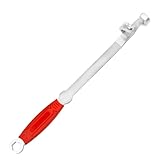
So, you’ve got this fancy wrench, right? It’s not just a fancy bar with a handle. When you use a click-type torque wrench, you’re setting a specific resistance. As you turn the bolt, the wrench builds up tension. Once you hit that pre-set tension point, a spring mechanism inside the wrench releases, and you hear and feel that satisfying ‘click.’ That click is supposed to tell you you’ve reached the manufacturer’s recommended tightness, no more, no less. It’s designed to prevent you from overtightening or undertightening fasteners, which, as I learned the hard way with my motorcycle engine case, can lead to some seriously expensive problems.
There are a few main types you’ll encounter. The click-type is the most common for DIYers and professional mechanics alike. Then there are beam-type wrenches, where a needle on a dial moves to indicate the torque. These are simpler and often cheaper, but can be harder to read accurately, especially if you’re working in awkward spots. Electronic torque wrenches are the fancy modern ones; they beep or vibrate when you hit the target. They’re generally very accurate but come with a higher price tag.
The key thing to remember is that torque is a measurement of rotational force. It’s how much twisting force you’re applying. This force is usually measured in foot-pounds (ft-lbs) or Newton-meters (Nm). Different bolts, different materials, and different applications all require different torque values. A tiny bolt holding a delicate electronic component needs far less torque than a massive lug nut on a truck wheel. If you’re wondering ‘are my bolts too tight using a torque wrench,’ the answer often lies in not understanding the specific torque value for that particular fastener.
Why is this so important? Because the manufacturer specifies a torque value for a reason. It’s not just an arbitrary number. It’s calculated to create the right amount of clamping force between two parts, without stressing the bolt, the threads, or the materials being joined.
Too little torque and the parts can loosen under vibration or load, potentially leading to failure. Too much torque, and you risk stripping the threads in the bolt or the material it’s screwing into, snapping the bolt head off, or even deforming the parts themselves. I once tried to torque down a set of exhaust manifold bolts on a car without checking the spec.
They were so tight they warped the manifold flange. Took me ages to flatten it back out. Lesson learned.
The accuracy of your torque wrench itself is also a factor. Cheaper ones, or older ones that haven’t been calibrated, can be way off. I’ve seen some budget torque wrenches that were consistently 20% or more inaccurate. If you’re working on something important, like a car engine, suspension components, or anything where failure could be dangerous, investing in a decent, calibrated torque wrench is a must. For basic DIY stuff, a mid-range one will probably get you by, but always be aware of its limitations.
Signs You’ve Gone a Little Too Far (or Not Far Enough)
So, how do you know if you’ve messed up? Sometimes it’s obvious, other times it’s sneaky. The most glaring sign that you’ve gone too far is when a bolt just… keeps turning.
You’re applying torque, expecting that click, and it just keeps going, or you feel the threads start to strip. That gritty, grinding feeling? That’s bad.
You’ve likely stripped the threads. This can happen in the bolt itself or, more commonly and often more expensively, in the material the bolt is threaded into. I once tried to force a bolt into a stripped hole on a piece of aluminum furniture. The bolt went in, but the threads in the aluminum were completely ruined.
I had to drill it out and tap it for a larger bolt, which looked terrible. Not a good feeling. (See Also: Do You Need Torque Caliper Bolts )
Another sign is a bolt that feels ‘mushy’ even after you’ve torqued it. This can indicate that the threads are damaged or the bolt is starting to stretch. Bolts are designed to work within an elastic limit. Stretch them too far, and they lose their ability to spring back, meaning they won’t hold tension properly anymore. This is especially true for stretch-to-yield bolts, which are designed to be torqued to a specific angle after reaching a certain torque value. If you overtighten these, they’re toast and need to be replaced.
What about signs of undertightening? This is often more subtle and can manifest over time. You might hear strange noises – rattles, clunks, or squeaks – coming from the area where the bolts are. You might also see signs of movement between the parts that are supposed to be held firmly together. For instance, if you’ve bolted a bracket to a frame and it’s not tight enough, you might see shiny spots where the bracket has been rubbing against the frame due to vibration. In important applications like automotive wheels, undertightened lug nuts are a recipe for disaster, potentially leading to a wheel coming off the vehicle.
Sometimes, you won’t get any immediate dramatic failure. Instead, you might experience leaks. If you’ve torqued down a manifold or a fluid-containing housing and it’s still leaking, it could be that the gasket isn’t being compressed evenly, or enough, because the fasteners weren’t tightened correctly. Conversely, overtightening a fastener on a gasket can crush it, creating a leak path where none should exist. I learned this with a transmission pan once. I cranked those little bolts down like crazy, thinking I was being thorough. Lo and behold, transmission fluid started weeping out from under the pan. I had to loosen them all, re-seat the gasket, and torque them carefully, which took way longer than doing it right the first time.
Visually, sometimes you can spot a bolt head that looks slightly deformed, or even cracked, if you’ve really gone overboard. This is a clear indicator that the material has exceeded its yield strength or fracture point. Threads that are pulled out or look mangled are also dead giveaways. When in doubt, and if it’s a important component, it’s often better to back off a fastener slightly and re-torque it, or even replace the bolt and start fresh. It might seem like a waste of time and a few dollars, but it’s a lot cheaper than a major repair or a dangerous failure.
Common Mistakes People Make with Torque Wrenches
Let’s be blunt: most people wing it. They buy a torque wrench, set it to some random number they vaguely remember, and crank away. That’s mistake number one: not knowing the correct torque specification for the fastener you’re working on. Manufacturers put these values in service manuals, on their websites, or sometimes even stamped near the bolt. If you don’t know the spec, you’re just guessing. And guessing with fasteners can be a real gamble. I once tried to guess the torque for a caliper bracket on a car. I ended up overtightening it and had to replace the whole steering knuckle because I stripped the threads in the aluminum housing. Not a fun afternoon.
Mistake number two is using the wrong type of torque wrench for the job or using it incorrectly. For instance, using a very large, heavy-duty torque wrench for tiny, delicate fasteners will make it almost impossible to be accurate. The use is too much, and the increments on the wrench might be too coarse. Conversely, using a tiny torque wrench for massive lug nuts won’t get the job done. Also, over-rotating after the click is a huge problem. That click is your signal. Stop. Don’t try to get ‘just a little more’ torque. That’s when you strip threads or break bolts.
Here’s a contrarian take for you: a lot of people think that if a torque value is listed as, say, 50 ft-lbs, you need to crank it until the wrench clicks firmly multiple times. That’s usually wrong. That single, clear click is the target. Going past it repeatedly can damage the wrench and the fastener. Another common mistake is not resetting the torque wrench to its lowest setting after use. Most click-type torque wrenches have a spring mechanism. Leaving it set to a high torque value for extended periods can actually weaken or damage the spring, making the wrench less accurate over time. Think of it like leaving a rubber band stretched out indefinitely; it loses its elasticity.
Lubrication is another minefield. Many torque specifications assume dry threads. If you lubricate the threads (with oil, anti-seize, or thread locker), you change the friction coefficient.
This means that the same torque setting will result in a higher clamping force. Some manufacturers specify different torque values for lubricated threads, but many don’t.
If you’re unsure, and the spec doesn’t mention lubrication, err on the side of caution and torque them dry, or use the manufacturer’s recommended torque value for lubricated threads if available. I once used a heavy-duty anti-seize on suspension bolts because I live in a salty area. The spec was for dry threads.
The bolts went in way too easy, and I stripped the threads in the control arm. Had to replace the whole arm.
Ouch.
Finally, not performing regular calibration checks is a big one. Torque wrenches, like any precision tool, can lose their accuracy over time. Dropping one or even just using it regularly can affect its calibration. Most manufacturers recommend calibration at least once a year, or after a certain number of cycles. If you’re using a cheap, no-name torque wrench that you bought at a discount store, the chances are high that it’s not accurate out of the box, and it’s probably getting worse. Trust me, that $20 torque wrench might be costing you a lot more in the long run. (See Also: Do I Need Special Replacement Bolts For Car Engines )
When to Actually Use That Torque Wrench (and When to Maybe Skip It)
Alright, so when is this fancy wrench a real lifesaver, and when is it overkill? For anything important, especially in automotive, aerospace, or any application where safety is most important, you absolutely need a torque wrench. Think about lug nuts on your car. Overtighten them, and you can warp your brake rotors or even snap a stud. Undertighten them, and you risk losing a wheel. Not worth the risk, even if it takes a few extra minutes. Other automotive examples include engine components like cylinder heads, connecting rods, and intake manifolds. These all have specific torque sequences and values that must be followed precisely. Follow them, and your engine runs smoothly. Ignore them, and you’re asking for trouble.
In bicycles, especially high-end ones with carbon fiber components, torque wrenches are a must. Carbon is strong but brittle. Overtighten a stem bolt on a carbon handlebar, and you can easily crush it, leading to a catastrophic failure. For things like seat posts, handlebars, and crank arms, there are often very specific, low torque values that need to be met. I saw a buddy’s expensive carbon seatpost crack right down the middle because he used a standard wrench and guessed the tightness. He learned his lesson the hard way, and it cost him a lot more than a proper torque wrench would have.
For general DIY projects around the house, like assembling furniture from IKEA, you could use a torque wrench, but often it’s not strictly necessary. Those fasteners are usually designed to be forgiving. Tightening them until they feel snug and secure is usually sufficient. The key here is “snug and secure.” You don’t want to be putting your entire body weight into the wrench. Same goes for many woodworking projects, unless you’re dealing with specific fasteners or materials that require precise clamping force.
However, there are times when even for DIY, a torque wrench is a good idea. If you’re building a deck or a fence, and you’re using lag bolts or structural screws, getting them to the right depth and tightness matters for the overall integrity and longevity of the structure. In my experience, for things like mounting heavy shelves or cabinets to walls, making sure those lag bolts are properly torqued provides peace of mind that they won’t unexpectedly let go. It’s also handy for anything involving plumbing connections that use threaded fittings where specific torque prevents leaks without crushing the fitting.
Here’s a table of common fasteners and when a torque wrench is generally recommended:
| Fastener Type | Typical Application | Torque Wrench Recommended? | Opinion/Verdict |
|---|---|---|---|
| Lug Nuts | Automotive Wheels | YES – Absolutely | Safety important. Incorrect torque can cause wheel loss. |
| Cylinder Head Bolts | Internal Combustion Engines | YES – Mandatory | Engine integrity and sealing depend entirely on correct torque. |
| Bicycle Components (Carbon Fiber) | Handlebars, Seatposts, Stems | YES – Mandatory | Carbon fiber is easily damaged by over-torquing. Precision is key. |
| Furniture Assembly (Flat Pack) | IKEA, etc. | NO – Generally Not Necessary | Snug is usually good enough. Overtightening can damage particle board. |
| Wood Screws (General Use) | Woodworking projects | NO – Generally Not Necessary | Feel is sufficient, unless dealing with very hard woods or delicate joints. |
| Lag Bolts/Structural Screws | Decking, framing, heavy shelving | YES – Recommended | Makes sure structural integrity and prevents overdriving into material. |
Ultimately, if you’re ever in doubt about whether a fastener needs precise torque, it’s better to use a torque wrench than to guess. It’s a tool that pays for itself in preventing costly mistakes and making sure your work is safe and reliable.
A Torque Wrench Isn’t Magic: Real-World Use and Calibration
Let’s talk about what a torque wrench actually does in the real world. It applies a measured amount of rotational force. But that force is affected by a bunch of things you might not think about. For starters, thread condition is huge. Clean, smooth threads will require less force to achieve the same clamping load compared to dirty, rusty, or damaged threads. This is why cleaning threads or even chasing them with a tap can be important before torquing. If the manufacturer’s spec assumes clean threads, and yours are gunky, you might be undertorquing without realizing it.
The material of the fastener and the material it’s going into also play a big role. A steel bolt going into an aluminum housing will behave differently than a steel bolt into steel. Aluminum is softer and more prone to stripping. This is why torque specs are so specific; they take into account the materials involved to make sure the bolt achieves the correct clamping force without damaging the softer material.
When I was working on a classic car with a lot of original aluminum parts, I learned to be extra, extra careful with torque values. I once overtightened a small bolt into an aluminum intake manifold and ended up having to buy a replacement manifold. That was a painful lesson in material differences.
The type of lubricant or thread locker used is also important. As mentioned before, lubricants reduce friction. This means that for the same applied torque, you’ll get a higher clamping force. Manufacturers sometimes provide different torque specs for dry threads versus lubricated threads. If they don’t, and you’re using a lubricant, you’re basically increasing the clamping force beyond what the spec intended, which can lead to over-stressing the bolt or the material. I’ve seen guys use copious amounts of anti-seize on everything, thinking it’s always good. It’s not. It can cause significant over-tightening if not accounted for, leading to stripped threads or broken bolts.
Calibration is the elephant in the room that most home mechanics ignore. Torque wrenches are precision instruments. They get dropped, they get stored improperly, and over time, their internal springs can weaken or their mechanisms can get slightly out of whack. Most manufacturers recommend having them calibrated annually, or after a specific number of uses, or if the wrench has been dropped.
I sent my primary torque wrench out for calibration after about three years of pretty heavy use. It came back reading about 15% low. That means for the last three years, I’d been undertorquing important fasteners without even knowing it!
It was a sobering realization. Investing in calibration is a small price to pay for the accuracy and peace of mind it provides, especially if you rely on that wrench for important jobs. (See Also: Can You Use A Torque Wrench To Break Bolts Loose )
What about those stretch-to-yield bolts? These are becoming more common, especially in engines and transmissions. They’re designed to be tightened to a specific torque, and then rotated an additional specific angle. This process stretches the bolt precisely to its elastic limit, creating an incredibly strong and reliable joint. However, if you overtighten these bolts beyond the specified angle, you’ve stretched them too far, and they are now permanently deformed. They will fail prematurely. There’s no going back. This is where a good torque wrench and an angle gauge (or a torque wrench with an angle finder built-in) are key. Trying to guess the angle is a sure way to ruin the fastener and potentially the component it’s holding.
Practical Tips for Getting It Right Every Time
Here are a few nuggets of hard-won wisdom that will help you avoid the ‘are my bolts too tight using a torque wrench’ dilemma. First off, buy a decent torque wrench. You don’t need the absolute top-of-the-line, but avoid the cheapest ones you can find. Look for brands that have a good reputation for accuracy and durability.
I’ve had good luck with brands like Craftsman (their higher-end ones), ACDelco, and some of the mid-range Tekton models for home garage use. If you’re working on anything truly important, like race car components, then you’re likely looking at Snap-on, Proto, or CDI.
And once you have it, read the manual. Seriously. Understand how to set it, how to use it, and importantly, how to store it properly.
Always store your click-type torque wrench at its lowest torque setting. This takes the tension off the internal spring, preserving its accuracy over time. Never use a torque wrench as a breaker bar to loosen stubborn bolts. This can damage the internal mechanism and throw off its calibration. If a bolt is that tight, use a regular wrench or a breaker bar first. When you’re using the torque wrench, pull smoothly and steadily. Don’t yank on it. The click should be distinct. If you’re not sure if you heard it, or if it feels mushy, it’s best to back off and try again.
Keep your fasteners clean. Before you start torquing, make sure the threads are free of dirt, rust, old threadlocker, and excessive old grease. A clean thread allows the bolt to seat properly and makes sure the torque reading is accurate. For applications where thread locker is specified, use the correct type and allow it to cure fully before applying torque. And remember, always double-check the torque specification. Don’t guess. If you’re working on a vehicle, get a service manual. If you’re assembling equipment, find the manufacturer’s documentation. Websites like Fastenal often have torque charts, but always defer to the OEM specs if possible.
Here’s a quick process to follow:
- Identify the exact fastener and its location.
- Consult the service manual or manufacturer’s documentation for the correct torque specification (including whether threads should be dry or lubricated).
- Select the appropriate torque wrench for the required range.
- Set the torque wrench to the specified value.
- Make sure the threads are clean and free of debris.
- Apply smooth, steady pressure to the torque wrench until you feel and hear the distinct click.
- Stop immediately upon reaching the click. Do not continue to apply force.
- If a specific tightening sequence or angle is required, follow it meticulously.
- Store the torque wrench at its lowest setting.
Finally, don’t be afraid to ask for help or second-guess yourself. If you’re unsure about a particular torque value or procedure, it’s better to pause and get clarification than to risk damaging your project or creating an unsafe condition. This is especially true for important components where failure could have serious consequences. It’s better to take a little extra time and do it right than to rush and have to fix a more expensive problem later.
People Also Ask
What Happens If You Torque a Bolt Too Much?
If you torque a bolt too much, you risk stripping the threads in either the bolt or the material it’s threaded into. You can also stretch the bolt beyond its elastic limit, causing it to weaken and potentially snap later. In some cases, overtightening can deform or crack the parts being joined together, leading to leaks or structural failure.
Can You Overtighten with a Torque Wrench?
Yes, you can absolutely overtighten with a torque wrench, especially if you don’t stop immediately when you hear or feel the click. Some people mistakenly believe the click is a suggestion and try to get “a little more” torque, which can damage the wrench, strip threads, or break the bolt. Over-rotation after the click is a common mistake.
How Do You Know If a Torque Wrench Is Accurate?
The most reliable way to know if a torque wrench is accurate is to have it professionally calibrated by a testing lab or the manufacturer. You can also perform basic checks by comparing readings with a known accurate wrench or by using a torque wrench checker tool. Regular calibration, typically annually, is recommended for precision tools.
What Happens If a Bolt Is Too Loose?
If a bolt is too loose, it won’t provide sufficient clamping force. This can lead to parts vibrating apart, fretting wear, leaks in sealed systems, or complete failure of the connection. In important applications like wheel lug nuts or suspension components, a loose bolt can have extremely dangerous consequences, potentially leading to parts detaching while in motion.
Final Verdict
So, to circle back to the question: are my bolts too tight using a torque wrench? The short answer is, yes, it’s entirely possible, and it’s a mistake many people make, myself included. It boils down to understanding the tool, respecting the specified torque values, and not treating that click as a starting point for more force.
A torque wrench is a precision instrument, not a magic wand. It requires careful handling, proper storage, and an understanding of the forces involved. If you’re constantly second-guessing yourself or worried about stripping threads, it’s a sign you need to get more familiar with your tools and the specifications for your project.
Next time you grab that torque wrench, take a deep breath, find that spec sheet, and let the tool do its job. Smooth, steady pulls are your friend. And if you’re ever unsure, it’s always better to re-torque or even replace a fastener than to risk a costly failure down the line.