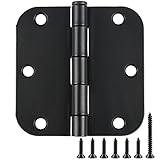
I remember walking into a kitchen showroom years ago, completely baffled. Everything looked… off. Sleek, modern cabinets, but with these clunky metal bits sticking out on the outside. My brain did a double-take. Was this some new trend I’d missed? I’d always associated hinges with the inside, a hidden detail. But there they were, front and center.
This is the question I kept circling back to: are new cabinets with hinges on outside popular? For a long time, my answer was a resounding ‘hell no.’ But the more I saw them, the more I wondered if I was just out of touch. Or worse, if I’d been stubbornly ignoring something that actually worked.
Let’s cut through the noise. These aren’t just some random design quirk; they’re a statement. And whether you love ‘em or hate ‘em, they’ve definitely got a following. So, are they popular? That’s what we’re here to figure out.
The Case for the Exposed Hinge: Why People Actually Choose Them
Alright, let’s talk about why anyone would willingly put hinges on the outside of their cabinets. It sounds counterintuitive, right? Most of us are trained to want things hidden, sleek, minimalist. But the reality is, exposed hinges aren’t just a mistake or a cheap shortcut, though they can be if done poorly. For many, it’s a deliberate aesthetic choice. Think industrial chic, farmhouse vibes, or even a retro nod. I’ve seen them pop up in kitchens that look like they belong in a Brooklyn loft, all exposed brick and polished concrete. They add a bit of mechanical character, a touch of the utilitarian that some people absolutely crave.
My first real encounter with this wasn’t in a showroom, but at a friend’s place who was going for a very specific, almost salvaged-wood look. Her kitchen cabinets were a deep, reclaimed oak, and instead of trying to hide the hinges, she went with these chunky, matte black ones that looked like they belonged on an old barn door. It wasn’t just about function; it was about completing the entire vision. And honestly, it worked. It grounded the whole space and made it feel less sterile, more lived-in. It’s that juxtaposition – the sleekness of cabinetry meeting the raw honesty of exposed hardware – that draws people in.
The other big factor is often durability and ease of maintenance. If you’re the kind of person who slams cabinets (guilty as charged, sometimes) or has kids who treat them like jungle gyms, exposed hinges can feel more solid. They’re right there, visible. You can see if something’s loose, if it needs a quick oiling, or if a screw has vibrated out. Compare that to an internal hinge that might be inaccessible without taking the door off entirely. For some commercial applications, or even busy family kitchens where ‘out of sight, out of mind’ can lead to neglect, having them visible is a practical advantage. You can’t ignore what you can see.
Let’s be clear: this isn’t for everyone. If your dream kitchen is all about smooth integration and vanishing hardware, then exposed hinges are probably going to drive you nuts. But if you appreciate a bit of grit, a bit of personality, and a hardware choice that speaks to a certain style, then they start to make a lot of sense. It’s about embracing the mechanical aspect of how things work, rather than trying to disguise it. The popularity, I’ve learned, is directly tied to these specific aesthetic desires and practical considerations.
A common misconception is that exposed hinges are always cheaper or lower quality. That’s absolutely not true. High-end manufacturers offer beautifully crafted exposed hinges in various finishes – brushed nickel, antique brass, oil-rubbed bronze – that can cost a pretty penny and add significant visual appeal. The price point varies wildly, just like any other hardware. So, while you can find cheap, flimsy exposed hinges, the high-quality ones are a design feature in themselves.
What to Look for When Choosing Exposed Hinges
So, you’re leaning towards the exposed hinge look. Awesome.
But before you go slapping any old hinge on your brand-new cabinets, let’s talk about what actually matters. This isn’t just about picking a shiny bit of metal; it’s about choosing something that complements your cabinets, functions smoothly, and doesn’t look like an afterthought.
The first thing you need to consider is the style of the hinge itself. They come in all shapes and sizes. You’ve got your classic butt hinges, which are probably the most common. Then there are strap hinges, which are much longer and more decorative, often seen on farmhouse or rustic designs.
Surface-mount hinges are another option, where the hinge is visible on the face of the cabinet door and frame. Each has a different visual impact.
My first foray into this was trying to match some industrial-style cabinet doors I’d bought second-hand. I ended up with these heavy-duty, black steel hinges that looked amazing, but they were way too big for the doors. The weight distribution was all wrong, and the doors sagged almost immediately. It was a rookie mistake born from focusing solely on the look without understanding the engineering. That taught me a valuable lesson: form and function have to walk hand-in-hand, especially with hardware. (See Also: Are Spring Loaded Door Hinges Better )
Material and finish are huge. Are you going for a modern, sleek look with brushed stainless steel? Or a warmer, vintage feel with antique brass or oil-rubbed bronze? The finish needs to hold up to your kitchen environment. High-quality hinges will have durable finishes that resist corrosion, especially in humid kitchens or near sinks. I’ve had cheap chrome plating flake off within a year, turning a stylish detail into an embarrassing eyesore. Look for solid brass, stainless steel, or high-quality powder-coated finishes. Don’t be afraid to ask about the coating and its durability. Some manufacturers even offer lifetime warranties on their finishes, which is a good sign.
The size and weight capacity are also important. A tiny hinge on a massive, heavy cabinet door is a recipe for disaster. You need hinges that are proportioned correctly for the size and weight of your doors. This is where consulting with your cabinet maker or a hardware specialist can be a lifesaver. They can tell you what weight capacity you need and recommend appropriate hinge sizes. I’ve seen people try to get away with undersized hinges, and the doors inevitably sag, bind, or even break. It’s a visual and functional nightmare.
Here’s a quick breakdown of what to prioritize:
| Feature | What to Look For | My Verdict |
|---|---|---|
| Style | Match the overall kitchen aesthetic (industrial, farmhouse, modern, etc.) | Don’t let it be an afterthought. The hinge IS a design element. |
| Material | Solid brass, stainless steel, quality powder-coated steel. Avoid cheap plated metals. | Durability is key. Cheaper materials look bad and fail faster. |
| Finish | Resistant to corrosion and wear. Consider your cabinet material and surroundings. | Needs to last and look good. Test in person if possible. |
| Size & Weight Capacity | Proportionate to the cabinet door size and weight. | Important for function. Overlook this and you’ll regret it. |
| Smoothness of Operation | Check if the hinge opens and closes smoothly without squeaking or sticking. | A smooth hinge feels high-quality and operates better. |
Finally, think about the mounting. Some exposed hinges are designed to be surface-mounted, meaning they attach directly to the face of the door and frame. Others might have a slight recess. Make sure the mounting style works with your cabinet construction and desired look. This is where understanding the mechanics of your cabinets really pays off.
Common Mistakes and What Not to Do
Okay, so we’ve established that exposed hinges can be a legitimate design choice. But I’ve also seen them done so badly it makes me want to weep. The number one mistake I see people make? Treating them like an afterthought, or worse, assuming any hinge will do.
This is where the budget-friendly, generic hardware store specials come in, and they almost always look exactly like that: cheap and generic. I once helped a friend pick out hardware for her “modern farmhouse” kitchen, and she’d already bought a set of brushed nickel hinges online. They looked okay in the picture, but when they arrived, they were flimsy, the finish was uneven, and they felt like they’d bend if you sneezed too hard.
They completely clashed with the solid wood doors and the overall vibe she was going for. It was a disaster. We ended up sending them back and spending an extra $150 on proper, heavy-duty ones that actually looked and felt the part.
Another huge error is mismatched style. You’ve got these beautiful, hand-finished walnut cabinets, and then you slap on some shiny, stamped-out chrome hinges that look like they belong on a garden shed. It’s jarring. The hinges need to complement the cabinets, not fight with them. If your cabinets are sleek and modern, you might opt for minimalist, clean-lined exposed hinges. If they’re distressed wood, perhaps something with a bit more texture or an antique finish. The common advice is to match finishes, but I disagree: you should match the feeling and style. A matte black hinge on a white shaker door can look fantastic, even though the finishes aren’t identical. It’s about the overall harmony.
People also frequently overlook the size and weight capacity. This is where the ‘pretty but useless’ hardware often appears. I’ve seen cabinets where the doors are clearly too heavy for the hinges, resulting in sagging, doors that won’t close properly, and stress fractures around the hinge mounting points. It’s not just ugly; it’s functional failure. A cabinet door that’s constantly sticking or dragging is incredibly frustrating. Always, always, always check the manufacturer’s specifications for weight limits and recommended door sizes. If you’re unsure, ask your cabinet maker or a knowledgeable hardware supplier. They’re the experts for a reason.
Finally, there’s the issue of installation. Exposed hinges need to be installed precisely. Because they are visible, any crookedness, uneven spacing, or misaligned doors are glaringly obvious. Unlike an invisible hinge where a slight misalignment might go unnoticed, an exposed hinge magnifies every imperfection. This means taking the time to measure carefully, use a level, and pre-drill pilot holes correctly. If you’re not comfortable with this level of precision, it’s absolutely worth hiring a handyman or carpenter to install them. A poorly installed exposed hinge looks unprofessional and cheap, undermining the entire aesthetic you were trying to achieve.
Let’s summarize the big no-nos:
- Buying the cheapest, most generic hinges you can find.
- Ignoring the style and finish match; don’t let hinges clash.
- Getting the size or weight capacity wrong, leading to sagging doors.
- Poor installation that highlights every imperfection.
These aren’t minor details. They are the difference between a kitchen that looks intentionally stylish and one that looks like a DIY disaster. (See Also: A Box Without Hinges Key )
Real-World Use: Are They Practical?
Let’s get down to brass tacks. We’ve talked about looks and mistakes, but how do these things actually hold up in the wild? Are cabinets with hinges on the outside practical for day-to-day life? My personal experience has been mixed, leaning towards ‘yes, but with caveats.’ I had a set of exposed hinges on a pantry cabinet in my old apartment. It was a small pantry, mostly for dry goods, and the hinges were simple, brushed nickel ones. They worked fine. The door opened and closed, and I never had any issues. However, it wasn’t a high-traffic area, nor was it subject to extreme humidity or temperature changes.
My friend Sarah, who went with the reclaimed wood look and heavy black strap hinges I mentioned earlier? Her kitchen is a different beast. It’s a busy family kitchen, constantly in use.
Kids are grabbing snacks, opening and closing doors with varying degrees of gentleness. The hinges she chose are incredibly solid and have held up beautifully.
They’ve needed a quick tighten-up maybe once a year, but that’s it. She says the visibility is actually a plus; she can see if anything is getting loose before it becomes a problem, and they’re easy to wipe down.
The practicality for her comes from the sheer sturdiness and the fact that she doesn’t have to fuss with them constantly, beyond occasional basic maintenance.
The practicality often hinges (pun intended) on the type of hinge and the environment. For a bathroom vanity, for instance, you’ll want hinges with finishes that are highly resistant to moisture and corrosion. A cheap, unsealed hinge will rust and pit quickly, looking terrible and eventually failing. For a garage workshop cabinet, durability and ease of cleaning might be the top priorities, with aesthetics taking a backseat. In these scenarios, a heavy-duty, powder-coated exposed hinge could be incredibly practical.
What about those super-sleek, minimalist exposed hinges you see on some modern designs? They can be practical too, but often require a bit more care. Think of them as requiring the same level of attention as a high-end appliance. They might have more complex internal mechanisms, or their finish might be more sensitive. The key is matching the hinge’s practicality to the demands of its location and usage. For example, if you’re installing them on a kitchen cabinet that gets a lot of grease splatter, you’ll want hinges that are easy to wipe clean without damaging the finish.
The biggest practical drawback I’ve encountered is simply the aesthetic. If you’re someone who likes a clean, uncluttered look, the visible hardware can just be… distracting. It breaks up the visual flow of the cabinetry. For some people, this is a feature; for others, it’s a constant annoyance. So, the practicality isn’t just about how well they function, but also about how well they fit into your personal tolerance for visible hardware. It’s a subjective thing. If the look bothers you, no amount of perfect functionality will make it truly practical for you.
One thing to consider is the type of door opening. Are they standard cabinet doors, or are you looking at something more specialized like appliance panels or appliance garages? The requirements for these can differ. For appliance panels, you often want a very clean, integrated look, which might steer you away from overtly decorative exposed hinges. However, for something like a wine cabinet or a liquor display, a decorative exposed hinge can add a touch of luxury and personality.
The Contrarian View: Why You Might Be Wrong About Them
Everyone and their dog seems to be going for the smooth, invisible look these days. Cabinet doors that blend into the wall, handles that disappear. It’s all about creating this clean, minimalist aesthetic. And I get it. It looks sharp. It makes a space feel bigger and more simplified. But here’s my contrarian take: sometimes, that pursuit of invisibility is a bit of a cop-out, and the common advice to always hide hinges is, frankly, wrong if you’re aiming for character and longevity in certain styles.
I disagree with the notion that exposed hinges inherently look cheap or messy. That’s a generalization that discounts a whole category of beautifully designed hardware. What people often mistake for inherent cheapness is actually just poorly chosen or poorly installed hardware. You wouldn’t say all door handles look cheap just because you’ve seen a few flimsy plastic ones, would you? The same applies here. The problem isn’t the concept of an exposed hinge; it’s the execution.
Think about the history of furniture and cabinetry. For centuries, hinges were not just functional; they were decorative elements. Look at antique armoires, chests, or even early kitchen cabinets. The hinges were often ornate, made of wrought iron or brass, and were a prominent feature. They were part of the craftsmanship. Hiding them was never the goal. The modern obsession with hiding everything is a relatively recent phenomenon driven by specific design trends. My grandmother’s old Hoosier cabinet had these beautiful, heavy cast-iron hinges that were a focal point. They were industrial, yes, but they were also elegant in their own way. They told a story. (See Also: Are Integrated Washing Machine Door Hinges Standard )
Furthermore, the constant push for hidden mechanisms can sometimes lead to more complex, and therefore more failure-prone, systems. When you have a simple, solid exposed hinge, there are fewer points of potential failure. If a concealed hinge fails internally, it can be a nightmare to fix or replace. An exposed hinge, being right there, is often easier to diagnose and repair.
It’s the mechanical equivalent of ‘what you see is what you get.’ This simplicity, in my book, often translates to greater long-term reliability and less frustration down the line. My own experience with a high-end, multi-component concealed hinge system on a lift-up cabinet door was a constant source of annoyance. It was supposed to be ‘invisible,’ but it was also constantly needing adjustment and made a weird creaking noise.
The simple, visible butt hinge I replaced it with? Silent, smooth, and hasn’t moved in two years.
The idea that hiding something makes it inherently better or more sophisticated is, I think, a bit of a fallacy. Sometimes, embracing the mechanical reality of an object, and even highlighting it, can lead to a more honest and interesting design. It’s about confidence in your choices. If you choose exposed hinges because they fit a specific aesthetic—be it industrial, rustic, or even a quirky modern look—and you choose high-quality ones that are installed perfectly, they don’t look cheap. They look intentional. They look like they belong. So, while the trend might be towards invisibility, don’t dismiss the power and appeal of visible, well-executed hardware. It’s not about being outdated; it’s about choosing a different, often more characterful, path.
Faq: Your Burning Questions Answered
Are Exposed Hinges a Sign of Poor Quality Cabinets?
Not necessarily. While cheap cabinets might use cheap, exposed hinges, high-quality cabinets can and do feature exposed hinges as a deliberate design choice. The quality of the hinge itself, its material, finish, and construction, is the true indicator of quality, not simply whether it’s visible.
Do Exposed Hinges Rust Easily?
It depends entirely on the material and finish. Stainless steel and well-coated brass or bronze hinges are very resistant to rust and corrosion. However, cheap, unsealed metal hinges, especially in humid environments like bathrooms or kitchens, can indeed rust or corrode over time, leading to unsightly staining and functional issues.
Can I Add Exposed Hinges to My Existing Cabinets?
Yes, you can often add exposed hinges to existing cabinets, but it requires careful planning. You need to make sure the new hinges are compatible with the door and cabinet frame construction, the size and weight of the doors, and that you can achieve precise alignment. It’s often best done when refacing or replacing cabinet doors.
Are Exposed Hinges More Difficult to Clean?
Generally, exposed hinges are no more difficult to clean than concealed hinges. You can usually wipe them down with a damp cloth along with the rest of your cabinetry. The main difference is that you can see any dust or grime buildup directly, which might prompt more frequent cleaning. Some intricate hinge designs might have more nooks and crannies to contend with.
Are New Cabinets with Hinges on Outside Popular in Modern Kitchens?
While the dominant trend in modern kitchens often leans towards minimalist, concealed hardware, exposed hinges are popular within specific modern aesthetics like industrial, loft-style, or certain Scandinavian-inspired designs. They are a stylistic choice rather than a universally standard feature, gaining popularity in niche design circles rather than mainstream popularity.
Final Verdict
So, are new cabinets with hinges on outside popular? The answer is a nuanced ‘yes, for certain styles and certain people.’ They’ve moved beyond being just a budget option or a mistake. They are a deliberate design choice that adds character, a touch of industrial flair, or a nod to traditional craftsmanship. If you’re going for a sleek, ultra-modern, minimalist look where every line must be uninterrupted, then no, they’re probably not for you. But if your kitchen has personality, if you appreciate the honest mechanics of how things work, or if you’re leaning into an industrial, farmhouse, or even a bold contemporary vibe, then exposed hinges can absolutely be the right call.
The key, as we’ve hammered home, is quality and intentionality. Cheap, poorly installed exposed hinges will make your cabinets look like a DIY fail. High-quality, well-chosen, and precisely installed ones will be a design feature that lifts your space. I’ve personally learned to appreciate them more, not as a compromise, but as a statement. They’re not for every kitchen, but when they fit, they fit beautifully.
My final thought? Don’t be afraid to consider them if they speak to your style. Do your research, choose wisely, and install them properly. You might just find that the hardware you were taught to hide is exactly what your kitchen needs to stand out.