I remember standing in my first fixer-upper, staring at a sink drain that was… well, wrong. Just a straight pipe going down. My dad, bless his heart, just shrugged and said, ‘Probably fine.’ Fine? It smelled like a sewer had moved in. That’s when I learned that plumbing isn’t just about connecting pipes; it’s about creating a system that actually works and, more importantly, is safe. So, the question ‘are p traps required by code’ isn’t just about ticking a box; it’s about preventing your house from smelling like a biology experiment gone wrong.
Forget the fancy jargon. At its core, this is about keeping your air clean and your family healthy. I’ve seen enough dodgy DIY jobs and cheap product failures to know that sometimes, the simplest, most obvious solutions are the ones mandated for a reason. Let’s cut through the noise and talk about what you actually need to know about p traps and building codes.
Why Your Sink Isn’t Just a Hole in the Floor
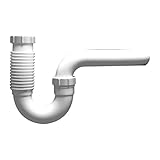
So, you’re wondering if that U-shaped piece of pipe under your sink or shower is just some plumber’s fancy decoration or if there’s a real reason it’s there. Let me tell you, it’s the latter. And the answer to ‘are p traps required by code’ is a resounding yes, almost everywhere. I’ve been elbow-deep in plumbing disasters, and trust me, a missing or faulty P-trap is a fast track to a stinky house and potential health hazards. It’s not just about stopping water from leaking out; it’s about stopping nasty sewer gases from leaking in.
Think about it: your drains lead to a complex network of pipes that eventually connect to the sewer system or a septic tank. This system is full of all sorts of unpleasant byproducts of decomposition – methane, hydrogen sulfide, and other gases that smell awful and can even be harmful in higher concentrations. Without a P-trap, these gases would have a direct highway right into your living space. It’s like leaving your front door wide open to a garbage dump.
I once bought a rental property where the previous owner, a supposed ‘handyman,’ had bypassed the trap on a guest bathroom sink. The moment I turned on the faucet, the smell that hit me was… unforgettable. I had to rip out the vanity and replace the trap immediately. That experience cemented my respect for this simple, yet vital, piece of plumbing.
The P-trap works on a deceptively simple principle: it’s designed to hold a small amount of water in its curved section. This standing water acts as a seal, a barrier. When you run water down the drain, it flushes out the old water and replaces it with fresh water, maintaining the seal. This seal is your first and best line of defense against those noxious sewer gases.
It’s passive, it’s effective, and it’s why it’s a fundamental component of any plumbing system designed to meet modern building standards. The International Plumbing Code (IPC) and Uniform Plumbing Code (UPC) both explicitly require fixture drains to be equipped with traps. These codes are the backbone of safe building practices in most of the United States and many other parts of the world. They aren’t suggestions; they’re mandates designed for public health and safety.
Understanding how this little curve of pipe protects your home is key. It’s not an optional extra. It’s the gatekeeper, making sure that the only thing coming out of your drain is water. The design is universal because the problem – sewer gas intrusion – is universal. Whether you’re in a sprawling mansion or a tiny apartment, the physics of pressure and gas are the same. This is one of those instances where ‘code’ actually means ‘common sense’ codified.
Decoding the Codes: What the Inspectors Look For
When you’re talking about whether are p traps required by code, you’re really talking about what gets a building inspector to sign off on your work, and more importantly, what keeps your home safe and up to snuff. Codes aren’t just there to annoy DIYers; they’re a set of standards developed over decades, often in response to public health crises or major building failures. The people who write these codes aren’t just guessing; they’re looking at what works, what’s safe, and what has proven to be reliable in preventing problems like foul odors, pest infestations, and the spread of disease.
The primary codes governing plumbing in the U.S. are the International Plumbing Code (IPC) and the Uniform Plumbing Code (UPC). Both are widely adopted, though local jurisdictions might have amendments.
The core requirement for traps is consistent across them. Section 307.1 of the IPC, for example, states that ‘Each fixture trap shall be placed as close as practicable to the outlet of the fixture drain, and the horizontal length of the trap arm from the fixture trap to the vent opening shall not exceed 5 feet (1524 mm) for a 3-inch (76 mm) nominal diameter trap arm or less.’
This might sound technical, but it breaks down to this: the trap has to be close to the fixture, and the vent pipe has to be properly connected. The vent is important because it allows air into the drain system, preventing a vacuum from siphoning the water out of the P-trap after a flush.
Without that air gap, your P-trap’s seal would be gone, and those sewer gases would come right back.
When an inspector comes to your house, they’re checking for several things related to P-traps. First, is there a trap on every fixture that needs one? (See Also: Are Omega Watch Straps Real Alligator )
This includes sinks (kitchen, bathroom), tubs, showers, and floor drains in areas like basements or garages. Second, is it the right type of trap?
Generally, a simple P-trap (the U-bend) is what’s expected. Some specialized applications might use different types, but for standard fixtures, the basic P-trap is the go-to. Third, is it installed correctly? This means it’s properly connected to the fixture drain above and the drain line below, and it’s not leaking.
They’ll look for proper slope and, importantly, the presence and correct sizing of the vent connection. A common mistake I see is people installing a P-trap but neglecting the vent, or having a vent that’s too small or too far away. The trap arm length mentioned in the code is important here; too long, and it can trap debris or lose its seal.
Beyond the visible trap, inspectors also check the trap seal depth. Most codes require a minimum seal of 2 inches (50 mm) and a maximum of 4 inches (100 mm). This makes sure enough water is held to create a reliable barrier without being so deep that flushing becomes inefficient or prone to siphoning. They’re basically making sure the trap is doing its job: holding water to block gases and venting properly so it keeps holding water. It’s a system, and every part has to be right. If you’re doing a renovation or a new build, getting these details right upfront saves you a massive headache and a potential costly redo.
Common P-Trap Mistakes and What Happens Next
Mistakes with P-traps are more common than you might think, and they range from minor annoyances to genuine plumbing nightmares. The number one error I see, especially with DIYers, is related to venting. People get so focused on installing the U-bend itself that they forget or misunderstand the importance of the vent pipe.
If you don’t have a properly functioning vent, when you drain a sink, the rush of water creates a vacuum behind it. This vacuum can literally suck the water right out of the P-trap. Once that water is gone, the seal is broken, and you’re left with that lovely aroma of raw sewage wafting back into your home. I learned this the hard way when I tried to ‘simplify’ a vent system in my own bathroom renovation.
For a week, everything seemed fine, then suddenly, the bathroom started to smell like a forgotten gym sock. Took me two days to trace it back to the siphoned trap.
Another frequent blunder is improper trap arm length or slope. The code specifies maximum lengths for the horizontal run (the ‘arm’) of the trap because if it’s too long, it can accumulate debris, which leads to clogs. Plus, a longer run increases the risk of siphoning. The slope is also important; it needs to be just right – typically 1/4 inch per foot – to allow water to flow freely without being so steep that it strips away the protective water seal. Too flat, and water pools, potentially stagnating or failing to clear the trap properly. I’ve seen traps installed with a negative slope – water pooling in the arm, creating its own little cesspool.
Then there’s the issue of trap material and connections. While plastic (PVC or ABS) is common and affordable, it can become brittle over time or crack if not handled carefully during installation. Metal traps (brass or chrome-plated brass) are more durable but can be more expensive and susceptible to corrosion if the finish is damaged. Improperly tightened slip nuts are a classic cause of leaks.
These aren’t usually code violations in themselves unless they cause ongoing leaks, but they lead to the same stinky, wet mess. Many codes also prohibit certain types of traps for specific fixtures. For instance, running a continuous waste system (where multiple fixtures share a single trap) is generally not permitted for sinks or tubs due to the increased risk of siphoning and cross-contamination. Each fixture that discharges waste needs its own trap, and that trap needs its own vent connection or to be tied into a properly sized vent system.
The consequences of these mistakes? Besides the awful smell, you can face issues with pests (cockroaches and rodents can travel through dry traps), and in severe cases, the buildup of sewer gases can pose health risks. If you’re having a house inspected for sale, these issues will almost certainly be flagged, leading to costly repairs and potentially delaying or even scuttling the deal. It’s far better to get it right the first time.
When Are P Traps Not Strictly Required (and Why You Still Might Want One)
Okay, so we’ve established that for most common plumbing fixtures, P-traps are not just recommended; they are required by code. But are there any exceptions? Yes, there are a few niche scenarios, and understanding them helps clarify why P-traps are so fundamental everywhere else.
The most common exception you’ll find mentioned in plumbing codes relates to floor drains in certain locations, particularly those not connected to the sanitary sewer system. For example, a floor drain in a detached garage or an outdoor patio that drains directly to the surface or a storm sewer might not require a P-trap. Why? Because it’s not connected to the sanitary sewer where those noxious gases originate. (See Also: Are Traditional Mouse Traps Humane )
It’s draining rainwater or surface runoff, not wastewater carrying sewage.
Another area where traps might be deemed unnecessary by code, again depending heavily on local regulations and the specific setup, is for certain industrial equipment or specialized processes where the discharge is a clean, non-odorous substance and there’s no risk of sewer gas ingress. However, even in these cases, if there’s any connection, however remote, to the sanitary sewer system, a trap is usually mandated. Codes are written with a strong emphasis on preventing the worst-case scenario, which is contamination from the sewer.
Now, here’s the contrarian bit: even if a P-trap isn’t strictly required by code for a specific application (like that storm drain in the patio), I would still seriously consider installing one, or at least a backwater valve. Why? Because codes are minimum standards. They are designed to prevent outright disaster, not necessarily to provide the absolute best performance or prevent every minor nuisance.
A floor drain, even if it drains to a storm sewer, can still be an entry point for vermin, insects, or even localized ground odors. A P-trap, even with just a small amount of water, can act as a deterrent.
Furthermore, plumbing systems can change over time. What might be a storm drain today could be connected to a sanitary sewer in the future if renovations happen. Having a trap in place offers a layer of future-proofing and general protection that goes beyond the bare minimum.
The key takeaway is that the reason P-traps are required for sinks, toilets, tubs, and showers is to prevent the backflow of sewer gases. If your drain doesn’t handle sewage or waste from living spaces, the code might not mandate a trap. But always, always check your local building codes and consider the practical benefits of that water seal, even when the code doesn’t explicitly demand it. Sometimes, what seems like an optional piece of plumbing is actually a very smart safeguard.
Choosing and Installing the Right P-Trap
Selecting the correct P-trap isn’t rocket science, but there are a few things to consider to make sure you get it right. The most common type you’ll encounter is the standard PVC P-trap. These are inexpensive, easy to cut and assemble, and readily available at any hardware store. They come in various sizes, typically matching your drain pipe diameter (usually 1 1/4 inch for bathroom sinks and 1 1/2 inch for kitchen sinks).
When buying, look for a trap that has decent wall thickness; some of the really cheap ones can feel flimsy. For exposed applications, like under a pedestal sink where the trap is visible, you might opt for a metal P-trap (like brass or chrome-plated brass) for a cleaner look.
These are more durable but also more expensive and can be trickier to install due to the need for precise cutting and fitting.
When it comes to installation, the most important thing is to follow the manufacturer’s instructions and pay attention to the details. You’ll typically be dealing with slip-joint connections, which use large nuts and plastic or rubber washers to create a seal.
Make sure the washers are oriented correctly (usually the tapered side faces the direction of the tightening nut) and that you don’t overtighten the nuts, which can crack the plastic or strip the threads. Hand-tightening plus a quarter-turn with pliers is usually sufficient. The trap needs to be installed with the correct downward slope towards the drain pipe below and should be positioned so that the trap arm has a slight downward slope towards the wall connection (usually 1/4 inch per foot).
This makes sure proper drainage and prevents water from pooling.
A important part of installation, as we’ve discussed, is making sure proper venting. The vent pipe connects to the trap arm, typically through a T-fitting or a specially designed P-trap with a vent connection. This vent allows air to enter the drain system, preventing siphoning. If you’re replacing an old trap, carefully note how the old vent was connected and replicate it. If you’re installing new plumbing, make sure the vent pipe is sized and routed according to code. For a standard 1 1/2 inch P-trap, the vent connection is usually on the horizontal trap arm, a short distance from the trap itself. It’s vital that this connection is made correctly; otherwise, the trap won’t function as intended. (See Also: Are Sticky Mouse Traps Humane )
Here’s a quick comparison of common P-trap materials and their use cases:
| Material | Pros | Cons | Verdict |
|---|---|---|---|
| PVC | Inexpensive, lightweight, easy to cut and glue/assemble. Widely available. | Can become brittle with age or UV exposure. Less aesthetically pleasing for exposed applications. | Excellent for most hidden applications. The go-to for budget-conscious or DIY projects. |
| ABS | Similar to PVC, but often preferred in colder climates as it’s less brittle. | Can be slightly more expensive than PVC. Requires specific primer and cement. | A solid alternative to PVC, especially if you’re in a region with very cold temperatures during installation. |
| Brass (Chrome-Plated) | Durable, attractive for visible installations. Resists corrosion well. | More expensive. Can be harder to cut and fit. Finishes can be scratched. | Ideal for bathrooms or kitchens where the P-trap is exposed and aesthetics matter. Invest if looks are important. |
| Cast Iron | Extremely durable and heavy-duty. | Very heavy, expensive, difficult to cut and install. Not common for residential sink traps. | Rarely used for standard sink P-traps; more common in heavy-duty commercial or industrial drainage. Overkill for home use. |
When in doubt, consult your local building department or a qualified plumber. Getting the trap type, size, and installation right makes sure it performs its important function reliably for years to come.
The P-Trap: More Than Just Code Compliance
We’ve covered the technicalities, the codes, and the common slip-ups. But let’s boil it down to what really matters for your day-to-day life. The P-trap is the unsung hero of your plumbing system. It’s that humble piece of pipe that silently prevents your home from smelling like a public restroom or a science experiment. When you ask ‘are p traps required by code,’ the answer is almost universally yes because the alternative – a direct line to sewer gases – is unacceptable from a health and comfort perspective. These codes aren’t arbitrary; they’re based on practical engineering and decades of experience in keeping homes livable and safe.
Beyond code compliance, there’s a real tangible benefit to having a correctly installed and functioning P-trap. It acts as a barrier against not only gases but also vermin and insects that can travel through dry or broken drain lines. Think of it as a small, water-filled moat protecting your home from the underworld of sewage. I’ve had friends ask if they can skip them on a utility sink in a garage that drains outside.
My answer is always a firm no. Even if it’s not connected to the main sewer, you never know what might be lurking down there, and a little water seal is cheap insurance against all sorts of unpleasant visitors and odors. It’s a simple mechanism that provides significant protection.
The prevalence of DIY shows and online tutorials can sometimes lead people to believe that plumbing is straightforward. While basic tasks like replacing a P-trap can be a manageable DIY project for some, it’s key to understand the underlying principles and code requirements.
A mistake here isn’t just a minor aesthetic flaw; it can lead to persistent odors, potential health issues, and costly repairs down the line. If you’re unsure about any aspect of your plumbing, especially regarding venting or code compliance, it is always best to consult with a licensed plumber. They have the experience and knowledge to make sure your system is safe, functional, and up to code. Investing a little now in professional advice or a proper installation can save you a lot of money and grief later.
Frequently Asked Questions About P-Traps
Do I Need a P-Trap on Every Drain?
Generally, yes. Any fixture that drains into a sanitary sewer system – sinks, tubs, showers, toilets, washing machines – requires a P-trap to prevent sewer gases from entering your home. Some exceptions exist for drains that discharge directly to the outside and are not connected to the sanitary sewer, but this is highly dependent on local codes. Always verify with your local building department.
What Happens If I Don’t Have a P-Trap?
Without a P-trap, there is no water seal to block sewer gases from entering your home. This will result in foul odors, and in the long term, can potentially pose health risks due to the presence of methane and other harmful gases. You might also find that vermin and insects can travel up through the drain line.
Can I Use a ‘high-Efficiency’ or ‘air-Admittance’ Valve Instead of a P-Trap?
Air-admittance valves (AAVs) are often used to vent plumbing systems, but they do not replace the P-trap itself. The P-trap is the component that creates the water seal to block gases. AAVs help prevent siphoning by allowing air into the drain system, but they are typically used in conjunction with a P-trap, not as a substitute for it. Codes specify requirements for both traps and vents.
How Often Should I Clean My P-Trap?
P-traps don’t typically need regular ‘cleaning’ unless they are clogged. However, if a fixture is seldom used, the water in the trap can evaporate over time, breaking the seal. In such cases, running water for a minute or two will replenish the seal. If you experience persistent clogs, the P-trap is often the first place debris accumulates, and it can be manually cleaned out by disassembling it (make sure you have a bucket underneath!).
What’s the Difference Between a P-Trap and an S-Trap?
An S-trap is an older design where the trap bends down and then up again, forming an ‘S’ shape. These are much more prone to siphoning the water seal out due to the nature of their design. Most modern plumbing codes prohibit S-traps because they are not reliably self-venting and can easily lose their water seal, allowing sewer gases to enter. The P-trap, when properly vented, is a far superior and code-compliant solution.
Final Thoughts
So, to wrap it up, the question ‘are p traps required by code’ has a pretty straightforward answer: yes, for almost every fixture in your home that connects to the sanitary sewer. It’s not about making life difficult; it’s about basic sanitation and preventing your house from becoming a methane factory. I’ve learned the hard way that cutting corners on plumbing essentials like these leads to way more trouble than it’s worth.
Don’t treat the P-trap as just another piece of pipe. It’s a important barrier. If you’re doing any work yourself, or even just noticing odd smells, take a good look at your traps and their vents. Make sure they’re present, properly installed, and holding water. If you’re ever in doubt about your plumbing, especially when it comes to code compliance or potential issues, call in a professional. It’s an investment in your home’s health and safety.
The next time you run your tap, take a second to appreciate that little curve of pipe. It’s doing a dirty job, keeping your living space clean and odor-free, exactly as it should.