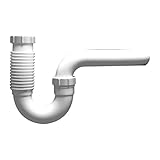
I remember standing in my buddy Dave’s garage, staring at this tangle of pipes under his new sink. He’d bought the fanciest faucet he could find, but the drain looked like a drunk octopus. “What’s all this junk?” I asked. He just shrugged, “Plumber said it’s fine.” Fine? It looked like a recipe for disaster. That’s when I realized how much we just assume about plumbing, especially the stuff hidden away. Like the humble p trap. Everyone sees them, but do they know if are p traps standard size? I certainly didn’t, not at first.
It’s easy to think of plumbing as one-size-fits-all, but when you’re elbows-deep in a DIY project or just trying to fix a slow drain, that assumption can cost you time and money. This isn’t about fancy fixtures; it’s about the basic guts of your house that stop things from going horribly wrong. And the p trap is at the heart of that.
Why That Goofy Curve Matters: The P Trap’s Real Job
Let’s cut the crap. The reason you see that U-shaped or P-shaped bit of pipe under your sink or toilet isn’t just for looks. It’s your first line of defense against something truly foul: sewer gas.
Think about it. Wastewater goes down, but what’s lurking in the pipes beyond that? Bacteria, decomposing gunk, and, well, gases that smell like a dumpster fire in August. These gases are not only rank, but they can also carry germs and be downright unhealthy to breathe in prolonged amounts.
The p trap, whether it’s a true P shape or a more common U-bend followed by a horizontal pipe, is designed to hold a small amount of water. This water creates a seal, a liquid barrier that effectively blocks those nasty gases from creeping back up into your living space.
It’s a simple, elegant solution. Water flows down, does its job, and then a little bit remains trapped in the lowest part of the curve. When you run the tap, fresh water flushes out the old, maintaining the seal. This mechanism is so effective, it’s been around for ages.
Most residential plumbing codes mandate them for exactly this reason. Without that water seal, your home would smell like a public restroom, and that’s putting it mildly. I learned this the hard way when I was trying to save a buck and bought a cheap, flimsy sink drain assembly for a basement bathroom. The “trap” part was barely a dip, and within a week, that faint sulfuric smell started creeping in.
I thought it was the old pipes, but nope, it was that cheap piece of plastic failing to hold a proper water seal. Lesson learned: the shape and the water it holds are a must.
Beyond the seal, the p trap also acts as a rudimentary catch for small, dropped items. Ever dropped an earring down the sink? If you’ve got a p trap, there’s a good chance it’s sitting in that U-bend, waiting for you to unscrew it and retrieve your treasure. I’ve fished out more than a few rings and small tools from p traps.
It’s a small bonus, but a welcome one. The design is fundamentally about creating a low point where water can sit undisturbed, a simple physical barrier against airborne nasties. It’s a testament to how basic physics can solve complex problems, making our homes more comfortable and hygienic. The materials they’re made from – usually PVC, ABS plastic, or sometimes metal like brass or stainless steel – are chosen for their durability and resistance to corrosion, making sure that water seal remains intact for years.
The Straight Dope on ‘standard Size’: What Plumbers Actually Mean
Okay, so you’re staring at plumbing diagrams or standing in the aisle at the hardware store, and you see terms like ‘1-1/4 inch’ or ‘1-1/2 inch’. When people ask if are p traps standard size, they’re usually referring to the diameter of the pipe. For most residential sinks, tubs, and showers, the standard drain pipe diameter is 1-1/2 inches. This is the most common size you’ll encounter for kitchen sinks, bathroom sinks, and even some tubs. However, toilets are a different beast. They typically use a larger 3-inch or 4-inch waste pipe, and while they have a trap built into the porcelain itself, the connection to the main drain line will use larger diameter piping and trap configurations.
But here’s where it gets a little murky and why the ‘standard’ question isn’t a simple yes or no. While the diameter is often standard, the configuration can vary. You’ll see J-bends, P-traps, and S-traps (though S-traps are largely outdated and often prohibited in modern codes due to their tendency to siphon dry). (See Also: Are Omega Watch Straps Real Alligator )
The overall length and the distance between the inlet and outlet can also differ slightly depending on the fixture and the available space. A vanity sink might have a more compact p trap, while a utility sink in a basement might have a longer one. The important measurement is almost always the pipe’s nominal diameter – the inside diameter that dictates water flow and compatibility with other fittings.
Most DIYers and even many pros will stick to these common diameters to make sure easy connections and proper drainage.
My first real plumbing panic attack happened when I was replacing a pedestal sink. The old trap was brass, looked ancient, and was corroded. I bought a shiny new plastic one, feeling smug about my DIY skills. I got it all hooked up, turned on the water, and… leak.
Not a drip, but a steady weep from where the trap connected to the drain pipe coming out of the wall. Turns out, the old trap was a slightly larger, non-standard diameter, or maybe the wall fitting had expanded over time. The new, ‘standard’ trap just wouldn’t seal properly.
I ended up having to buy a few different adapter fittings and a new wall flange to make it work. It took me three trips to the hardware store and about two hours of fiddling.
That’s the thing about ‘standard’: it’s a guideline, not an absolute law in every single house built before yesterday.
Common P Trap Sizes for Residential Plumbing
| Fixture Type | Common Pipe Diameter | Notes |
|---|---|---|
| Bathroom Sink / Vanity | 1-1/2 inch | Most common for sinks and lavatories. |
| Kitchen Sink | 1-1/2 inch | Double sinks might have a more complex drain assembly but still use 1-1/2 inch traps. |
| Bathtub / Shower Drain | 1-1/2 inch | Sometimes can be 2 inch for larger or higher-volume drains. |
| Toilet | 3 inch or 4 inch (waste line) | Trap is integrated into the toilet bowl. Pipe size is for the waste line connection. |
| Utility Sink | 1-1/2 inch or 2 inch | Can vary based on sink size and intended use. |
This table highlights the typical diameters. When you’re buying a replacement, measure the pipe you’re removing or check the old part. It’s better to be sure than to have my ‘three trips to the hardware store’ experience.
When ‘standard’ Isn’t Enough: Avoiding Common Mistakes
The biggest blunder people make is assuming all p traps are interchangeable just because they look similar or have the same stated diameter. As I learned, slight variations in pipe diameter, wall thickness, or even the angle of the connections can cause headaches.
Another common mistake is buying the cheapest plastic trap you can find. These often have thinner walls, less solid threads, and can become brittle over time, leading to cracks and leaks.
I’ve seen cheap traps warp under heat or simply fail to create a reliable seal. For a few extra bucks, opting for a thicker-walled, name-brand plastic trap, or even a brass or stainless steel one if your budget allows and the aesthetics matter, is usually a wise investment. You want something that feels solid, not flimsy.
One of the most frustrating issues is improper installation, leading to leaks or the trap not holding water. This can happen if the slip nuts aren’t tightened enough, or if they’re over-tightened, cracking the plastic fitting. Sometimes, old, worn-out washers (the rubber or plastic rings that create the seal) are reused instead of being replaced with new ones. (See Also: Are Traditional Mouse Traps Humane )
Always use new washers when installing or re-installing a p trap. Another subtle mistake is installing the trap too high or too low relative to the fixture drain. While plumbing codes dictate minimum distances and slopes, a poorly positioned trap might not retain enough water or could be prone to siphoning.
Siphoning is when the water seal is pulled out of the trap, defeating its purpose. This often happens with improperly vented systems or with those old, banned S-traps.
The common advice you’ll hear is to just ‘get a standard 1-1/2 inch p trap.’ I disagree.
My advice is to always inspect the existing trap or the connections you’re working with before you buy a replacement. Look for any signs of damage, unusual dimensions, or corrosion.
If it’s metal, check for pitting. If it’s plastic, check for cracks or warping. Sometimes, the issue isn’t the trap itself, but the drainpipe it connects to. If the pipe coming out of the wall is damaged or has a non-standard fitting, you’ll need to address that first.
I once spent an entire Saturday trying to fix a leak under a sink, only to realize the problem was a hairline crack in the drainpipe behind the wall, which the p trap was correctly showing me with every flush. It pays to be a detective, not just a parts replacer.
Putting It to the Test: Real-World P Trap Performance
In my own home, I’ve got a mix of p traps. The main bathroom sink has a standard 1-1/2 inch PVC trap I installed about five years ago. It’s been completely trouble-free. No smells, no leaks, just doing its job quietly. It’s a simple, no-frills design, and it works. In contrast, the old house I bought a few years back had some original cast-iron plumbing, including traps. These were heavy, durable, but prone to internal corrosion and buildup. Over time, the buildup narrowed the pipe and made them more susceptible to clogs. Replacing those iron traps with modern PVC was a significant upgrade, not just for ease of maintenance but for hygiene. The smooth PVC surface resists gunk much better.
I’ve also encountered situations where a standard p trap just wasn’t practical. In a tight under-sink cabinet with lots of pipes and a garbage disposal, I once had to use a ‘space-saver’ or ‘low-profile’ p trap. These are designed to hug the wall more closely. While they solve a space problem, they can sometimes be a bit fiddlier to clean and might have a slightly smaller water holding capacity. For a kitchen sink, where you might be washing greasy pans, a full-size trap is generally preferable. My experience is that for everyday use and reliability, the standard 1-1/2 inch PVC p trap is the workhorse. It’s affordable, widely available, and generally performs flawlessly when installed correctly.
The sensory aspect is subtle but real. A properly functioning p trap is silent.
You hear the water go down, but the trap itself makes no noise. If you start hearing gurgling, slurping, or whistling sounds from the drain, it’s a sign that the water seal might be compromised or the pipe is starting to clog. A persistent sewer smell, even a faint one, is the loudest alarm bell that your p trap isn’t doing its job. It’s like a tiny guardian, and you only notice it when it’s failing.
I once had a guest mention a “funny smell” in the downstairs bathroom. I’d been procrastinating on cleaning the drain, and sure enough, a thick wad of hair and soap scum had started to disrupt the water seal. A quick clean-out, and the smell vanished. (See Also: Are Sticky Mouse Traps Humane )
Don’t ignore those subtle cues!
Practical Tips for P Trap Maintenance and Replacement
Let’s talk practicalities. For most homeowners, the main ‘maintenance’ a p trap needs is occasional cleaning to prevent clogs. Hair, soap scum, grease, and food particles are the usual culprits. You don’t necessarily need harsh chemical drain cleaners, which can damage pipes (especially older metal ones) and are bad for the environment. A good old-fashioned plumber’s snake or a drain auger is excellent for dislodging stubborn blockages. For routine cleaning, pouring boiling water down the drain can help melt grease and loosen minor buildup. Some people swear by a baking soda and vinegar mixture followed by hot water – it’s less aggressive than chemicals and can help deodorize.
When it comes to replacement, the process is usually straightforward for standard PVC traps. You’ll need a bucket to catch any residual water, and usually channel locks or a pipe wrench to loosen the slip nuts. Turn off the water supply to the fixture, though for a sink trap, it’s not strictly necessary as the main shut-off is usually the faucet itself. Loosen the nuts on either side of the trap, remove the old unit, clean the connection points, install the new trap with new washers, and hand-tighten the nuts first, then snug them up with the tool – don’t overtighten. Test for leaks by running water for a few minutes.
Here’s my contrarian take: don’t be afraid to try replacing a p trap yourself. Everyone says it’s a plumber’s job, but honestly, for a standard PVC trap, it’s one of the easiest plumbing tasks you can tackle.
It will likely save you money on a service call for what’s often a simple fix. The most important thing is to get the correct size and configuration.
If you’re unsure, take a picture of the old one or even bring the old trap (or a piece of it) to the hardware store. Most standard traps come in kits that include the trap arm, the U-bend, and all the necessary nuts and washers. For about $10-$20, you can often get a replacement. Just remember to check for leaks thoroughly after installation.
It’s better to spend an hour doing it yourself and have it done right than to pay someone else for a job that could be a simple DIY win.
When to Call a Plumber for P Trap Issues
While many p trap issues are DIY-friendly, there are times you absolutely need to call in the pros. If you’ve replaced the trap and are still experiencing persistent sewer smells, the problem might be with your main drain line venting system, which is a more complex issue. If the pipe coming out of the wall is damaged, corroded, or has a non-standard fitting that you can’t easily adapt, a plumber will have the tools and expertise to repair or replace it. Also, if you’re dealing with older metal piping (like galvanized steel or cast iron) and are unsure about compatibility or potential damage during removal, it’s best to let a professional handle it. They can also assess if the trap is siphoning due to code violations or improper installation elsewhere in the system.
Conclusion
So, are p traps standard size? Mostly, yes, when it comes to diameter – 1-1/2 inches is the go-to for sinks and tubs. But ‘standard’ doesn’t mean ‘identical’ in every old house. The fittings, the exact lengths, and the condition of the pipes they connect to can all vary. My biggest takeaway from years of wrestling with plumbing? Don’t assume. Always take a good look at what you’re dealing with before you buy parts.
If you’re smelling something funky or seeing drips, don’t just slap on any old replacement. Measure, inspect, and get the right part. For most folks, a standard PVC trap is cheap, effective, and easy to install yourself. But if you’re facing weird connections or persistent smells after a replacement, it might be time to call in a pro who can see the bigger picture of your home’s plumbing system.
Next time you’re under the sink, give that little U-bend a nod. It’s doing a dirty job, keeping your home fresh and safe, one water seal at a time.